


FW
Pitti Immagine launches multiple projects on digital platform
While Pitti Immagine has decided to team with Dolce & Gabbana to launch the brand’s bespoke tailoring and haute couture collections with runway shows in Florence, the organizer is also releasing a wide range of projects on its digital platform Pitti Connect. Some of the projects that Pitti Immagine has launched on its digital platform include 15 shorts videos by Olivier Saillard featuring as protagonists Eighties and Nineties’ models interpreting iconic men’s wear pieces.
Through these videos, the company gives visibility to 13 emerging brands focused on delivering eco-friendly collections, including Flavia La Rocca, Ksenia Schnaider, Kids of Broken Future, Myar, Nanushka, Nous Etudions, Philip Huang, Phipps, Raeburn, Uniforme, Viròn, Vitelli and Youngsang.
In addition, Pitti Uomo selected ANDAM winner Glenn Martens’ Y/Project as the special guest of the sustainable fashion section, which will present the designer’s ‘Evergreen’ collection. A partner of the project, Textile Company Reda in September will give the chance to one of the brands showcasing in the section to create a capsule for its B-Corp certified sportswear brand Rewoolution.
Japan’s textile and apparel exports decline by 26 per cent in May
As per Japan Textiles Exporters Association based on Ministry of Finance trade statistics, the value of Japan’s textiles and apparel (T&A) exports dropped by 26 per cent in May 2020 compared to the same month of last year to $441.46 million. The country’s exports of textile fibers, yarns and woven and knitted fabrics also decreased, while exports of nonwoven fabrics increased in volume but decreased in value.
Japan’s textile fibers exports in May declined 41 per cent in volume to 10,792 ton. Exports of rayon staple fiber dropped 77 per cent, along with those of acrylic staple fiber 55 per cent. Though the country’s exports of polyester staple fiber grew by 16 per cent quantitatively but decreased by 2 per cent in value.
Japan’s yarn exports fell 41 per cent in volume to 5,443 tonne, with those of rayon filament yarn declining by 60 per cent, nylon filament yarn by 40 per cent and polyester filament yarn by 30 per cent. Export of woven and knitted fabrics also dropped 28 per cent to 46.93 million sq. mt. Exports of nylon filament fabrics decreased by 17 per cent to 5.92 million sq. mt. while those of polyester filament fabrics dropped by 25 per cent to 13.34 million square meters.
By destination, Japan’s exports to East Asia declined by 23 per cent to $328.26 million while exports to China dropped by 22 per cent to $147.12 million. The country’s exports to Vietnam also declined by 18 per cent to $61.44 million.
Luxury brand Chanel to witness significant declines in sales and profit
Luxury brand Chanel is likely to record a significant decline in its sales and profits in 2020 due to the pandemic. The next 12 to 18 months would be particularly challenging for the brand as even a strong recovery could not compensate for the lack of international travel in countries where the group’s shops have reopened.
Like rivals, Chanel had to shut down all its stores across the globe and idle production sites as the virus first emerged in China’s key market for the sector and then spread to the rest of the world.
Since then, the group has reopened 85 percent of its stores and its sales in China have also bounced back by over 100 percent. However, the brand, which aims to make a profit this year, is reducing ads and promotions by more than a quarter, cutting out production and canceling or changing certain activities such as this year’s fashion shows, including streaming them online.
Haryana cotton growers oppose increase in PMFBY premium
Haryana cotton growers have opposed the state government’s move to increase their share of premium under the Pradhan Mantri Fasal Bima Yojana (PMFBY) from Rs 620 per acre to Rs 1,650. This is the result of withdrawal of the 3 per cent subsidy by the government on the premium. Under PMFBY guidelines, a farmer is required to pay 2 per cent of the sum insured in for Kharif crop and 1.5 per cent for Rabi crop as the premium and the balance is shared 50:50 by the state and the Centre.
This year, farmers’ premium share under the government insurance scheme was hiked up to Rs 50 per acre for paddy, Rs 10 per acre for maize, Rs 40 per acre for bajra, Rs 1,030 per acre for cotton, Rs 8 per acre for barley and wheat, Rs 15 per acre each for gram and sunflower and Rs 130 per acre for mustard.
Rajbir Sihag, a farmer from Bhiwani’s Miran, criticized the government move and demanded a reduction in the hiked amount. He says, the move adds to the financial burden of farmers who have invest a lot in cotton production.
Levi's to equip 3,000 stores with UHF RFID by 2021
Denim brand Levi’s plans to equip around 3,000 of its exclusive stores with UHF RFID by 2021. Around two thirds of these stores are operated by franchise partners. The smaller part of the stores is managed directly by Levi's. Levi's implements 100 per cent source tagging of all merchandise. The RFID tags are not used for the supply chain processes down to the individual stores. The brand sells around 25 million items through its own stores. A further 25 million items are sold via 50,000 sales outlets – online and offline – in 110 countries worldwide. The cost per day: seven cents. The company thus invests around €1.75 million per year in RFID tags, half of which are not used in Levi's store network.
RFID tags help the company to achieve the objective of selling every customer their desired products, which further increases it sale. Stores in which the RFID application is fully operational have recorded an average increase in sales of five percent.
An organic supply chain can help India boost exports, employment
 Companies that once prided on having their supply chains spread across the world, are now mulling new technological solutions within Industry 4.0 domain such as Artificial Intelligence (AI), robotics and additive technologies (3D Printing) to bring manufacturing home (back-shoring) or in countries close to its borders (near-shoring). These companies have realized the risk of having a single supplier in one country and intend to find a solution soon.
Being a significant part of the value chain
India can prove to be a solution for many of these companies if instead of just an assembly point for imported components, the country focuses on being a significant part of the value chain. For instance, German company BDT which manufactures data storage hardware shifted its electric motor manufacturing from Philippines to India due to lower labor costs. However, now the company is being forced to source its components from European manufacturers as most of the raw material currently available in India is sourced from China. India can provide a solution by manufacturing these components locally.
Though beneficial, the trends of backshoring or nearshoring also pose a risk for labor intensive countries like India. The use of new automation technologies like Industry 4.0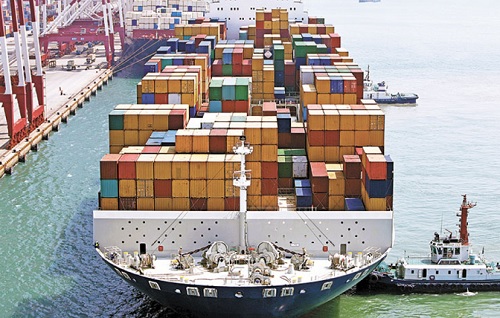 represented by robotic factories may lead to the loss of jobs in the clothing and leather sectors of many developing countries. The introduction of Industry 4.0 on the back of 5G may also affect the outsourcing industry in the long run.
Though a decade from now, Indian industries will have to adopt Industry 4.0 to remain globally competitive, it will first have to install both 4G and 5G infrastructure widely as the backbone for Industry 4.0.
Tap agribusiness for employment generation
To retain its export markets as well as provide avenues of employment to millions of displaced workers, India should introduce extensive mechanization and automation to tap its potential in agribusiness. It should focus on turning khadi along with handloom into a value-added signature fabric of India by establishing extensive value chain from rural sourcing to buyers in prosperous countries. This can lead to innovations in area of organic chemicals like vegetable dyes. The organic sustainability supply chain could be a big seller in Europe, US and other high-income countries.
India can also link its agri-business with yoga to market organic and healthy lifestyle products abroad. For this, it needs to introduce new technologies such as hydroponic or vertical farming to enable small landholders to grow value-added organic medicinal herbs and spices. It can also set up distillation and extraction units near the farms to add value to farm produce.
And not just the garment industry but India should implement technological innovations in the entire gamut of industrial landscape. The country should apply foresight scanning to provide alternate employment avenues to workers displaced by factories opting to be more become automated due to the low-cost benefits it provides.
US industry coalition outlines policies for PPE manufacturing
An industry coalition representing the full spectrum of domestic personal protective equipment (PPE) manufacturers such as Alliance for American Manufacturing, American Iron and Steel Institute, American Sheep Institute, etc has outlined policy principles and objectives needed for reshoring and safeguarding domestic PPE manufacturing.
The COVID-19 pandemic, which exposed severe shortages in our nation’s PPE supply and an over-reliance on foreign sourced products, underscores how important it is for the U.S. government to incentivize, support and maintain domestic manufacturing capacity for PPE.
The association members, encompassing every segment of the US textile, apparel and PPE supply chain, as well as unions representing workers, acted swiftly to convert manufacturing facilities and build supply chains virtually overnight to produce desperately needed PPE.
The associations are calling on Congress and the Trump administration to adopt principles outlined in the statement through legislation, executive order and other appropriate means.
FashionGo Week becomes the latest virtual addition to industry calender
FashionGo Week, a new digital trade show event that will take place August 24–September 6, is the latest virtual addition to the industry calendar. Organized by B2B wholesale e-commerce marketplace FashionGo, the two-week show will target buyers and vendors in the fast-fashion and accessories market, as opposed to the high-end brands usually associated with fashion weeks.
A digital wholesale platform, FashionGo provides a year-round opportunity for brands and retailers to present and review collections; take and manage orders; and use data to inform purchasing decisions. Products presented on the site are commonly already in-stock and available for shipment, to cater to a fast-fashion audience.
For the FashionGo Week event, attendees and exhibitors will gain access to a series of new features. Participating vendors will be able to upload videos to promote their collections, showcase lookbooks and highlight new arrivals or exclusive items on their dedicated brand page. A number of brands will then also be featured on the event home page, to increase awareness and exposure.
Good on You rates Kings of Indigo as ‘great’
Good on You, a consumer-facing platform that assesses brands on their impact on people, planet and animals, has rated denim brand Kings of Indigo as “great,” which indicates Kings of Indigo received a five out of five overall rating.
To date, Good On You has assessed more than 2,000 fashion brands. While it awarded Kings of Indigo a “great” rating, there were two areas in which it showed the brand could improve: people and animals. Kings of Indigo, however, is putting steps in place to better address both categories. By 2021, the company will have adjusted its workers’ wages to account for cost of education and savings. It also declared in its 2020 sustainability report that it would continue research on living wages, request detailed open costing from suppliers, and participate in the Fair Wear living wage incubator 2.0 in order to reach those goals.
As for the animal category, Kings of Indigo uses sheep’s wool in some of its collections, and despite it being 100 percent recycled, it’s still unable to be classified as a vegan company as a result.
Kings of Indigo is committed to staying ahead of sustainable practices, and has been certified by The Global Organic Textile Standard (GOTS), OEKO-TEX, OCS100 and GOTS. Its latest sustainability report outlined those certifications and more, as well as its water-, chemical-, and energy-reduction practices. The report showed that, of the 82 jeans styles in its Spring/Summer 2020 collection, half are measured as having no impact or low impact on the environment.
VDMA launches new series of web events
In the wake of the corona crisis, VDMA Textile Machinery has launched a new series of web events called "Textile Machinery Webtalk". Here, experts from up to four VDMA member companies present their innovative technologies on a specific topic in a maximum of 90 minutes and are available to answer questions from participants. The presentations are held in English. Participation in the web events is free of charge.
Topics of the first two webtalks were technologies for the production of melt-blown nonwovens for respiratory protection masks and technologies for the production of respiratory protection masks
Around 180 people from more than 30 countries took part in the first two webtalks. With this format, the VDMA reaches both textile and nonwovens manufacturers who already manufacture these products and companies that want to invest in new business areas.
The next webtalk will take place on July 23, 2020 on the current topic "Technology solutions to produce fully-fashioned community face masks." Experts from Karl Mayer, Stoll By Karl Mayer and Jakob Müller will be presenting their technologies for producing everyday textile masks to an international expert audience











