FW
GTP hopes for legislation on counterfeits by next year
Wax print textile company GTP expects the Ghana government to introduce a legislation to tackle counterfeits by next year. The company has been facing intense competition from counterfeits printed in China and other Asian nations. During the COVID-19 lockdown in Ghana, GTP's fabric sales plummeted from about 1 million yards a month, to less than 100,000. Though sales are slowly recovering and the company has introduced new designs, it fears that these too would be soon counterfeited.
GTP has several measures to protect its products. In 2015 it started working with Ghanaian company mPedigree, which uses technology to help buyers know what they purchase is authentic. The fabrics have a scratch code on them which buyers text to a number to get confirmation the fabric is from GTP.
For the past few years, Ghana’s government has been considering measures to regulate the industry and curb illegal imports, such as creating a stamp for fabrics produced in Ghana and a taskforce to look for counterfeit goods.
Cotton Corp to export 2 million bales to Bangladesh
State-owned Cotton Corporation of India may export 1.5 million to 2 million cotton bales to Bangladesh in order to reduce India’s record surplus before the new crop begins arriving in October. It generally sells cotton to local mills and traders at market prices, after buying from farmers at government-set minimum rates. Export prices will be decided by the two governments using the Cotlook index. Industry researcher Cotlook’s benchmark is a daily average of the five cheapest cash prices in the world.
Cotton Corp plans to sell 500,000 bales to 700,000 bales of 170 kilograms each to Trading Corp of Bangladesh in the marketing year ending on Sept. 30. The rest of the quantity will be shipped in 2020-21.
India is likely to have a record closing stockpile of 10.25 million bales by September 30, according to the Cotton Association of India, as domestic consumption may drop more than 20 per cent from a year earlier to 25 million bales in 2019-20.
Cotton Corp bought 10.5 million bales this year, the highest-ever procurement. It included 2 million bales purchased during a nationwide lockdown to prevent distress selling by local growers. The company is carrying about 8.4 million bales at present and its ending reserves may not exceed 3 million bales on September 30.
Asics Q2 sales drop 21.5 per cent
Sports shoe brand Asics posted 21.5 per cent decline in sales to ¥146.89 billion in second quarter that ended on June 30. The company incurred operating loss of ¥3.87 billion compared to operating income of ¥8.58 billion in Q2 FY19. Gross profit slipped 20.7 per cent to ¥70.5 billion and ordinary loss during the quarter was ¥3.87 billion. However, the company’s digital sales increased worldwide with 151 per cent growth in North America and 139 per cent in Europe.
During the second quarter, the brand recorded 15.1 per cent decline in sales to ¥70.93 billion in its performance running category while sales of core performance sports dropped by 25.5 per cent to ¥16.18 billion. Sales of sports style shoes declined by 22.7 per cent to ¥12.60 billion while that of apparel and equipment sales decreased by 36.3 per cent to ¥12.53 billion.
The brand recorded a decline in sales in all its regions during Q2 FY20. Its sales in Japan decreased by 24 per cent to ¥47.0 billion; North America by 27.1 per cent to ¥28.41 billion; Europe by 20.5 per cent to ¥37.09 billion; Greater China by 0.7 per cent to ¥18.52 billion; and Oceanian by1.4 per cent to ¥8.58 billion.
Forever 21 teams up with 7-Eleven for a new casual collection
Forever 21 has joined hands with 7-Eleven to launch a casual apparel range, featuring the US convenience chain’s famous logo and soft drinks. The 7-Eleven apparel collection comprises 16 colorful pieces, including regular Tees and hoodies, representing the convenience-store chain’s summer drinks – Slurpee and Big Gulp. It pays homage to everyone’s favorite memory of being out, but staying close to home, heading out for a quick snack run with friends, and finding comfort in the little things.
Forever 21 launched several promotions for the collection on Instagram and TikTok, including a dance challenge, poll, games, and sweepstakes. A Slurpee AR hologram in the Forever 21 app allows followers to take photos and share on social media. The Forever 21 x 7-Eleven collection is sold only online.
Automation, sustainability to fuel Europe’s textile and apparel recovery by 2021
 A report by analyst Euler Hermes Global says, the European textile and apparel (T&A) is expected to recover from its current gloom and grow by 15 per cent in 2021. The report attributes this optimism to the liquidity provided by central banks and governments to ailing companies. Also, new job-retention schemes will provide a substantial relief to the labor-intensive industry.
The report asserts even though the share of European textile and apparel industry has declined to less than 34 per cent from 40 per cent in 2009; it has acquired a more solid and competitive base focusing on higher-end items. As Eurostat reveals, between 2009 and 2017, the gross value added by each European employee increased by 25 per cent in apparel, 30 per cent in textile and 48 per cent for leather goods, footwear and accessories
However, aggregate turnover from the European textile and apparel industry will remain 7 per cent below its 2019 levels due to its dependence on international tourist flows.
Making polluters pay
The textile and apparel industry is a major consumer of water resources with estimated 73 per cent of all textile production is either incinerated or landfilled. The rise of fast fashion has contributed to the growing preference for quantity over quality among consumers. Between 2000 and 2015, average clothing utilization declined by about 35 per cent, while global volumes sold doubled to reach more than 100 billion items per year. Apparel consumption has grown by more than 25 per cent in Europe, with France and the UK seeing the strongest increases since 2000. Adding online retail sales of clothing, which are not captured in Eurostat’s dataset, makes the trend even more apparent.
To align environmental concerns with business interests, European manufacturers need to substitute primary resources with recycled materials. They can tackle the financing issues of separate collection, sorting and treatment of waste by introducing taxes based on the ‘polluter-pays’ principle .This also encourages producers to find ways to reduce their environmental impact.
Additional public support can be sought to accelerate R&D projects focusing on improving textile waste collection, treatment, re-use and recycling – technologies are much less mature than in the glass or paper industries. The industry should also create demand for recycled materials by assigning targets to companies.
E-commerce to rescue manufacturers from crisis
As Europe has comparatively stricter labor regulation, higher labor costs and a narrower labor force, European manufacturers cannot compete with foreign manufacturers. Since long, NGOs and trade associations have addressed the need to change the European consumers’ buying behavior and align it with environmental targets with the interests of local manufacturers. Even a 10 per cent reduction in apparel imports by Germany and France to boost local European production by 8 per cent.
Researchers Carl Benedict Frey and Michael Osborne say, most garment industry jobs will be computerized by 2023, with tailors standing at 83 per cent and hand sewers at 99 per cent. Automation can help reduce Europe’s comparatively high-cost structure, support funds to increase the competitiveness of European manufacturers and stimulate the robot industries of Germany and Italy. European apparel manufacturers should also accelerate their efforts to develop e-commerce capabilities. Though e-commerce may not fully compensate for store closures, it can provide large retailers with some relief amidst the COVID-19 crisis.
India’s cotton production to increase while consumption to decrease: CAI
 At its recent meeting, Cotton Association of India (CAI) increased its cotton production estimates for the 2019-20 season by 19 lakh (1.9 million) bales to 354.50 lakh (35.45 million) bales of 170 kg each. The committee increased its production estimate for the North zone by 3 lakh (0.3 million) bales, Central zone by 13 lakh (1.3 million) bales and Southern zone by 3.25 lakh (0.325 million) bales. This increase in production estimate is a result of higher pressing of cotton bales due to aggressive buying by CCI that induced farmers to bring their kapas to the market.
However, CAI predicts a decline in cotton consumption during the current year by 30 lakh bales (3.0 million) to 250 lakh (25 million) bales as against previous estimates of 280 lakh (28 million) bales. This reduction in consumption is estimated due to the disruptions caused on account of lockdown and shortage of labor. Upto July 31, cotton consumption in India is estimated to have been around 206 lakh bales (20.6 million) of 170 kg each.
Exports to rise by 8 lakh bales
CAI has also increased estimates for cotton exports from India by 3 lakh (0.3 million) bales. Compared to previous estimates of 47 lakh (4.7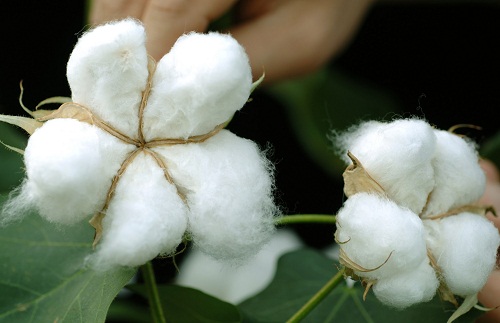 million) bales, the association now expects India to export 5 lakh (5.0 million) bales during the current year. This estimate is higher by 8 lakh (0.8 million) bales compared to estimates for 2018-19 crop year. The association expects upto 43 lakh (4.3 million) bales to have been shipped upto July 31 and the remaining 7 lakh (0.7 million) bales are expected to be shipped during the months of August and September 2020.
Imports estimates falls by 50 per cent
CAI has also increased its estimate for cotton imports during the year by 1 lakh (0.1 million) bale to 16 lakh (1.6 million) bales compared to its previous imports estimate of 15 lakh (1.5 million) bales. However, this estimate is half of the previous year’s import estimate of 32 lakh (3.2 million) bales as cotton is now easily available in the domestic market at cheaper rates. India is estimated to have imported around 15 lakh(1.5 million) cotton bales upto July 31 and remaining 1 lakh(0.1 million) bales are expected to arrive in August and September 2020.
India to add 2 mn bales to cotton stock
Upto July 31, Indian spinning mills held upto 15 million (1.5 million) bales of cotton stock of 170 kg each This is an approximately 25 days’ consumption by mills at their current pace of cotton consumption this season. On the other hand, stock with CCI/Maharashtra Federation, MCX, MNCs, Ginners, etc. upto July 31, 2020 is estimated to be around 128.40 lakh(12.84 million) bales which is equivalent to about 136 lakh(13.6 million) running bales of 160 kg each totaling to 143.40 lakh(14.34 million) bales of 170 kg each.
The CAI;’s crop committee estimates total cotton stocks upto September 30, 2020 to reach 402.50 lakh (40.25 million) bales of 170 kg each as against 382.50 lakh(38.25 million) bales estimated in the previous month. This total stock includes opening stock of 32 lakh (3.2 million) bales on October 01, 2019, production estimated now at 354.50 lakh (35.45 million) bales and imports estimated at 16 lakh (1.6 million).
This is equivalent to about 109 lakh (10.9 million) running bales of 160 kg each. All the members of the Crop Committee from across the country will closely monitor cotton arrivals, consumption, imports, exports, etc before meeting again in September to estimate the final crop numbers and the cotton balance sheet as at the close of the 2019-20 crop year.
Jennifer Johnson to be the new fashion director at Macy’s
Jennifer Johnson has been promoted to be fashion director at Macy’s. She will be responsible for all areas of women’s apparel within the fashion office, which serves as a resource for determining the latest fashion trends and insights, and curates product from national and private brands.
Johnson, who has more than 20 years of fashion expertise in trend forecasting and marketing, joined Macy’s in 2006 as a head fashion stylist and has held various marketing roles. She was most recently director of creative marketing integration and production, where she focused on bringing fashion campaigns to life through multimedia.
Johnson reports directly to Durand Guion, vice president of Macy’s fashion office. She replaces Suzanne K. Anderson who was vice president and women’s Ready to Wear fashion director since January 2019 and is currently leading private brands design.
Johnson’s role is a critical one for the department store, considering the new challenges and changing consumer buying patterns due to the coronavirus pandemic. Furthermore, women’s sportswear has been among the softer categories at Macy’s, and Macy’s needs to present a fashion image and assortment that attracts a greater market share of younger generations.
Spinnova hires international textile experts for fibre business
Spinnova recently on boarded two niche textile experts to help commercialize its sustainable wood-based fibre. The company appointed Shahriare Mahmood as its new Sustainability Director. Mahmood joined Spinnova from the renown Finnish children’s wear brand Reima. He has both an academic and a technical textile industry background. Graduated as a chemical engineer in Bangladesh and Master of Engineering in Finland, Mahmood has also worked in textile mills in Asia and Europe.
In the course of his extensive career, he has specialized in e.g. circularity, material R&D as well as quality and supply chain management. He has also recently earned a PhD in sustainability management. With Spinnova, Mahmood focuses on supporting sustainability efforts of partnering brands and related pre-commercial and commercial phase supply chains.
Spinnova’s other textile expert appointment is Eun (Enja) Young Kim, who started as Senior Fibre Application Specialist in Spinnova’s R&D team. Engineer by background, Kim previously worked for fibre technology company Lenzing in Austria, where she worked in technical customer service of technical applications. She will be focusing on developing the Spinnova fibre’s quality and finishings.
Decathlon opens new store
French sporting goods retail giant Decathlon opened a new store at Select Citywalk, Saket. The store is equipped with all the safety precautions in order to offer a relaxed shopping experience to its customers.
The zero contact check-out called the ‘Scan & Pay’ uses the app feature to eliminate cashier contact while making the shopping experience easy and fast. It also has a zero contact drive-through for the shoppers on-the-go.
The store also offers the option of ‘Reserve & Collect’ where the order placed on the app can be picked up at the store within a 2 hour pick-up window.
Yogeshwar Sharma, Executive Director & CEO, Select Citywalk says, the mall has always brought customers the chance to experience world class brands across various categories. With the growing focus on sports and fitness, Decathlon would bring all its customers together in their passion for sports.
OFashion to boosts prospects for online DTC brands
OFashion, a new online DTC marketplace believes these brands offer immense brand value when sold together and is taking on the marketing efforts to give these smaller companies a chance to thrive at DTC.
OFashion will focus on web traffic, user experience, marketing, and the curation of products. It will also centralize shipping and customer service to make it easier for brands and customers alike. This way unlike other multi-brand fashion marketplaces, processing times will be consistent (next day) and customers will receive their shipment in one box. The marketplace will also provide full customer support, saving customers the possible headache of dealing with multiple vendors for an issue. Orders have a 2 to 3-day shipping time with Free Shipping after $75.
The site also offers Free Returns. Looks on the site will focus on trendy contemporary and fast-fashion styles.