


FW
ASEAN-India meeting reviews partnership between the two regions
A virtual ASEAN-India ministerial meeting recently reviewed the strategic partnership between the two regions. The first major interaction with ASEAN after India walked out of the Regional Comprehensive Economic Partnership (RCEP), the meeting reviewed the progress in implementation of the ASEAN-India plan of action (2016-2020). It also adopted a new plan of action for the next five years besides reviewing the preparations for the upcoming 17th ASEAN-India summit.
Ministers discussed ways to strengthen cooperation to fight the pandemic and exchanged views on important regional and international developments. India, China, South Korea, Japan, New Zealand and Australia are the six prominent members of the ASEAN. The RCEP was to be a free trade agreement among these six countries. However, India stayed away as it does not safeguard our interests. Indian analysts hope ASEAN will tilt towards the Quad (US-India-Australia-Japan) in the contestation of South China Sea. However, China has been resisting Quad’s efforts to raise bilateral ties with member countries.
Bangladesh develops 500 new eco-friendly garment factories
Bangladesh is developing 500 new eco-friendly garment factories. The country certified 19 new units as eco-friendly in the first eight months of this year. This has increased the number of eco-friendly apparel and textile units in Bangladesh by around 125. There has been a spurt in green manufacturing units in Bangladesh following the infamous Rana Plaza building collapse, which highlighted the importance of a safe and secure working environment. As per BGMEA, there 144 facilities Bangladesh received the LEED certificate, of which 125 are garment and textile factories.
Among the factories that received LEED certificate this year included Avitex Dress Shirt, EMS Apparels, Mayble and Frank Fashions, Anwara Fashions, Nippon Garments Industries, Pacific Casual, Karooni Knit Composite Ltd. and Karupannya Rangpur.
Burberry to live video stream Spring/Summer 2021 Collection
Burberry plans to live video stream its Spring/Summer 2021 collection in collaboration with service provider Twitch. The brand will use Twitch’s unique Squad Stream function that will allow its hosts to stream the show together in one window. This will enable virtual guests to view the show from multiple perspectives. The collaboration with Twitch will allow the brand to engage with its community through curated content and experiences.
A global luxury brand, Burberry is headquartered in London and listed on the London Stock Exchange (BRBY.L) and is a constituent of the FTSE 100 index. Launched in 2011, Twitch is a global community that creates unique, live experiences through its interactions with millions of views. The community creates entertainment across a host of categories from casual gaming to world-class sports, sports, music and art streams.
A digital-physical combine will help trade shows survive the pandemic
 With the direct-to-consumer model and digitization diminishing their importance, physical trade shows suffered even before the pandemic. A Business of Fashion (BoF) and MyKinsey’s State of Fashion 2020 report reveals, nearly 55 per cent brands and retailers view trade shows as having little or no relevance to their business. COVID-19 pandemic has exacerbated the relevance of these trade shows with all US B2B events in the second quarter either being cancelled or postponed, notes the Center for Exhibition Industry Research (CEIR).
For visitors, these shows offer an opportunity to network with other exhibitors, and physically showcase products. To boost their future appeal, organizers will have to reinvent the organizational structure of trade shows, believes Julie Gilhart, Industry Veteran and Brand Consultant. Well-curated and localized trade shows will continue to attract visitors in the post pandemic world, she says.
Adapting to changing times
The success of modern trade shows depends on their ability to swiftly adapt to last-minute lockdowns and travel restrictions. Over the last few months, Premiere Vision made heavy investments in digital operations. Its online marketplace allows buyers and vendors to make virtual appointments and attend some 20 online educational seminars. It has also set up 1,600 online shops on the marketplace which exhibitors can operate free of charge.
On the other hand, Florence-based trade show, Pitti Immagine Uomo, charges €2,500 per season for customers to use its online platform Pitti Connect. Since the first four weeks of its launch, 500 companies, 6,000 buyers and 270 media professionals have used the Pitti Connect service. One of the largest players in B2B exhibitions and events, Informa charges exhibitors $1,995 to showcase collections in its online marketplace. The organizer aims to complement its physical events with digital operations, says Nancy Walsh, President, Informa Markets Fashion.
Eyeing more acquisitions
As the industry has become more competitive, bigger companies are eyeing smaller digital trade shows with a strong sense of branding and point of view. They plan to acquire more virtual events which enable them to display all their showrooms under one virtual roof and become a one-stop-shop for buyers, says Nancy Drapeau, President-Research, CEIR.
Informa’s Market Fashions offers many finished-product trade shows like Coterie, Magic and Micam Americas. The group’s eight-week digital marketplace, launched in partnership with NuOrder, allows buyers to filter searches through product keywords or the names of the trade shows they typically frequent.
Taking the mid-route
Pre-COVID, physical shows were the biggest source of revenue for Brand Assembly, a business platform started in 2013. The company’s multi-city trade shows made up 60 to 70 per cent of total annual revenue. Now, the share of these trade shows has declined below 50 per cent, says Hillary France, Co-Founder and Chief Executive. The platform has launched virtual marketplaces in collaboration with e-commerce firm Alkeon for established contemporary brands and emerging designers. Though currently free to use for brands and designers, these marketplaces plan to introduce a software-as-a-service model where customers will have pay a monthly or annual subscription fee to showcase their products year-round.
Organizers also plan to take the hybrid route for their events. Besides organizing physical events, these organizers plan to make huge investments in their online platforms to attract customers with customized shopping experiences. Though digital events are not so lucrative for these organizers, they help them become data-rich, says Walsh.
COVID-19 transforms GCC retail landscape as retailers switch to digital mode
 COVID-19 is revolutionizing GCC retail landscape with consumers increasingly embracing online retail channels, opined Hozefa Saylawala, Director-Sales Middle East, Zebra Technologies at a virtual roundtable organized by RetailME on Intelligent Orchestration of Retail Experience. As per Statista, an online tracker of global economy and retail sector, e-retail sales are expected to account for 22 per cent of global retail sales by 2023. Of this, the GCC e-commerce market is expected to reach $19.7 billion in 2020. Justina Eitzinger, Chief Operating Officer, RetailME views these statistics as an indication of the huge potential of e-commerce market in the GCC and the greater Middle East region and advises retailers and consumers to gain crucial insights from the virtual roundtable series to remain ahead of the curve.
A blessing by default
Adel Sajan, Director, Danube Group, which initiated virtual meetings with key customers and offered products through a virtual tour of its stores, says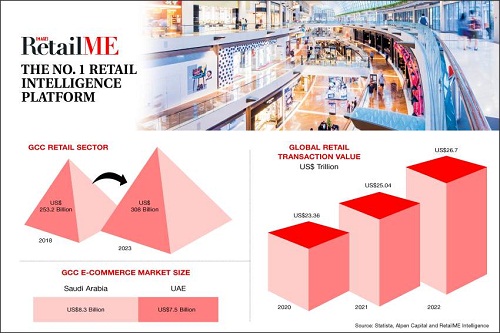 their online sales jumped up 500 per cent to make up 25 per cent of total sales during the lockdown. Recently, the group launched a pilot project to dispatch a wide variety of home furnishing products to clients' homes. This enables customers to see, touch and feel the products.
Bhavna Buttan, Vice President-Market Place Transformation, Sun and Sand Sports views COVID-19 as a blessing by default as it forced consumers and retailers to change their shopping behavior swiftly. The retailer accelerated the use of digital space during the period with online sales jumping 500 per cent. According to Ashutosh Chakradeo, Head-Retail, Choithrams, the biggest change is being witnessed by grocery retail, supermarkets and hypermarkets as their online sales have jumped almost three times. Choithrams managed to meet the growing demand for its products by making certain physical adjustments and upgrading technologies.
AI for a frictionless shopping experience
Mark Thomson, Director - Retail and Hospitality, EMEA, Zebra Technologies, views frictionless shopping experience to be one of the biggest challenges for the retailers currently. As a solution, Danube Group deploys artificial intelligence (AI) to interpret customer data analytics. This enables the group to zero-in products to suit customers' taste.
Though retailers are using customer data analytics to make decisions, they interpret them in different ways, observes Hozefa Saylawala, Director of Sales, Zebra Technologies. The industry can address this issue by providing decision-makers with automated action points. For instance, Zebra's retail technology solutions help the company track inventory and orders, and offer customers a better shopping experience
UK trade officials open discussions for accession to CPTPP
Liz Truss, International Trade Secretary, UK along with Graciela Márquez, Chairperson, Comprehensive and Progressive Agreement for Trans-Pacific Partnership (CPTPP) opened discussions between senior UK trade officials and chief negotiators from all 11 members of the partnership to discuss potential UK accession to CPTPP.
This is the first time the United Kingdom has met with these chief negotiators and the first time CPTPP members have had such a discussion with a country seeking membership since the partnership was created in 2018.
The United Kingdom held preparatory conversations with all CPTPP members. If the UK decides to apply, it will enter into a formal accession negotiation with all member states, a government press release said. This meeting follows major progress in negotiations between the United Kingdom and Japan, the beginning of negotiations with Australia and New Zealand, and the resumption of negotiations with Canada, as the United Kingdom looks to focus on trade with the dynamic Asia-Pacific region. CPTPP membership also provides an opportunity to expand trade links with key partners in the Americas.
The UK aims to join CPTPP because membership will help put the United Kingdom at the centre of a network of free trade deals with dynamic economies, making the country a hub for international businesses trading with the rest of the world; put it in a stronger position to reshape global rules and drive reform at the World Trade Organisation; boost its economic security; and make it more resilient to future crises by diversifying its trade and supply chains.
Fashion for Good launches project in chemical recycling
Fashion for Good has launched ‘Full Circle Textiles Project: Scaling Innovations in Cellulosic Recycling’ – a first-of-its-kind consortium project. Focusing on cellulosic fibers, the project aims to validate and eventually scale promising technologies in chemical recycling from a select group of innovators to tackle landfill and other issues.
In the project, leading global organizations—Laudes Foundation, Birla Cellulose, Kering, PVH Corp, and Target—join Fashion for Good to explore the disruptive solutions, with the goal of creating new fibers and garments from used clothing and ultimately drive industry-wide adoption. The project’s overall aim is to investigate economically viable and scalable solutions for cellulosic chemical recycling to enable a closed loop system converting textile waste – of cotton and cotton-blend materials, to produce new man-made cellulosic fibers (MMCF).
Over an 18-month period, project partners will collaborate with innovators, Evrnu, InfinitedFiber Company, Phoenxt, Renewcell and TytonBioSciences, to validate the potential of their technologies in this still nascent market. The recycled content produced by four of these innovators will be converted at Birla Cellulose’s state-of-the-art pilot plants to produce high quality cellulosic fibres. From there, fibers will move through the project partners' supply chains to be manufactured into garments. Given that InfinitedFiber Company produces industry-ready fiber through their process, their fiber will be delivered directly to the project partner’s supply chains for garment production. The project will provide an assessment of the innovator’s environmental impact, technologies, recycled output and subsequent garments.
Vietnam textile and garment industry calls for greater cooperation with India
Strengthening cooperation with India will help Vietnam’s garment and textile industry enhance competitiveness and boost exports, said delegates at the virtual seminar themed: ‘Promoting Vietnam-India business relations in the areas of garments, textiles and health’. Organized by the Vietnamese Embassy in India on September 10, the seminar was attended by 250 enterprises, scholars and policymakers from the two countries in the three aforementioned fields.
Pham Sanh Chau, Vietnamese Ambassador to India emphasized on the significant changes in the world’s geo-political picture with rivalry and competition between major powers, and tensions and disputes in the area of security affecting economic issues. In addition, supply chains are facing multiple challenges due to the disease, thus hurting global trade. However, this can be an opportunity for India and Vietnam to promote bilateral relations and complement each other, thereby contributing to the recovery and enhancement of supply chains in important fields, he said.
Delegates lauded Vietnam’s economic achievements in recent years with an average annual growth rate of 6-7 per cent. Vietnam is also a popular destination for foreign direct investment (FDI) with its signing of more than 10 free trade agreements (FTAs).
Ashok Juneja, President, Textile Association (India) said, garments and textiles are a key export sector of Vietnam with revenue of up to $36 billion, equaling India’s $38 billion in value terms. However, India exports $16 billion of garment and $22 billion of textile products, while Vietnam exports up to $31 billion of garments and only $5billion of textile items. Therefore, the two countries have ample space to boost cooperation in this area. Juneja added, India can boost Vietnam textile and garment industry by exporting natural fibers such as cotton, jute, silk and wool, to synthetic fibers such as polyster and nylon.
Vietnam textile and garment companies eye EU expansion
To compensate for the shortage of export orders, Vietnamese textile and garment companies are trying to expand into the EU market. Vietnam’s textile exports turnover declined 11.6 per cent during the first eight months of 2020. It is expected to further decline by 15 per cent until the end of the year, says Vietnam Textile and Apparel Association (VITAS). The textile industry currently has up to 118.7 per cent of goods in inventory as 20 per cent companies were forced to shut down while others cut labor and restructure production activities.
As many global fashion brands like New York & Company, J C Penney and Brook Brothers declared bankruptcy, Vietnamese textile manufacturers turned towards the domestic market, with main products including masks, work wear, medical outfits and fast fashion, targeting the cheap or mid-range segment. Though domestic consumption is expected to increase 5 per cent until the end of 2020, it cannot make up for the shortage of export orders, said Le Tein Truong, General Director, Vietnam National Textile and Garment Group (Vinatex). According to him, the Vietnam-Europe Free Trade Agreement (EVFTA) will allow companies to reach an export turnover of $7 billion which was that of 2019.
Having competitive pricing and fast delivery times will enable Vietnam to take full advantage of EVFTA and increase market share in the EU as well as compete with the Bangladeshi providers, Truong said. Businesses ought to improve logistical capacity to achieve shorter delivery time, and the government should simplify administrative procedures, reduce clearance and inspection time, he added.
Manufacturers should also start importing materials from countries that have signed FTAs with Vietnam and the EU to take advantage of cumulative rules of origin. Additionally, they should dabble in specialized, hi-tech, multi-detailed textile products or workwear, sports and medical products, while changing production technology, improving management capacity and investing in social and environmental factors.
Gap releases ‘Preferred Fiber Toolkit’ in partnership with Textile Exchange
Gap has released its ‘Preferred Fiber Toolkit’ put together in partnership with Textile Exchange. The toolkit is an online resource that details the environmental and social impacts of various raw materials, to inform likeminded companies striving to meet their sustainability targets. Serving as a complement to the Sustainable Apparel Coalition’s (SAC) Product Tools, the toolkit will not only disclose the associated environmental effects of raw materials but also other factors for consideration such as the subsequent impacts on labourers, biodiversity and land-use.
With this toolkit, users can flick through a database of raw materials and their associated impacts on not just the environment, but also workers, land, biodiversity and animal welfare. It will provide clear direction to create alignment and reduce the proliferation of conflicting guidance.
Textile Exchange (TE) will update the Toolkit with new data and a broader set of fibers and materials, before starting to use the tool to drive the adoption of ‘preferred’ materials.
Textile Exchange will also work to identify areas of further reduction of impacts to support the industry in meeting science-based targets. The updated Toolkit and the proposed review process will be shared with stakeholders for comments and feedback later this year.











