


FW
Bangladesh to increase export earnings to $41 billion
Bangladesh aims to increase export earnings in FY 2020-21 to $41 billion including $33.79 billion from export of ready-made garment products. As per data released by the Export Promotion Board, Bangladesh's export earnings in the first quarter of the 2020-21 fiscal year grew by 2.58 percent year on year to nearly $10 billion. The country earned a total of $9,896.84 million from exports in July-September, compared to $9,647.99 million in the same period a year earlier.
Of its total earnings, the country's income from ready-made garment items, including knitwear and woven, stood at $8.13 billion during the July-September period of the current fiscal year. In the first quarter of the current 2020-21-year, export of knitwear garments increased by 7.04 percent to $4.46 billion while those of woven garments fell by 5.78 percent to $3.66 billion dollars, comparing with the same period of last fiscal year.
The country's export sector is limping back to normalcy after suffering serious blows in the last fiscal year owing to COVID-19 impacts. Its export earnings in the past financial year 2019-20 sank about 17 percent to $33.67 billion, the lowest since the 2014-15 fiscal year.
Digital tools can help apparel companies build resilient supply chains
 According to a new research by McKinsey Global Institute, supply chain disruptions can result in fashion companies losing a year’s profit over the course of a decade. Around 93 per cent of these companies plan to make their supply chains more resilient through a combination of strategies such as the construction of a comprehensive database of thousands of suppliers and the hundreds of thousands of parts to quickly shift components across sites when needed.
Digital tools build structural resiliency in suppliers
Digital tools can help fashion brands build agile and structural resiliency measures into their operational models These tools can increase their efficiency by reducing input costs and increasing productivity besides giving them new, options to maintain workforce productivity in the event of closures from a severe weather event, or a pandemic.
Digital tools can also help brands monitor, connect, and collaborate across supply chain as critical weakness may be entrenched deep inside the suppliers’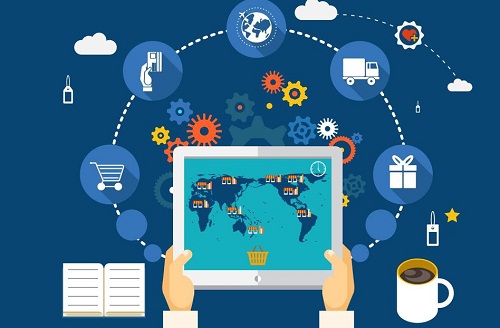 and of suppliers’ suppliers’ operations. For example, RFiD tagging helps Nike track its goods from end to end as the brand outsources its manufacturing to over 500 factories across 40 countries.
Supply chain mapping for identifying lower-tier suppliers
In recent years, shortage of paint additives, plastics, and specialty chemicals have led to scarcity of components across multiple industries. Many times, the original equipment manufacturer is unaware of the materials required for their products.
To change this, a chemical manufacturer increased its suite of digital tools and dashboards by 30 percent. It provided its employees with real-time visibility into material shortages through a digital order-tracking system that also allowed it to spot problems and rapidly identify the root causes of non-delivery. These tools enabled the company to increase production during the pandemic.
To minimize material shortage risks, companies can use supply-chain mapping tools to identify lower-tier suppliers from publicly available information, asking them to share information on their own critical suppliers and encourage suppliers to conduct their own resilience stress tests. One company supplier used its digital infrastructure to manage supply and production risks during the COVID-19 pandemic. The company succeeded in combining resilience with efficiency and minimal cost. It now only enhanced its digital capabilities but also made its supply chain more resilient.
India’s cotton exports grow by 14.82%
According To merchandize trade data released by the Ministry of Commerce and Industry, India’s exports of cotton yarn, fabrics, madeups, handloom products etc showed a positive growth of 14.82 per cent in September 2020 compared to September 2019. Exports of readymade garments of all textiles also rose 10.21 per cent during the month.
In September 2020, India’s merchandise exports grew by 5.27 per cent to $27.40 billion, as compared to $26.02 billion in September 2019. However, exports during April-September 2020-21 declined by 21.43 per cent to $125.06 billion.
On the other hand, the value of merchandise imports in September 2020 was $30.31 billion, as compared to $37.69 billion in September 2019, a decline of 19.60 per cent. Merchandise imports during April-September 2020-21 were $148.69 billion, as compared to $248.08 billion during the same period last year, exhibiting a negative growth of 40.06 per cent. India is thus a net importer in September 2020, with a trade deficit of $2.91 billion, as compared to trade deficit of $11.67 billion, showing a substantial improvement of 75.06 per cent.
Among the major commodities of export which have recorded positive growth during September 2020 vis-à-vis September 2019 are: carpet (42.89 per cent), handicrafts excluding handmade carpet (21.40 per cent), jute manufacturing including floor covering (18.62 per cent), cotton yarn/fabrics/madeups, handloom products etc. (14.82 per cent), and readymade garment of all textiles (10.21 per cent), the provisional data showed. However, export of manmade yarn, fabrics, madeups etc declined 9.13 per cent.
E-TEX, Clensta launch anti-viral T-shirts and COVID-19 protection lotion
Two start-ups – E-TEX and Clensta incubated at the Indian Institute of Technology (IIT) – have jointly launched antiviral T-shirts and a COVID-19 protection lotion at an affordable price.
The antiviral shirts have been manufactured using the advanced technology that is proven to reduce the likelihood and speed of contaminations and transmissions by destroying micro-organisms on contact.
The garments can retain the antimicrobial properties even after 30 washes at mild condition. The finishing is done on cellulosic fibres which are safe for human contact and on the environment. The lotion offers 99.9 per cent virus protection with antiviral and antiseptic properties for up to 24 hours.
The product is a breakthrough advancement in the formulation of engineering chemistry with first-of-its-kind PAP Technology (Prolonged Antiviral Technology) to prevent bacterial, viral and fungal infections without harming the environment and human health and advanced hand sanitiser is formulated with increased alcohol retention time to be effective prevention against multiple viruses.
The product can be used on any exposed part of the body including face and is said to keep the virus away for almost 24 hours and reduces the extended use of alcohol-based sanitisers and washing hands multiple times a day.
Walmart to sell majority stake in UK supermarket chain
Walmart plans to sell a majority stake in its UK supermarket chain Asda reports Sourcing Journal. The deal worth $8.79 billion is likely to be bagged by Issa Brothers and TDR capital. Walmart will retain an unspecified minority investment. The new owners are planning to invest over $1.29 billion in the business and help keep prices low, a move that also is expected to help keep its supply chains intact.
Walmart acquired Asda in July 1999 for $10.8 billion. The deal benefited both companies more so Walmart who was known for its pile it high and sell it cheap strategy. The retailer currently plans to sell Asda’s George apparel line for men’s wear. According to Charlie O’Shea, Vice President and Senior Credit Officer, Asda sale will allow Walmart to refocus on markets with more long-term upside, such as India and China.
While full financial terms have not been disclosed, Walmart has acknowledged it will retain a minority stake, board representation and remain active as a strategic partner via logistics and sourcing. The retailer will take a non-cash charge of around $2.5 billion, in addition to Asda’s ongoing pension settlement.
Government to focus on skill upgradation and financial assistance in textile
The Union government plans to focus on skills upgradation and financial assistance in the textile sector and integrating it sector with latest technology. At an international webinar on textile traditions organized by the Indian Council for Cultural Relations (ICCR), PM Modi said Indian textile sector offers many opportunities. It is highest employment generating sector in India while internationally, it helps build trade and cultural relations with the world.
He lauded the ICCR and the Uttar Pradesh Institute of Design for their efforts in bringing people from different countries to participate in the webinar on the theme ‘Weaving Relations: Textile Traditions’. Modi also highlighted the rich textile traditions of the nation's tribal communities. Noting that the program was organized in the context of Mahatma Gandhi's 150th birth anniversary celebrations, he said Gandhi saw a close link between the textile sector and social empowerment and converted the simple 'charkha' into a key symbol of India's independence movement.
M&S ropes in Nobody’s Child as third-party apparel brand
Fashion giant Marks & Spencer has signed womenswear fashion brand Nobody’s Child as its maiden third-party apparel brand, reports Apparel Resources. The brand has already launched its autumn collection on M&S’ e-commerce platform to help the retailer’s apparel section regain its foothold.
The inclusion of Nobody’s Child on its platform will highlight M&S’ eco-friendly initiatives. The brand makes its mini dresses and tea dresses from recycled polyester and sustainably sourced viscose. Each of these dresses cost £35. Steve Rowe, Chief Executive, M&S, had earlier stated that the company plans to stock guest brands online and in brick-and-mortar stores as a part of its efforts to widen the appeal segment and enhance e-commerce business. The brand has been taking initiatives to lure customers to stores and online despite ongoing struggles and in this context had also announced the relaunching of popular shwopping scheme earlier this week.
London-based Nobody’s Child was founded in 2015 by Andrew Xeni and champions sustainable fabrics and recycled production for its apparel collections.
China’s cotton yarn imports from Pakistan rise over four times
China’s cotton yarn imports from Pakistan increased by 4.36 times to $ 41.836 million in August from the same period last year with year-on-year imports increasing 336 per cent, reveals data from China's General Administration of Customs. As per Hua ng Xifen, Sales Executive-Import and Export Department, Litai Xingshi (Taicang) Holding Co, Pakistan mainly produces low-count siro spun yarns generally below 21s, which are mostly imported to south China's Guangdong province to be made into denim.
Another importer, Seazon Textile and Apparel Co imported about 1,000 tons of cotton yarns from Pakistan every year. The company’s denim fabric is made of thick and low-count yarns, which are basically 10s or 8s, no more than 12s. The fabric woven with higher-count yarns is thinner and softer.
The main reason for the import surge is Pakistan's yarn export to China enjoys zero tariff, thus having a greater competitive advantage internationally. Also, Pakistani yarn is much cheaper than Chinese one, the largest gap reached RMB 2,000 to 3,000 per ton in the last two years, with a price gap of about 10 per cent. China's domestic denim fabrics varies according to specific orders, so manufacturers find sticking to one kind of cotton yarn risky. These manufacturers plan to continue importing yarns from Pakistan as long as they are consumed in China’s factories and their prices are acceptable
China’s cotton yarn imports from Pakistan rise by 4.36
China’s cotton yarn imports from Pakistan increased by 4.36 times to $ 41.836 million in August from the same period last year with year-on-year imports increasing by 336 percent, states data from China's General Administration of Customs.
As per Hua ng Xifen, Sales Executive-Import and Export Department, Litai Xingshi (Taicang) Holding Co, Pakistan mainly produces low-count sirospun yarns generally below 21s, which are mostly imported to south China's Guangdong province to be made into denim.
Another importer, Seazon Textile and Apparel Co imported about 1,000 tonne of cotton yarns from Pakistan every year. The company’s denim fabric is made of thick and low-count yarns, which are basically 10s or 8s, no more than 12s. The fabric woven with higher-count yarns is thinner and softer.
The main reason for the surge in import lies is that Pakistan's yarn export to China enjoys zero tariff, thus having a greater competitive advantage internationally. Also, Pakistani yarn is much cheaper than the Chinese one, the largest gap reached RMB 2,000 to 3,000 per ton in the last two years, with a price gap of about 10 per cent.
In terms of denim fabrics, China's domestic denim fabrics are relatively variable according to specific orders, so manufacturers find sticking to one kind of cotton yarn risky. These manufacturers plan to continue importing yarns from Pakistan as long as they are consumed in China’s factories and their prices are acceptable
Pitti Immagine Uomo returns to physical format
Pitti Immagine Uomo will return to physical format for 99th edition at the Fortezza da Basso, from January 12 to January 14,2021. The show will place top priority on safety of its attendees. Its team is currently working in preparation for #SaferWithPitti-an extraordinary set of safety measures and services for the exhibition spaces and common areas of the Fortezza.
The duration of the show has been extended to four days as against the earlier schedule of three years. Pitti Uomo is one of the world's most important platforms for men's clothing and accessory collections, and for launching new projects in men's fashion. It's held twice yearly in Florence, at the Fortezza da Basso.
The first edition of Pitti Uomo was held in Florence in September 1972. The exhibition provided a platform for raising the profile of Italian designers and now has achieved international stature as a leading fashion fair. Pitti Uomo is credited with making dandyism acceptable to a wider audience.











