


FW
EVFTA facilitates Vietnam’s textile and garment exports to EU
Formalized on August 1, the EVFTA enables Vietnam to promote trade and investment, especially form new supply chains. The agreement allows textile-garment, leather-footwear and seafood businesses to export products to the EU. Ministry of Industry and Trade’s Agency of Foreign Trade reveals, authorized agencies granted 7,200 certificates of origin (C/O) form EUR.1 for goods exports to the EU worth $227 million, including footwear, seafood, plastics and plastic products, coffee, textiles and garments, bags, suitcases, fruits and vegetables, and rattan and bamboo products. Importers included EU countries with seaports and distribution centers - Belgium, Germany, the Netherlands, and France.
While opportunities are available for businesses to participate in value chains, Vietnam’s support industries remain underdeveloped. The number of Vietnamese companies joining the global value chain is small. As per a study by the Japan External Trade Organization (JETRO), Japanese companies in Vietnam buy about 32.4 percent of input goods and services they need from Vietnamese suppliers, compared to 67.8 percent in China, 57.1 percent in Thailand, and 40.5 percent in Indonesia. Vietnam has about 20 automobile assembly companies but has only 81 level-1 suppliers and 145 level-2 and level-3 suppliers. The average revenue of Vietnamese manufacturing enterprises was only $2.9 million per year, while businesses still need to have an annual minimum turnover of $5 million in order to join the EU market.
Local firms are not willing to make greater investments to join the global value chain, says Ngo Chung Khanh, Deputy Director, Multilateral Trade Policy Department.
Vietnam emerges a global hub for face masks and PPE equipment
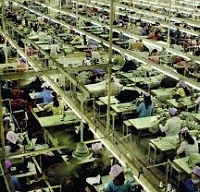 To reduce their dependence on China, many garment and textile companies have shifted their production to Southeast Asian countries like Vietnam for the last few years. However, COVID-19 has halted this process. Vietnam Textile and Apparel Association (VITAS) discloses, till August 2020, foreign direct investment in Vietnam declined by 13.7 per cent compared to the same period in 2019. Textile and apparel exports by the country decreased 11.6 per cent during the first eight months of this year.
Vietnam is the world's third largest textile exporter after China and India. However, the industry has never been under so much pressure and changed plans so quickly as today, says Vu Duc, Giang, Chairman, VITAS. Global demand for apparels is down which impacted order volumes in all major markets.
Riding over the crisis
To survive the crisis, many textile and garment manufacturers in Vietnam have switched to mask making, informs Frank Weiand, a supply chain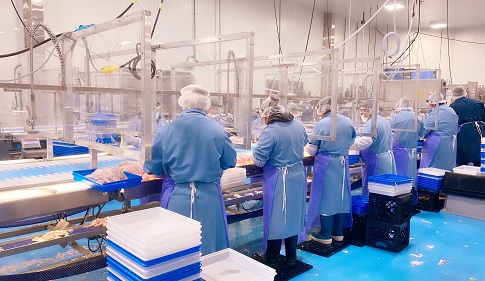 localization consultant at the US Agency for International Development (USAID), Hanoi. A company fast becoming Vietnam’s face of high-quality of garment manufacturing is Dony Garment. An international exporter of protective clothing and face masks, the company fabricates uniforms and garment products on order. During COVID-19, it shifted production to protective clothing and premium quality face masks. Today, the company donates 5 per cent of its income to social welfare just like its donation of 100,000 face masks to the US.
The 3-ply face mask developed through closed sterilization technology by Dony Garment can be reused. The mask is made from antimicrobial Cotton which helps it to fight the spread of the coronavirus besides protecting it against UV light. The anti-droplet face mask’s breathing resistance is human friendly. It is also eco-friendly, skin-friendly, and economical.
Dony Garments exports masks and other PPE products to six continents and countries like the US, Australia, and Europe. The company proves a good alternative for consumers to looking beyond China for PPEs and masks from China. The company books mega shipments for worldwide exports every day. Besides face masks, Dony Garments also excels in making personal protective equipment. Currently it makes protective overall and isolation gown for health workers across the world. PPEs are certified to prescribed standards. Apart from the PPEs and masks Dony Garment also designs uniforms for healthcare workers. The uniforms are made from high-quality materials and are available at reasonable rates. Dony Garment also customizes T-shirt designs at its factories. These T-shirts are made from 100 per cent cotton and are very cool, smooth and soft.
Teen spending at all time low as COVID-19 mutes consumer sentiment
 As per a CNBC report, money spending by teens on food, concerts and events has hit a two-decade low since the COVID-19 outbreak. Piper Sandler’s 40th biannual ‘Taking Stock with Teens’ report also says, this year, teen spending has dropped by 9 per cent year over year to $2,150.
The Piper Sandler report surveyed 9,800 consumers with an average age just under 16 from 48 states, with an average household income of $67,500. According to this report, a teen has spent only $507 on apparels per year since the outbreak. Females have been spending $160 more on clothes than males, the survey said.
Handbag spending reaches all-time low
Spending on handbags by teens too reached an all-time low to $87. In this category, LVMH’s Louis Vuitton surpassed Michael Kors as the top handbag brand. Teenagers spending on purses and clutch bags had peaked in 2006. However, popularity of this category has been fading since then.
In apparels, Nike retained top spot followed by American Eagle and Adidas. Athletic apparel maker Lululemon climbed upto the sixth position from its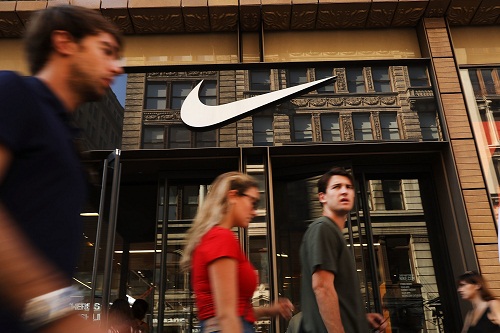 seventh position in the previous year. While fast-fashion chain H&M moved up the list, L Brand’s Victoria’s Secret dropped from its thirteenth position to No. 22 while Forever 21 also dropped on the list.
Secondhand clothes gain momentum
Demand for secondhand clothes gained momentum as around 46 per cent teenagers purchased secondhand clothes from resale platforms like Poshmark and The RealReal. Around 58 per cent teenagers also reported selling their clothes on a second-hand marketplace. Ranking on the thirteenth position, thrift/ consignment stores emerged as teens’ favorite brand or retailer during the fall. Teenagers also spent around 6 per cent less on footwear. On average, men spent about $50 more on shoes than females.
Amazon rules as consumers shun physical stores
E-commerce giant Amazon emerged as teens’ favorite website during the pandemic. Around 54 per cent teenagers named Amazon as their favorite shopping destination, up from 52 per cent a year earlier. Ninety per cent teenagers reported shopping online during the period.
Safety remained the main concern of shoppers as only 33 per cent of teens reported shopping at department stores and specialty retail stores. This led to many of these department store chains including J.C. Penney, Stage Stores and Neiman Marcus filing for bankruptcy protection during the pandemic.
According to the survey, men spent 21 per cent of their money on food, followed by video games and clothing. On the other hand, females spent a majority or almost 27 per cent of their money to clothing followed by food and personal care.
As the global health crisis has put either themselves or their parents out of work, 48 per cent of teenagers reported a pessimistic outlook for the economy compared to 32 per cent a year.
Levi Strauss posts $1.6 billion revenues
Levi Strauss, which belongs to the Zacks Retail - Apparel and Shoes industry, posted revenues of $1.06 billion for the quarter ended August 2020, surpassing the Zacks Consensus Estimate by 38.63 per cent. This compares to year-ago revenues of $1.45 billion. The company has topped consensus revenue estimates two times over the last four quarters.
Empirical research shows a strong correlation between near-term stock movements and trends in earnings estimate revisions. Investors can track such revisions by themselves or rely on a tried-and-tested rating tool like the Zacks Rank, which has an impressive track record of harnessing the power of earnings estimate revisions.
Ahead of this earnings release, the estimate revisions trend for Levi Strauss was mixed. While the magnitude and direction of estimate revisions could change following the company's just-released earnings report, the current status translates into a Zacks Rank #3 (Hold) for the stock.
Texworld New York to focus on regional buyers
The Texworld New York s being designed with a heightened focus on regional buyers from the tri-state area, which is currently exempt from New York’s quarantine requirements. Buyers are welcome from other locations for the January edition, but they will need to adhere to restrictions in place at the time of the show.
As a solution for mills that cannot travel to New York, Texworld is debuting a new Pop-Up Sourcing Showcase concept that will enable them to ship product for display at the Javits Center. This area of the show floor will be curated by New York-based trend agency The Doneger Group. Attendees will have guided access to on-site textile experts as they explore the fabrics. All of the products will include QR codes, which buyers can scan to easily connect with mills via the show’s virtual platform. Using personal devices or show-provided tablets and computers, attendees can chat live with suppliers in the networking lounge or set up an online meeting.
Building on the successful digital Texworld USA event held in July, the January edition of Texworld NYC will also have a virtual platform for companies that cannot attend the physical show. Participants can take advantage of artificial intelligence-powered networking and chat via text or video with contacts.
The show will take a multichannel approach to its education platform, with some sessions held solely online or in person. Texworld’s core educational content, including the Lenzing Seminar Series, Textile Talks and the Texworld Trend, will also be recorded and accessible to the virtual audience.
Texworld NYC’s localization move is aimed at navigating Covid-era restrictions, but this also comes as companies are ramping up their domestic sourcing. In a McKinsey survey conducted with Sourcing Journal earlier this year, 46 percent of fashion sourcing executives said they expect the nearshoring trend to rise.
US issues Withhold Release order on cotton and apparel imports from XUAR
The US recently issued a Withhold Release Order on cotton and apparel imports from specific producers in the Xinjiang Uygur Autonomous Region (XUAR) which may escalate global trade tensions.
The US imported $7.35 billion of apparel products from China during January-July 2020, while China exported around 20 per cent of its overall apparel exports to the US in first quarter of this fiscal, said an India Ratings and Research report.
On the other hand, China depends on the US for raw cotton. China may retaliate by cutting down on cotton procurement from the US, leading to favourable supplies from Brazil and India, both of which are likely to have high inventories. While demand from the US could impact the overall cotton demand in China, the value-addition could gradually move out of China to other geographies.
Indian yarn companies’ dependence on China had reduced to about 20 per cent in the June quarter due to growing competition from Vietnam and Pakistan. India Ratings and Research believes Pakistan and Brazil have a pole position compared with India due to their preferential status. India’s cotton yarn exports declined 28 per cent y-o-y in FY20 to ₹19,600 crore due to a 53 per cent fall in demand from China.
Moreover, severing of ties by global retail brands such as H&M and Lacoste with China on account of labour issues, along with the ongoing US-China trade war, have benefited Indian ready-made garments exporters in the form of additional orders. The agency believes that the vacuum space created would be a positive for Indian garment exporters and help them tide over the impact of pandemic. Furthermore, the home textile segment has reported increased inquiries from the US for sourcing diversification.
Government extends RoSCTL scheme
The government has extended Rebate of State and Central Taxes and Levies (RoSCTL) scheme upto March 2021. The move will bring positive sentiments among garment and made-ups exporters, who were reeling under cash crunch, said analysts. The RoSCTL scheme has been the backbone of policy support for the industry and will surely restore not just the competitiveness of the industry, but also positive sentiments for achieving higher export targets. The scheme rebates embedded taxes including central excise duty on fuel used in transportation, embedded CGST paid on inputs, purchases from unregistered dealers, inputs for transport sector and embedded CGST and compensation cess on coal used in the production of electricity.
According to the government, the move will bring positive sentiments among garment and made-ups exporters, who were reeling under cash crunch, said analysts. This scheme has been the backbone of policy support for the industry and will surely restore not just the competitiveness of the industry, but also positive sentiments for achieving higher export targets.
Clean Clothes Campaign network urges brands to take workers’ responsibility
As per reports Clean Clothes Campaign network has started a campaign urging brands to take responsibility for their workers who make clothes and ensure that they are paid for their work. The Clean Clothes Campaign urged apparel brands and retailers to commit to a wage assurance: a public commitment to ensure that the workers in their supply chains are paid what they are owed and to enter into negotiations to establish a fund that will make sure workers can no longer be left jobless without their legally owed severance. It launched the Pay your Workers campaign which focuses on H&M, Primark, and Nike - three of the brands that most frequently appeared in reports from workers about worker rights violations during the pandemic
This campaign targets some of the wealthiest apparel supply chains in the world. These brands have made profits for decades on the basis of poverty wages and outsourced responsibility without contributing to any form of social protection in garment producing countries. The campaign aims to reclaim funds for the workers, by convincing brands to take responsibility for the people who enabled great profits through their underpaid labor.
Indonesia initiates safeguard probe of RMG import
Indonesia’s Safeguards Committee’s has launched a probe to ascertain how apparels from Bangladesh negatively affected exports to the Southeast Asian country. The committee initiated the investigation following an application from the Indonesia Textile Association.
The next round of negotiations is scheduled to be held in October 21-22. The two countries are scheduled to hold meeting on the rules of origin issue for the PTA. The latest development may affect negotiation process as well as Bangladesh’s export to the country if Indonesia finally imposes any safeguard duty after the investigation is completed.
Evaluating the application of the association, Indonesia in its notification said that there was sufficient evidence to justify the initiation of a safeguard investigation. The products that fall under the investigation include overcoats, suits, shirts, blouses, T-shirts, singlets and other vests, jerseys, pullovers, cardigans, babies’ garments and clothing accessories, other made up clothing or parts of garments, jackets, blazers, trousers and some other items.
Removal of export curbs to open global market for masks: AEPC
As pr A Sakthivel, Chairman, AEPC, the government's decision to remove export curbs on N-95 masks will open up global markets for Indian players engaged in the sector. It will increase India's exports by Rs 1,000 crore annually. The country will be able to bag export orders worth crore of rupees. Annual export of all PPE kits including N-95 masks could reach around Rs 3,000 crore to Rs 4,000 crore.
The government removed export curbs on N-95 masks, which are in demand due to COVID-19 pandemic, with a view to promoting outbound shipments of the product. This will open up the global market for all items under PPE which has a total global market of more than $60 billion over the next five years, Sakthivel said. He further added this will strengthen domestic PPE manufacturers to compete at the international level. The industry is producing more than 50 lakh N-95 and 2/3 ply masks on a daily basis.











