


FW
Focus on climate specific innovations to drive sustainability in denim
 One of the most polluting industries, denim has been closely watched for its adverse environmental impacts. This has led the industry to accelerate sustainability innovations and inspire the fashion industry towards a greener and cleaner future.
Over the years, denim industry has launched numerous innovations to reduce its reliance on virgin cotton, harmful chemicals and dyes, excessive water use, says a WWD report. Turkish denim mill Isko has fully traceable and holistically responsible denim products under its ‘Responsible Innovation’ approach. Its latest innovation is a fully responsible fabric initiative called R Two which emphasizes on denim fabrics made from recycled and reused materials. Like Isko, Lenzing has developed Tencel and Refibra fabrics, which are great alternatives to cotton. Similarly, Swedish pulp maker Re:newcell has developed Circulose fabric to minimize its environmental impact.
News ways to make denim
Along with sustainable fabrics, the denim industry needs to find cleaner ways to make jeans, believes Nicole Murray, Founder, N-ovative. The industry can reduce excess water usage in processes by scrutinizing fiber creation process. Innovations in chemicals and finishing can also help reduce environmental impact.
The denim industry has also been an innovator of many technologies. Technologies like Calik’s Washpro extends its denim’s life and then there are Jeanologia’s laser and eco-finishing technologies and a program called ‘Environmental Impact Number’ that helps laundries and garment finishers measure denim data. Denim pioneer Levi Strauss & Co’s industrial garment finishing methods also help the denim mill to reduce water usage at its laundries by as much as 93 per cent.
Much scope for improvement
Ebru Ozkucuk Guler, Senior Corporate Social Responsibility and Sustainability Executive, Isko believes, despite innovations, there is still a lot of scope for improvement across all stages, especially for brands and retailers. Guler advises all players to contribute to sustainable change for creating the most responsible and innovative product from farm to fabric.
At its launch in July 2019, The Jeans Redesign initiative had only 16 companies as members. Today, the figure has tripled to 53 players across the value chain, including heritage brands like Gap, fabric mills Advance Denim, and manufacturers including Saitex, signaling what Francois Souchet, Head, Make Fashion Circular, called “broader conversations on circular design”. The initiative aims to encourage denim players improve garment durability, material health, recyclability and traceability by adhering to strict wastewater guidelines from chemical management standard-setting body Zero Discharge Hazardous Chemicals.
The Make Fashion Circular initiative also demands third party verification from denim companies on data. These companies have to report on compliance to required standards on the Make Fashion Circular website. The initiative is yielding concrete results — with redesigned denim from Mud Jeans, Fairblue and Outland Denim being introduced in the market.
Innovations in design and durability
To reduce carbon emissions across the industry, denim experts are urging brands to design better denims, and consumers to wear them longer. Paul Dillinger, Vice President and Head-Global Product innovation, Levi Strauss & Co believes it is difficult for the industry to engineer these values into other products and sectors of the industry. To achieve this, the industry needs to strengthen its focus on issues like climate change and pollution.
Dhaka to seek duty free access for Bangladesh exports to US
Foreign Minister AK Abdul Momen said Dhaka will seek duty free access of Bangladeshi readymade garments (RMG) products to the US market for the next three years.
Through this move, Bangladesh will ensure recovery of the RMG sector from the financial fallout caused by the pandemic, added Momen. The minister further said he will also raise the Rohingya issue seeking stronger US support in commencing repatriation of the displaced Myanmar people from Bangladesh.
Dhaka will also urge the US to invest in infrastructure development in Bangladesh under its Indo-Pacific Strategy (IPS).
Momen will also raise the visa issue of potential Bangladeshi students as the US embassy in Dhaka yet to start issuing new student visas for Bangladeshi nationals due to COVID pandemic.
Bangladesh RMG exports to non-traditional markets decline
According to Export Promotion Bureau (EPB), Bangladesh’s RMG exports to tis non-traditional markets maintained negative growth during the first quarter (Q1) of the current fiscal year (FY).
According to industry people, Australia, Brazil, Chile, China, India, Japan, Korea, Mexico, Russia, South Africa and Turkey are the 11 prospective markets beyond the three traditional export destinations, namely, the USA, European Union and Canada.
Exports of both knit and woven items to the non-traditional destinations declined by 8.33 per cent to $ 1.24 billion in Q1 as compared to $1.36 billion in the corresponding period of the last fiscal
Exports to Brazil, Chile, China, India, Japan and Mexico declined by 26.88 per cent, 18.37 per cent, 34.35 per cent, 43.50 per cent, 10.93 per cent and 25.72 per cent respectively in the July-September period.
Exports to Australia, Korea, Russia, South Africa and Turkey, however, increased by 8.28 per cent, 9.22 per cent, 41.69 per cent, 4.19 per cent and 47.74 per cent respectively during the period. The RMG shipments to the US witnessed a rise by 5.98 per cent to $ 1.58 billion during the Q1.
CAI increases India’s cotton crop estimate for 2019-20
The Cotton Association of India (CAI) has increased cotton crop estimate for 2019-20 to 360 bales of 170 kg each from its previous estimate of 354.50 lakh bales of 170 kg each. As per CAI estimates total cotton supply till end of cotton season i.e. up to September 30, 2020 was around 407.50 lakh bales of 170 kg each. This includes opening stock of 32 lakh bales of 170 kg each at the beginning of the cotton season on October 1, 2019, crop for the season estimated at 360 lakh bales of 170 kg each and imports estimated of 15.50 lakh bales of 170 kg each.
Imports are estimated to be lower than previous year’s estimates by 16.50 lakh bales. Domestic consumption for the entire crop year i.e. upto September 30, 2020 has been estimated at 250 lakh bales.
CAI has retained its export estimate for the season at the same level as estimated by it previously i.e. at 50 lakh bales of 170 kg each The carryover stock estimated at the end of the season is 107.50 lakh bales of 170 kg each.
Zimbabwe to accelerate cotton industry growth
The Zimbabwe government recently released its vision for the country’s cotton industry that aims to accelerate growth in the sector besides enhancing sustainability. In context of the recently launched Agriculture and Food Systems Transformation Strategy, the vision emphasizes on climate proofing the cotton presidential input scheme to insulate the sector from the devastating effects of climate change.
Anxious Masuka, Minster for Land, Agriculture, Water and Rural Resettlement says, the industry should invent new ways to shield cotton crops from the vagaries of weather. The dominance of Cottco should be reduced and there should be an enhanced capacitation of farmers through irrigation development, tractor and implement and equipment provision through lease, rentals and outright purchase by farmers. Merchants should provide robust extension support systems and decentralize inputs collection and buying points for easy accessibility.
Involvement of farmers in cotton value addition and beneficiation should be increased so that they can get a share of by product, says Masuka. According to him, cotton production remains a key source of livelihood for many families and growing the sector will help the country achieve upper middle income status by 2030.
Fashion Pact announces seven new time-bound targets
Launched in August last year, the Fashion Pact has announced seven quantifiable, time-bound targets that include initiatives to reduce emissions, plastic packaging and the impact of raw materials within the fashion industry. The pact has also placed fresh emphasis on the importance of protecting biodiversity. Signatories have committed to source 25 per cent of their materials from lower-impact sources and eliminate plastic that are defined as problematic or unnecessary in packaging by 2025.
These new targets have been announced at a time when there is an accelerating urgency in the fashion industry. As per a report by the Global Fashion Agenda and McKinsey & Company, the sector is under mounting pressure from consumers and regulators to become more sustainable, in recognition of an increasingly tight time frame to meet international climate goals.
The Fashion Pact has attracted an unusually large cross-section of companies, including luxury brands like Chanel, who rarely participate in such industry initiatives. It is gaining broad participation from French brands due to its government’s encouragement and a growing realization that no one company can tackle these challenges alone, says Bruno Pavlovsky, Fashion President, Chanel.
Woolmark Company waives license fee for certification program
To help supply chain partners gain access to the Woolmark Certification Progam, the Woolmark Company has reduced annual license fee by 50 per cent. According to the company, the scheme allows manufacturers of high quality wool products to leverage the reputation and authority of the Woolmark symbol and thereby build and strengthen supply chain integrity and consumer confidence. The fee waiver is valid until June 2021. The company has also waived the application fee for new licensees who pay for their own product testing using an Authorized Laboratory.
According to Stuart McCullough, Managing Director, the revised program will allow licensees to navigate industry, consumer and economic challenges in the current climate and promote their wool and wool-rich products to our extensive global network.
Citing Nielsen data, the company said, around 85 per cent of survey participants agreed the Woolmark symbol ensures quality and 68 per cent of them believed clothes with the Woolmark symbol are worth paying for.
Saudi Arabia bans fashion made in Turkey
In latest development of escalating tensions between Saudi Arabia and Turkey, an informal ban on Turkish products has hit the international fashion scene. As per a Financial Times report, Spanish fashion brand Mango has banned all imports of made in Turkey products. The brand is one of several European and US fashion retailers that have manufacturing sites in Turkey, including Sweden’s H&M and Britain’s Marks & Spencer, among others.
Mustafa Gultepe, Head-Istanbul Apparel Exporters’ Association (IHKIB), said, all Turkish exporters to Saudi Arabia are facing long delays at Saudi customs portal. Hence, eight Turkish business groups, including textile exporters and contractors, have urged Saudi Arabia to improve trade relations between the two rivals.
Last year, Riyadh had blocked the entrance of dozens of Turkish trucks carrying textile products and chemicals into the country while state-run media and leading business figures have advocated for boycotts of tourism and imports against Ankara.
Earlier this month Ajlan al-Ajlan, Head, Chamber of Commerce, urged the government to set up an official boycott in response to the continued hostility of the Turkish government against Saudi Arabia.
Columbia Sportswear bans alpaca wool from future collections
Encouraged by the campaigning efforts of animal rights organization PETA, outdoor apparel brand Columbia Sportswear has banned the use of alpaca wool in its future collections. The ban covers Columbia’s entire portfolio, and will compel its group brands PrAna, Mountain Hardwear and Sorel to rethink their approach towards alpaca wool and adopt alternative materials. This will help it to prevent vulnerable alpacas from being abused and shorn bloody for their fleece, says Tracy Reiman, Executive Vice President, PETA.
PETA routinely purchases minimum shares in fashion industry firms as to gain a seat at their annual meetings. The organization is able to influence leading executives to follow the growing list of companies choosing to shun animal-based product of all kinds.
Looking ahead though, PETA is asking kind consumers to do their part to end this cruelty by leaving alpaca items on the rack.
Fast fashion dies a slow death as consumers focus on ethical shopping
 Alessandro Bru, Politecnico Di Milano School of Management believes, COVID-19 has had a big impact on the global retail industry. The pandemic has not only sparked conversations on shoppers’ consumption patterns but also made them realize their responsibility towards ensuring a sustainable future.
Growing preference for durable, sustainable clothes
The pandemic has compelled consumers to review their buying habits and choose products carefully. It has made Generation Z consumers aware of ethical issues surrounding fashion, including sustainability. And they are threatening the existence of fast fashion by seeking apparels that are more durable, sustainable, and ethically produced. The fast fashion industry is also suffering due to lack of consumers from low to middle income families. Hit by loss of jobs and incomes, these consumers are shifting their focus from clothes and accessories to daily essentials.
No effect on consumption of wealthy consumers
On the contrary, consumption patterns of wealthy consumers remained largely unaffected. Hence, luxury retailers are not likely to suffer the same way as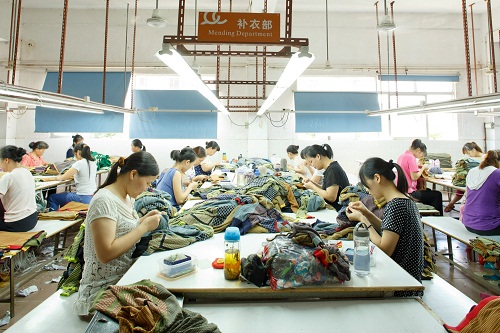 fast fashion retailers. The luxury industry might survive the pandemic as it offers a variety of products including apparel, footwear and accessories. Besides supercars and yachts, it also offers watches and jewelry that are often passed down from generation to generation.
People have been consuming luxury products including champagne, chocolates, home décor and home wear items throughout the lockdown. Inspired by social media platforms, they have been dressing up in luxury loungewear despite having nowhere to go.
Process over product
Earlier too, the fast fashion industry showed slowdown signs multiple times. However, this year, the pandemic has accelerated the demise of fast fashion by hitting lower-income group hardest. Low-income consumers are prioritizing spending on essentials, eroding the market for fast fashion retailers.
Consumers are also focusing on the entire process of garment manufacturing rather than just the end product. This is helping them make informed decisions about apparel purchases. As millennials focus shifts to ethical shopping, fast fashion continues to suffer.











