


FW
China warns mills against buying Australian cotton
As the latest sign of worsening trade relations between Australia and China, Chinese cotton mills have been ordered to stop buying Australian cotton. China is the biggest buyer of Australian cotton and the trade worth was worth about A$900 million ($637.4 million) during the 2018/19 crop year.
Australia’s relationship with China soured after Canberra accused China of meddling in its domestic affairs. Relations worsened when Prime Minister Scott Morrison called for an independent inquiry into the origins of the COVID-19 pandemic, which originated in the Chinese city of Wuhan.
China warned its millers of being hit with a 40 per cent tariff if they continue to buy from Australia. The suspension of cotton purchases comes just days after Canberra scrambled to confirm reports that China ordered the suspension of coal purchases from Australia.
IAF to host pre-convention event at 36th World Fashion Convention
International Apparel Federation (IAF) will host a digital ‘Pre-convention Event’ at its 36th World Fashion Convention from November 10- 11, 2020. The Fashion Convention is expected to take place from June 7 to 9, 2021 in Antwerp. The digital pre-convention event will consist of two components. On November 10, IAF will present five- minute movie clips by seven prominent IAF members. Speakers will make visionary statements on the industry’s future. IAF will also organize four different online sessions, each tackling a major issue facing the global apparel industry
The flagship session will be an IAF-MOTIF webinar titled ‘Shared Risk and Reward in the Fashion Supply Chain’. The three speakers at this session are: John Thorbeck, CEO, Chainge Capital; Liz Simon, Chief Sustainable Transformation Officer, Fashion3, and Anne Patricia Sutanto, Vice President, PT Pan Brothers. The webinar will answer the question of whether the balancing of risk ánd reward is one of the keys to unlocking a better overall performance of the supply chain.
The session will see IAF connecting members and relations to the Fashion Technology Alliance project, a major global project bringing together educators, large and small brands and fashion technology providers. The session will shed light on some of the new job descriptions and requirements required by the apparel industry because of the 3D digital design.
The third session will discuss industry standards for digitization of product design and development, particularly the communication on digital fabric characteristics. The fourth and the final session will tackle the issues of audit and standard fatigue.
Coats’ H1 FY20 revenues decline to $536 million
Revenues of Coats Group, decreased to $536 million during the first half (H1) of FY20 that ended on June 30, 2020 compared to $705 million in the same period previous year. The company’s operating profit for the six months period slipped to $34 million. Its Asia sales fell by 27 per cent to $283 million due to severe lockdown measures in key A&F markets and some offset from Vietnam.
During the period, Coats Americas sales dropped by 6 per cent to $149 million while sales in EMEA slipped by 24 per cent to $104 million ($137 million) with Italy (zips) impacted by lockdown.
Sales in apparel and footwear segment sales plunged by 29 per cent to $372 million ($523 million). However, sales of performance materials grew marginally 2 per cent to $164 million ($160 million). The company accelerated investments in digital and sustainability initiatives which have resulted in huge commercial gains.
Coats Group is the world's largest manufacturer and distributor of sewing thread and supplies. It is also the second-largest manufacturer of zips and fasteners, after YKK. The company is listed on the London Stock Exchange and is a constituent of the FTSE 250 Index.
Wall Street Journal ranks Gilden Activewear 32nd on sustainability score
Gildan Activewear has been ranked 32nd in The Wall Street Journal’s new ranking of the Top 100 Most Sustainably Managed Companies in the world. The company has also bagged the 6th spot among the top 10 companies in the world in the business model/innovation sub-ranking. These rankings highlight the effectiveness of the company’s vertically-integrated operating model and supply chain from a sustainability standpoint. Gildan was the second among three apparel companies to be included in the top 100 ranking and was also the only North American apparel company.
Based on the review of 500 publicly traded companies, the Wall Street Journal’s inaugural ranking of the World’s Most Sustainably Managed Companies evaluated companies for their disclosure standards for data showing what programs, policies and performance metrics they have in place for several key sustainability dimensions, including environment, human capital, social capital, and business model/innovation.
The scores take a broad view of sustainability that assesses a company’s ability to create value over the long term, using criteria considered most financially relevant as defined by the Sustainability Accounting Standards Board (SASB), a nonprofit organization that works with companies and investors to create a framework for reporting on sustainability.
Second digital Canton Fair kicks off in Guangdong
The second digital China Import and Export Fair, popularly known as Canton Fair, kicked off in South China's Guangdong province. This is the 128th edition of the 10-day event that has attracted around 26,000 domestic and overseas enterprises. It features over 2.35 million products spanning 50 exhibition areas in 16 categories.
The fair is expected to attract buyers from more than 210 countries and regions. It was initiated in 1957 and is an important barometer of China's foreign trade. The Chinese government's decision to hold the Canton Fair online under such unique circumstances is conducive to the safe and smooth operation of the international industrial and supply chains and stable foreign trade and investment, said Ren Hongbin, assistant minister of Commerce.
The fair can help safeguard the multilateral trading system and promote economic globalization, Hongbin added.
Bestsellers launches project to reduce online returns
Bestseller has managed to reverse a rising tide of online returns by launching a project at its e-commerce office in Amsterdam. The Danish fashion retail giant brought together 10 e-commerce specialists from various departments to investigate returns and attempt to reduce their impact on the firm in a project dubbed Return Revolution.
The project evoked 130 responses to the question with 100 of them being followed up. The initiatives they recommended included data and financial analysis, as well as changes on its brands’ websites and in the way it operates. One of the most significant response was to extend the firm’s online return window from 30 to 100 days. The brand has begun the project in Fulfilment Centre where it adds a tag to high value, high return items. The aim is to not only to lower the return rate for these items, but also to deter customers from wearing products and then returning them.
Besides minimizing the volume of returns, the project also aims to minimize their impact by investing in new environmentally-friendly cleaning equipment at its Return Centre in Poland to remove small stains and odor. The project has now evolved into a new e-commerce Customer Team led by Burke with Bertholdson responsible for ongoing innovation in her role as Operational Excellence Specialist.
WRAP initiates investigation on Page Industries
A top apparel industry watchdog, Worldwide Responsible Accredited Production (WRAP) has launched an investigation into Jockey International's Indian partner Page Industries following allegations of human rights abuses at one of its factories. The investigation follows Norway's $1 trillion sovereign wealth fund dropping Page from its investment portfolio due to concerns of human rights violations at "Unit-III" in Bengaluru.
Page has denied these allegations and called them outrageous. However, Seth Lennon, spokesperson, WRAP, said, such violations could normally result in a factory losing certification. The Page site under investigation is certified until November 15.
Bengaluru-headquartered Page is the exclusive licensee for Jockey wear in India and six other countries. The company also makes apparel for Britain-based swimwear maker Speedo, but in a smaller capacity. Its unit-III factory in Bengaluru employs about 1,000 workers. Page, which reported roughly $400 million in revenue in the fiscal year ended March 31, did not disclose what proportion of sales came from Unit-III. It has engaged with the Norwegian wealth fund's Council on Ethics - the body which recommended the fund exclude Page from its portfolio after its investigation.
Low labor costs, favorable policies make Cambodia an attractive investment destination
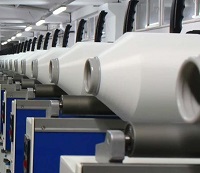 A fast developing nation, Cambodia has not received any orders for garments since May this year. And as a CCF Group report suggests, around 256 garment, footwear and travel goods factories in the country have suspended operations, affecting over 130,000 workers. A report by the National Bank of Cambodia highlights, garment exports by the country have diminished by over 5 per cent to approximately $3.78 billion in the first half of this year. Imports too have declined by 5 per cent due to a 15 per cent drop in import of garment raw materials. Textile and garment raw materials have declined due to interrupted supply from China, which was affected by tough COVID-19 restrictions in early 2020.
GMAC stalls minimum wage discussions
As per the country’s labor ministry, garment factories have not received any orders since May this year. Around 256 garment, footwear and travel goods factories in the country have suspended operations while 169 tourism companies too have temporarily closed their manufacturing units, laying off around 16,891 workers. The Cambodian government has decided to pay $70 a month to each unemployed worker.
The Garment Manufacturers Association in Cambodia (GMAC) has requested the labor ministry to stall minimum wage negotiations in textile, garment, and footwear sector for 2021 while Better Factories Cambodia (BFC) has started a hotline number to protect workers in the garment, footwear, travel goods and bag industries against the spread of COVID-19.
The Cambodian government has also permitted GMAC to produce all kinds of face masks, medical equipment and protective clothing for domestic consumption and export them under the threat of rapid spread of COVID-19.
EBA suspension to cause further unemployment
Meanwhile GMAC and the Cambodia Footwear Association (CFA) have requested the EU to postpone partial withdrawal of the Everything but Arms agreement (EBA). EU had earlier suspended Cambodia’s eligibility for EBA due to gross violations of human rights in the country. On June 2, the GMAC, CFA and with European Chamber of Commerce (Eurochambers) sent a letter to EU requesting it to postpone the scheduled August 12 implementation of the partial suspension of EBA benefits for Cambodia.
GMAC argues COVID-19 has already devastated conditions of Cambodian workers. Partial EBA would serve as a double blow to the countries textile and garment sector and prevent further employment in the sectors.
New FTAs to boost exports and investments
Cambodia is finalizing Free Trade Agreements (FTAs) with China and South Korea. These FTAs are expected to boost exports and raw material investments and boost bilateral trade $10 billion by 2023. And the new investment law will help Cambodia attract new investors and sign more agreements with South Korea, Japan, UK, India, Mongolia, the Eurasian Economic Union (EAEU) and the US.
As per a Fitch Solutions report, China reduction of apparel manufacturing operations has encouraged Cambodia to expand its manufacturing services to North America and Euro. Low labor costs and favorable investment policies along with full foreign equity ownership in textiles is further supporting this shift. The country not only imports its raw materials from China but also uses its transport facilities.
EU to approve LVMH’s acquisition of Tiffany
EU is likely to approve LVMH’s acquisition of US jeweller Tiffany. The EU decision comes amid a legal battle between LVMH and Tiffany, with the latter suing the Louis Vuitton owner in a Delaware court, alleging that the French company has deliberately been stalling the completion of the deal.
Tiffany has alleged that LVMH has improperly tried to renegotiate the deal, which was agreed in November last year before the COVID-19 pandemic emerged and hit countries and companies worldwide.
LVMH has countersued Tiffany, alleging that the U.S. company has been mismanaged during the COVID-19 pandemic.
The European Commission, which is scheduled to decide on the deal by October 26, declined to comment. LVMH and Tiffany did not immediately respond to a request for comment.
The two companies had several overlaps in some areas but these are not serious enough to trigger competition concerns, the people said. The US Committee on Foreign Investment and antitrust enforcers in Australia, Canada, China and South Korea have already given the green light to the deal.
US home textile imports surge 20.7 per cent in Q3
There was a 20.7 percent surge in US’ imports of home textiles in the third quarter, including a 361 per cent surge in shipments linked to Welspun, says Panjiva, the supply-chain research unit of S&P Global Market Intelligence. The country’s imports of winter apparel fell by 21.1 per cent during the quarter, which included a 24.7 per cent drop in shipments linked to Sumec Corp, a Chinese importer of bulk commodities including apparel and textiles.
Panjiva’s data shows, total US imports of apparel, footwear and textiles imports rose by 0.8 percent year-over-year in September 2020. However, imports of apparel and footwear fell by 1.6 percent and 17.0 percent year-over-year, respectively, while textile imports spiked by 18.9 percent.
COVID-19 has driven many shoppers to invest in athleisure apparels instead of work-appropriate attire. This can be corroborated by a rise in shipments of athleisure apparel, while imports of suits and shirts dropped 17.6 percent. Even spending on kids’ apparel for kids has slowed as parents faced uncertainties over what the school year would bring.











