


FW
Resume cotton supply immediately, urges President, TEA
Raja M Shanmugham, President, Tirupur Exporters Association, has urged Tirupur textile units to resume cotton supply immediately as the mills have stopped supplying cotton yarn and are not taking up fresh orders. Shanmugham has written to all textile mills associations including SIMA, TASMA and ITF to advise their members to supply the yarn continuously to protect the Tirupur Knitwear Exports sector.
According to him, the mills’ decision to stop supply would impact garment units, largely affecting exports and stimulating job losses. It would also lead to foreign buyers cancelling orders and leaving the country. Shanmugham further said that the rise in yarn prices in the past two months has led to textile units incurring losses on already committed orders and the garment sector operating on wafer-thin margins.
Pakistan completed apparel orders worth $200 million since last IAF
As per the Pakistan Readymade Garments Manufacturers and Exporters Association (PRGMEA) Pakistan has completed over $200 million worth of apparel orders since the conclusion of 35th IAF (International Apparel Federation) Fashion Convention last year.
Sohail A Sheikh, Central Chairman, PRGMEA said, despite global lockdown, Pakistan has managed to compete apparel orders worth over $200 million and is currently negotiating with foreign buyers for more orders. Sheikh noted that the world-class event highlighted Pakistan’s true and soft picture, ensuring contact between Pakistani exporters and international textile chains. Abdul Razak Dawood, Prime Minister’s Adviser on Commerce also hailed the efforts of PRGMEA as Germany’s fashion brand Hugo Boss placed its first order of sportswear to Pakistan. He congratulated Jaz Khokhar, Chief Organizer for holding the IAF Convention to Pakistan.
Textile Ministry to restructure operations for PLI scheme launch
At the ASSOCHAM Foundation Week 2020, Smriti Irani, Union Ministry of Textiles, informed, the ministry aims to restructure its operations to launch the production linked incentive (PLI) scheme for technical textiles and manmade fibre (MMF) segment. Irani said, the union government has ensured technological aid for the MSP operations and economic benefits for those who participate in these operations. She also urged the industry to conjoin its efforts with the farming community and increase the production of ELS cotton from four lakh bales to 50 lakh bales. In the first two months of this current marketing year starting October 01, 2020, Central government purchased cotton worth Rs 14,654 crore from 9.63 farmers, reports Financial Express. The government now plans to launch a Rs 10,000-crore production linked incentive (PLI) scheme for man-made textiles. India’s leverage to the use of technology in agriculture and its plans to digitize transactions offers it a huge opportunity to increase cotton production from the current 4-5 lakh bales to 50 lakh bales a year.
Niranjan Hiranandani, President, ASSOCHAM assured industry’s full support to the government’s aim to become an Aatmanirbhar Bharat and $5 trillion economy. Dipali Goenka, CEO and Joint Managing Director, Welspun India urged the industry to focus on MMF and technical textiles while Priya Agarwal Hebbar, Director, Vedanta called for support to the underprivileged. T Rajkumar, Chairman, Confederation of Indian Textile Industry (CITI) hailed the launch of first-ever cotton brand ‘Kasturi’ that would help Indian cotton stakeholders get good price realization for their cotton products.
Anti-dumping duty on Caprolactum raises nylon filament yarn prices
The imposition of anti-dumping duty on Caprolactum has led to rise in prices of nylon filament yarn by Rs 50 per kg in the local market. As per a report, Gujarat State Fertiliser Corporation (GSFC) is the sole producer of caprolatum in India and supplies to many domestic spinners producing nylon textile grade chips. These manufacturers, in turn, produce nylon textile yarn.
Many nylon spinners near Surat either buy caprolactum from the GSFC to produce nylon chips or import these chips from China and Taiwan. Recently, due to shortage of caprolactum and hampering of chip imports from Taiwan led to a major shutdown for these spinners, says Vinay Agarwal, a nylon yarn manufacturer
Even the GSFC cut its capro supplies by 25 per cent. Additionally, the prices of container shipping charges skyrocketed almost by eight times due to shortage of vessels and containers.
Pakistan textile and clothing exports grow over four per cent from July-Nov
Data released by the Pakistan Bureau of Statistics shows, Pakistan’s textile and clothing (T&C) exports grew 4.88 per cent year-on-year to $6.04 billion between July and November FY21. The report states, exports grew 9.27 per cent in November while they grew by 6.18per cent in October and 11.03 per cent in September. In the first month of the current fiscal year, exports grew 14.4 per cent year-on-year basis. The rebound is a result of a series of incentives launched by the government to support exporters.
Pakistan’s readymade garment exports grew 4.36per cent though the quantity declined 44.64 per cent during the July to November period. Knitwear exports increased 14.34 per cent in value and 32.35 per cent in quantity while bedwear exports increased 12.28per cent in value and dipped by 7.95 per cent in quantity. Towel exports increased 14.24 per cent in value and 3.79 per cent in quantity, whereas cotton cloth exports dipped 8.73 per cent and 31.78 per cent in quantity.
Among primary commodities, cotton yarn exports plunged 37.34 per cent, yarn other than cotton 16.69 per cent, export of made-up articles — excluding towels — increased 15.53 per cent and tents, canvas and tarpaulin increased by a massive 58.05 per cent during the months under review. Pakistan’s textile machinery imports dropped 6.07 per cent during the first five months of current fiscal year while its import of raw cotton, synthetic and artificial silk yarn increased 60.36 per cent.
VTT collaborates with Aalto University to examine dyeing, color removal methods
Finland’s textile research and development institute VTT has collaborated with the Aalto University to examine the compatibility of different dyeing methods and color removal. The study involves using different methods to dye cotton materials and then decolorizing the textiles. The dye and the dyeing method used by these two institutes proved to be decisive for color removal, meaning it is only possible to effectively reuse waste textile if information is available on the dyeing methods used. They have also published a paper on their study, titled “Color Management in Circular Economy: Decolorization of cotton waste” which has won the Paper Award in the 2020 Emerald Literati Awards.
The paper notes on an industrial scale, dyeing and decolorizing textile fibers have a high environmental impact. The process consumes chemicals, energy and water, and generates wastewater. During this process, the fibers can also be purified from other harmful chemicals, avoiding their transfer to recycled fiber products. All this opens up new opportunities for reuse, says Marjo Maattanen, Principal Scientist, VTT.
On the other hand, a recycled look is desirable feature for products made from waste textile. The process does not need to separate textiles dyed with different methods and remove the dye, the paper noted. It can identify and collect separately the textiles dyed with a particular method, it added. Professor Kirsi Niinimäki said, using textile waste requires information on its fibers, dyes and dyeing methods, and chemicals. This information needs to be collected at the manufacturing stage and stored alongside the textile fiber until it reaches the end product, he added.
Pakistan’s cotton production declines by 2.8 million bales
As per a report by Pakistan Cotton Ginners Association, Pakistan’s cotton production declined by 2.8 million bales till December 15. The country produced 5 million bales during the first 15 days of this month which is 35.67 per cent less as compared to more than 7 million bales produced till December 15 last year. The purchase of cotton bales by local textile mills’ declined by 35.06 per cent to 4.1 million bales during this period. The ginners had the stock of more than 800,000 bales which is 35.06 percent less as compared to the last year stock of more than 1.2 million bales.
Punjab produced 2.9 million cotton bales during this period which is 1.4 million bales less as compared to the last year’s production of 4.4 million bales. In Sindh 2.8 million bales were produced which is 1.3 million bales less than the last years production.
Naseem Usman, Chairman, Karachi Cotton Brokers Forum, said as this year Pakistan's textile sector is running on full capacity, demand for cotton may reach more than 10 million bales. He estimated Pakistan to produce 6 million bales and import 7 million bales worth $6 billion to fulfill the demands of the local industry.
Sustainable fashion to assume a new shape in 2021
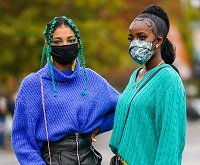 Experts hoped the pandemic would rebuild fashion into a more impartial and ethical industry. However, their vision failed as retailers refused to honor commitments as global shutdown tightened economies. As per a Fashionata report, billions of dollars vanished from the supply chain within a few days. Secondhand clothing market faced increased COVID-19 risk as crowds flocked and the government failed to provide any support. Labor abuses became rampant with Californian laborers being exposed to COVID-19 in factories and denied legal protection against wage theft. Sustainable brands like Everlane and Reformation were criticized for racism and union-busting.
However, advocates didn't take all this lying down. They launched the #PayUp campaign to pressurize retailers to pay for their cancelled orders. Employees helped expose racism in their companies while workers continued to push for new legislation to protect their wages.
Consumers opt for local products, upcycling
The pandemic altered shopping behavior with consumers tightening their shopping budgets. There has been a sharp decline in consumer spending leading to the shutdown of many retailers. Also, consumers have been shopping for more local products, which help reduce carbon emissions from shipping. Brands are rolling out sustainability initiatives like upcycling irrespective of cost additions. Once abandoned as impractical, upcycling became a new way of functioning for brands like Coach, Miu Miu and Maison Margelia who started incorporating vintage or overstock fabrics into their designs. Though brands will continue to create new fabrics, their fascination for upcycled fabrics will not disappear completely. Even bigger brands may launch upcyled collections in future.
New ways of showcasing collections
As per the Guardian, half of global aviation emissions are caused by 1 per cent people who, on average, take three long-haul flights a year or one short-haul flight per month. Fashion professions are known to attend a couple of international fashion weeks a year along with a few press trips and Instagrammable vacations. Though the pandemic has currently, halted air-travel, it is ultimately bound to resume. The crisis has forced the industry to discover new ways to present collections or shoot editorials that don’t require them to fly frequently. Even conferences are being arranged on Zoom while collections are being showcased through mini video films. Designers are also using virtual reality to create visual experiences of their clothes.
Fashion to get inclusive in 2021
The US government plans to promote sustainable fashion by launching inclusive collections by Blacks, Browns and other indigenous people. Sustainable fashion will definitely not go away. However, it may change its shape with the industry aligning with its environmental limits in 2021.
MMI Textiles to open 30,000 sq ft facility in North Carolina
Global diversified supplier of industrial and custom fabrics and textile components with military, tactical, medical, commercial and apparel expertise, MMI Textiles Inc plans to open 30,000-sq-ft production facility in North Carolina.
The new facility in Lenoir, NC will be focused on manufacturing and printing narrow fabrics, including a full line of mil-spec webbing and binding tape products. The main driver behind the new operation is MMI’s CTEdge® Printed Narrow Fabrics that use patented technology to give the border of webbing and binding tape a more concealed edge, because it is woven with different color threads that allow it to blend into the materials behind it. This product line has seen momentous growth over the last few years with sales on a global scale and multiple international distributors.
MMI will hire new staff and acquire new equipment in Lenoir to ensure better control of the manufacturing process for this line. The new facility will house both MMI Textiles’ new manufacturing facility and Mikan’s print facility under one roof. Mikan is one of the country’s most respected and innovative leaders in the textile printing industry.
The new MMI Textiles manufacturing and print facility will be integrated under one roof to ensure efficiencies and consistencies that are better aligned with the MMI Textile brand promise of unmatched service and innovation. All sales and customer service transactions will continue to be handled through existing channels.
Milan Fashion Week to feature 37 brands
Scheduled on January 15-19, the Milan Fashion Week will feature 37 brands, reports Fashion Network.
Of these, five labels will stage genuine physical catwalk shows, and seven new names - presenting their menswear (and womenswear too for some) collections for the Fall/Winter 2021-22 will showcase their collections digitally
Dolce & Gabbana, Fendi and Etro will stage physical shows. K-Way and Korean label Solid Homme by designer Woo Young Mi, both showing for the first time in Milan, are the other two names on the physical show list.
The other debut labels on the Milanese calendar are Italy-based Moldovan designer Dina Leu, who won the menswear prize at this year’s Who’s On Next competition; emerging label Vaderetro, created in 2019 by designer duo Hanna Boyer and Antonio D'Andrea; Dalpaos, by talented emerging designer Nicola D’Alpaos; New Delhi-based Indian designer and entrepreneur Dhruv Kapoor; and Tokyo James, the label by Nigerian-born British designer Ineyie Tokyo James.
All the top Italian fashion names are of course on the calendar, like Ermenegildo Zegna, which will stage the fashion week's opening event on Friday January 15, followed by Les Hommes. Prada, Tod’s and MSGM will follow suit on Sunday January 17. Some labels are mulling whether to take part in the January fashion week or in the February one, presenting their men’s and women’s collections together.
As in July, the Italian Fashion Chamber (CNMI) will deploy a website dedicated to the event with plenty of content. Besides featuring the official calendar and the labels’ video presentations, the site will also give access to pages with various conferences and interviews. Each participating label will also have its own digital showroom on the site.











