


FW
Indian denim mills incorporate Tencel based fibers in collections
Denim mills across India are incorporating Tencel based fibers in their collections. As noted during the latest Carved in Blue seminar, KG Fabriks is using Tencel Lyocell from Lenzing in its production of sustainable denims. The company is also developing Tencel™ Lyocell-blended denims with linen and hemp to be more natural and more sustainable.
With its eco-friendly concepts, in water usage, green energy, dyes and chemical usage and raw material conservation, KG Fabriks is known for its less chemical usage and carbon footprints. Its denim fabrics used in the garments have less EIM scores. Likewise, Nandan Denim uses Tencel™ Lyocell used in its lightweight denim fabrics. The company has been selling cotton/TENCEL™ Lyocell/spandex denim for the last one year. It has also developed samples with warp cotton/Tencel™ Lyocell blend.
JC Penney owners search for a new CEO as Jill Soltan quits
New owners of American department stores giant JC Penney Co, Simon Property Group and Brookfield Asset Management, along with strategic partner Authentic Brands Group, have begun to search for a new chief executive officer to replace Jill Soltau. Soltau, who joined the retailer around two years ago, and will leave the company now. The owners will seek to identify a leader that is focused on modern retail, the consumer experience, and the goal of creating a sustainable and enduring JC Penney.
With a successful track record of turning around retailers and brands and restoring them to profitability, JC Penney’s new ownership group will establish a temporary office of the CEO to include key member of the current leadership team.
Stanley Shashoua, Simon Property’s Chief Investment Officer, will be appointed interim CEO from January 1. J. C. Penney Company is an American department store chain with 840 locations in 49 US states and Puerto Rico. In addition to selling conventional merchandise, JCPenney offers large Fine Jewelry departments, The Salon by InStyle, and Sephora inside JCPenney.
H&M axes 100 jobs in Bangladesh
One of the largest global apparel brands, H&M has axed more than 100 jobs from Bangladesh production office to cope with the rapid changes in the retail industry amid the COVID-19 pandemic. The Swedish retailer is gradually withdrawing its businesses from tier three or silver category factories and shifting towards platinum-and gold-rated ones. The group is developing its organization to become even more efficient, fast moving and agile, said Ulrika Isaksson, Head-Communications, H&M Group.
H&M has approximately 650 employees at its production office in Bangladesh. These employees will be the group's main priority in this process, and that they will fulfill their obligations according to local labour law requirements. The retailer is and will be shifting the orders to local big platinum-and gold-rated factories as its units received work orders for more than their capacity during the pandemic.
The big factories will grab a larger share of the orders withdrawn from the H&M's silver categorized units and they might shift to other countries, especially China.
Government prepares national action plan for toys industry
The government has prepared a national action plan for the country's toys industry in collaboration with 14 central ministries involving need-based interventions for overall development of the sector in 13 identified handicrafts toy clusters.
As a part of the initiative to promote the domestic toy industry, the government also plans to organize a National Toy Fair between February 27 and March 3, 2021 It will also set up a Mega Integrated Textile Region and Apparel (MITRA) Park, in over 1,000 acre with state-of-the-art infrastructure, common utilities and R&D lab.
So far, the government has sanctioned 59 textile parks under the scheme for Integrated Textile Parks, out of which 22 have been completed. The textile ministry is also developing an e-commerce platform through Digital India Corporation, ministry of electronics and information technology, to provide direct marketing platform to the handicraft artisans. In the first phase, artisans/weavers from 205 handicrafts/handlooms clusters are being selected throughout the country for uploading the handicrafts/handlooms product on portal.
International brands source garments and home textiles from India
There is huge demand amongst international brands and retailers to source their garment and home textiles requirements from India. Indian exporters have 25 per cent more orders than the capacity available, says M Nachimuthu, President, Karur Textile Exporters' Association. These are orders that are diverted from China, he adds.
Garment orders coming in for the winter season, not a traditional area for Tiruppur garment exporters. Winter garments are mostly made of blends and there is a huge demand this year for these products, adds Raja M. Shanmugham, President, Tiruppur Exporters' Association.
Many international brands are now looking at more suppliers and larger volumes. They are looking for manufacturers, giving samples, and estimating whether the Indian exporters can meet their requirements.
The demand is high from buyers in the US and the European Union. And they are looking at a wider range of products, some of which are new to Indian garment exporters. With huge demand, investments are also taking place, mostly for expansion of existing capacities. The current trend is expected to continue at least for six more months.
RILA warns against US tariffs on Vietnam goods
Blake Harden, Vice President, Retail Industry Leaders Association (RILA), is concerned the Trump administration may impose punitive tariffs on Vietnam as one of its last actions before its influence expires on January 20. As per a Sourcing Journal report, the Trump administration and USTR imposed tariffs against China under Section 301 violations and have threatened to do the same against Vietnam.
American businesses and families have acquired over $72 billion in additional tariffs against China, says Harden. These tariffs have resulted in less money in the pockets of American families, a slowdown in US manufacturing, and decreased competitiveness for American businesses vis-à-vis their European and Asian counterparts. In addition, tariffs on goods from Vietnam will harm the ability of US retailers to compete globally. Meanwhile, David French, Senior Vice President-Government Relations, National Retail Federation also urged the USTR not to place tariffs on Vietnamese imports at the illegal timber and currency practices hearings this week.
French estimated tariffs on import of apparel, footwear and other goods from Vietnam would result in American consumers paying $4 billion to $9 billion more in higher prices. Furthermore, he noted that placing tariffs on imports from Vietnam would punish these companies and may result in sourcing shifting back to China.
DGTR recommends anti-dumping duty on PET imports from China
Based on an application led by IVL Dhunseri Petrochem Industries and Reliance Industries, the Directorate General of Trade Remedies (DGTR) has recommendedan anti-dumping duty on the imports of Polyethylene Terephthalate (PET Resin) originating in or exported from China.
As per the application, India is the single largest market for Chinese exporters and the share of exports to India in the total exports from China increased to 10 per cent in April-June, 2019 from 5 per cent in April-September, 2018.
The exports from China to India are increasing at a much faster pace than those to third countries. The increasing importance of India as a market itself highlights threat of material injury.
While noting that the imports have increased at a “rapid rate” DGTR said that there are significant surplus capacities in China which are expected to increase further and that India, being the largest export market, is an important one for the exporters especially as other markets such as the US, Canada, Brazil and Argentina may be closed due to imposition of trade remedial measures.
The authority said that the imports entering the domestic market at such prices are likely to have a further suppressing or depressing effect as there is existence of a threat of further injury to the domestic industry.
The Canadian fashion industry resurges with new fashion trends
 COVID-19 has given rise to many new fashion trends in Canada. The industry, which had been facing rough waters for the last few years, finally seemed to be emerging out of the blues in 2019 as traditional fashion categories such as denim, suits and dresses reemerged during the latter half of the year. For three years market had remained relatively flat with minimal growth. Now, many new micro trends have emerged as consumers changed focus from athleisure. The fashion industry was in the midst of a transformation as consumers geared up for rebranding.
Consumers reprioritize comfort and loungewear
Year 2020 changed everything. Fashion sales dipped by over 50 per cent in just two months of March and April. The industry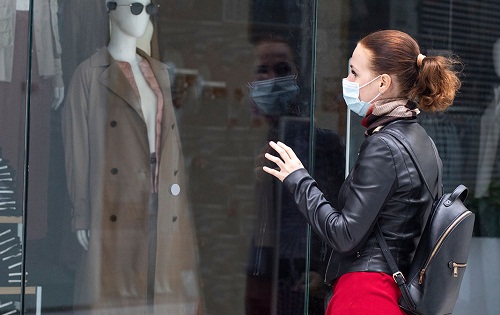 lost -$2.6 billion in market value as consumers reprioritized their spending on essentials. By May, consumers began to accept the situation as the new normal and their interest in fashion resurfaced. With strict adherence to social distancing norms, hand sanitizer, masks and Zoom, consumers again started flocking stores. However, their fashion tastes changed as they focused more on comfort and loungewear. By end summer, the industry started recovering as sales declined just 2 per cent in September and October compared to 2019. Given the current circumstances, this was a huge win for the industry.
Adapting to changing demands
As per a NPD Group study, the factor that influenced consumers’ fashion choices in the past three months was their search for novelty. They also looked for something trendy that made them feel good. Gen Z and millennials represent 56 per cent of Canada’s women’s wear market which indicates a positive future for the industry. As Canadian consumer look to gratify their fashion senses with innovative garments, the industry needs to quickly adapt to changing demands. The industry is definitely showing positive growth signs as it slowly rebounds from these extraordinary times.
Vietnam’s garment-textile turnover to reach $38-39 billion in 2021
According to Le Tien Troung, Chairman, Vinatex, Vietnam’s garment-textile export turnover is projected at $38-39 billion in 2021
According to Truong, localities have supported the sustainable and clean production of the garment-textile industry which, he said, must follow global rules set for the supply chain.
Under the Government management, the sector has reduced non-production costs, especially those for logistics services through the national logistics network, and other non-tariff costs.
The Ministry of Industry and Trade has also helped businesses optimise new-generation free trade agreements (FTAs) through the issuance of guidance and the launch of a portal on those deals.
Vietnam has signed a total of 17 new-generation FTAs, he said, stressing that a number of countries like Japan have reached up to four pacts with Vietnam.
In 2020, Vietnam is the only among the world’s top five garment-textile exporters not to have to cease production.
Although Vietnam’s garment-textile export reached only 35 billion USD against the 39 billion USD recorded last year, the result is still remarkable given the global demand dropping over 22 percent.
Scottish entrepreneurs, Edinburg University collaborate to recycle cashmere garments
Belinda Dickson, Founder, Belinda Robertson Cashmere, and Ross Powell have co-founded Cashmere Circle, a service to revive, repair and recycle cashmere garments with Edinburgh University to help luxury fashion move to a circular economy model while boosting textile skills and jobs in the Scottish Borders
The start-up business has partnered with a number of Borders-based experts with the aim of returning the area to its once leading position in the textiles industry, says Edinburgh Innovations. A knowledge transfer program facilitated by Cashmere Circle will ensure skills are retained for the next generation of knitwear experts, it says.
Cashmere Circle aims to be a truly sustainable business – environmentally of course, but also socially, by ensuring jobs and skills are retained in the Borders
Cashmere Circle will also donate 1 per cent of its revenue to Trees for Life, which is rewilding the Scottish Highlands, and has entered an agreement with Oxfam for the charity to divert end-of-life cashmere garments that would otherwise go to landfill.











