


FW
Bangladesh records double digit drop in apparel exports to the US
Falling consumption in the world largest economy amid the pandemic has led to 11.73 per cent decline in Bangladesh’s apparel exports to the United States in 2020. The US Department of Commerce’s Office of Textiles and Apparel data reveals, Bangladesh’s RMG exports to the US decreased by $695 million in value and 120 million sq mt in quantity compared with that in 2019. Bangladesh’s RMG exports to the US in 2020 fell by 5.98 per cent to 1.89 billion sq mt. Apparel import by the US from the world dropped 23.46 per cent in 2020 to $64.07 billion from $83.70 billion in the previous year.
According to BGMEA data, Bangladesh’s RMG exports to the US grew 5.5 per cent in volume in December 2020. However, their value declined by 13 per cent compared with that in the same month of 2019. US apparel imports from Bangladesh decreased by $56.17 million in December 2020 to $361.88 million from $418.057 million in the same month in 2019.Bangladesh’s apparel exports to the US grew by 8.09 million sq mt to 155.33 million sq mt in December 2020 from 147.30 million sq mt in the same month of 2019.
In July-December 2020, the US apparel imports from Bangladesh declined by 3.19 per cent year-on-year, BGMEA said.
Even though US global apparel imports dropped by 17.25 per cent, the imports from Cambodia and Pakistan grew by 6.89 per cent and 8.16 per cent respectively during the period.
US apparel imports from Vietnam decreased by 7.25 per cent but with 11.73 per cent negative growth, Bangladesh was holding a very shaky position compared with its fellow opponents.
Customs duty on cotton to impact India’s premium garment exports
Cotton stakeholders believe, increasing customs duty on cotton may impact India’s advantage in premium/ high-end garment exports to the world. Stakeholders also fear losing international market, especially US and Europe, to neighboring competitors Bangladesh and Pakistan as well as Vietnam.
The Cotton Textiles Export Promotion Council says a hike in customs duty will lead to a higher cost for value-added products including fabrics, made-ups and garments. The Southern India Mills’ Association (SIMA) had also demanded a roll-back of the decision soon after the Budget.
As per Cotton Association of India (CAI), India’s cotton imports for the year 2019-20 (October to September) were projected at 15.50 lakh bales, whereas for the year 2020-21 it is estimated to be around 14 lakh bales, of which 4.5 lakh bales of cotton was imported as on December 31, 2020.
As per the trade insiders, the cotton textiles/garments using 51 per cent or more Pima cotton can qualify for Supima label, which commands higher price and premium in the US market as well as other prominent garment markets.
US’ apparel imports decline 23.46 per cent in 2020
As per official data, apparel imports by the United States declined by 23.46 per cent in 2020. The country imported apparels worth $64.07 billion during the 2020, recording a decline of $17.60 billion from 2019, reports Apparel Resources. This affected its partner countries whose exports declined by double-digits, except Vietnam which recorded a single-digit export decline.
In volume terms, US’ apparel imports plunged 16.37 per cent to 23,132.80 million SME in 2020. The unit prices of these imports also nosedived by 8.28 per cent in 2020 as compared to 2019 when UVR remained US $ 3.02 per SME. Particularly in December ’20, the volume of US’ apparel imports declined by 1.40 per cent on Y-o-Y basis. Imports shrunk 16 per cent to $4.83 billion in the last month of 2020.
One third British retailers to close stores in 2021: Brightpearl survey
As per a research by e-commerce firm Brightpearl, nearly a quarter of British retailers plan to close their physical stores in 2021. The survey polled 1,000 brands and 2,000 consumers from across the UK.
Almost 18 per cent plan to move stores out of city centres and into local high streets within the next 12 months, while 4 per cent are undecided on whether to follow suit.
Brightpearl CEO Derek O’Carroll said, the study shows some big shifts as its work-at-home patterns intensify. Though customers have relocated online, they’ve also relocated to the suburbs and the rural towns as reflected in emerging shopping habits. Retailers need to respond to these changes and our data suggests many are already making plans to move stores to high street locations that have increasingly strong foot traffic.
Over the next year, retailers are also going to have to up their digital game to meet growing online demand, and the expectations shaped by our new buying patterns. Some companies are planning to add local collection points to their online delivery offering to capitalize on customers’ increased preference for local shopping.
Canopy founder to receive $3 million grant
One of the two recipients of this year’s Climate Breakthrough Awards for her organization’s work to protect ancient and endangered forests, Nicole Rycroff, Founder and Executive Director, NGO Canopy will subsequently receive a $3 million grant.
Over the next three years, Rycroft – along with the award’s other recipient, Mohamed Adow of Kenyan sustainability think tank, Power Shift Africa – will leverage the grant to further accelerate the ambition of Canopy.
Since its inception, the Vancouver-based NGO has engaged industries including fashion in better protecting critically endangered forests by promoting the benefits of sustainable forestry management and adopting alternative fibres to conventional man-made cellulosic textiles.
Its latest Hot Button rankings – which assess the efforts of fibre suppliers to safeguard endangered forests, including their conservation work – is representative of the changing tides in man-made cellulosic supply chains, as it highlighted that more than 50 per cent of global supplies are now sourced by ‘green’ or ‘dark green’ shirt recipients.
In fact, fibre suppliers Lenzing and Aditya Birla attained the ranking’s first ever ‘dark green’ shirts in recognition of their exemplary efforts to protecting forestry.
The Climate Breakthrough Project will work with the pair to bring visionary new strategies from idea to fruition. For Rycroft, the $3m will be used to help develop and scale low-carbon, commercially viable fibre alternatives that reduce the industry’s reliance on high carbon forests.
Apparel trade group plans insolvency policy for COVID-19 battered units
The apparel trade group plans to develop insolvency or exit policy framework to salvage the industry battered by the pandemic.
As per Financial Express, the framework will detect early and resolve the financial distress in entities, including the current provisions of corporate debt restructuring mechanism.
It will resolve bankruptcy and insolvency through a considered balance between reorganization and liquidation according to the Terms of Reference prepared by BGMEA.
The framework will be prepared by forming a working group with the participation from both in the public and private sectors, garment entrepreneurs, international buyers, legal professionals, chartered accountants, retired senior policy makers, retired high court officials, experienced liquidators, economic policy experts and bankers.
A technical exercise will be conducted by the group to facilitate improvements and reforms in Bangladesh's business exit regime and practices. The BGMEA has initiated the formal exercise to assess the current exit or insolvency regime and practices, and identify necessary improvement measures, reflecting pertinent improvements relevant to the garment sector, she said.
It would support the government for enacting the necessary reforms or improvements in the legal and regulatory framework for business exit, she added.
Through the exercise, the group will identify necessary improvement measures.
Pakistan’s trade deficit widens to $2,597 billion in January
Pakistan’s trade deficit widened by 20.84 per cent to $2.597 billion in January from $2.149billion over the same month last year mainly on account of surging duty-free imports, reports Dawn.
The trade deficit swelled for the second consecutive month suggesting that consumption is reviving. An increase in export could mean recovering global economy and improvement in domestic production.
During the first seven months (July-January) of FY21 the trade deficit increased 8.24pc to $14.96bn from $13.82bn in the corresponding period last year.
Earlier, the country’s trade deficit during FY20 had narrowed to $23.099bn from $31.820bn.
Official data available with Dawn showed the country’s imports have been rising since September 2020. The duty-free import value recorded an unprecedented growth of 80pc in December while it grew by 30pc in January.
In the July-January period of 2020-21, the duty-free imports witnessed an increase of 27pc in terms of dollars over the last year. In overall imports, the share of duty-free import has surged 42pc in the seven months this year from 35pc over the same period last year.
As a result of the increase in duty-free imports, in January, the import bill rose by 14.68pc year-on-year to $4.725bn as against $4.120bn over the corresponding month last year. Meanwhile, on a month-on-month basis, imports in January dipped by 5.59pc compared to December.
Years to understand the full impact of COVID-19, say experts
Experts speaking on a podcast at the Leeds University said, it would take experts years to understand the full long-term impact of the coronavirus pandemic on the fashion and textiles industry.
Entitled 'How COVID-19 has increased the complexity of the fashion industry and its supply chains', the podcast was hosted by Dr Matthew Davis, an associate professor at the business school, with speakers Dr Mark Sumner, a lecturer in sustainability and fashion at the university's School of Design, and Fergus Dowling, a research assistant working on a project looking at the impact of COVID-19 on modern slavery.
Davis opened the discussion by asking about the impact of COVID-19 and the associated lockdowns on the global fashion industry and, in particular, the effect on how brands manage worker rights and relationships in their supply chains.
Describing the situation as "complex", Sumner said, there may be some major changes in the industry which he hoped would be positive like improving transparency and improving the relationship and the connection between brands and suppliers.
Dowling noted that some brands had cancelled orders without compensation but others had agreed to pay for all orders - leaving them with huge amounts of stock as lockdowns continue.
Freedom from synthetics can help fashion industry become more sustainable
 Found in more than half of all textiles, polyester production is likely to account for 85 per cent of total global fiber production by 2030, says a report titled ‘Fossil Fashion: The Hidden Reliance of Fashion on Fossil Fuels’, published by the Changing Markets Foundation, the report charts out growing polyester use in the last 20 years. The report also focuses on the growing carbon footprint of polyester production across the world. While this footprint was equivalent to 700 million tonne of CO2 in 2015, it is expected to nearly double by 2030.
One of the main reasons for the growing footprint is rise in production of plastics, from which polyester is made. Growing polyester production also results in an explosion of cheap and low-quality clothes causing a huge waste crisis, says the report. People today buy 60 per cent more clothes than they did 15 years ago, but do not wear them for half as long. This may result in ballooning of fashion production to 102 million tonne by 2030, it adds.
Fast fashion biggest generator of industry waste
Urska Trunk, Campaign Manager, Changing Markets Foundation, compares fast fashion to fossil fashion. According to her, brands’ addiction to cheap clothes made with synthetic fibers results in 87 per cent waste of clothing materials. Synthetic clothes also release tiny, non-biodegradable microfibers during washing and disposal.
Found everywhere from the Artic Ocean to food chains and even tap water, these microfibers are known to damage human lung development besides being harmful for sea creatures. Laura Díaz Sánchez, Campaigner at the Plastic Soup Foundation, also warns of the devastating effects of these microfibers on human health
An opportunity for European Commission
Time and again, the fashion industry has made several promises and launched many initiatives to control this microfiber pollution, but failed to reverse its impact on the environment. Now, the European Commission has the opportunity to lead this change. Besides slowing down the consumption rate of clothes across Europe, the commission can ensure that textile industry invests in fiber-to-fiber recycling technologies.
The Commission can also ensure that only those brands benefit from the COVID Recovery Package funds who adopt sustainability practices. Urska Trunk advises the commission to propose an all-encompassing textile strategy that makes fashion independent of synthetic fibers and takes it on a sustainable route. In this way, the commission can effectively address the issue that is threatening our lives.
Casualwear next growth driver for Arvind Fashions as it scales digital capabilities
 Expecting online sales to cross the Rs 10,000 crore mark soon, Arvind Fashions has made huge investments in various digital channels. Not only does the company sell on all third party portals, it has also scaled up its own website, said Kulin Lalbhai, Director to the Economic Times. Currently, the company is integrating stores with online channels ramp up sales.
Positive results from Flipkart partnership
Having seen incredible traction last quarter, Arvind Fashions has collaborated with Flipkart to build its brand Flying Machine. The partnership will help Arvind Fashions explore the best of both worlds, Lalbhai feels as it combines Flipkart’s reach and analytics with Arvind’s brand building capabilities and supply chain. The partnership is already yielding positive results with territory sales of Flying Machine growing almost 70 per cent during the festive season.
Sales recovery with efficient cost management
The company’s offline sales are also promising, says Lalbhai. It saw healthy recovery in January sales and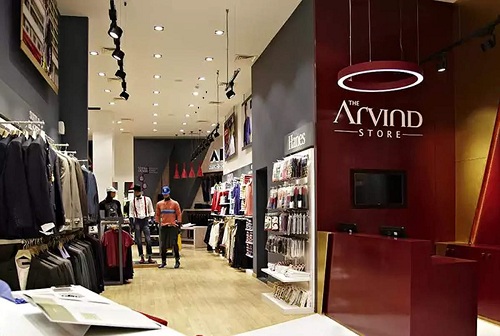 expects the trend to continue. It also plans to get a lot of fresh merchandise in stores from February onwards, he adds. Meanwhile Arvind Fashions managed to cut down a few of costs like temporary rental reductions and other costs during the pandemic. Though these costs are expected to rise again, the company has done a lot of structural cost savings, adds Lalbhai. It has not only reduced employee headcount but also cut supply chain costs. Arvind Fashions is also working on raw material costs and plans to introduce new strategies to prevent margin dilution and price corrections due to an increase in prices.
Robust revenues in Q2 & Q3
The company clocked in robust revenue growth in both second and third quarter of the current financial year and had a much better bottom line. Currently its offline sales have recovered to 70 per cent of pre-COVID levels while online sales are 230 per cent of last year. Adjusted for the Ind-As accounting, the company’s EBITDA is also much better last year’s third quarter. Most of its brands are gaining market share through sales on Flipkart and the company expects the trend to continue
Casual wear to drive future growth
Lalbhai believes, current casualization trend is not a response to COVID but existed even before that. The pandemic has only accelerated this trend with workwear transforming from formal to semi-formal. He expects casual wear brands like Tommy, Calvin Klein, US Polo to continue growing and emerge stronger from the pandemic. T-shirts and polos will lead casual wear growth post COVID, says Lalbhai. He also expects rapid growth for the footwear segment in times to come.











