


FW
Pakistan’s textile exports up 10 per cent in January
Pakistan’s exports of textile commodities increased 10.79 per cent year on year in January 2021 as against the same month last year. On a month to month basis, however, exports decreased 5.54 per cent in January 2021 compared to December 2020. Overall, export of textile commodities increased 8.23 per cent during the first seven months of the current fiscal compared to the corresponding period last year.
Among the top performing commodities, knitwear exports increased 18.74 per cent, yarn exports (other than cotton yarn) inched up 4.63 per cent, bed wear exports rose 16.38 per cent while towel exports increased 19.91 per cent. Exports of tents, canvas and trapline grew 48.95 per cent, readymade garments 5.48 per cent, art, silk and synthetic textile 0.45 per cent, while export of made-up articles (excluding towels and bed wear) increased 18.01 per cent. On the other hand, exports of raw cotton declined 96.27 per cent. Likewise, cotton yarn exports decreased 23.97 per cent whereas cotton cloth exports dropped 8.63 per cent.
The country’s merchandize exports increased 5.53 per cent during the first seven months of the fiscal year ’21 as compared to the corresponding period of last year. However, imports during the period under review also increased by 6.92 per cent. Pakistan’s trade deficit increased 8.27 per cent during the period under review.
Hyosung to present sustainable fiber developments at Kingpins24 FLASH
Hyosung will present its latest sustainable fiber developments to the tightknit denim community during Kingpins24 FLASH virtual event from February 23-24, 2021. As per Innovation in Textiles, Hyosung will highlight its GRS-certified, 100 per cent recycled creora regen elastane made from reclaimed waste, which has caught the attention of Tejidos Royo a leading denim innovator and manufacturer committed to sustainability.
Hyosung will also share developments with its 3D Max creora elastane, which allows denim products to have dual performance features - ultra-stretch and excellent recovery that lasts over time. As Mike Simko, Global Marketing Director-Textiles says, Hyosung, denim made with 3D Max creora elastane eliminates the need for stretch polyester and the fabric can be treated for environmentally friendly laser washing to create distressed looks.
In addition, Hyosung will present eco-friendly, multi-function fibers such as MIPAN regen aqua X: recycled cool-touch nylon with UV protection; regen askin: recycled cool-touch polyester with UV protection and regen aerolight: recycled lightweight polyester with high-performance moisture management
Hyosung is a comprehensive fiber manufacturer that produces world-class products, providing innovation and solutions to the textile industry. Hyosung’s creora elastane is the world’s largest spandex brand, supplying the broadest range of stretch fiber offerings supported by exceptional technology and quality. Mipan nylon and specialty polyester provide functional and sustainable fibre solutions that are essential to today’s dynamic textile market.
US’ brassieres imports tumble by 14.30%: OTEXA
OTEXA figures reveal, US’ brassieres imports has fallen 14.30 per cent for the third consecutive year in 2020 to $1.93 billion. As per Apparel Resources, shipments by China, Sri Lanka, Indonesia tumbled in 2020, while those by Vietnam, Thailand, Bangladesh, Cambodia and Colombia have increased.
Cambodia emerged the biggest brassieres exporter during the year with exports increasing by 31.55 per cent from 2019. It was followed by Bangladesh whose exports increasing by 30.24 per cent. Thailand was the third largest exporter with shipments increasing by 18.77 per cent from 2019,
The last time import values of brassieres rose was in 2017 when it increased by 3.43 per cent on Y-o-Y basis. Since then, it has been nose-diving as it experienced a fall of 13.48 per cent in 2018 over 2017, 2.60 per cent in 2018 over 2019.
H&M Group issues €500 million sustainability-linked bond
H&M Group has issued a €500 million sustainability-linked bond with a maturity of 8.5 years. The annual coupon rate of this bond is 0.25 per cent. The bond generated great interest and was 7.6 times oversubscribed. In contrast to green bonds, where funds are linked to specific projects, sustainability-linked bonds are coupled to the company meeting a number of defined sustainability targets.
Through this bond, the H&M Group aims to achieve the following targets: increase the share of recycled materials used to 30 percent; reduce emissions from the Group’s own operations by 20 percent; reduce absolute Scope 3 emissions from fabric production, garment manufacturing, raw materials and upstream transport by 10 percent.
“H&M Group Sustainability-Linked Bond KPIs are relevant and material to the issuer and that the SPTs are ambitious and impactful. The goal to reach 30 percent recycled materials as inputs is a highly ambitious SPT (Sustainability Performance Target) and represents leadership in the clothing industry,” says Evan Bruner, Project Manager, Sustainalytics.
“The successful issue of this bond proves that the financial market also values our ambitious sustainability work and we look forward to working together for a sustainable industry,” adds Helena Helmersson, CEO, H&M Group.
The bond will be listed on the regulated market Euronext Dublin and has been placed with the assistance of BNP Paribas, Commerzbank, Danske Bank, SEB and Standard Chartered. SEB also acted as advisor for the Sustainability-Linked Bond Framework.
Argentina imposes 56% ADD on glove imports from Bangladesh
Argentina has imposed a 56 per cent anti-dumping duty (ADD) on import of gloves from Bangladesh and some other countries for five years. As per the notice issued by the Productive Development Ministry, the country imposed a 42-per cent ADD on the freight on board value on exports from Bangladesh, China, Sri Lanka and Malaysia while it has imposed a 35.06 per cent ADD rate on imports from India.
Earlier in November 2019, the country initially imposed a 56-per cent ADD on import of the product from Bangladesh, China, India, Malaysia and Sri Lanka. As per Bangladesh’s Export Promotion Bureau, Argentina imported gloves, mittens and mitts, knitted or crocheted, impregnated, coated or covered with plastic or rubber worth $182,982 from Bangladesh in the fiscal year 2019-2020.
Although Bangladesh’s export volume gloves to Argentina was not so significant compared to with its total export worth $33.67 billion in FY20,imposition of anti-export duty will have far-reaching impacts on exports as other countries might follow Argentina’s example. In recent years, Bangladesh has also faced anti-dumping and related duties on jute and jute goods, hydrogen peroxide and fishing nets from India, on hydrogen peroxide from Pakistan and synthetic yarn from Turkey.
Oerlikon Manmade Fibers to hold webinars on home textiles
Oerlikon Manmade Fibers plans to hold a series of webinars on home textiles this year. It will begin with a webinar titled, Manufacturing carpet yarn with the BCF S8 – Experience-based Innovation on March 3, 2021. This webinar will begin with a presentation on the BCF S8 system by Nis Lehmann-Matthaei, Sales Director, BCF.
This will be followed by a webinar titled BCF S8 Tricolor – a massive step forward for your carpet yarn production on March 10, 2021. In this webinar, Michael Rübenhagen, Sales Director, BCF will focus on tricolor yarn production.
The third webinar will focus on the topic: Heavy-denier applications – WINGS HD and eAFK Big V complete your home textiles portfolio. To be held on March 17, 2021, this technology will presented by Oliver Lemke, Sales Director.
In a fourth webinar, Ralf Morgenroth, Product Manager will unveil the VarioFil R+ compact spinning system for recycled filament yarn, developed and built by subsidiary BBE.
Adidas joins Fur Free Retailer to keep off fur
Adidas has joined the Fur Free Retailer (FFR) program, a coalition of more than 50 animal protection organisations scattered around the world, which encourages brands and retailers to ban the use of fur throughout their operations. Four Paws represents the FFR program in Germany, Austria, Bulgaria, South Africa and Australia.
Adidas is driving sustainability in across all its product range and business operations. Adidas has made vegan materials a focus of its work over recent years and is developing a new vegan leather shoe made from fungi. These trainers are to be produced from mycelium, the thread-like structures of mushrooms, and will inform the brand’s continued shift from conventional leather. The number of vegan products with three stripes is growing; since last year, for example, the popular sneaker classics Stan Smith and Superstar have been available as vegan versions.
The company has made the decision to underline its position on the controversial use of animal-derived materials within apparel, and by doing so becomes the 1,500th company to join the FFR initiative, following the likes of H&M, Zara, Gucci and Prada. Today’s consumers support fashion brands that care about animals and the environment.
Brands beat COVID-19 blues with new eco-friendly collections at Milano Unica
 As was evident from the digital Milano Unica show held recently, COVID-19 failed to dampen the spirits of the Italian textile sector as brands continued to launch new eco-friendly collections. As per a Womens Wear Daily report, around 192 companies participated in the show held on the e-Milano Connect info-commerce platform. The show enables textile companies to enhance their product portfolios. Ensuring product boost and markets expansion.
To run for the next six months, the show allows textile companies to boost their product basket across the season. It helps smaller market players expand into newer territories besides assisting exhibitors like Reda, the Marzotto Wool Manufacturing company and Bonotto manage their sales campaigns by launching proprietary online platforms.
However, Alessandro Barberis Canonico, President, Milano Unica does not expect sales to rebound during the Spring 2022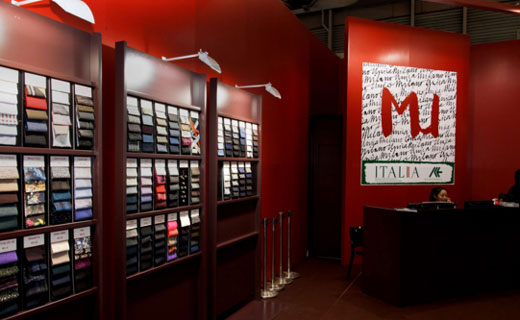 season as brands and retailers are still grappling with unsold inventories from the Spring 2021 season. He expects comfortable, lightweight luxury fabrics and silhouettes to rise in demand due to their sustainability factor. He also expects performance and sustainable fabrics for womenswear to gain more popularity.
Hybrid textiles in focus
Many brands are tapping hybrid textiles at the show. These textiles blur the lines between leisurewear with formalwear. ZQ-certified mulesing-free and fully traceable pure merino wool developed by Italian Woolen mill Reda is a prime example of this. Exploring the natural qualities of merino wool and having thermoregulatory features, this fabric is perfect for breezy and lightweight woolen shirts.
Sustainable and comfortable suiting fabrics are also the focus of Marzotto Wool Manufacturing Company’s spring 2022 collection. The company launched wrinkle-free and naturally elastic B Dyanmic+ range of woolen textiles for making lightweight and summery suits.
Investing in GOTS-approved linen and hemp, Shirt specialist Tessetura Monti launched a fabric range dyed using inorganic compounds from ferrous oxides. These fabrics are complimented by striped Leicester Bio cotton poplin in pastel tones such as baby pink and ochre. Tessetura Monti also introduced a range of printed cotton poplins bearing graphic motifs in neon and saturated hues. Based in the outskirts of Como, Lombardy Canclini 1925, offers James Bond inspired striped shirts with oversize stripes in pastel hues, and super thin replicates combining popsicle-inspired shades. In future, the company aims to launch indigo fabrics for casual chino pants and lightweight overshirts with camp collars featuring innovative designs.
Nature-inspired performance fabrics
High-end textile company Bonotto has launched nature inspired range of bio-based and biodegradable fabrics. Featuring smooth and fluid textures, these fabrics are developed from seaweed and crab shells. Bonotto also launched lyocell, a cellulose fiber made from dissolving pulp and then reconstituting it by dry jet-wet spinning.
The show focuses on technical performance by introducing rubber-coated tailoring wool, heat-sensitive cotton and fluorine-free, water-repellent outerwear fabrics. For instance, Como-based Ratti launched silk and cotton fabrics with a ripstop finishing, as well as coated, jacquard and quilted ripstop textiles. The company experimented with patters like kaleidoscopic tartans and nocturnal scenes that combine dark tones and vibrant shades on silk and viscose twill, silk chiffon and Lurex.
Offline stores to herald a new era in retail with technology integration
 With consumer behavior undergoing mass transformation, the Indian retail sector has been most affected by COVID-19. But like a silver lining in dark clouds, the sector is likely to benefit from this development in the long run, says a report by the Economic Times.
Rising safety concerns amid the pandemic has led to more consumers preferring online transactions, increasing digital penetration and mobile usage across India. As per Bain & Co, India’s online shoppers are likely to reach about 300 million by 2025. A Redseer report also estimates online shoppers will rise by 85 per cent in 2020.
The use of social commerce and m-commerce will also accelerate in future. Paypal expects the value of social commerce to rise to $100 billion while increasing penetration of mobile-commerce will push retailers to launch special mobile apps for add-on services.
New opportunities for brick and mortar stores
The post pandemic world also offers new opportunities to brick and mortar stores. As per the report, these stores can provide an experiential shopping environment by partnering online players. They can also expand their business by taking the omni-channel route.
The second strategy is already being adopted by large e-retailers offering digital services to offline stores. The ‘Local Shops’ platform of Amazon has onboarded 5,000 offline retailers across various categories. These stores fulfill local orders by using Amazon’s technology based on area pin codes. Reliance’s JioMart platform also connects three crore offline retailers with over 20 crore customers.
Amazon, Starbucks and Shoppers Stops are also setting up data warehouses to facilitate their consumers online and offline transactions. This helps them provide a ‘phygital’ experience to their consumers.
New business models for better margins and prices
E-commerce also enhances product deliveries of FMCG retailers including Hindustan Unilever, ITC, Modelez, Procter and Gamble, Dabur and Colgate. Besides launching new apps and websites, these retailers are partnering with Dunzo and Swiggy for products delivery. Through their apps, these companies hope to generate better margins and products prices, and also enhance their consumers’ shopping experiences. To avoid overcrowding in metros and Tier-I cities, brands and retailers are expanding into smaller Tier-II, III cities as they offer huge growth opportunities to offline as well as online retailers
Agile firms to shape future market growth
As the year 2021 promises to be a year of technology-driven innovations, many brands’ are likely to reshape their business models and operations. Agile firms will capture majority of the market share by integrating digital strategies into their daily operations. Neighborhood stores will continue to flourish and makeup over 95 per cent of India’s grocery market. Firmly entrenched the Indian consumers’ psyche, offline stores will herald a new era in India retail by integrating new technologies in their operations.
Fast Retailing’s value reaches $103 billion
Topping Zara’s parent company Inditex, the value of Fast Retailing, the Japanese parent of casual clothing chain Uniqlo, reached 10.87 trillion yen ($103 billion) recently. As per Asia Nikkei reports, the casual wear specialist is well positioned to capitalize on the changing habits of consumers. The company operated 2,298 Uniqlo stores around the world in November. Sixty percent of these stores were located in Asia with China being the company’s second biggest market after Japan.
The company’s operating margin in Greater China during the last fiscal year ended August stood at 14.4 per cent. The company adopted the "digital consumer retailing" concept in 2016, which involves analyzing data from online and store purchases from IC tags attached to all merchandise. It has partnered with Google and other outside companies to develop a manufacturing infrastructure powered by artificial intelligence.
In terms of revenue, Fast Retailing remains in third place at roughly 2 trillion yen ($18.9 billion) for the previous fiscal year. Inditex leads the way at €28.2 billion ($34.1 billion dollar) for the year ended January 2020, while Sweden's H&M is runner-up with 187 billion kronor ($22.5 billion) for the financial year through last November.











