


FW
India’s woven clothing imports from China surge by 31.14%
According to the provisional data released by Ministry of Commerce and Industry, India’s woven clothing import from China surged by 31.14 per cent in pandemic-hit 2020 to $165.67 million as compared to US $ 126.33 million in 2019.
However, the import of woven garment declined by 22.84 per Y-o-Y to $512.72 million.
Bangladesh was the top import destination for woven clothing with shipments worth $ 196.90 million. However, shipments declined by 33.41 per cent from 2019.
Overall garment imports by India (woven and knit) declined by 24.12 per cent to $890 million in 2020.
As far as knitted clothing is concerned, the import of India plunged by 25.81 per cent in 2020 to $ 377.28 million; China’s share plunged by 33.45 per cent to $136.10 million while that of Bangladesh fell by 0.40 per cent to $ 102.52.
India needs to build on momentum to strengthen global position in PPE market
 The pandemic saw India emerge as the world’s second largest manufacturer of PPE kits, after China. The textile ministry encouraged many manufacturers to venture into PPE production essential for the fight against COVID-19, says a India Today report. Initially, manufacturers were apprehensive about entering a completely new domain. They faced logistic issues like sourcing yarn from Ludhiana and moving products from one location to another during lockdown. Bigger manufacturers could easily pivot into PPE. However, smaller ones like the Noida-based Sunlord Apparel faced many issues.
Dealing with challenges
One major issue was the lack of knowledge amongst factory owners and workers about PPE manufacturing. As Indian manufacturers were not able to meet the required quality standards, the Textiles Ministry and industry chambers tried to educate them through Zoom calls. They also sent PPE samples to Coimbatore for testing in the early days.
The ministry also called manufacturers to ensure they faced no challenges in in making PPE kits, says, Rahul Mehta, former CMAI president. The PMO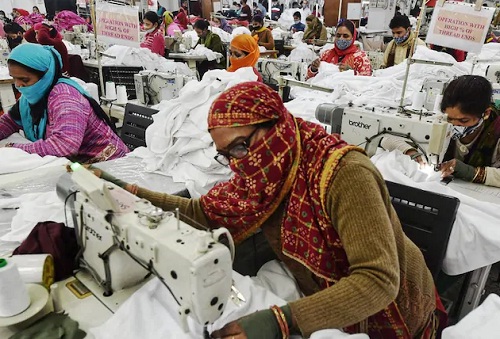 and Gujarat Chief Minister’s office allowed Welspun India to set up masks and PPE overalls manufacturing facilities and built the required ecosystem. This included knowledge transfer, sessions on R&D and testing facilities in every state. This led to India’s daily PPE suits production increasing to 500,000 with over 600 Indian companies now certified to manufacture PPEs.
The textile ministry also collaborated with manufacturers to set up PPE factories and import the equipment. Single window procurement agencies like Hindustan Lifecare were set up to issue guidelines on PPE kits manufacturing.
Promoting medical textiles
Government agency for investment promotion and facilitation, Invest India estimates the global PPE kits market to be worth $52 billion (Rs 3.8 lakh crore) while the India market is worth $1 billion (Rs 7,300 crore. In this, the percentage of medical textiles is relatively less. Earlier, this market was largely dominated by China and Indian manufacturers faced a tough time convincing villagers to work in PPE manufacturing factories. Factories had to allow workers to stay on shop-floors to allay fears of catching the virus.
This led to manufacturers like Matrix Clothing abandoning PPE kits manufacturing. Its abandonment has compelled the government and textile manufacturers to ensure a sustained quality and deliverability of medical textiles.
In 2020, demand for face masks and PPE led to 30.4 per cent jump in China’s textile exports, says General Administration of Customs. The government is also urging apparel manufacturers to aim for double digit share in global fabric exports. For this, the government proposes to upskill workers besides adopting latest technologies. It also proposes to set up seven mega textile parks across India.
Exploring its collaboration with industry leaders, the government needs to build on this momentum to strengthen India’s position in the global PPE market.
Year 2021 to see greater convergence of fashion with the digital world
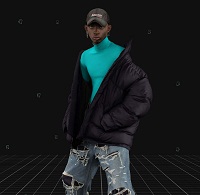 Even in an ultra-tough market, the digital world is helping fashion sector connect with customers, says Mark Sinnock, Chief Strategy Officer, Havas Group. Brands are introducing consumer engagement strategies to attract buyers to shop with them. They are also encouraging industry peers to work with Black-owned business. As a report by Vogue Business notes, they recently passed the 15 per cent Pledge to encourage US retailers to increase their percentage of Black partners.
Consumers too are looking for brands with value, adds Sinnock. Though a positive sign, brands should abstain from using this as marketing gimmick and thread carefully, he advises. Social media offers such brands a platform to voice their opinions with tools such as Tiktok, making them a part of ongoing dialogue with consumers, adds Brian Mandler, Co-Founder, The Network Effect, a digital agency focused on short-form content. Fashion marketers can also benefit from short-form video applications that help engage younger audiences.
Exploring interactive marketing trends
As per fashion marketers, future is about exploring interactive marketing opportunities. For instance, in September last year, Burberry partnered Twitch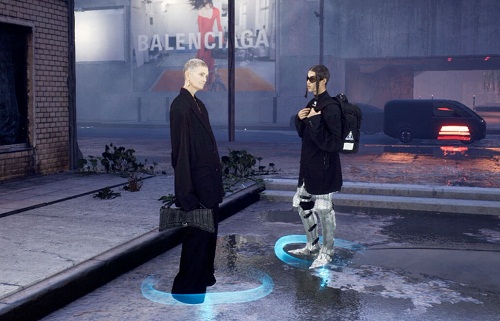 to enable viewers of Spring/Summer 2021 show to interact in chat rooms. Prada also hosted a virtual show to encourage its audience participation. Its focus on China also paid off as the brand staged screenings of virtual show in Shanghai, besides live streaming on its Weibo and Douyin accounts.
Another trend luxury brands are exploring is gaming. Balenciaga launched its A/W ’21 collection last December as a video game. Titled Afterworld: The Age of Tomorrow, the game invites users to explore various zones and discover new designs by creative director Demna Gvasalia. Luxury brands have also launched the avatar version of Donatella Versace at Complexland virtual festival Complexland while Pangaia has created a virtual gamified experience on top of a glacier to promote the launch of its new down alternative, Flwrdwn.
There are likely to be more such collaborations in 2021 as the focus on shared experiences including virtual trade shows, exclusive in-game drops and virtual try-on hauls will increase. As per Gina Chung Lee, Vice-President-Marketing and Creative, Gen G, brands will customize campaigns with the most receptive and valuable messages.
Fashion-sports relations to evolve
Focus on real-life sports stars is likely to boost demand for wellness-themed products in 2021, encouraging luxury brands to collaborate with them. In January, Louis Vuitton signed a multi-year partnership deal with NBA to launch an annual capsule collection of apparel and accessories designed by Virgil Abloh, artistic director of menswear.
Luxury brands are competing with well-funded sportswear giants like Nike to rope in the biggest names in the industry, says John Collard, Chief Executive Officer, Sports Impact. Such deals help brands connect with buyers of their most accessible products like perfumes and accessories. Sports shoes will also be largest footwear category in the US this year, confirms NPD Group. Year 2021 will be big for fashion and sports, opines Collard of Sports Impact. The relationship between fashion and sports will evolve as brands will leverage sporting influencers to reach target audience.
Milan Fashion Week to be held virtually
This season, with the pandemic exacerbated by the spread of new COVID-19 variants, the Milan women's fashion week will once again be held in virtual mode.
The event is scheduled from February 23 until March 1. The first of the 64 catwalk shows will be held on February 24. The rest of the program includes 65 presentations and seven special events, among them a gala evening organized by the Italian Fashion Chamber (CNMI) for the fashion week’s opening.
Only two of the catwalk shows will actually be staged physically. The first is scheduled y Daniel Del Core, the former stylist to Gucci's celebrity clients, launching his own Del Core label. The second show will close the fashion week March 1, alongside Dolce & Gabbana, and will be staged by Valentino behind closed doors at the Piccolo Teatro, a unique opportunity for the renowned Milanese theatre to re-open its doors after twelve months of lockdown.
Besides these two shows, another highlight will be the eagerly awaited presentation of the first women's ready-to-wear collection by Kim Jones for Fendi.
The other new entries on the Milanese calendar, besides Del Core and Alessandro dell’Acqua x Elena Mirò, are Brunello Cucinelli; the ‘We are Made in Italy’ show by the Black Lives Matter in Italian Fashion collective; Onitsuka Tiger, the fashion sibling of Japanese sport brand Asics; Fabio Quaranta, a Milan catwalk show regular; and Maxivive, the androgynous label founded in 2007 by Papa Oyeyemi, a designer based in Lagos, Nigeria, renowned for his experimental approach.
HanesBrands recognized as world’s most ethical companies in 2021
HanesBrands has been recognized as one of the World’s Most Ethical Companies in 2021 by Ethisphere, a global leader in defining and advancing the standards of ethical business practices.
HanesBrands is one of only two apparel manufacturers being recognized among 135 companies spanning 22 countries and representing 47 industries. Ethisphere’s assessment process includes more than 200 questions on culture, environmental and social practices, ethics and compliance activities, governance, diversity and initiatives to support a strong value chain. This year, Ethisphere also gauged how applicants adapted and responded to the global health pandemic, safety, equity and inclusion and social justice.
HanesBrands has a longstanding commitment to leadership in ethical business practices. The company was recently named one of the 100 most sustainable companies in the nation for the second year by Barron’s and earned a leadership level A score, following two years at A-, in the CDP 2020 Climate Change Report. HBI is also the only apparel company in history to earn the U.S. Environmental Protection Agency Energy Star Sustained Excellence Award.
In October 2020, HanesBrands announced wide-ranging 2030 global sustainability goals that include a commitment to science-based environmental targets, a goal of improving the lives of at least 10 million people, and addressing the use of plastics and sustainable raw materials in products and packaging. The goals were launched via a new sustainability website, designed to increase company transparency and reporting on key metrics, including diversity, human rights benchmarks and risk assessments for investors.
Paraguay plans new investments in textile and clothing
As per Business of Fashion, Paraguay plans to invest $1.1 million in the manufacturing sector, mainly benefiting the clothing, textiles, and footwear industries, among other areas related to assembly operations.
The investment, spread across seven projects, will boost Paraguayan exports of industrial origin which in January reached a total of $85.1 million. This represents a 22 percent increase compared to the same month in 2020, according to the latest report from the Central Bank of Paraguay. 82 percent of Paraguay’s manufacturing exports go to Mercosur countries, specifically Brazil and Argentina. The rest is mainly destined for the United States, Thailand, Bolivia, Chile, Ecuador, El Salvador and Mexico.
Paraguay has placed an emphasis on assembly manufacturing for its economic development. Since 1997 the country has been implementing a special tax regime to encourage companies to establish production operations and assembly of auto parts, textiles, leather and footwear, among other products.
Welspun India collaborates with Stycheco for BeProduct platform
Global textile powerhouse Welspun India has collaborated with digital innovation and technology implementation firm Stycheco to deploy the BeProduct platform and to revitalize its international design, development, and production processes.
A part of the Welspun Group, Welspun India is one of India's fastest-growing conglomerates. With more than 25,000 employees, a presence in more than 50 countries, and a ‘farm to shelf’ model of vertical integration that runs from design to drop shipping. Welspun has a broad product footprint covering bed, bath and flooring categories. In textiles, Welspun produces under license for household names in Asia, Europe, and North America, delivers to major global retailers, and oversees cutting-edge manufacturing worldwide.
The group has embarked on a company-wide digital transformation project that spans from sales and marketing to sourcing. Its partnership with Stychecho and BeProduct quickly became a vital part of that digital transformation for its textile business. The company’s goal is to connect with customers and consumers through the collaboration with technology.
Walmart builds large private label brands
As it plans for more e-commerce growth in coming years, Walmart is building large private label brands competing with the likes of Target and Amazon. As per Women’s Wear Daily in recent years, Walmart has built a roster of private label brands and elevated lines through a combination of acquisitions, high-profile collaborations and its own creative push.
Currently, the retailer courts a shifting demographic of shoppers online and has sought to refine its apparel mix in recent years to strike a balance between basics and more fashion-forward styles. The brands that Walmart has added to its platform include Levi’s, Champion and Jordache, as well as the private lines. It now has 13 general merchandise private brands that qualify as billion-dollar brands, and that three of its apparel lines are $2 billion brands.
Competition from Amazon, and the receding importance of once prevalent fashion staple brands including Old Navy, may have pushed retailers like Walmart and Target to try to capture some of that market and boost their e-commerce infrastructure, said Jessica Ramírez, Jane Hali & Associates. In its Q4 earnings this month, Walmart expects its global e-commerce sales to surpass $100 billion in the next couple of years.
Textiles Ministry seeks details on reimbursement rates under RoDTEP
The Textiles Ministry has sought details from the Commerce Ministry on the rate of reimbursement they will be entitled to under the new Remission of Duties and Taxes on Export Products (RoDTEP) scheme. The Commerce Ministry announced new scheme, RoDTEP, from January 1, 2021 to compensate exporters for input taxes not reimbursed under existing schemes.
It also withdrew the Merchandise Export from India Scheme (MEIS) scheme as it was ruled as a banned export subsidy by a WTO panel since the reimbursement rates were not calculated strictly on the basis of input taxes paid. As the outlay for RoDTEP is set to be much lower than the over 50,000 crore allocated for the MEIS, there are expected to be cuts in reimbursement rates.
Earlier, garments and made-ups exporters believed reimbursement rates that were fixed at around 6 per cent of the value of exports of garments and around 8 per cent for made-ups would remain the same under RoDTEP. However, now they are not sure.
US apparel sales register smallest decline in January
As per Master card Spending Plus, apparel sales in the US declined in January though this decline was the smallest year-on-year since the pandemic hit sales in March 2020. However, sales at department stores grew by 1.5 per cent, marking a first positive month since December 2019. The hardware and furnishing sector witnessed highest growth.
According to Business of Fashion, the growth in department stores could be attributed to redemptions in holiday gift-cards and returns of in-person gifts. These stores performed better in the Southwest and on the West Coast due to the weather conditions and COVID restrictions weighing on East Coast retail.
Total retail sales, excluding cars and gasoline, rose by 9.2 percent last month from a year earlier. Online sales grew by 62.1 percent. The estimates are 95 percent correlated with the official retail sales figures the Commerce Department will release later this month











