


FW
Egypt’s textile and apparel exports to decline by 15% in 2021
Egypt’s textile and apparel exports are likely to decline by 15 per cent in 2021as several manufacturers, especially in the cotton textiles industry, have reduced production.
The country’s textiles and apparel exports declined by 29 per cent to $2,313.38 million in 2020. In 2019, US, Turkey, Germany, Italy, and Spain were the top five export destinations, however UK entered in the list replacing Italy in 2020.
Egypt is a major exporter of apparels, home textiles and fabrics. The country also exports yarn and fibres in comparatively smaller amount. The dip in country’s textiles and apparel exports has been observed from April 2020 to June 2020. It recovered in the following months but again declined in November 2020 and December 2020.
Disney to create a more flexible e-commerce experience
Disney plans to create a more flexible, interconnected e-commerce experience to give consumers easy access to unique, high-quality products across all our franchises. The company aims to integrate the Disney platform more with the Disney Parks apps and social media platforms.
Disney's pivot to online follows a 4 per centdecline in retail revenue in the fiscal year that ended in October 2020, which covered much of the pandemic so far. For reporting purposes, the brand giant lumps its retail revenue together with licensing, which together made about $4.2 billion for the fiscal year, or about a quarter of Disney's total revenue, according to the company's most recent 10-K.
Disney has also been expanding its shop-in-shops worldwide. That includes a shop-in-shop partnership with Target, launched in 2019 ahead of the holidays that helped beef up Target's assortment of toys and gave Disney an in with a growing force in the category in Target.
Calik Denim to boost use of recycled cotton
Calik Denim aims to boost the use of recycled cotton in production processes to reduce its environmental impact. The use of such cotton saves great amount of water and preserves unspoiled nature by stopping new agricultural expansion. 1 kilo of recycled cotton saves almost 10.000 liters of water. However, genuinely proving that the final garment is made with recycled material is getting harder every day. The recycled materials travel between several locations and organizations (spinners, dyeing houses, weaving mills, traders, etc.). During this journey, the recycled material can easily be modified or tweaked. So, the original recycled material usage in end-product can be difficult to obtain. That is why the industry works with various certification methods and traceability becomes very important to prevent any greenwashing.
Calik Denim’s sustainability strategy “Passion for Denim, Passion for Life,” is built on the idea that making a positive impact creates a better life. The purpose is to embrace its products, stakeholders, and the environment. Calik Denim is aware of its responsibility to move from the linear business model to a circular approach.
Each year Calik Denim increases use of recycled raw material such as cotton and polyester, lowering its environmental impact. Also, the company believes that collaborating and building partnerships is key to share a coherent messaging about principles of circularity and expand necessary know-how about it. As a part of its 2025 Targets, achieving a 60% use of organic, recycled or BCI Cotton in production and boosting traceability, Calik Denim and Aware™ has kicked off a collaboration on a new capsule collection. New off-season collection includes 4 different products and it is made with fully traceable recycled materials.
APTMA urges government not to allow cotton imports from India
AsiffInam, Chairman, APTMA Sindh-Balochistan Region urged the government not to allow import of cotton yarn from India as India has imposed restriction on import of all Pakistani products. To restrain import of yarn from India and support the local industry he demanded the government to withdraw levy of sales tax on zero rated sector so that the genuine industry may flourish and be able to provide yarn at affordable prices.
Inamshowed his deep concern on drastic decline in price of fine counts of yarn by Rs. 10,000/- per bag in the Faisalabad Yarn Market which is in expectation of massive tax evasion plan by individuals in anticipation of permission be allowed to import cotton yarn from India through Wagah Border.
Inam has said that industry has procured cotton at very high prices and they are not in apposition to sustain these losses. He said that about 90 percent of yarn produced in the country is available for the domestic market and there is no shortage of yarn in the country.
He also urged the government to save domestic industry from total closure, DLTL should not be provided on those entire textile products produced using imported materials which are either produced or manufactured in Pakistan as all such textile items which are produced using imported materials are incurring losses to the national exchequers because most of the exporters falls under the category of Fixed Tax Regime whereas they are also availing DLTL facility ranging between 2% to 4% and subsidized Export Refinance Facility which is provided from the revenue earned by the government from Pakistani Taxpayers. DLTL and ERF should only be provided on the products produced using domestic yarn and fabrics, he added.
Fashion firms need to be accountable about environmental, human rights claims
 Over the past decade, regulators and customers across the globe have been scrutinizing the textile industry for its impact on the environment. The Biden government recently announced plans to amend reporting requirements for US Securities and Exchange Commission, making climate disclosures compulsory for companies.
The European Union plans to increase transparency by incorporating reporting requirements for the textile industry. In November 2020, the UK urged a few companies to align their rules for climate-risk reporting, with the recommendations of the Task Force for Climate-Related Financial Disclosures’ (TCFD). In March, the Union released its Circular Economy Action Plan identifying textiles as fourth biggest user of raw materials and textiles after food, housing and transport. The Action Plan also hinted at the Commission’s plans to improve climate disclosures in its upcoming review of the EU’s Non-Financial Reporting Directive.
Accountability on environmental claims
Besides a growing demand for sustainable products, the fashion and textile industry also faces litigation for making false environmental claims about their products. In May 2019, a US Department of Agriculture (USDA) report detailed the legal actions taken by its National Organic Program against manufacturers who wrongly labeled their products as organic. People’s groups like Greenpeace are also protesting against companies that fail to comply with FTC’s green marketing guidelines.
The New Consumer Agenda released by the EU in November 2020 also emphasized on the need for protecting consumers against greenwashing. It urged companies to substantiate their environmental claims through Product and Organization Environmental Footprint methods.
Focus on human rights violations
Besides ensuring transparency in supply chains, the fashion industry is also addressing human rights violations. In November 2020, US Customs and Border Protection (CBP) issued a Withhold Release Order for cotton and cotton products originating from China’s Xinjiang Production and Construction Corporation (XPCC) and its subordinate and affiliated entities. The order was issued on the basis of information received about use forced labor in these companies. This was followed by similar WROs aimed at eliminating state-sponsored forced labor in the Xinjiang Uyghur Autonomous Region. The CBP issued five more WROs in September 2020 involving hair products, apparel, and cotton.
Stakeholders will continue to scrutinize environmental and human rights claims made by fashion companies in 2021. They need to closely track legislative, regulatory, and enforcement developments particularly those disclosures made mandatory by the Biden government. In addition, they also need to ensure effective supplier oversight and accountability to ensure the accuracy of claims made by companies.
Innovations, cost-management will boost Bangladesh denim sector
 Although the Bangladesh denim industry has all backward linkage industries such as weaving, dyeing, finishing and washing, nearly 50 per cent of its denim fabrics are imported. As per ‘Denim in Focus,’ report Bangladesh is the top importer of denim fabrics. However, it is also the top exporter of denim jeans to the world. Bangladesh currently exports over $6 billion denim jeans annually. However, it can increase its export earnings by adding more value to its jeans.
Highest denim exporter during pandemic
Bangladesh has 400 factories that manufacture only jeans. It leads exports in the woven sector with half of the country’s woven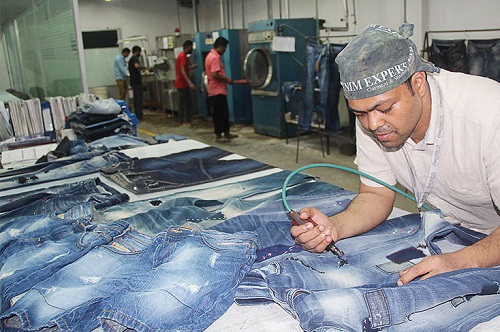 exports being achieved by denim jeans. Of the 400 factories, 32 with a capacity of 450 million meters per annum, are vertically integrated facilities. This is also one main reason for Bangladesh exporting the highest amount of denim products during the pandemic while other manufacturers registered negative growth. The industry offers huge scope for development and value addition.
Increase capacity, manage utility costs
Companies need to upgrade their R&D facilities to introduce new products and finishes, and also diversify into other businesses. They need to increase capacity of both their fabric and jeans manufacturing. Denim mills need to acquire gas connections on priority basis and ensure compliance with other energy regulations. This will help ease their utility costs.
The industry needs to encourage indigenous brands to promote Bangladesh with new dimensions. It needs to look beyond the EU and US to reduce dependency on these two markets and explore other global markets.
Rebranding, innovations to boost credibility
The Bangladesh denim industry also needs to adopt a proper strategy and recruit skilled employees. It needs to rebrand the industry to make it more credible and attract foreign investors. One way to achieve this is by increasing productivity, cost-effectiveness and resilience. The industry can also introduce product and market innovations to ensure a bright future ahead.
Tommy Hilfiger launches first Jeans Redesign garments
Tommy Hilfiger has launched its first Jeans Redesign garments, made to be more durable and recyclable, two critical components in creating a circular economy. The garments were manufactured with the company’s 2019 pledge to the Ellen MacArthur Foundation Jeans Redesign project.
Guided by the Ellen MacArthur Foundation’s Jeans Redesign project, the seven garments, including five pairs of jeans and two denim jackets, were made with durability, material health, recyclability, and traceability in mind. This was accomplished by rethinking the design of the jeans according to the circular principles, including using detachable buttons, the replacement of metal rivets with bar tacks, the removal of all metal zippers, removal of the leather patch, and use of 100 percent organic fabric.
Each piece has wash and care instructions on the pockets, along with advice on how to repair, donate or recycle the product after use.
This collection is part of Hilfiger’s ongoing commitment to eliminate waste by innovating for circularity. To date, Hilfiger has trained more than 80 percent of its designers on circular design principles and recently launched Tommy for Life, its first circular business model. Under this program, the company takes back items from customers and partners, cleans, repairs and resells them, keeping products in use longer. The company has produced more than two million pieces of lower impact denim, which is finished through a process that uses less water and energy than traditional processes and has become the first major company in the denim market to use 100 percent recycled cotton at scale.
Reebok appoints Portia Blunt as new VP-Apparel
Reebok appointed New Balance veteran Portia Blunt as the new Vice President of its apparel division.
According to Fashion Network, reporting to Todd Krinsky, Reebok’s SVP, global product and based in Reebok’s Boston headquarters, Blunt will lead the global apparel team and drive product excellence across all apparel product categories.
Most recently, Blunt served as director of apparel operations at New Balance, where she lead the functional areas of innovation, material design and global integrated operations. During her 13-year tenure, she held a variety of roles in the apparel business, including leading innovation.
At New Balance, Blunt also served as a member of the Diversity Council, where she is credited for contributing to the development of the current diversity, equity and inclusion strategy for the brand.
Last month, parent company Adidas announced plans to sell or spin-off its underperforming Reebok brand. The move comes as it starts a formal process aimed at divesting Reebok as part of a five-year strategy, which it plans to present on March 10, when the company will also share its 2020 financial results.
Pakistan textile profitability increases by 32%
Pakistan’s textile sector’s profitability increased significantly by 32per centYoY during the first half (July-Dec) of FY21 primarily due to an increase in exports, improvement in other income, and decline in finance cost.
According to data shared by Topline Pakistan Research, the country’s overall textile revenues increased 12per centYoY during the period under review, with exports rising 8pc YoY in USD terms and 13per centYoY in PKR terms.
Topline’s data regarding the listed textile composite sector is based on profitability analysis of 21 companies that represent 82per cent of the sector’s market capitalization.
The increase in pricing and depreciation of PKR/USD by 4.6per centYoY helped mitigate the impact of rising cotton prices, as gross margins remained largely unchanged at 16per cent. However, gross profits increased by 9per centYoY.
According to Topline Research, local cotton prices increased 7per centYoY to average Rs9,154 per maund during 1HFY21. This was mainly due to 34pc YoY decline in cotton production.
Other income of sample companies increased 22pc YoY mainly due to re-measurement gain booked on Gas Infrastructure Development Cess (GIDC) as per the IFRS, and exchange gain recorded on net foreign asset exposure.
Finance costs also declined 14per centYoY during 1HFY21, mainly attributable to lower interest rates as SBP reduced policy rate by a cumulative 625bps to 7.0per cent.
M&S launches sustainability standards for denim
M&S has launched new sustainability standards for one of its most popular hero categories – denim – as customers say responsibly made clothing is important. In a recent M&S survey, over half (58%)** of customers agreed sustainability is a key consideration when shopping for this wardrobe staple and 75% are looking for jeans that are made to last. The first M&S range to meet the new standards launches online today across womenswear, menswear and kidswear, and all products are made of 100% responsibly sourced cotton, 86% less water* and kinder chemicals.
With M&S selling one in 10 pairs of jeans to customers across the UK, the new standards are part of its wider approach to sustainable clothing and focus on three key aspects of denim manufacturing from sourcing to finishing:
The cotton used in these denims s soft, breathable and hardwearing and is the core material in the denim M&S customers love. The brand uses 100 per cent cotton used for all M&S clothing, with the majority sourced through the Better Cotton Initiative – helping farmers to reduce their water usage (roughly 18bn litres of water were saved through M&S’s sourcing of BCI in 2019) and increase their profits (read farmers’ stories here).
M&S is committed to switching standard indigo dyes with cleaner alternatives that are kinder to people and the planet – requiring less water and chemicals to produce. Nearly 50 per cent of the Spring/Summer range have been made with this lower-impact dye.











