


FW
Bring yarn under Essential Commodities Act, urges SIMA
C Easwaran, President, South India Hosiery Manufacturers Association (SIHMA) has urged the Central Government to ban yarn and fabric exports and bring yarn under the Essential Commodities Act.
Earlier, the Tiruppur exporters forum called for a one-day strike in the garment industry against the hike in yarn prices and the non-availability of raw materials. The strike was supported by 30 industrial associations of Tiruppur and eight trade unions.
As per Raja M Shanmugham, President, Tiruppur Exporters Association, the strike highlighted the plight of the industry to the authorities.
The high yarn prices coupled with non-delivery of the raw material on time is affecting our garment industry and there is nothing exporters can do other than shutting down the companies, he said
Major international brands are outsourcing their work to the Tiruppur garment industry and the non-delivery of the finished materials in time will lead to loss of major orders, thus affecting the garment industry, he added.
The Tiruppur Garment Industry employs over 10,000 workers and allied staff, If the yarn prices are increased, the industry will be shut down and workers will lose their jobs, warned Shanmugham.
MIT researchers develop new textile to reduce industry’s carbon footprint
Researchers from the Massachusetts Institute of Technology believe that the new textile produced by them that can significantly reduce the carbon footprint of the fashion industry and global plastic waste. As per a report by the Chemistry World, produced from polyethylene, the textile has better cooling properties than cotton or linen, is more stain resistant than polyester, is easily recyclable and can potentially be made from recycled materials.
The textile industry has a huge carbon footprint and is responsible for 5–10 per cent of the world’s greenhouse gas emissions. The industry once depended entirely on natural fibers such as cotton, linen and wool, but in the past century synthetic polymers such as polyester and nylon have become increasingly widespread.
Polyethylene, however, has been largely overlooked. Svetlana Boriskina, Materials Engineer,Massachusetts Institute of Technology says Polyethylene can be .used as protection against rain and in garments that prevents moisture from entering the body.
Moreover, the structural simplicity of polyethylene gives the textiles much higher infrared transparency than fabrics woven from more complex polymers, allowing for better radiative cooling.
Boroskina says, the textile industry is increasingly moving away from the traditional wet-dyeing process, which creates a real risk to the environment’. Instead, colorants are incorporated into molten materials before they are spun into fibers. The dye-resistance of the fibers even had the advantage of making their textile more stain-resistant than cotton, linen or polyester, allowing it to be washed more economically at lower temperatures.
The team is now working towards the commercialization of polymer – which could be produced from recycled polyethylene.
Retail experts confident of bright future despite drop in February sales
As per Craig Johnson, President, Customer Growth Partners, though retail sales lost momentum last month, the market seems to be turning around.
In February this year, sales at department stores fell by a seasonally adjusted 8.4 per cent from January and by 14.5 percent from a year ago, reports Sourcing Journal. Sales at apparel and accessories specialty stores slipped by 2.8 percent between February and January and were down by 11.3 percent from a year earlier.
Sales of non-store retailers plunged by 5.4 percent from January, but increased by 25.9 percent from a year earlier.
Overall retail and food service sales decreased by 3 percent from a month earlier, worse than the 0.7 percent drop economists projected.
Despite this, optimism prevailed in the market as consumers started to make up for the lost. Their efforts were boosted by the government’s promise of stimulus checks and hopes that vaccines will bring life back to normal. Compared to a year earlier,retail and food service sales increased by 6.3 percent in February.
Johnson had previously predicted annual apparel sales would fall by 9 percent this year. However now, he plans to revise his predictions favorably if the recent trend continues.
2021 might be as challenging as 2020, full recovery by 2023: McKinsey Report
 Fashion executives looking for some relief from COVID-19 led disruptions in 2021 may be disappointed as the current year might prove to just as challenging as the previous year, says a new report by McKinsey and Company.
The report indicates, prospects of lockdowns continuing until Easter on April 4, are likely to worsen fashion retail scenario in Europe which plunged by 20 per cent in 2020
Germany, France emerge winners in Europe
Of all European countries, Germany and France performed the best as sales in these markets declined by only 16-18 percent while sales in Spain, Italy, and some eastern European countries contracted by almost 30 percent.
Fashion sales in the United States plunged by 23 percent year on year while those in China declined to only 7 percent year on year, returning to growth trajectory in August 2020.
Fashion’s capacity to rebound was seen through the strong market performance by the Europe and United States during the summer months. Shoppers in both regions regained normalcy as stores reopened. Germany’s third-quarter fashion revenues declined by only 13 per cent during the period compared to its 2019 levels. The country’s investments in building digital muscle paid off as E-commerce giant Zalando added 3 million new shoppers in the third quarter of 2020 alone, driving 30 percent year on year growth of its gross merchandise value (GMV).
Pandemic uncertainty may push recovery to 2023
Markets with a high e-commerce penetration, including the United States and the United Kingdom grew between 45 and 50 percent in e commerce in 2020, while southern Europe markets increased by 25 percent.
. The year 2020 provided the European fashion industry with an opportunity to engage consumers through online shopping. The industry expects the growth in e-commerce to continue in 2021. However, it fears the continuation of lockdowns until Easter to set fashion sales back to 2020 levels.
Even if lockdowns are avoided during the fourth quarter, the industry remains uncertain of consumers’ sentiments. It will have to comply with public health rules such as the mandatory use of masks, etc. And if consumption remains moderate during summer and the pandemic is not contained by the next winter season, the industry may not recover till 2023.
Fashion sales across US, China to improve
Fashion sales across the United States are expected to improve in 2021. Growth in online sales by upto 40 per cent will restrict the decline in fashion sales between 6 and 16 percent. However, health and safety restrictions and limits on the number of people allowed in stores will continue to impact brick and mortar sales.
Chinese luxury brands have been capitalizing on the opportunities in the domestic market by creating shopping attractions, entertainment and special events. Luxury consumers in the country are expected to increase theirspending in the domestic market by as much as 50 percent this year. However, this will compensate for just half of its sales lost overseas and in Hong Kong.
Stamina and perseverance would be the key for future planning for the industry. Fashion executives need to remain alert to the key demand predictors during the year besides building their online channels and building agile supply chains.
Growing consumer awareness demands sustainability initiatives from fast fashion retailers
 The COVID-19 pandemic has intensified consumers’ approach to eco-friendly shopping. As per 2020 GlobalData report, around 37.3 per cent of UK consumers now opt for sustainable brands. In such a scenario, fast fashion retailers, not usually considered as being eco-friendlyrisk losing relevancy if they do not invest in digitization and transparency.
Rukmini Durge, Retail Analyst, Global Data believes, in order to survive fast fashion retailers need to ensure transparency in their supply chains and manufacturing besides introducing new recycling initiatives.
Low prices, influencers fuelling fast fashion popularity
Argoi Rashid, Senior Lecturer, Nottingham Business School, agrees consumers are becoming more aware of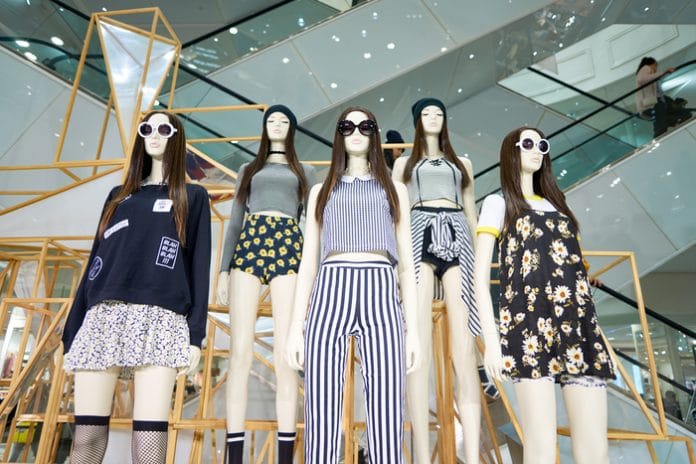 sustainability and corporate social responsibility though theirhabit of purchasing cheaper products persists. These habits have been instilled by lower price products, desire for new clothing product, unstable market demand, fashion bloggers influence, and passion for quick and convenient service, she adds. Rashid also attributes the growing popularity of fast fashion to the growing influence of fashion bloggers influence, especially during the current lockdown when consumers can’t do much apart from watching fashion blogs and shopping online.
Retailersgreenwashto appear ethical
However, Claire Heathcote, Co-Founder, Loop Cashmere, warns, fast fashion retailers usually muddle with buzzwords like sustainability, eco shopping, and conscious shopping to attract shoppers. To appear to be ethical, many of them also retort to green washing. They also launch sustainable products to distract consumers from their non-sustainable practices, adds Scott Joseph, Founder, Fashion Without a Face.
Joss Ford, Founder, Enviral, says, retailers’ transparency starts with their efforts to communicate their purpose to its employees. This helps employees prepare a sustainability report showing the targets they’ve met even before a public campaign is launched.
Though it has widely disrupted the industry, fast fashion has also made the retail market more simple, convenient, accessible and affordable. However, fast fashion retailers need to accelerate their sustainability initiatives as consumers are becoming more aware of their buying decisions.
CCCvA demands increase in duties on Asian imports
Camilo Rodriguez, President, Colombia’s Apparel And Related Products Chamber (CCCyA) is demanding an increase in duties on sub-valued imports from Asian countries. As per Sourcing Journal, Rodriguez believes, these goods are threatening Sri Lanka with job losses in the domestic market.
Bowing to industry pressure, Bogota recently slapped a 40 percent duty on clothing priced under $10 and a 15 percent plus $1.50 per kilogram tax for all apparel fetching over $10 when arriving at the country’s ports.
The CCCyA urged the government to expand this duty to cover clothing priced under $15 not $10. For apparel arriving at over $10 apiece, the tax should be 10 percent plus $3 per kilogram, said Rodriguez.
Colombia, a leading exporter of lingerie and beachwear products, is choking under sub-valued Asian merchandise, mainly T-shirts, pants and blouses which typically come in valued well below their production cost, Rodriguez claimed.
Last year, the country imported $2 billion of apparel products, compared with $574 million in exports. In 2019, that deficit stood at $2.4 billion for imports versus $734 million for exports. Clothing production, meanwhile, declined 21 percent to $4.13 billion as retail sales fell 21.7 percent.
Guillermo Criado, Commercial Manager, PatPrimo and a founding CCCyA member, said only 2 percent of Colombian imports fall under Bogota’s 40 percent duty, making it virtually worthless and requiring a more aggressive alternative.
Philippines needs to upgrade domestic, export markets before joining CPTPP
 Though the Comprehensive and Progressive Agreement for a Trans-Pacific Partnership (CPTPP), may boost Philippines’ garment sector, it may eventually drive investors away from the country, believes Robert Young, President, Foreign Buyers Association of the Philippines (FOBAP) As per a Phil Star Global report, from $1.09 billion in 2016, Philippines’ garment exports slipped y on an average 12.6 cent to $642.67 million in 2020 due to lack of backup industries in the country.
Philippines imports all raw materials including textile and buttons from abroad. Its fabrics are imported from South Korea, China, Vietnam. Young says, this increases its cost of garment-making which is 20 per cent more expensive than in Vietnam.
Consider local limitations
In such a situation, if Philippines is forced to sign the CPTPP, it may face direct competition from Vietnam, forcing investors to relocate to other countries, says Young. The country first needs to consider the limitations of local manufacturers who are yet to move beyond fast fashion to cater to the demands of international buyers, he adds.
The government also needs to focus on reviving the $1 billion garment exports to traditional markets such as United States, Japan and South Korea, Young adds.
Focus on export quality
Rene Ofreneo, Professor-Labor and Industrial Relations, University of the Philippines, urges the government to improve the quality of exports. This will help local players capture more orders for high value apparels, he adds. They should also aim to develop a niche product to capture the global apparel market.
Though Philippines invested nearly $35 million or P1.7 billion to transform facilities to PPE making during the pandemic, it received only 14 per cent or less than P700 million, of the P4.8 billion contracts placed by the government. The government therefore, needs to boost domestic as well as export markets before entering new trade agreements.
Egypt to set up world’s largest spinning and weaving factory
Egypt plans to set up the world’s largest spinning and weaving factory in Mahalla al-Kubra, at a cost of about LE900 million.
As per reports, the factory is scheduled to be completed by the end of this year, after construction work was delayed as a result of the coronavirus pandemic.
According to the Holding Company for Cotton, Spinning, Weaving, and Clothes, this factory will contribute to a major shift for this industry in Egypt. It marks the first step forward towards the development and modernization of the textile industry, through the government’s plan to develop it at a cost of more than LE21 billion over two years.
The plan includes great focus on increasing exports and improving the quality of production by importing the latest machinery from Italy and Switzerland.
Planned on about 62,500 square meters, the factory accommodates over 182,000 yarn materials with an average production capacity of 30 tonne of yarn a day.
Egypt also aims to develop similar factories in Cairo, Kafr al-Dawar and the Delta region to convert the losses of public textile companies – approximately LE three billion – annually into profits.
Scotch & Soda launches store expansion program
Scotch & Soda has launched a new store expansion program. As per Fashion Network, the company plans to l open 15 new standalone locations over the next six months, as well as 12 concessions.
The company has also unveiled a new brand logo that reflects the brand’s design ethos of connecting the expected with the unexpected, celebrating the power of self-expression and liberal thinking of Amsterdam, the city where the brand was born.
Designed in collaboration with A Studio in New York, the new identity was revealed on the brand’s social media channels, website and dedicated app, as well as in several new stores, before launching on collections in November with the SS22 offer.
The store opening plan started with Utrecht in the Netherlands and will be followed by Westfield’s Mall of the Netherlands in Leidschendam on March 18, as well as the brand’s largest flagship worldwide opening in ‘s-Hertogenbosch. It will also open two stores in Germany, while a store in Ukraine will open in May.
Further the company will open two stores in Poland by October. It will open a store in the US in September, while a store in Israel will debut next month followed by Qatar, UAE and Kuwait. In Asia-Pacific, a new franchise will open in April in Mumbai, India, as well as in October in Perth, Australia.
The brand is also adding new showrooms and offices in Shanghai and Milan this spring.
The new stores will have strong sustainability features and the company will increase the responsible standard of materials used in its collections to a minimum of 50 per cent of these materials.
Sateri to expand lyocell production capacity by 2025
A major producer of viscose fiber, Sateri plans to expand its lyocell production in in China to 500,000 tonne by 2025.
As per Sourcing Journal, the company kicked off the first phase of this expansion with groundbreaking on a new 100,000-tonne facility in Changzhou, Jiangsu province. It plans to build another 100,000-tonne plant in Nantong, Jiangsu province, later this year. The Changzhou facility is expected to commence production in the third quarter of 2022 and will create more than 800 jobs, the company noted.
Sateri forayed into China’s lyocell market last May when its 20,000-tonne lyocell production line in Rizhao, Shandong province, commenced production. The same site houses a 5,000-tonne lyocell pilot production line dedicated to the development of lyocell technology.
A natural and biodegradable fiber, Sateri’slyocell is made from wood pulp sourced from certified and sustainable plantations. It is manufactured using closed-loop technology, requiring minimal chemical input during the production process and utilizing an organic solvent that can be almost fully recovered and recycled.











