


FW
Reebok explores sale options
Matt O’Toole, President, Reebok is exploring various options to sell the activewear brand. Although the sale has attracted numerous companies including Authentic Brands Group, VF Corp and Anta Sports, China-based parent of Fila and Descente among them — no deal has been finalized as yet.
Adidas bought Reebok for $3.8 billion in 2006 and the sale is now expected to be worth $2.4 billion. Adidas incurred costs of €60 million related to divestiture in the first quarter, and is reporting all income and expenses for Reebok as discontinued operations. However, Reebok experienced a sustainable business recovery in Q1, with net sales up double digits backed by a strong order book going into 2021.
Once the sale is completed, Adidas has no plans to downsize or exit the Boston headquarters, which employs some 700 people. The employees will begin returning to office this summer but most likely on a staggered basis, says O’Toole. O’Toole said Reebok will not be involved with Fédération de la Haute Couture et de la Mode, and will only support designer Kerby Jean-Raymond as he shines a light on his Pyer Moss collection. However, the designer is working closely with Reebok’s design team, led by Portia Blunt, who joined the brand from New Balance in March as vice president of apparel. Reebok’s other launches expected for 2021 include updates on the basketball heritage side as well as a “big launch of classic leather at the end of the year, O’Toole said.
Second COVID-19 poses challenges for Tirupur, Coimbatore manufacturers
The second COVID wave has posed a lot of challenges for manufacturers in the textile hubs of Tiruppur and Coimbatore. While Coimbatore is the second worst-hit region after Chennai, Tiruppur has also seen a spike in daily new cases over the past few days. Each unit in Tirupur is adopting calibrated measures and adhering to government guidelines, informs Prabhu Damodharan, Convenor, Indian Texpreneurs Federation. As per Hindu Business Line, these units are ready to undergo the short-term pain for long-term gains once key export markets see a revival.
A Sakthivel, Chairman, Apparel Export Promotion Council (AEPC), says, the industry expects the situation to improve soon as key markets — such as the US and Europe — are not under lockdown and orders continue to flow from these regions. Damodharan points out, key consumption markets are witnessing a demand boom and the industry has adequate raw materials and manpower to meet requirements. Organized players have retained migrant laborers and workers by providing them accommodation and making arrangements for early vaccination, he adds.
New York Fashion Week plans physical edition in September
New York Fashion Week will return to its physical edition from September 8 to 12, 2021. This Spring/Summer 2022 season of the show will be a traditional in-person event and attract 11 brands. The event will be supported by IMG, Fashion Alliance, Teflar, Rodarte, Proenza Schouler, Altuzarra, Brandon Maxwell, Prabhal Gurung, Seirgo Hudson, Monse, Jason Wu, LaQuan Smith and Markarian.
These labels will unveil latest offerings as part of NYFW: The Shows, a program organized by IMG and sponsored by Afterpay. The event will be funded by the Fashion Alliance which will also provide the content and talent for it, says Leslie Russo, President, IMG. A few American brands will also make their comeback at the event. These include Pyer Moss by Kerby Jean-Raymond and Thom Browne.
Italian luxury brand Moschino will make its debut at the event which will conclude with the Met Gala on September 13.
Global cotton consumption to grow 3.5 per cent
As per USDA’s first cotton forecast for 2021/22, global cotton consumption is expected to grow by 3.5 per cent to almost 122 million bales in 2021-22. World cotton trade is expected to witness slight drop during the year tough exports are expected to more than double, to 697,000 tonne due to dramatically higher production and improved prospects relative to the extreme drought in 2020-21.
Exports from United States and Brazil are expected to dip due to significantly lower carry-in while those from India are expected to increase. China is projected to be the world’s largest importer for the second consecutive year, although imports are forecasted to be lower than previous year’s eight-year high. Pakistan imports are expected to decline due to highest expected consumption level in three years.
Global cotton stocks have expanded again in the past three years to between 95 per cent and 75 per cent of total use, compared with the three years from 2016-17 when stocks represented less than 70 per cent of use.
H&M resumes orders in Myanmar
After a temporary pause following a military coup in the country, Swedish fashion retailer H&M has once again started placing new orders with Myanmar suppliers. With this decision, the brand aims to prevent suppliers from closing their factories which would result in unemployment for tens of thousands of workers. It has confirmed the factory does not have any direct links with the Myanmar military and is now seeking legal guidance to handle indirect links.
Shortly after the military seized power, H&M signed a statement committing to the Myanmar and its employees during developments of deep concern. It is known for its fast fashion clothing for men, women, teenagers, and children. As of November 2019, H&M operates in 74 countries with over 5,000 stores under the various company brands, with 126,000 full-time equivalent positions. It is the second-largest global clothing retailer, behind Spain-based Inditex.
BGMEA seeks additional tax cuts from the government
The Bangladesh Garment Manufacturers and Exporters Association (BGMEA) has urged for more tax cuts from the government as the industry has suffered huge losses due to the COVID-19 pandemic. The industry lost exports worth $4 billion in the 2019-20 fiscal year. BGMEA has urged the government to reduce tax at source on readymade garment exports from the existing 0.5 per cent to 0.25 per cent for the next five years and not deduct income tax against this source tax.
Faruque Hassan, President, BGMEA requested the government to keep the corporate tax rate at 10 per cent for green factories and 12 per cent for other factories for the next five years. He also demanded the rate of income tax deduction on incentives be reduced from 10 per cent to 0 per cent. BGMEA further proposed the apparel sector be allowed to repay their incentive loans through 30 installments in three years instead of 18 installments in two years. It has also sought maximum cooperation of the finance ministry for the release of various imported goods and fire extinguishers.
The BGMEA also plans to contribute Tk500 crore to the SME Assistance Fund and take steps to meet the emerging challenges in transitioning from a least developed country (LDC) to a developing one. The apex apparel sector trade body has also sought funds for creating a virtual marketplace, which requires an allocation of Tk100 crore in the next budget. It has also placed several proposals related to the sustainable development of the industry.
Consumer awareness may help prevent ‘Greenwashing’ by brands
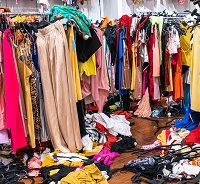 The growing importance of sustainability has unfortunately also given rise to greenwashing amongst fast fashion brands. As per an extra.ie report, the term, first coined in 1980, has once again come under spotlight with consumers’ increasing demand for sustainable fashion brands. Laura Egan, Owner, Studio Minti, defines Greenwashing as misleading of consumers by brands by falsely projecting their practices as being sustainable. Egan cites the example of some print ads released by US oil company Chevron in the 1960s that falsely depicted its environment-friendly policy by making employees pose with animals like sea turtles.
Putting up ‘sustainability façade’
Companies resort to Greenwashing to capitalize on the demand for sustainable products amongst consumers, says Egan. They often spend more on putting a façade of sustainability rather than actually being sustainable. A study by Neilsen Holdings in 2015 showed 66 per cent consumers were willing to invest more in sustainable products. Today, this figure has risen to 73 per cent. Consumers need to evaluate the sustainability approaches of companies to see whether it is a holistic one or limited to one specific factory or product. At times, conscious’ brands promote their collections made from so-called ‘sustainable’ fabrics. Consumers need to be wary of such brands that inadvertently indulge in mass production and stop buying from them.
Awareness can lead to more sustainable choices
Often, brands focus on a minor sustainability details like recycled fabrics, ignoring larger issues involving the ethical and environmental aspects of their production. For instance, fast fashion brand Primark claims to adhere to international working standards in its factories. It also claims to have stopped using chemical dyes and raw materials in its garments. However, Egan rubbishes the claims made by the brand and calls them frustrating. She recommends consumers to buy more secondhand clothes as they contribute to a circular economy.
Egar also recommends opening of swap shops to enable consumers exchange clothes with others. According to her, this would enable owe something new without paying a cent and contributing to the fast fashion industry.
Emphasizing that reducing fast fashion consumption may not happen overnight, Egan urges consumers to be aware of its environmental hazards. According to her, this will help them alter their shopping habits and make more sustainable decisions.
Next edition of London Fashion Week to be held digitally in June
The next London Fashion Week will again be held digitally from June 12-14, a week before the final UK reopening date. The event will cover both women’s and menswear. Though largely digital, the event will have certain physical events operating strictly in line with official guidelines.
Sponsored by Clearpay, the event will celebrate excellence in design and creativity but with a strong skew towards enabling growth with sustainability. Participants in the event will include, Av Vattev, recent award-winner Bethany Williams, Dilara Findikoglu pLtd, Jordanluca, Liam Hodges, Lyph, Marques ‘ Almeida, Nicholas Daley, Olubiyi Thomas, Per Götesson, Preen by Thornton Bregazzi, Pronounce, Qasimi, Robyn Lynch, Staxx, Teija, University of Westminster, and Discovery Lab in collaboration with Toni & Guy. The latter will feature Abigail Ajobi, Auroboros, Azura Lovisa, Béhen, Chloe Baines, Djokic, Maxime, Mayyaagayeva, Noirgaze, Paolo Carzana and Shek Leung.
Trident to raise funds through NCDs and equity
Textile and paper maker Trident plans to raise funds up to Rs 1,100 crore through NCDs and equity shares. Of this, Rs 600 crore will be raised by issuing Non-Convertible Debentures (NCDs) and up to Rs 500 crore through equity shares. As per SRTEPC reports, Trident had earlier cleared the resolution for raising of funds for an amount not exceeding Rs 600 crore by issue of NCDs by way of public or private offering, in one or more tranches. It also approved the resolution for raising of funds for an amount not exceeding Rs 500 crore by issue of equity shares, non- convertible debt instruments along with warrants, convertible debt instruments or by way of a public or private offering, including QIP.
The company also appointed Naveet Jindal as its new CEO for Paper, Chemicals and Energy Business and Swapan Nath as CEO for Budhni. The board also approved the change in designation of Rajiv Dewan as the new Chairman of company with immediate effect and appointment of Usha Sangwan as its additional director.
Maternity wear market to grow by 3% CAGR from 2021-2025
Introduction of COVID-19 vaccines and consumers’ rapid shift to online shopping is expected to push maternity wear market during 2021-2025 growing at 3 per cent CAGR. As per reports, growth in global maternity wear market is being driven by improvements in economic conditions and rising disposable incomes. Also, the rising number of pregnant working women and increasing awareness about the availability of fashionable maternity apparel has created a significant demand for maternity wear. Moreover, increasing fashion consciousness among women in both developed and developing countries is expected to present several growth opportunities for vendors during the forecast period.
Driven by increasing demand for maternity tops from developing countries like India and China, the market generated maximum revenue in the tops segment in 2020. The segment is expected to witness further growth in the forecast period owing to rising disposable incomes and increasing birth rates. Growth in APAC is expected to be faster compared to the growth of the market in other regions. This can be attributed to increasing number of working women. Also, the high birth rate in the region is expected to contribute to the growth of the maternity wear market during the forecast period.











