


FW
Mame Annan-Brown appointed Executive Vice President of Kontoor Brands
Global lifestyle apparel company with a portfolio led by two of the world’s most iconic consumer brands, Wrangler® and Lee®, Kontoor Brands has appointed Mame Annan-Brown new Executive Vice President, Global Communications and Public Affairs, effective August 11, 2021.
Annan-Brown will be responsible for all aspects of global corporate communications – developing, leading and executing a cohesive internal and external communications strategy. This includes oversight of message development, media relations, owned and digital content creation as well as employee relations and engagement. She also will lead government affairs strategies to achieve positive outcomes, developing Kontoor’s position on key legislative and regulatory issues. Additionally, she will serve as a representative and advocate for Kontoor’s interest among government agencies and other select associations. As a member of the company’s Executive Leadership Team, Annan-Brown will report to Kontoor’s President and Chief Executive Officer, Scott Baxter.
Annan-Brown was earlier employed with the International Finance Corporation (IFC) as the Head of External Relations since 2018. Prior to that, she was Head of Communications, IFC Asset Management Company (AMC); Chief Communications Officer, Results for Development Institute (R4D); Director-Marketing & Communications, United to End Genocide and Vice President, Investment Bank-Marketing & Communications, JPMorgan Chase & Co.
Lectra to acquire Neteven’s capital and voting rights
Lectra has signed an agreement to acquire the entire capital and voting rights of the French company Neteven. As per Textile Focus, Neteven offers Lectra an innovative service based on a SaaS platform, which enables brands effectively monitor the distribution of their products on the world’s largest online marketplaces.
The SaaS platform centralizes the product catalog and information on stock levels, sales prices and orders, in order to automate and facilitate distribution on online marketplaces. This saves the customers’ time while they manage their distribution channels and gain greater local and international visibility of their products in order to reach more consumers. Neteven’s technological and services expertise helps brands optimize their e-commerce strategy.
Neteven is the perfect complement to the other solutions recently acquired by Lectra, Kubix Link (product lifecycle management and product information management – PLM, PIM) and Retviews (competitive intelligence and trend analysis). The combination of the three offers will enable Lectra to provide an even more comprehensive response to its fashion customers’ needs.
The transaction involves the acquisition of 80 per cent of Neteven rights for €12.6 million. The remaining capital and voting rights will be acquired in June 2025, for an amount between 0.6 to 0.9 times 2024 recurring revenues.
Reformation, Saitex champion for the passage of SB62
At an event hosted by Remake and the Garment Worker Center, Reformation joined denim manufacturer Saitex in championing the proposed Garment Worker Protection Act (SB62). As per Sourcing Journal, the act eliminates the controversial piece-rate payment model, provides more stringent safeguards against worker wage theft, and holds brands responsible for damaging practices perpetuated across their supply chains.
It seeks a level playing field, ensuring workers are not paid less than state or county-mandated minimum wage laws stipulate. In Los Angeles, that rate is $15 per hour. However, some advocacy groups claim the bill could harm American brands and California’s garment sector as a whole. California’s Chamber of Commerce included claims the Act would significantly increase burden on employers, and could ultimately encourage them to contract with manufacturers outside of the state.
Meanwhile, the American Apparel and Footwear Association (AAFA) has opposed SB62 in its current form, citing certain aspects of the bill that it believes are unfair to those that manufacture stateside.
GSP+ scheme could help Bangladesh address LDC graduation losses
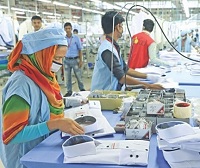 Bangladesh graduation from Least Developed Countries (LDCs) is likely to be bittersweet. On one hand, Bangladesh will progress to being a developing country on the other it stands to lose LDC specific preferences and privileges afforded by international development partners. One of its most significant losses would be the loss of duty-free and quota-free (DFQF) market access for exports. Bangladesh’s exit from LDC has been scheduled by United Nations Committee for Development Policy (UNCDP) for 2026. On its graduation, the country stands to lose huge trading benefits to the EU and UK market.
Exploring GSP+ to cover DFQF fallouts
To address DFQF loss-related fallouts—particularly in the EU -- Bangladesh plans to access the EU’s GSP+ scheme. As per a Daily Star report, the GSP+ scheme was initiated by the EU In 2015 for non-LDCs, Low-Income Countries (LICs) and Low-Middle-Income Countries (LMICs). Titled ‘Special Incentive Arrangement for Sustainable Development and Good Governance’, the scheme enables EU to offer zero duty market access upto 66 per cent of tariff lines to the eligible countries, like Bangladesh.
Currently only eight countries including Pakistan and Sri Lanka enjoy benefits under GSP+ scheme. To access these benefits, Bangladesh needs to fulfill several requirements including raising the value of top seven major exports to over 75 per cent of total GSP-covered exports. Bangladesh already fulfills this criterion as the current value of top seven exports is 96 per cent of total exports to the EU.
Eligibility requirements
Secondly, Bangladesh needs to limit its share in EU’s total imports under the scheme to 7.4 per cent. Currently, Bangladesh’s share in EU’s total imports is 26 per cent which could hamper its eligibility for GSP+. The preference eligibility under the GSP+ scheme demands "double transformation" of exported items. If post LDC graduation, Bangladesh aims to access the DFQF markets, it needs to move on from being a producer of raw materials to a supplier of finished goods.
Another challenge Bangladesh faces is fulfilling the sustainability requirements. It needs collate and process credible data to argue the ‘vulnerability criteria’ and ‘import share criteria,; if it intends to pursue the GSP+ pathway. It also needs to strengthen its backward linkage industry by implementing a strategic business plan in the textile sector.
Invoking regional cumulation provision
The Rules of Origin facility of GSP+ enables Bangladesh to meet the requirements of double transformation. The country can invoke the ‘regional cumulation’ provision that allows imports from South Asian countries to account in the calculation of the double transformation. The regional cumulation provision also allows Bangladesh to account for imports from countries with which the EU has Free Trade Agreements (FTA). However, to what extent Bangladesh’s exports will remain price-competitive by accessing the inputs from these countries, needs to be seen.
Strategies for climate-related goals
Bangladesh also needs to formulate new strategies to accomplish other related global commitments including ensuring lean energy, carbon neutrality, waste management, robust climate actions vis-à-vis the emerging EU Green Deal, Circular Economy frameworks, etc.
To gain a permanent duty-free access to trading nations Bangladesh can weigh the option of an FTA with the EU. However, this is a tedious, so-far-uncharted option that requires difficult trade-offs between domestic industries/sectors. Therefore, the Bangladesh government needs to initiate discussions with business and industry leaders on strategies post LDC graduation.
Wrangler, Billabong launch first collaborative collection
Wrangler and Billabong have launched their first collaborative summer collection that highlights the best of both brands through a western spin on vintage surf fashions for men and women.
The collection’s first drop, includes more than 40 men’s and a robust array of women’s summer staples ranging from signature boardshorts, workwear, denim, accessories, graphic Ts, playful blouses and dresses, and surf and swimwear (a first for Wrangler) with a ’70s-inspired beach-meets-western, casual élan. The second drop, slated to release later, will include more Wrangler-inspired range jackets, denim, fleece, high-waisted cords, and more. In addition, the line was designed with eco-conscious materials — recycled P.E.T., organic cotton and hemp.
The Wrangler x Billabong collection, ranging in price from $25.95 to $149.95 across the 130 total styles, will be available on both brands’ e-commerce sites, as well as with select retail partners, such as nordstrom.com.
Guess announces targets in new sustainability report, Vision Guess
In its fourth sustainability report Vision Guess covering fiscal years 2020 and 2021, American fashion brand Guess announced its future targets, written in accordance with the Global Reporting Initiative (GRI) and Sustainable Accounting Standard Board (SASB) standards.
As per these targets, Guess plans to increase sustainable denim offerings to 75 per cent within three years, replace virgin polyester with recycled materials, reduce corporate greenhouse gas emissions by 50 per cent and supply chain emissions by 30 per cent by 2030. Its greenhouse gas targets have been approved by the Science Based Targets Initiative.
The report also highlights the company’s new Guess Sustainability Assurance Framework - a robust process to collect, review and test sustainability data to ensure the consistency and comparability of nearly 100 ESG-related metrics, before sending to its external assurance provider.
The publication of Vision Guess marks the company’s successful completion of a reasonable assurance engagement with Big 4 accounting firm KPMG to examine the metrics and disclosures in its sustainability report.
Madewell launches new resale platform
Expanding its partnership with secondhand specialist ThredUp, J Crew Group-owned denim brand Madewell has launched its own dedicated resale platform, Madewell Forever.
As per Fashion Network, the Madewell Forever platform will be powered by ThredUp’s Resale-as-a-Service (RaaS) tech and logistics program. Together, the two companies will create the denim-focused white-label resale channel, which includes a digital shop.
The platform will allow Madewell fans to both empty out their own closets and shop for second-hand denim pieces. It will launch with more than 3,000 pre-owned women’s jeans. Stocked via ThredUp’s inventory and with pieces collected at Madewell stores, Madewell Forever will add new styles hourly, as available.
Customers can bring pre-worn jeans of any brand or style to Madewell stores and receive $20 to be spent on a full-priced pair of the brand’s jeans. Collected denim items are then sent to ThredUp, who sort the inventory and pass on women’s Madewell denim that meets its quality standards to be resold via Madewell Forever.
Pieces that are not considered fit for resale will be recycled through approved programs such as Cotton’s Blue Jeans Go Green.
China’s T&A imports increase to $2 billion from January-April 2021
China’s textile and apparel (T&A) imports from Europe increased to $2 billion during January-April 2021 from $1.4 billion during the corresponding period in the previous year. As per a Textile Value Chain report, China’s imports from Europe grew 44.11 per cent during January-April 2021. Imports from Vietnam increased 35.74 per cent to $1.7 billion in 2021 during the same period. Imports from the US increased 72.98 per cent or $0.4 billion.
India’s export of textile and apparel imports to China grew by 67.83 per cent from $0.4 billion to $0.8 billion. Japan’s export to China remained constant for both the mentioned durations at $0.7 billion. There was a slight growth in Brazil and Australia’s exports at $0.6 billion and $0.5 billion respectively. Taiwan’s exports grew by 10.14 per cent from $0.4 billion to $0.5 billion. Korea’s export dropped from $0.6 billion to $0.4 billion.
Ghana’s apparel exports being threatened by competitors’ low costs, high volumes: GEPA
Ghana’s apparel exports are being continuously threatened by the low-cost, high-volume competing exports from China and other Asian countries, says the Ghana Export Promotion Authority (GEPA). The sector’s prospects are linked to the relative speed with which it can be set up and the large impact on employment-generation, especially in industrial settings.
In a Ghana Web report, the association says, domestic apparel exports continue to suffer from inadequate promotion of its textiles and Afrocentric fashion in mainstream apparel channels abroad. The apparel industry in Ghana employs more than 6,000 Ghanaians and exports more than $30million on average annually. According to GEPA, export revenues from the sector in 2020 stood at $43million compared to the $137.4billion worth of apparel and accessories that China alone exported last year to the US market.
But in its 10-year National Export Development Strategy for the non-traditional export sector, GEPA says its export revenue for 2021 is projected to reach $52million by December. The authority says it is currently reviewing financial positions of existing apparel companies in order to roll-out a funding package to service funding requirements of the industry.
The association also plans to provide strong capacity building and funding support to upgrade its members to become a self-sustaining national industry.
Intermoda 2021 commences in Mexico
One of the largest fashion trade shows in Latin America, Intermoda 2021 is being held from July 20-23, 2021 at Guadalajara in Mexico. As per Business of Fashion, the trade fair is being held at Expo Guadalajara and is attended by 500 companies and 700 brands from countries like Mexico, Colombia and the US, and over 10,000 buyers. The fair features pavilions dedicated to womenswear, menswear, childrenswear, streetwear, suppliers, footwear and accessories. Intermoda has been running for 37 years with two editions per year, in January and July.
According to Mario Flores, President, this edition of Intermoda seeks to reactivate the sector with a pavilion to promote the economic revitalisation of the fashion industry in states like Jalisco, Hidalgo and Guanajuato and also Mexico City. Called ‘Canaive-Made in Mexico’, the pavilion is being held in partnership with the National Chamber of the Clothing Industry (CANAIVE).
Like the previous two editions, the event is not holding runway shows due to health and safety measures; strict security protocols are being implemented to mitigate the pandemic. Attendees will, however, be able to visit prescribed areas where designers and brands such as Paulina Luna, Daniel Andrade, Vero Diaz, Yeshua Herrera are expected to showcase their latest collections.
There will also be a session of 13 conferences dedicated to the fashion business, business innovation, design, trends and foreign trade in a hybrid format that will feature both in-person and remote speakers from Spain, Italy, the United States and Mexico.











