


FW
Higg launches new traceability program
A technology platform that enables consumer goods companies to measure, manage, and share the social and environmental impacts of their full value chain, Higg has launched a new program enabling comprehensive traceability across the global supply chain. As per Textile World, the Higg traceability program aims to fast-track global brands’ efforts to track the hidden impacts within their manufacturing processes, ensure fiber integrity, and to understand, communicate, and accelerate product sustainability.
The Higg traceability program is designed to enable consumer brands to identify and share the supply chain provenance of billions of items with their upstream value chain partners and highlight and disclose sustainability information – on their own and other ecommerce platforms – to the public and other stakeholders.
The program launches with a cohort of innovation partners including atma.io by Avery Dennison, FibreTrace, and TrusTrace: leading solution providers in the end-to-end tracking of materials and product origins, and unified in identifying and illuminating essential sustainability management data. These providers will be integrating their unique services onto the Higg platform in order to connect a network of 45,000 users, 500 brands and retailers, and tens of thousands of manufacturers’ factories, bringing product chain-of-custody tracking to the robust platform.
Cone Denim appoints new Senior Vice President, Commercial Strategy
US denim producer Cone Denim has appointed Amie Borges as the new Senior Vice President-Commercial Strategy. As per a Spin Off report, Borges will lead the global sales team and work closely with the product, operations and manufacturing teams.
Prior to joining Cone Denim, Borges served in a number of leadership roles across apparel brands, most recently as Vice President Sales - North America and Asia with 7 for all Mankind. Throughout her diverse roles, she has led brand transformations and revenue growth, while overseeing all aspects of product life cycles across North America, South America and Asia, Cone Denim states.
A graduate of the Fashion Institute of Technology, Amie Borges has a Bachelor’s degree in Fashion Merchandising Management, Magna Cum Laude. In her new role she is based out of Cone’s New York office and will begin connecting with customers over the coming weeks.
Cone Denim operates as part of Elevate Textiles, Inc. with manufacturing capabilities in Mexico and China and a global network of sales, product and merchandising professionals based out of Greensboro, NC, New York, Los Angeles and Hong Kong.
Empyrean Luxury to use PETA approved Vegan mark on footwear
A Delhi-based footwear firm, Empyrean Luxury plans to use the ‘PETA-Approved Vegan; mark to help shoppers choose vegan items and accessories. House of Anita Dongre, Welspun India, Purvi Doshi, Paperdom, and PAIO are among the other Indian companies, designers, and brands that use the mark.
Recognized for its Italian elegance and high-quality footwear, Empyrean Luxury is celebrating its move from leather to veganism by utilizing the hashtag #WeLoveAnimals on its website and offering a 10 per cent discount to customers who use the purchase code “GOVEGAN.”
By embracing vegan fashion, the company commits to stand as a socially responsible business and never advocate any form of cruelty to animals in any way, says Saksham Chaudhary, Owner, Empyrean Luxury. The company’s most sought-after vegan shoes are designed to assist shoppers in putting an end to cow cruelty.
Eastman launches Naia™ fiber for sweaters, knitwear
Maker of sustainably sourced Naia™ cellulosic fiber, Eastman, recently launched its Naia™ fiber in the sweaters/knitwear category. The fiber gives sweaters and knitwear designers more choices and versatility to create, as per a report by Global Fashion Agenda.
A ustainable fiber made from wood pulp, Eastman Naia™ cellulosic fiber offers full traceability from tree to fiber. The fiber is made with the highest safety, social and environmental standards. Eastman’s closed-loop production process allows recycling and safe reuse of solvents and water, resulting in fibers that have a low environmental impact.
Naia™ allows for the creation of sweaters that are comfortable, extremely soft, smooth, breathable and—depending on the blend— feel lightweight to provide longer-lasting comfort.
Made with sustainably sourced wood, Eastman Naia™ cellulosic fiber brings the richness of nature to comfortable and effortlessly luxurious fabrics. The fiber is the perfect choice for fabrics in womenswear. The filament yarn transforms into luxurious, soft, and easy-to-care-for fabrics, while our staple fiber creates eco-conscious blends that are supremely soft and quick drying and consistently reduce pilling, giving designers more freedom and choice.
Euratex urges European authorities to support companies facing energy crisis
Alberto Paccanelli, President, Euratex, issued an urgent appeal to European and national authorities to support companies facing a massive increase in their energy costs.
Euratex urged for immediate measures to alleviate the burden of these energy costs, e.g. by reducing VAT on the energy bills. In the longer run, the EU should develop a smart strategy towards ensuring long term sustainable energy supply, at reasonable cost for the industry. If this is not considered, any attempt towards developing a new EU Industrial strategy will be meaningless, since competition with third countries will be devastating.
As the voice of the European textile and clothing industry, EURATEX works to achieve a favourable environment within the European Union for design, development, manufacture and marketing of textile and clothing products.
The EU textile and clothing industry, with around 160,000 companies employing 1.5 million workers, is an essential pillar of the local economy across many EU regions. With over € 62 billion of exports, the industry is a global player successfully commercializing high added value products on growing markets around the world.
Working together with EU institutions and other European and international stakeholders, Euratex focuses on clear priorities: an ambitious industrial policy, effective research, innovation and skills development, free and fair trade, and sustainable supply chains.
Chargeurs*PCC Fashion Technologies to sponsor CFS +2021
Chargeurs*PCC Fashion Technologies has emerged as one of the Global Faashion Agenda’s supporting sponsors for CFS +2021.
Chargeurs*PCC has rolled out a series of innovations since the initial launch of its Sustainable 50 collection, including a line of circular-knit interlining products using an innovative, process patented by partner mill Weemeet that requires no water. At launch, the Chargeurs*PCC sustainable collection offered 50 items, but the range has now expanded to include more than 250 items. In addition, the company can now sustainably manufacture any base material from its catalogue of thousands of products, including nylon, polyester and cotton.
The manufacturer is holistically committed to sustainability and is the only supplier in its market segment to have both signed the UN Global Compact (the world’s largest corporate sustainability initiative, driving businesses towards supporting the 17 Sustainable Development Goals) and performed Sedex Members Ethical Trade Audits (SMETAs) on its facilities as well as those of its suppliers. The audits cover all aspects of responsible business practice across Sedex’s four pillars of labour, health and safety, environment, and business ethics.
Industry needs to take responsibility for the rise in fast fashion culture
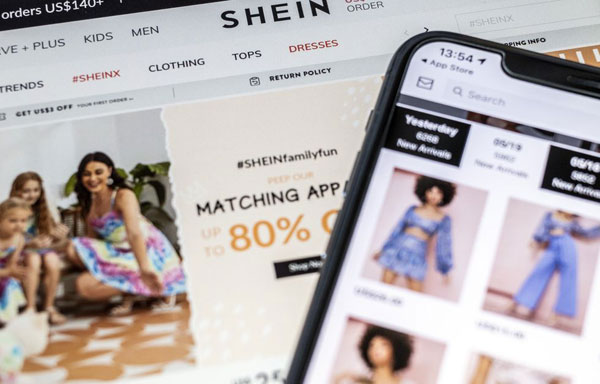
Whether it is for putting a swastika necklace up for sale or for the #BamaRush TikTok controversy, Chinese online fashion company, Shein has perpetually been in the eye of storm. The fast fashion brand has often been accused of issues ranging from environmental to ethical. One frequent accusations against Shein is the brand’s complete lack of transparency. Founded in 2008, the direct-to-consumer fashion brand is often criticized for transporting clothes overseas by planes, adding to its overall environmental footprint.
No evidence to prove legal and ethical compliance
As Sophie Hirsh writes in ‘Is Shein an Ethical Brand- A Look Into the Fast Fashion Empire’ in the Green Matters, though the company’s website emphasizes its focus on social responsibility and supply chain transparency, it does not elaborate on the Code of Conduct for suppliers. This makes it difficult for consumers to determine the brand partners’ involvement in forced labor. Also, the Code of Conduct, mentioned on the website, applies only to the brand’s partners not to Shein itself.
The website also declares Shein’s partners not only comply with local environmental laws but also adopt required measures to reduce the impact of their operations on environment. However, the company does not have a third party certificate to prove these claims. The brand lacks ethics completely, says Venetia La Manna, Fair Fashion Campaigner, Influencer and Co-founder, Remember Who Made Them, a campaign to support garment workers. It has no evidence to prove either the sustainability of its operations or adherence to fair wage practices, she adds. The e-commerce brand has also been accused of plagiarism by many other brands.
Complete ignorance of labor rights
Shein often posts endless videos of customers sharing their purchase hauls from the brand’s website. An advertising campaign, these videos inspire customers to buy clothes from the brand in bulk. Many of these videos are designed to explore the society’s fascination for newness and penchant for cheap prices. However, most of them ignore workers’ rights and environment in general, says La Manna.
The fashion industry, needs to completely overhaul its operation system, says La Manna. This involves narrowing the huge wealth gap between factory owners and garment workers, curbing excess production and dealing with inventory issues. Instead of blaming consumers, the industry needs to take complete responsibility for its actions for the rise in fast fashion culture.
Shein plans pop-up store in Paris
Chinese fashion e-tailer. Shein, has decided to open a temporary physical store in Paris during the forthcoming fashion week.
The Shein Studio store will be open between September 29 and October 2 at 13 rue Jean Beaussire. It will feature the latest fall/winter novelties in ready-to-wear, accessories, lingerie and beauty products, as well as the Curve collection (with sizes ranging from XL to 4XL), Shein's premium line Motf, and collaborations with influencer Stephanie Durant and French R&B singer Wejdene.
Before Paris, Shein will make an appearance in New York on September 26, where it will stage the ‘Rock the Runway’ show, featuring live music, dancing and fashion collections. A year ago, Shein staged a first digital show that was broadcast worldwide, and in 2019 it opened pop-up stores in Paris and Marseilles. The e-tailer is especially keen to highlight the design content of its range, and this year it has launched Shein X, a program to support emerging designers. According to Forbes, Shein’s annual sales are worth $10 billion, and the e-tailer, first set up in 2008, is gradually eroding the market share of traditional fashion retailers. For example, between March and May 2021,Shein overtook Kiabi to become the leading player on the women’s ready-to-wear market in France, as per data by Kantar.
IPF report urges UK fashion leaders to create a circular fashion ecosystem
The Circular Fashion Eco-system report led by the British Fashion Council’s Institute of Positive Fashion (IPF) with contribution from the UK Fashion & Textile Association (UKFT) calls on all those engaged in UK fashion to come together and create a circular fashion ecosystem for the UK.
The report seeks to address the industry’s impact on the planet through linear production models and defines the roles that all stakeholders, from academia to consumers, must play.
The report provides the fashion industry with three target outcomes which combined will allow for a viable, resilient and prosperous ecosystem – reduced volume of new physical clothing; maximized utilization and revaluation through product circularity; and optimized sorting methods and materials recovery. These outcomes are underpinned by 10 priority actions and 30 recommendations for an ecosystem of stakeholders who need to act collectively to succeed.
The priority actions involve efforts across many different parts of the fashion value chain. Each action area is equally important and has the potential to amplify the effects of the others – circular design; consumer empowerment; circular and sharing business models; demand for circular and sustainable fibres; post-use ecosystem; sortation and recycling; enhanced identification and tracking; ecosystem modelling; policy and regulation and infrastructure investment.
GII Apparel Group to buy European luxury brand Sonia Rykiel
G-III Apparel Group has signed an agreement to purchase European luxury fashion brand Sonia Rykiel.
G-III plans to accelerate the relaunch of the brand primarily in Europe, for the fall of 2022, with collections across multiple categories. The transaction is expected to close by the end of October 2021.
Morris Goldfarb, Chairman and Chief Executive Officer, G-III, says, there is significant opportunity to unlock the untapped potential of this brand. GII will leverage the existing executive management team and infrastructure based in Europe, as well as its supply chain expertise to scale and grow the Sonia Rykiel business across apparel, accessories and numerous other lifestyle categories.
Eric and Michael Dayan, Owners, Sonia Rykiel, adds G-III’s dominance in a diversified range of lifestyle categories, along with its well-established and broad range of retail partners, assures a bright future for the growth of the Sonia Rykiel brand.











