


FW
Egypt’s annual apparel trade surpasses EGP 300 billion
According to Mohamed Abdel Salem, Chairperson, Federation of Egyptian Industries’ Ready-Made Garments Chamber, the country’s apparel trade now surpasses EGP 300 billion per year as imports have dropped due to Decree No. 42, which required importers to register with the General Organization for Export and Import Control (GOEIC). In addition, the Ready-Made Garment Chamber and Gahez Digital Marketing recently inked a collaboration pact.
Salem says, these factors aided local businesses to improve their products and produce high-quality clothes to meet market demands. The Federation of Egyptian Industries (FEI) is one of the country’s largest employers’ associations, with 20 industrial chambers as members, representing over 60,000 industrial enterprises, with over 90 per cent of them belonging to the private sector, which employs over 7 million people and accounts for 20 per cent of the country’s GDP.
2021 World Cotton Day to focus on fiber’s positive impact
The 2021 edition of the World Cotton Day will be on the theme ‘Cotton for Good’. It will celebrate the fiber enduring positive impact. The event will feature a virtual seminar with notable speakers such as Bert Jacobs, CEO and Co-Founder, Life is Good, and Maxine Bédat, Director, New Standard Institute. Other global industry experts include Cotton Council International, Viterra India, International Cotton Advisory Committee, Better Cotton Initiative and African Cotton Foundation.
Organized by the International Cotton Advisory Committee (ICAC), the webinar will focus on keynote topics such as responsible fashion, sustainability and the importance of cotton in countries around the world. Attendees will learn about the US Cotton Trust Protocol®, which aligns with the U.N. Sustainable Development Goals to bring quantifiable and verifiable goals and measurement to sustainable cotton production.
The United Nations celebrates October 7, each year as World Cotton Day. On this day, stakeholders from the global cotton community come together to speak on the benefits of cotton. Formed in 1939, the ICAC is an association of cotton producing, consuming and trading countries. It acts as a catalyst for change by helping member countries maintain a healthy world cotton economy; provides transparency to the world cotton market by serving as a clearinghouse for technical information on cotton production; and serves as a forum for discussing cotton issues of international significance.
SVP Global Ventures to set up technical textiles facility in Rajasthan
Cotton yarn manufacturer, SVP Global Ventures plans to set up a 4,375 mt per annum Greenfield facility for technical textiles in Rajasthan. To be set up with an investment of Rs 100 crore, the facility will make significant contribution to the group’s topline and margins. It will courage the group’s revenues of approximately Rs 175 crores per year from the technical textiles, says OP Gulia, CEO, SVP Global.
SVP will manufacture protective uniforms, functional garments, medical textile, mobiltech, hometech, anti-odour and antibacterial knitted fabric for sports, medical and cosmetic uses in apparel in the facility. Expansion will complement the company’s core business and the plant is expected to start commercial operations in 12 to 15 months, adds Chirag Pittie, Director, SVP Global. SVP Group has also commenced commercial operations at its textile plant in Oman. The textile brand invested $150 million in this expansion. For Q1 of FY22, the company reported a growth of over 300 per cent Y-o-Y with net sales of Rs 412 crore.
Cotton futures unlikely to surpass $2 levels of 2011
While the recent surge in cotton futures past $1 a pound for the first time in decade is psychologically significant, the rally likely won’t surpass the $2 level reached in 2011, says Louis Rose, Director-Research, Rose Commodity Group. Adverse weather and shipping snags led to cotton futures racing past $1 a pound for the first time in nearly a decade, driving up costs for clothing around the world. In New York, the contract for December delivery climbed as much as 3.6 per cent to $1.0155 a pound, the highest since November 2011. Price has surged 28 per cent this year. Gains are being intensified by traders rushing to cover short positions.
With cotton projected to see a second year of global supply deficits, traders are focusing on an updated figure for the shortfall due this week from researcher Cotlook. The fundamentals aren’t in place for a doubling in cotton prices, adds John Robinson, Economist, Texas A&M’s AgriLife Extension in College Station. While supply chain disruptions are hurting cotton, US production fears are overhyped, he adds.
Fila to launch eco-friendly shoes range
Seoul-based global apparel brand Fila plans to launch a new range of eco-friendly shoes made with recycled materials. Called ‘Earth Touch’, the new range is made by applying various environmentally-friendly products such as recycled cork and biodegradable waterproof paper. Some models use up to 85 per cent recycled materials for synthetic leather that covers the upper part. Packaging materials such as shoe boxes and product tags use 100 percent recycled paper.
Kakao Commerce, the e-commerce wing of South Korea's web service company Kakao, announced in June 2021 that the company would replace vinyl and plastics used in the packaging and delivery of character goods with eco-friendly paper by July. Bottled water companies are also releasing label-free polyethylene terephthalate (PET) bottles for easy recycling so that consumers do not have to remove labels made of a thin sheet of plastic.
Shutdowns in industrial provinces to boost China’s textile and garment prices
The planned shutdowns in industrial provinces of Jiangsu, Zhejiang and Guangdong are likely to boost China’s textiles and garments’ prices 30 to 40 per cent in the coming weeks. The shutdowns will range from 40-60 per cent, and continue till December 2021, as the Chinese government plans to curb emissions ahead of the Winter Olympics scheduled for February 4 to 22, 2022, in Beijing.
Another reason for planned power blackouts is the extremely tight supply globally, as the boost in demand after lifting of COVID-19 induced lockdowns is seeing an economic rebound the world over. However, in case of China, there is a short supply of coal from Australia on account of its strained relations with that country.
China is a major supplier of several products, including textiles and apparel, to countries across the world. Hence, the continuing power crisis would result in shortage of those products, disrupting global supply chains. On the domestic front, China’s GDP growth rate may falter to around 6 per cent in the second half of 2021, after growing at over 12 per cent in the first half.
India’s trade imbalance increases to $13.87 billion in August 2021
Preliminary statistics on India’s merchandise trade for the month shows, trade imbalance increased to $13.87 billion in August 2021 compared to $8.2 billion in August 2020. As per a Textile Focus report, RMG exports increased 13.99 per cent to $1.235 billion in August 2021, compared to $1.083 billion in August 2020. Cotton yarn, textiles, made-ups, and handloom goods exports climbed 55.62 per cent to $1.297 billion last month, compared to $833.95 million the previous month.
In August 2021, India’s merchandise imports increased 51.47 per cent to $47.01 billion, from $31.03 billion the previous month. India’s item imports grew by 81.75 per cent to $219.54 billion in April-August this year, compared to $120.79 billion in April-August 2020.
Sri Lanka’s garment exports to exceed $8 billion by 2025
During the American Chamber’s recent ‘Be Inspired’ webinar series, Aroon Hirdaramani, Director, Hirdaramani Group, stated the Sri Lankan textile sector may exceed $8 billion in garment exports by 2025. Hirdaramani stated Sri Lanka is well positioned to expand with further local value addition through initiatives like the fabric park in Eravu. The government’s immunization campaign is assisting BOI businesses in staying open.
The Hirdaramani Group is cooperating with a few high-value partners to establish a more stable business environment .Hirdaramani stated policymakers are communicating with the sector and that the importance of trading mechanism is being recognized.
Jeevith Senaratn, Senior Manager, Star Garments Group, added, the industry’s exports are still 10 per cent lower than in 2019. Hasib Omar, Director, Brandix Clothing Company, stated the industry is extremely polluting which could be a future source of concern for clients. The new manufacturing procedures, according to Shirendra Lawrence, Executive Director of MAS Holdings, may be putting additional burden on the workforce.
Archroma to increase product prices by $0.25 per kg
Archroma plans to increase products prices by $0.25 per kg from October 1, 2021. These adjustments will apply to all Archroma products globally. The increase will help the company offset the ongoing exceptionally high freight and logistics costs.
A global, diversified provider of specialty chemicals, Archroma serves the branded and performance textiles, packaging and paper, and coatings, adhesives and sealants markets. Headquartered in Reinach, Switzerland, the company operates in over 100 countries, with 3,000 employees located in 35 countries and 26 production sites.
Archroma is passionate about delivering leading and innovative solutions, enhancing people’s lives and respecting the planet. The company is committed to the principles of ‘The Archroma Way to a Sustainable World: Safe, Efficient, Enhanced. It's our nature,’ an approach reflected in its innovations, world-class quality standards, high service levels and cost-efficiency.
Dye market opens up as customers seek new products, techniques
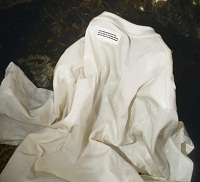 From using natural dyes and innovative new processes to not using dyes at all, retailers are adopting all required measures to control environmental impact of dyeing clothes. They are also launching capsule collections and reinventing old production methods. As per a Drapers Online report, dyeing causes many environmental issues such as use of fossil fuels to create oil-based dyes, excessive water consumption and water pollution from dyeing effluents. To control these issues, brands are launching limited edition collection like the 22-piece collection launched by Primark in August this year. It uses three dyes created from agricultural waste from EarthColors by speciality chemicals provider Archroma.
Brands steps up sustainability efforts
Nuria Estape, Head-Global Marketing, Archroma says, brands are making more efforts to offer sustainable collections. The company works with many high-street brands and offers six dyes sold directly to brands and retailers. Launched in 2018, loungewear and basics brand Pangaia works with natural and polyfunctional reactive dyes that are more efficient at binding and allows it to use less dyestuff. A biosynthetic dye, EarthColors is used by other high street brands, including G-Star Raw and Esprit. The brand procures raw materials from waste that is engineered by Archroma to create higher yield.
Another brand that uses EarthColors is Scandinavian fashion brand Samsøe Samsøe. The brand is still at the product development stage. In June, Samsøe Samsøe launched an undyed range which helped it save 80 litres of water for every kilo of fabric produced. Adidas too launched a range of undyed golf shoes in August this year. These shoes need post-treatment to maintain their performance levels buy they help the brand save water and energy upto 60 per cent. The shoes give a distinct look to golfers. H&M launched a dye-themed range in April in partnership with We Are SpinDye and ColoriFix, a biotechnology company that uses DNA sequencing to decipher the nature of pigments before using them in engineered microorganisms.
The basics of dyeing
Merryn Chilcott, Sustainability and Technical Manager, BAM Clothing opines, it is important to limit the damage of certain dyes in brands’ supply chain before they explore new dyeing methods. Her company incorporated the tools by Zero Discharge of Hazardous Chemicals Foundation to map dyeing supply chain, highlight problem areas and ensure compliance.
Estape says, brands need to experiment with new dyeing methods as customers are responding to the muted colors offered by natural and biosynthetic dyes. Charlotte Turner, Consultant, Sustainable Fashion and Textiles adds, brands can use capsule collections to explore new alternatives to existing dyeing materials and methods. They can achieve sustainability in dyeing by covering entire apparel value chain.











