


FW
30 AATCC research committees to meet in US on November 15&16
More than 30 AATCC research committees will meet on November 15 and 16 at the Sheraton Imperial Hotel in Durham, NC, US.
The RA63 Water Resistance, Absorbency & Wetting Agent Evaluation Committee will focus on test methods to evaluate condensation on textiles in humid microclimates. The RA100 Global Sustainability Committee will review the newly-published test method on fiber fragments (“microfibers”) in laundering.RA111 Electronically Integrated Textiles Committee will discuss the work of other global organizations working on e-textiles, and the committee’s own work on evaluating stretch of e-textiles.C3 Technical Committee on Research includes brief updates from each of the committees meeting during the week
The research committee meetings will be part of a larger Week of Celebration commemorating AATCC’s 100th anniversary. Other events include the Textile Discover Summitand a tour of the AATCC Technical Center featuring displays of historic documents, photos, and artifacts. A time capsule from 1964 will be opened and a new one deposited for future generations.
Focus on core issues will help Bangladesh benefit from new GSP scheme
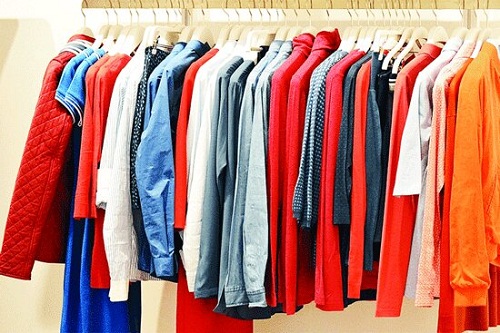
The new generalized scheme of preferences (GSP) proposed by the European Commission is likely to limit Bangladesh’s gains from the current ‘GSP plus’ scheme, says a report by the Daily Industry. The report suggests, focusing on core issues like climate protection and good governance, the scheme lowers product graduation thresholds by 10 percentage points, enhancing competitiveness of large industrialized players in their preferred markets. The scheme maximizes opportunities for low-income countries to benefit from the GSP. It also ensures a smooth transition for all countries graduating from the least developed (LDC) next decade, as per European Commission’s legislative proposal for 2024-2034.
With the new scheme, countries will be able to retain access to the EU market and also apply for special incentive arrangement for sustainable development and good governance (GSP+).
Lower thresholds hamper Bangladesh’s competitiveness
To boost growth prospects for poorer developing countries, the new scheme lowers the threshold to 47 per cent and textile threshold to 37 per cent. This may be a major disadvantage for Bangladesh as majority of its products are above this threshold. It prevents Bangladesh from benefiting from products that have good export competitiveness, believes Mustafizur Rahman, Fellow, Centre for Policy Dialogue. In force from January 1, 2024, the new scheme enables all graduating countries to apply for the GSP+ facility. However, the scheme has certain conventions on labor rights that need to be amended.
Fazlee Shamim Ehasan, Vice President, Bangladesh Knitwear Manufacturers and Exporters Association (BKMEA) feels, the new scheme will enable Bangladesh to get GSP+ facility. However, it may create a few problems for woven garment exporters, he adds. Focusing on climate protection, the new proposal will mark a new beginning for Bangladesh apparel sector, says Md Saiful Islam, President, Leathergoods & Footwear Manufacturers & Exporters Association of Bangladesh (LFMEAB). To benefit from the proposal, the government needs to negotiate with the European players through political and diplomatic routes, he adds. Also, entrepreneurs need to comply with all environment and safety-related rules.
Ease of withdrawal on violation of rights
Another benefit of modernized framework is the widening of scope for withdrawal of EU GSP preferences in case of serious and systematic violations. Besides, human rights and labor contracts, the proposal also includes rules on environment and good governance. The new framework also adds two new rules on rights of the disabled and children, and another two on labor inspections and tripartite dialogue. It also incorporates a convention on transnational organized crime.
Rensje Teerink, Head, European Union Delegation to Bangladesh believes, GSP Plus will be the way forward for Bangladesh as it includes issues related to environment protection and good governance. Therefore, she advises Bangladesh to follow the core issues related to GSP Plus in detail post LDC graduation.
Wool Week to run through October this year
To be held by the British Wool from October 04-31, 2021, the Wool Week will run for the entire month of October this year. Each year this event is used to amplify the wool message to consumers. This year, it will target consumers with a few key themes during this period; selling and promoting British wool rich products, highlighting those organizations that have made a commitment to buy British wool, and promoting the sustainability as well as the many environmental benefits of wool and British farming.
The new British Wool e-shop will also be a focus for Wool Week. It will give the organization an ideal platform to sell its products directly to the consumer. British Wool has recently been involved in launching a number of new products and initiatives to help drive demand and ultimately the price for British wool. These include; a major 100 per cent carpet yarn (Wool Britannia) with the market leader in the residential carpet sector in the UK (Headlam Group Plc), a new traceable wool scheme that already includes brands such as Harrison Spinks and Devon Duvets and is being extended further to a major new customer in the coming months, plus numerous other new products such as a stunning 100 per cent British wool kilt cloth from Lochcarron of Scotland.
Nigeria fails to tap into world cotton market
Nigeria has been unable to tap into the world cotton market estimated at $38.45 billion last year, says a Nation Online report. As per a Research and Markets report, the global cotton market is expected to hit $46.56 billion by 2027, with a compound annual growth rate (CAGR ) of 2.74 per cent within this period.
The Africa Cotton Market is expected to register a CAGR of 3.5 per cent from 2020-2025. The West Africa region comprises 12 cotton-producing countries, namely Benin, Burkina Faso, Cameroon, Central African Republic, Chad, Côte d’Ivoire, Ghana, Mali, Niger, Nigeria, Senegal, and Togo. It produces about 2.5 million tonne of cottonseed, which is 5.8per cent of global production.
As per International Trade Centre statistics, Nigeria exported 3,108 tons of cotton seeds at $2.104million in 2020. The Central Bank of Nigeria (CBN) is working hard to increase cotton production. This year, the bank launched the Anchor Borrowers program that benefitted almost 130,000 cotton farmers.
Foreign garment and textile buyers to increase sourcing from Philippines
Foreign buyers of garments and textile expect will increase sourcing from the Philippines to $1.2 billion this year, says Robert Young, President and Chairman, Foreign Buyers Association of the Philippines (FOBAP). Besides, easing quarantine restrictions, Philippines’ orders are growing with additional purchases due to Vietnam’s ongoing lockdown, adds Young. Orders from Myanmar are also shifting to Philippines, he adds. However, the Philippine garment and textile industry is still being threatened by unprecedented supply chain disruptions in the US that hamper the US economic recovery plan.
FOBAP is also one of the signatories of the appeal letters issued by the American Apparel and Footwear Association (AAFA) to the Biden administration. The letters urge the US government to look at using other tools beyond the tariff as trade leverage. The group also welcomed the introduction of the Ocean Shipping reform Act of 2021. Meanwhile, Young said major headwinds faced by the industry include empty clothing shelves, price increases of the products, lesser number of shoppers, outdated fashion items, aside from store closures and workers being terminated.
Europe’s textile and clothing sector recovers, Q2 growth above 2019 levels
 An important part of its manufacturing sector, the textile and clothing sector plays a crucial role in ensuring the economic and social well-being of European countries. With around 160,000 companies operating in this space and 1.5 million workers, it is an essential pillar of the economy across many EU regions. With over € 61 billion in exports, the sector has 3 per cent share of value added exports and a 6 per cent share of employment in total manufacturing in Europe.
Exports surge 49 per cent in Q2
The industry has recovered from the pandemic’s impact and surpassed 2019 growth levels. In Q2, FY2021 Q2, the European textile industry grew 3.3 per cent, while the clothing sector surged 7 per cent during the quarter. The European Union’s trade balance for the sector also improved during the quarter shows a report by Euratex. Compared to the same quarter of previous year, Europe’s textile and clothing exports boomed 49 per cent while imports declined 26 per cent on account of declining imports from some countries like China and the UK due to Brexit and weak demand in Europe.
The sector’s recovery also stabilized employment in the region. Compared to pre-pandemic levels, decline in employment in the textiles sector was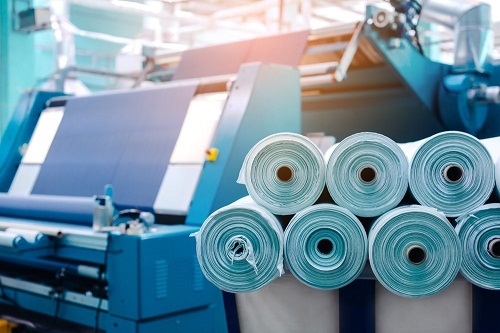 restricted to 4.4 per cent while the decline in clothing sector was 11.8 per cent. New jobs in the textile sector grew -0.2 per cent quarter-on-quarter in Q2 FY2021 while jobs in the clothing sector recorded a -1.2 per cent growth in the sector.
Shipping, raw material prices threaten growth
However, higher shipping costs and increase in raw materials and energy prices threaten to derail this fragile growth by the industry. In particular, energy costs have increased over three times since the start of this year. Prices of carbon dioxide have risen above €60 since the announcement of the EU’s “Fit for 55” package. This has impacted the sector’s competitiveness on a global level. It has also threatened future recovery along with other factors including labor and equipment shortage.
The current supply chain and energy problems may disrupt the sector’s current recovery, says Dirk Vantyghem, Director General, Euratex, which ensures a favorable environment within the European Union for design, development, manufacture and marketing of textile and clothing products. Alongwith other EU institutions and European and international stakeholders, Euratex also focuses on developing an ambitious industrial policy, effective research, innovation and skills, free and fair trade, and sustainable supply chains.
To sustain its current growth, the industry needs to adopt sustainable production on a global scale besides proposing measures to avoid carbon leakage in the upcoming EU Textiles Strategy, Vantyghem sums up.
Kerala T&A industry opposes GST hike in RMG and fabrics
The Kerala garment and textile industry has opposed the proposed GST hike on readymade garments and fabrics from 5 per cent to 12 per cent from January 2022. John Thomas Mundacal, State Vice President, Kerala Textile and Garment Welfare Association says the GST hike is likely to increase production cost from 10 to 30 per cent. He urged the Central and state governments to withdraw the tax. Kerala's textile industry is still enduring heavy losses even after the reopening of businesses after almost a year of complete shutdown due to subsequent waves of COVID-19.
Shop owners in Kottayam are finding it difficult to meet even basic expenditures like salaries, electricity bills, and rent. Local business owners also complained that buyers are buying things online instead of visiting physical stores due to the fear of COVID-19.
Kitex Garments’ Board of Directors approves Rs 2,406 investment proposal
Kitex Garments’ Board of Directors has approved investment proposal of Rs 2,406 crore in Kakatiya Mega Textile Park, Warangal and Industrial Park, Sitarampur, Rangareddy District. The Board has decided to incorporate a new subsidiary company in Telangana with an initial investment of Rs 750 crore. Around 70 per cent of the initial investment will be made by Kitex Garments and 30 per cent will be invested by Kitex Childrenswear.
The Board also noted the decision on source of funds for the investment plan will be made based on the detailed project report of Ernst & Young (EY). A part of the renowned Anna-Kitex group of companies, founded by MC Jacob, Kitex Garments is the largest employer in private sector in the state of Kerala.
Established in 1992, the company caters to prominent and renowned conglomerates in the US and Europe. It currently employs around 9,500 people at its facility, and has been a business provider to many satellite businesses in the state.
Low awareness, skills lowers Bangladesh share in technical textiles market
A study by a German Agency GIZ reveals Bangladesh could not grab a good share of the multibillion-dollar global technical textiles trade due to its lack of awareness of market requirements and adequate technical expertise. The feasibility study revealed these bottlenecks alongside the challenges and constraints facing the textile and apparel sector in making TT and PPE. Faruque Hassan, President, BGMEA opines, Bangladeshi manufacturers did not have the experience of producing technical textiles and PPE before the COVID-19 pandemic and is now moving in that direction.
The GIZ's study will relate the actual scenario on Bangladesh's position in producing technical textiles and PPE and the lacking, he added. The strength of this new sub-sector will, however, depend on the ability of current textile and apparel industry to tweak its existing facilities to produce new PPE products made from technical textiles suitable for export orders in the most cost-efficient manner. The study states, global technical textile market will grow from $179.2 billion in 2020 to $224.4 billion by 2025, at an average annual growth rate of 4.2 per cent, while the global PPE market is likely to exceed $93 billion by the end of 2025.
Though Europe is a leading importer of medical textiles, demand from North America is expected to continue to grow, the study adds.
Chiripal Group to expand domestic and international footprint
Ved Prakash Chirpal, Chairman, Chiripal Group of Companies informs, his group aims to expand its footprint both in the local as well as international markets. A diversified textile company, Chiripal Group is a global conglomerate comprising Chiripal Industries (fabric division), Chiripal Industries (petrochemicals), Nandan Denim, Vishal Fabrics, Nandan Terry, Chiripal Poly Films and Vraj Integrated Textile Park.
With a net worth of Rs 2,500 crore, the group is committed to bringing about sustainability and developing environmental initiatives in the regions surrounding its manufacturing plants and facilities. It has made all efforts to reduce, recycle, and reuse waste. It has also increased the proportion of reusing and recycling among its denim verticals like Vishal Fabrics to 5-10 per cent and is in the process of replacing outdated machinery with modern equipment to reduce waste. The group employs a go-green washing machine for sampling and research. It also uses eco-friendly dyes besides having a large green cover around both the plant and the industrial park.











