


FW
African nations become the largest source of cotton for Bangladesh
African nations have become the largest source of cotton for Bangladesh as local spinners and millers cut down their dependence on. Last year, Bangladesh had imported 26.12 per cent of its total cotton requirement from India. The country had cut down cotton imports from India by more than 60 per cent two years ago, according to data from the Bangladesh Textile Mills Association (BTMA). Last year, Bangladesh imported 11.35 percent of the cotton from the CIS (Commonwealth of Independent States) countries, 11.14 per cent from the US, 4.65 per cent from Australia and 9.65 per cent from the rest of the world.
One reason for Bangladesh’s declining cotton imports from India is the low quality of the Indian cotton, says Monsoor Ahmed, Secretary, BTMA. Also, Indian cotton traders fail to maintain timely shipments and deliver the right quantity as per agreement, adds Mehdi Ali, President, Bangladesh Cotton Association.
Nick Beighton quits as Asos CEO
Nick Beighton, CEO, Asos has quit the British online fashion retailer as it faces a 40 per cent profit decline in 2022 on account of supply chain pressures and consumers returning to pre-pandemic behavior. Beighton spent 12 years, at Asos including six as CEO. His departure would enable the company find new leadership to accelerate international growth and deliver £7 billion($9.5 billion) annual revenue within four years.
Mat Dunn, Chief Finance Officer will lead the business on a day-to-day basis till a new CEO is sought. Katy Mecklenburgh, Director-Finance, will become interim Chief Financial Officer. Ian Dyson, Senior Independent Non-Executive Director, will be promoted as the company’s chairman on November 29, 2021.
Asos reported a 36 per cent rise in year to August 31 adjusted pretax profit to £193.6 million, driven by a £67.3 million boost from the pandemic when shoppers bought leisurewear, rather that partywear options for a night out, some of which were then returned. The company’s revenue rose by 22 per cent to £3.91 billion as its active customer base increased by 13 per cent to 26.4 million.
US emerges the largest importer as India’s home textile exports rise in July ’21

The largest exporter of home textiles after China, India witnessed a significant increase in home textiles shipments this year. As per a Textile Value Chain report, India’s exports of home textiles including blankets and travelling rugs increased to $108.24 million in July 2021 from around $79.01 in June 2020.
Similarly, exports of bed linen, table linen, toilet linen and kitchen linen increased by 81.8 per cent to $1,260 million while exports of curtains, drapes, interior blinds, valances grew 5.20 per cent to $89.35 million. Furnishing exports except for mattresses, also increased to $1,247.32 million from $805.09 million recorded at the end of July 2020.
US, largest importer of blankets and travelling rugs
The US remained the largest destination for Indian export of blankets and travelling rugs. India’s exports of blankets and travelling rugs to the US increased from $9.33 million in the January-June 2020 period to $10.7 million during the corresponding period of June 2021. India’s exports revenues from the US increased from $0.43 in July 2020 to $0.5 million in July 2021.
Australia emerged as the second largest export destination for blankets and travelling rugs from India during the year through its exports declined by 4.9 per cent. In July 2021, India exported $1.74 million worth of blankets and travelling rugs to Australia against $1.83 million exported during July 2020.
Products worth around $1.7 million were exported from India to China, Canada, and Sweden in July 2021 while exports to the UAE increased 13 per cent to $1.56 million during January -July of 2021.
Sharp rise in export of curtains, drapes, interior blinds, valances
India’s exports of curtains, drapes, interior blinds and valances to the US increased 72.71 per cent to $46.51 million in 2021 from $26.93 million in 2020. In both years, the US remained the largest importer in the category.
It was followed by France and Germany with Indian exports to both countries amounting for $6.24 and $5.56 million in July 2021. India’s exports of curtains, drapes, interior blinds and valances to China recorded a marginal increase of 5.2 per cent from January-July 2021.
On the other hand, exports to the UAE dropped 85.51 per cent from $38.37 million in 2020 to $5.56 million in July 2021.
US’ furnishing imports’ share rises
India’s exports of furnishing articles, except mattresses, etc to the US increased to 724.39 per cent by July 2021 from $455.57 million in July 2020. US’s global share in the imports of these products increased to 58.08 per cent. UK’s and Germany’s global share increased 4.95 per cent and 3.49 per cent respectively to $61.72 million and $43.49 million by July, 2021.
The global share of Canada and Australia recorded a massive increase of 94 per cent with imports worth $39.12 million and $37.08 million January-July 2021 period. Imports of UAE and Spain reached $21 million by the end of July 2021. Imports of other countries totaled $235.84 million.
Plastic pollution rises amidst rising ‘greenwashing’ amongst fashion brands
 A potentially hazardous trend of ‘greenwashing’ is rising amongst high-street brands such as H&M, Primark and Zara, reveals a new report by the Changing Markets Foundation and plastic pollution campaigner City to Sea. Large fashion brands are using polyester made from recycled plastics in their collections. Most polyester fibers are made from old single-use drinking bottles, as per a Daily Mail report. The report rebuts around 59 per cent of the claims currently made by fashion companies as being unsupported and misleading for consumers.
High-street retailer H&M makes 90 per cent of its recycled polyester from single-use plastic bottles. This prevents these bottles from being recycled again. However, these bottles have a significantly lower carbon footprint than conventional polyester, says an H&M spokesperson. The brand continuously invests in new recycling technologies and innovative materials. It has already launched products made of recycled polyester from pre-owned garments, he adds. Researchers believe, this process of recycling plastic bottles into fabric accelerates the release of microplastics into the environment. It also increases brands’ reliance on fossil fuels and encourages people to buy garments that they don’t need.
Polluting human lives through air and food
Often, plastics recycled into synthetics compound the problem of microplastics in the environment. These microplastics end up polluting the seas and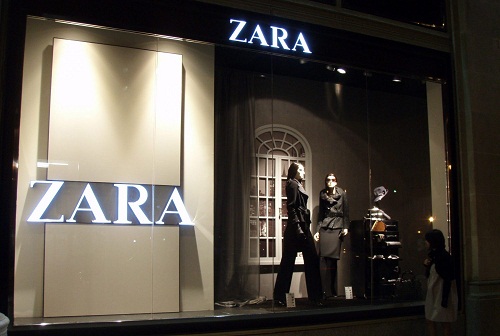 human lives through air, food and drinks. Derived from oil and gas, these fibers continue to distract fashion consumers from deeper environmental problems. To maintain sustainability, brands need to weave it into their operations, opines George Harding-Rolls, Campaigns Adviser, Changing Markets Foundation. They need to stop downcycling plastic bottles into clothes and curb their reliance on fossil fuels, he adds. Consumers too need to opt for second-hand, pre-loved clothes.
Scientists believe, urban flooding has accelerated flushing of microplastics into the oceans. They tested 40 sites around Manchester and found every waterway in the city contaminated with small toxic particles. According to them, some of these waterways are so heavily contaminated that even smallest stream contain microplastics.
No signs of slowing
Researchers believe, around 90 per cent of microplastics in the oceans originate from land. Contamination levels at oceans rise during urban flooding as 70 per cent of the microplastics are transferred from rivers to oceans.
Once plastics are recycle d into fibers, they cannot be recycled further and need to be thrown away. This accumulates more waste in landfills. The tiny microplastics particles shed from clothes while wearing and washing, end up polluting oceans and human lives through air, food and drinks. Their production has increased over the last 20 years, and shows no signs of slowing.
Address barriers in cotton imports from the US, urge Bangladesh spinners
At a seminar organized by the Bangladesh Cotton Association (BCA) and Cotton Council International (CCI) to celebrate ‘World Cotton Day’ in Dhaka, Bangladesh local spinners urged authorities to address barriers in cotton imports from the US to smoothen supply. The spinners also urged for a duty concession on RMG products made from US cotton to enhance the bilateral trade, said Mohammad Ali Khokon, President, BTMA.
Terming the US as one of the major export destinations of Bangladesh RMG, Khokon said, while there is a lot of potential to enhance trade between Bangladesh and the US, the existing tariff structure to enter the US market of its RMG products is comparatively high. He urged the US government to provide some concession for RMG products from Bangladesh made with US cotton and added this will be a win-win situation for both countries. He also requested Miller to raise the issue with US government with high emphasis.
The World Cotton Day was launched by the World Trade Organization (WTO) in 2019 while the United Nations General Assembly officially recognized October 07 as World Cotton Day on August 30 last year.
Macy’s launches new collection for under 40 years customers
Macy’s has launched a collection titled Oake under its new bedding and bath house brand for customers under the age of 40 years. As per a Home Textiles report, the sustainably designed Oake Collection has been launched online and in select Macy’s department stores with an assortment that includes sheets, quilts, duvet sets, comforter sets, bath towels and mats, plus decorative pillows and blankets.
The line features select items made from a blend of cotton and Tencel lyocell fibers, which are made from renewable wood sources as well as items made from a blend of cotton and Ethicot, a recycled cotton made from pre-consumer textile waste. Many products are certified Made in Green by Oeko-Tex, which ensures they are safe from more than 350 harmful substances. On the occasion of the new brand’s launch Macy’s donated 50,000 trees to One Tree Planted. The trees will be planted in California to help replenish forest cover that was lost during the 2020 wildfires.
The Lycra Company wins IPR for denim products in China
Developer of innovative fiber and technology solutions for the apparel and personal care industries, the Lycra Company has won intellectual property rights including patents and trademarks for denim products, from the China National Intellectual Property Administration. The company recently initiated several infringement suits related to dual core and multi-core patents for denim against third parties in China. These parties were selling fibers and goods the Lycra Company deemed to infringe on Lycra brand patents.
The Chinese National Intellectual Property Administration then issued a decision in support of Lycra Company patents for two invalidity challenges. Subsequently, the Jiangsu Authority informed the company that its patent has been upheld in both these cases.
The Lycra Company also supports customers and licensees in patent challenges related to products. In two recent cases, two licensees in Europe turned to the company for technical and legal assistance for their own patent litigation defenses related to the company’s dual core patents. This assistance helped bring about wins for the licensees against the challenger, the company said. The presiding court ruled the licensees were not infringing on the other company’s patent.
Levi’s expects product prices to rise by 1 per cent
Levi’s has negotiated cotton prices for the first half of 2022 and expects cost of products to increase 1 per cent in the first half of 2022 compared with 2021 levels. For the second half of 2022, the company hopes to negotiate prices to a mid-single-digit percentage increase compared with 2021 levels.
Reports suggest, the 18 per cent rise in cotton prices over the past month has sent Levi’s shares down 5.1 per cent while the S&P 500 index has increased by 0.4 per cent. Share prices of fast-fashion retailers H&M and Inditex too have declined by 4.9 per cent and 4.6 per cent, respectively, while Gap’s share prices fell 2.2 per cent.
Levi’s average selling prices have increased more than 10 per cent compared to 2019 while gross margins have surged 10 percentage points compared to a decade ago, during the last cotton price surge. The brand’s gross margin in the last quarter grew almost 5 percentage points compared to pre-pandemic levels. On the other hand, gross margins of Hanesbrands grew just 0.6 percentage points in its last quarter compared to pre-pandemic quarter, while Zara owner Inditex’s margins increased by just 1.5 percentage points.
India’s cotton exports to fall 36 per cent in FY2021-’22
Rising domestic demand amid limited supplies may lead to a 36 per cent fall in India's cotton exports in 2021/22 from a year ago. This may support global cotton prices, which recently jumped to its highest levels in a decade on account of strong demand from top consumer China.
Sumeet Mittal, General Manager-India, Louis Dreyfus Company says, India’s exports may decline to 5 million bales in the new season as demand in the local market has been increasing. In 2020-’21, India exported around 7.8 million bales, the highest in eight years, as the state-run Cotton Corporation of India continuously sold from its warehouses keeping Indian prices competitive, he informs. Higher exports and local demand have depleted carry forward stocks to 6.5 million bales in the new season that started on October 1, from 12.5 million bales a year ago.
Good demand from local mills and a rally in global prices have lifted domestic prices MCOTc1 to a record high this week, tapering the advantage India had over other suppliers. Leading cotton producing states including Gujarat, Maharashtra, Telangana and Andhra Pradesh received heavy rainfall in September. This could impact the early-sown crop in all these states, adds Chirag Patel, Chief Executive Office, Jaydeep Cotton Fibers.
US’ underwear imports increase 7.52% in H1’21
In H1 ’21, US’ underwear imports increased 7.52 per cent to $2.01 billion from $1.86 billion in H1 ’19, reports Apparel Resources. Compared to H1’20, US’ import values surged by 70.96 per cent indicating market of underwear in the country is on an upward trajectory. India’s contribution grew 9.26 per cent and clocked om $176.70 million in revenues in total US underwear imports.
As per IBIS world, the US’ lingerie market is projected to grow over 4.4o per cent from 2021 as changing lifestyle of US women consumers is incurring increased spending on fitness and related accessories, which has positively impacted the market growth. US’ import of shapewear was up 11.70 per cent in H1’21 touching $ 1.37 billion as compared to $1.23 billion in H1 ’19. The availability of a wide range of products, such as control camisoles, corsets, body shapers, singlets, and body briefs, is likely to boost the market growth even more in the US in months to come. India shipped $21.65 million worth of foundation garments to the US in H1 ’21, noting a significant decline of 47.87 per cent as compared to $41.53 million that it had clocked in H1 ’19.
The US crossed pre-COVID levels in kid’s wear import valued at $1.10 billion during the first six-month of 2021, as compared to $1.05 billion in H1 ’19, increasing by 4.89 per cent. The growth is attributed to rising momentum in back-to-school shopping in the US, before that the growth came from clothing purchased by parents for their kids’ virtual classes.
Nightwear imports touched $870.07 million in H1 ’21, up 38.50 per cent from H1 ’20 when the value stood at just $ 628.19 million. Import of dressing gowns increased 7.30 per cent to $284.93 million from H1’19. India’s exported dressing gowns worth $ 3.37 million to the US in H1 ’21, a 10 per cent decline from H1 ’19.











