FW
India to boost technical textile exports over next three years
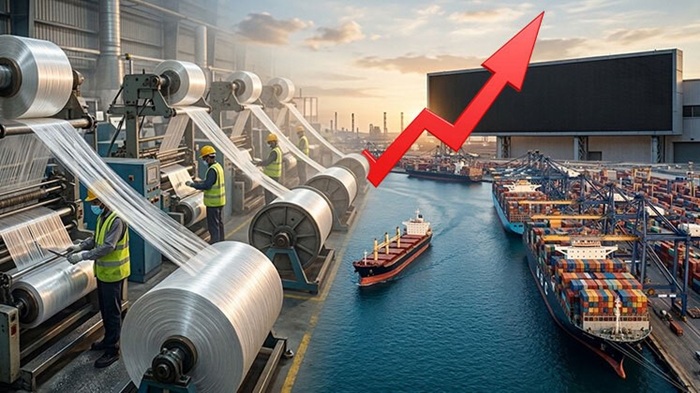
India targets a fivefold increase in export of technical textiles in the next three years. There will be production-linked incentives for the textile sector including affordable infrastructure for manufacturing like cheap land and power and alignment with the best standards in textile manufacturing.
Growth of technical textiles in India has gained momentum in the past five years, growing at an eight per cent per annum. The aim is to hasten this growth to 15 to 20 per cent over the next five years. The growth will be directed toward high technology and indigenously innovated products. With these objectives in mind, the National Technical Textiles Mission was launched in February 2020, with a view to making India a self-reliant, vibrant, export-oriented economy. In January 2019, for the first time in India, 207 HSN Codes were issued for technical textiles, and in less than two years India turned a net exporter in technical textiles.
Technical textiles are textiles that are engineered to give the desired output suitable for specific applications. The basic raw materials are natural fibers like jute, silk and cotton. India has an eight per cent share in this market. The biggest players are the US, western Europe, China and Japan.
Growing use of synthetics in fashion damaging human, environmental health
Fashion brands use a significant amount of fossil fuel like oil to create synthetic materials such as polyester, says Changing Markets Foundation. Each year, production of synthetic fibers, such as polyester, produces the same amount of greenhouse gas emissions as 180 coal power plants and this is set to nearly double by 2030. Synthetic fibers represent over two-thirds of all materials used in textiles. This amount is expected to reach nearly three-quarters by 2030.
Cheap synthetic fibers have become the most significant driver of fast fashion’s overproduction and overconsumption. Polyester – fast fashion’s preferred fiber – is half the price of cotton and its use has more than doubled since 2000. As production has boomed, the average person now buys 60 per cent more clothing items than 15 years ago and almost as much clothing produced every year is thrown away.
Heavy use of plastic fibers has also seen an exponential rise in invisible microfibers, which are damaging to human and environmental health. Airborne microplastics from synthetic clothes get into the human body, becoming engulfed by immune cells, which can cause significant inflammation.
Jeanologia develops unique customer experience
Jeanologia has developed an innovation laboratory to transform physical stores into digital and sustainable experience centers for consumers. The company has worked with top brands and retailers in a new in-store model focused on eco-efficiency, personalization, and digitalization. Consumers are at the center as participants in the sustainable finishing of their garments.
Jeanologia has two success cases developed using its technology to bring to retail the experience of real-time personalization in front of the consumer. A Levi’s Haus store in Miami is an example of the future of garment finishing that demonstrates the next level of personalization powered by Jeanologia’s laser. The consumer can customize every detail of the garment. Levi’s Haus in Miami has marked a retail milestone, bringing together jean design and production physically in-store with the fun of the in-person experience for the consumer.
Another Jeanologia case study is Bershka’s flagship store in Italy, transforming it into a digital denim customization laboratory. Consumers can have an unique experience in real-time, designing their own garments in a quick and sustainable way with laser technology, in only 45 minutes and being present during the whole live process.
For Jeanologia, the three pillars for the future of retail are consumer experience, sustainability, and the omnichannel that connects the physical world with the digital.
Cannes beachwear event MarediModa opens tomorrow
MarediModa will be held in Cannes from November 9 to 11, 2021. The event focusing on beachwear, underwear and athleisure will have a 100 European companies presenting their fabric and accessory collections for summer 2023.
Visitors will receive free access to the exclusive spring/summer 2023 trend book. This is a unique and indispensable online tool available in ebook format. The goal of this project is to provide a quality tool that can spark creativity, gain access to new visions and accompany the creative process till its end starting from a social background up to the fashion themes to come.
MarediModa makes its trend book available to creative talents worldwide as a source of inspiration and a true sextant for designing a beachwear, underwear or athleisure collection featured by explorations into the closest territories and identified by cross-contaminations.
Lycra is the event partner. The commitment of Lycra to key issues such as innovation, sustainability and traceability of the supply chain will be highlighted.
Finland opens Nordic’s first textile recycling plant
Finland has opened a textile recycling center with a capacity of processing about 12 million kg of textile annually, or roughly 10 per cent of the country’s cloth material waste. The facility, set up jointly by textile recycling company Rester and waste firm LSJH, is the first in Nordics that will turn waste textile materials into recycled fibres on a large scale. A commercially-viable solution of recycling and processing industrial and household textile waste into raw materials has been developed. The recycled and processed textile fiber can be used to make new cloth products.
Finland throws out about 100 million kgs of textile waste every year, and the material has remained a poorly-recycled resource. There are plans to build similar plants across Finland. It will become mandatory to sort textile waste in Finland in 2023, and a similar change is planned across the EU in 2025. Manufacturers are increasingly interested in using recycled fibers, due to growing concern for the environment and tightening regulations in the EU.
Finland has created significant expertise in textile recycling as well as a wide network of cooperation. They will help in finding sustainable textile solutions in line with the recycling and circular economy goals of Finland and the EU. However, sorting technologies must also be developed to ensure sufficient volume and quality of material for industrial recycling processes.
Superdry records encouraging start to AW21
Superdry has recorded an encouraging start to AW21, helping it to make continued gross margin gains.
As per a Fashion Network report, the company’s revenues in the first half of the year (H1) declined by 2.4per cent year-on-year (Y-o-Y). The revenues declined by 25.3 per cent compared to the same period two years ago (2Y-o-Y). In the most recent eight weeks, the fall was 8.8 per cent on a one-year basis.
The company’s store revenues increased by 21.7 per cent Y-o-Y, but declined by 34.5 per cent 2 Y-o-Y. Online revenue declined by 30 per cent on a one-year basis as consumers gravitated back to physical shopping. However, online revenue rose by 7.6 per cent 2Y-o-Y. And wholesale revenue increased by 1.2 per cent Y-o-Y, but declined by 28.3 per cent 2Y-o-Y.
In the most recent eight-week period, revenue through stores rose by 2.5 per cent Y-o-Y but fell 28.6 per cent 2Y-o-Y. Online revenue declined by 20 per cent Y-o-Y but rose by 6.6 per cent 2Y-o-Y.
The company explained its recent performance further saying the improvement in trading in its retail channels across the eight-week period has been encouraging, as it launched the AW21 collection. The full-price performance seen through the Summer has translated into stronger overall performance going into the peak Autumn months. Its core categories are resonating well, with AW21 jackets particularly strong.
Turkey records 25.72% rise in apparel exports from Jan-Sep’21
Turkey recorded a 25.72 per cent year-on-year rise in apparel exports in the first three quarters of 2021, according to the data from the Turkish Statistical Institute and the country's ministry of trade. In January-September 2021, Turkey exported apparel worth $13.364 billion, compared to exports of $10.630 billion during the corresponding period of 2020.
Category-wise, exports of knitted and crocheted clothing and accessories increased by 35 per cent to $7.792 billion during the first nine months of the current year compared to $5.770 billion earned during the same period of the previous year.
Exports of non-knitted apparel and accessories increased by 14.7 per cent to $5.572 billion compared to $4.859 billion exports made in January-September 2020.
Among non-apparels, exports of carpets, mats matting and tapestries shot up by 34 per cent to $2.385 billion, during the period under discussion.
Exports of old clothing and other textile articles and rags (HS chapter 63) also grew by 19.7 per cent to $2.109 billion during January-September 2021. Meanwhile, Turkey's imports of cotton, cotton yarn and cotton textiles (HS chapter 52) increased substantially by 34.2 per cent to $2.553 billion.
Pangaia introduces innovative way to reduce waste
Pangaia, a brand known for its sustainable sweats and outerwear, has introduced an innovative way to reduce waste, As per a Glossy report, the brand aims to ensure that every pair of jeans in itsmonth-old denim line is the perfect fit. On November 11, the brand will launch a new collaboration with custom denim brand Unspun. As part of the collaboration, Pangaia will become the first brand to use Unspun’s new mobile app, which lets customers take a 10-second 3D scan of their body using their phone. Doing so generates a cut pattern for a pair of jeans perfectly fitted to their body.
According to Joanthan Cheung, Denim Designer, Pangaia, the partnership aims to efficiently create jeans that can fit any size or shape. It eliminates the guessing game of producing cuts ahead of orders being placed, which inevitably leads to waste and excess materials used.
The new tech is debuting alongside Pangaia’s second denim launch. The first Pangaia denim, which debuted in October, was made from nettle, while this one is made from hemp. Unspun’s own brand of jeans and Pangaia’s jeans are priced similarly, around $200, which will remain unchanged for this collaboration.
Beth Esponnette, Co-founder, Unspun, adds, the company only wants to partner with brands that share its core values around sizing, like Universal Standard. Its combination of ethical values and focus on how technology can improve fashion is a near-perfect match.
S&P awards adidas with highest ESG Profile Score
Following a thorough assessment by rating agency S&P, adidas was awarded with an ESG Profile Score of 79 out of 100, one of the highest scores applied across all companies assessed globally. Combined with a strong Preparedness Score (+6), the company’s overall ESG Evaluation Score amounts to 85, placing adidas sixth in the entire S&P Global Rating Universe.
In its assessment, S&P emphasizes adidas’ industry-leading approach to innovation, supply chain management and consumer engagement. In particular, credit is given to adidas’ ambitions to scale the use of sustainable materials, to expand circular services and to deliver against ambitious net-zero emission targets. In addition to adidas’ strong control mechanisms over its supply chain ensuring fair and safe labor practices, the analysis also calls out the integration of a sustainability target into the compensation system of the Executive Board. The close interaction between the Supervisory Board and the Executive Board is seen as exemplary and supportive of the overall strategy execution.
The S&P Global Ratings’ ESG Evaluation assesses a company’s ESG performance (ESG Profile Score) and ability to prepare for potential future risks and opportunities (Preparedness Score). The ESG Profile Score and Preparedness Score sum up to the final ESG Evaluation Score that allows comparison with other entities globally, across sectors. The upper score of 100 indicates the lowest level of risk.
Primark launches circular denim collection
Primark has launched a new circular denim collection. A part of The Jeans Redesign project, the collection features denim that’s designed, produced and created to align with the Foundation’s vision of a circular economy for fashion. Based on the principles of the circular economy, the guidelines ensure jeans are used more, made to be made again, and are made from safe and recycled or renewable inputs.
As a participant of the Jeans Redesign project, Primark has released a new collection of jeans and denim jackets, featuring denim that is made from organic cotton and recycled fibers and that has been designed to be easily recycled so that they have the potential to be turned into new jeans once they can no longer be worn. The product is metal rivet-free, a common design element that can make jeans difficult to recycle. Labelling also includes guidelines on removing buttons and zips before sending to recycle to ensure this product has another life.
The jeans are made from 70 per cent organic cotton, 29 per cent recycled cotton and 1% elastane and the jackets are made from 80 per cent organic cotton and 20 per cent recycled cotton.
The collection includes denim jeans for women (£19) and denim jeans for men (£18), as well as an adult denim jacket for £21. The collection is available in store now in 161 stores across all 14 countries Primark operates in.