


FW
Global brands sign for new safety platform Accord in Bangladesh
At least 147 global brands and retailers have so far joined the International Accord to ensure health and safety in the global garment and textile industry. The signatories include many of the 200 EU-based brands that previously joined Bangladesh’s garment industry’s Accord, a platform set up immediately after the Rana Plaza building collapse in 2013. After the expiry of Accord in Bangladesh, the Readymade garment Sustainability Council (RSC) was formed in June 2020 that took over the charge of Accord’s works in the country. In September 2021, the International Accord came into being, a 26-month-long legally-binding agreement to make garment factories safe. Most of the International Accord signatories were signatories of Accord.
According to the new agreement, the signatories will continue the health and safety program in Bangladesh through the RSC by recognising its independence. Almost 150 brands and retailers covering 1,300 factories have now signed the new International Accord. Among the brands that have joined are H&M, Benetton, Best Seller, C&A, Inditex, Marks & Spencer, Mango, Matalan, Next, Puma, PVH and Primark.
Bangladesh is now receiving more work orders, while more orders are expected in coming months due to various global factors, including issues in Myanmar. Exporters in Bangladesh have invested millions of dollars and made significant improvement in workplace safety in line with the recommendations of Accord and Alliance.
Bangladesh yarn exports up 15 per cent
Bangladesh’s exports of yarns and fabrics are up 15.52 per cent. Shipment of raw materials and intermediate goods is rising fast. Exports of yarn, fabrics and waste yarn were up 38 per cent from July 2021 to November 2021 Export Promotion Bureau. Spinners and weavers in Bangladesh are exporting yarns and fabrics after meeting the demands of domestic garment factories.
Vietnam recently agreed to buy yarn from Bangladesh. The garment producing country purchases one lakh tons of yarn from India every year. Similarly, textile millers and yarn and fabric users in Turkey, South Korea, Egypt and Taiwan are planning to buy more yarns and fabrics from Bangladesh. So spinners and weavers are expanding their capacity to produce manmade fibers because of the growing demand. In the next two years, Bangladesh's yarn production capacity will see an addition of 2.5 million spindles. Currently, 13.5 million spindles are used to manufacture textile raw materials.
Bangladesh has already conquered the international apparel market and is currently the second-largest exporter of garment items worldwide after China, with a six per cent global market share. Although Bangladesh depends on imports of cotton, a key raw material for textiles, the country is fast becoming a major source for yarn and fabrics for textile and garment producers.
India’s cotton production drops 1.37 per cent in 2020-21 as MSP is increased
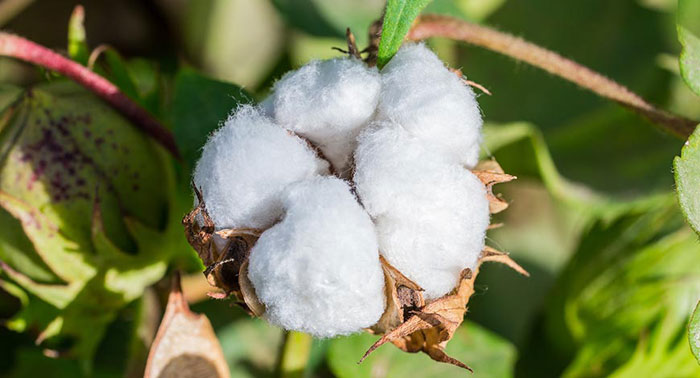
Spanning Gujarat, Madhya Pradesh and Maharashtra, the Central Zone emerged as the highest cotton producing zone as India’s cotton production dropped by 1.37 per cent to 360 lakh bales during the October-September 2020-21 seasons. State-wise, Gujarat emerged top cotton producer during the year with a production of 90 lakh bales; followed by Maharashtra with 84 lakh bales of cotton. Orissa was the lowest cotton producing state with just 4.5 lakh bales.
North Zone grows 0.7 per cent
Cotton production in the North zone grew 0.7 per cent to 65.50 lakh bales during 2020-21. Rajasthan emerged top producer of cotton during the year with a growth of 10.34 per cent. The state produced 32 lakh bales of cotton accounting for 9 per cent of the total cotton produced in India. The second largest cotton producer in the zone, Haryana‘s cotton production however, declined by 15.1 per cent to 22.50 lakh bales of cotton during the year.
Central Zone’s production drops
Central zone’s cotton production dropped 2 per cent during the year to 192 lakh bales. Gujarat emerged the highest cotton producing state in the zone with a growth of 1.1 per cent to 90 lakh of bales. The second largest producing state in the zone, Maharashtra witnessed a decline of 3.4 per cent in cotton production to 84 lakh bales in 2020-21.
Southern Zone produces 96 lakh bales
Cotton production in the Southern zone dropped 2 per cent to 96 lakh bales of cotton in 2020-21. Production in the zone was led by Telangana which produced 51 lakh bales in 2020-21 season, 5.5 per cent lower than the previous season; followed by Karnataka whose production grew 10 per cent to 22 lakh bales.
Exports surge
India’s cotton exports surged 105.7 per cent in the first nine months of 2021 totaling to $1,898.10 million. Bangladesh remained the top export market for India’s raw cotton. Cotton exports to the country grew by 37.19 per cent to $907.32 million in 2021 over CPLY.
India’s cotton exports to China grew 160.4 per cent to $630.86 million in January-September 2021. Around 336.29 million kg of cotton was exported to the country during the same period.
MSP for cotton increased
The Cabinet Committee on Economic Affairs increased the Minimum Support Prices (MSPs) for cotton fiber for the new cotton season 2021-22. Prices of medium staple cotton having a length of 24.5 to 25.5 mm have been increased to Rs 5,726 per quintal while the prices of long staple cotton having a length of 29.5 to 30.5 mm have been increased to Rs 6,025 per quintal.
In the last two cotton seasons, the Cotton Corporation of India procured around about 200 lakh bales and disbursed more than Rs 55,000 crore directly in the bank accounts of around 40 lakh farmers. In the current season, it has deployed manpower at over 450 procurement centers to meet all price requirements.
Zara teams up with South Korea’s Zepeto
Fast fashion giant Zara has partnered Ader Error to be present in the South Korean metaverse Zepeto. Avatars don’t spend their entire lives strutting their stuff in jogging suits and Gucci sneakers. They are entitled to fast fashion outfits too. So users of the app can now buy virtual clothes and makeup for their avatars in the Ader Error X Zara store. The designs reflect the lifestyle of people whose personalities are shaped by their simultaneous experiences in the real world and the virtual one, demonstrating the new persona dreamt up by both brands.
South Korean metaverse Zepeto counts numerous partnerships with players in fashion and cosmetics, including Louboutin, Ralph Lauren, Gucci, Nars, and Dior Beauty and with many celebrities such as Selena Gomez and the group Blackpink.
The concept of the metaverse may still be somewhat vague for many men and women around the world, but it's becoming harder to ignore this new world that is finding favor in many sectors, starting with fashion and beauty. The luxury industry is currently dividing its priorities between sustainabie and digital initiatives, and it could soon be a key player in these new worlds. Many brands, including Gucci, Balenciaga and Ralph Lauren, have already experimented with them, creating capsule lines and collections specifically designed for people’s virtual counterparts.
Top textile companies bid for bankrupt Sintex
Four leading textile players, Reliance, Welspun, GHCL and Himatsingka, have placed bids for the bankrupt Sintex. While Reliance has teamed up with stressed asset buyer Assets Care & Reconstruction Enterprise for the Sintex bid, the other three parties have made solo offers.
Sintex is the second company under the Indian bankruptcy code for which Reliance has shown interest. It had previously bought Alok Industries in partnership with JM Financial Asset Reconstruction. Welspun has routed its bid for Sintex through Easygo Textiles. The proposed deal will help Welpsun in its backward integration strategy. GHCL’s move for Sintex comes after it inked a deal to sell its home textile business in Gujarat to Indo Count Industries. Dinesh Kumar Himatsingka has routed the Sintex bid in his personal capacity along with his son Shrikant and Himatsingka Ventures.
Sintex was admitted into the bankruptcy process by the National Company Law Tribunal, Ahmedabad, on April 6 this year on a plea by Invesco Asset Management over a Rs 15 crore default in payment of principal and interest of non-convertible bonds in September 2019. Sintex which weaves fabrics for global fashion brands like Armani, Burberry and Diesel, owes about Rs 8000 crores to financial and operational creditors.
Texcare scheduled for November ’24
Texcare will be held in Germany, November 9 to 13, 2024. This is held every four years and offers manufacturers of laundry and dry cleaning technology to meet with textile care companies. The focus is on innovations in the industry and on networking and exchanges with business partners. Due to the pandemic, the trade fair had to be suspended altogether in 2020-2021. The new date was chosen since it fits well into the international trade fair calendar. Also, it was favored by exhibitors and visitors because it is during the low season for the tourism industry, when most investments are made.
Technology suppliers use Texcare to launch their innovations, which they often develop just in time for the fair. The frequency of the fair therefore also goes hand in hand with the innovation cycle of the manufacturers. The appeal of Texcare for visitors and exhibitors alike lies in the bundling of innovations in one place, real machines and intensive exchanges with business partners. The product range extends from laundry and dry-cleaning technology, detergents and cleaning agents, linen and work wear to IT and logistics. The fair is being organized by Messe Frankfurt and its partners, VDMA Textile Care, Fabric and Leather Technologies and the German Textile Cleaning Association.
South Africa to guide textile units on sound practices
South Africa will assist small and medium enterprises in the textile sector to address environmental challenges through sustainable business practices. This will be done by implementing eco-innovation and life-cycle approaches to improve circularity within the textile industry. The Innovative Business Practices and Economic Models in the Textile Value Chain – or InTex – project is being implemented by the National Cleaner Production Centre South Africa (NCPC-SA) working with a technical partner, Centre for African Resource Efficiency and Sustainability (CARES). The project is funded by European Union and managed by UNEP in Tunisia, Kenya and South Africa.
During the first phase of the project, a target of 10 companies will be assisted and at the end of the phase five case studies will be developed to share the impact and encourage further uptake of circular economy principles and innovative business practices in the sector. The whole point of this project is to promote innovative business practices and economic models in the textile value chain. The second phase of the project will see the implementation of the project being extended to other textile companies through hosting of training and capacity building workshops.
Small and medium units will benefit from the training workshops by learning about eco-innovation, product environmental footprint and circular business models and gain access to tools and guidelines that can help make their business more sustainable, circular, and resilient. Further, by being part of the project, they will also learn how to calculate and communicate the environmental footprint of their textile product and develop new business strategies and underlying business models by following the eco-innovative approach.
Now Burberry enters clothing renting business
Burberry is branching out into clothing rental. The luxury fashion house has partnered My Wardrobe to offer some of its most iconic pieces, including the famous trench coat, for rent for a minimum of four days, and up to 14 consecutive days. And if the customer doesn’t want to give it up, it’s also possible to buy a given product used, at a more affordable price than buying it new. The choice covers everything from scarves to trench coats, T-shirts, dresses, pants and sneakers.
Rented clothing is gaining popularity among youngsters as this is the only way they can afford to buy high-end designer wear trendy clothes for events such as weddings, theme parties, photo-shoots and film making. Women’s online clothing rental and ethnic wear segments dominate the global market share. Men‘s end user and western clothing style segments are also growing at a robust rate.
Such initiatives help mitigate fashion’s impact on the planet. Whether it’s buying second-hand, recycling, repairing, upcycling or clothing rental, all these alternatives to traditional fashion help significantly reduce the fashion industry’s environmental footprint. Emissions from this rapidly changing sector are expected to reach 2.7 billion tons a year by 2030. Many fashion companies are now tackling the problem head on, offering new approaches to the way fashion is consumed.
MAS Holdings enters adaptive wear
MAS Holdings has ventured into adaptive clothing. The vision is to normalize the use of adaptive wear through universal design thinking, specialized garment construction and fastener placement, to unlock everyday clothing solutions for temporary and permanent conditions. To create truly meaningful and inclusive clothing which further enhances ease of dressing and delivers greater comfort to adaptive users, MAS will leverage specialized garment construction to provide sensory-friendly finishes, employ magnetic or auto-aligning or auto-locking fasteners, accessory pouches, wicking fabric for sweat absorption and discrete closures.
MAS plans to develop specially-constructed garments – particularly intimates, swimwear, active wear and recovery wear – facilitating independent dressing for those with varying disabilities. These include amputees, wheelchair users, those with muscular dystrophy or mobility impairments, as well as people undergoing physical rehabilitation or recovery post-injury or surgery.
At present, adaptive wear – clothing incorporating the unique needs of consumers with disabilities into their designs and construction – is offered only by a handful of major brands and retailers. Even the limited designs on offer can lack visual appeal.
MAS is one of South Asia’s pioneers in intimate wear manufacturing. Founded in 1987, it is a fully integrated, sustainable apparel manufacturer, employing over 1,00,000 people across 16 countries. MAS spans 57 manufacturing plants with established design locations placed in key style centers worldwide. MAS provides design-to-delivery solutions to leading global apparel brands.
Intertextile Shanghai Apparel Fabrics in March
Intertextile Shanghai Apparel Fabrics will take place in China, March 9 to11, 2022. This is aimed at supporting the global textile and apparel industry in business recovery, information exchange and making progress on combating climate change. Intertextile Apparel is the ideal trading platform for global exhibitors to meet with genuine buyers who are looking to place orders. The entire textile supply chain can be found under one roof for buyers to conveniently source the products they are looking for. Exhibitors and visitors will also be able to catch up with the latest industry developments via Intertextile Apparel’s trend forum, seminars, panel discussions and product presentations, which will cover topics on design and trends, market information and business strategies, sustainability Issues, and technology and solutions.
Intertextile fairs have remained a consistent source of business trading for the industry over what has been a challenging couple of years, with both the spring and autumn editions successfully taking place in 2021. The resilience of Intertextile Apparel, the global apparel textile flagship, has been mirrored by the strong recovery of the Chinese market, with the two progressing together in the rapidly changing climate. China’s textile industry has continued to expand and has experienced growth in terms of production, revenue and profit in the first three quarters of 2021.











