FW
Brands deny workers minimum wage
Factories are refusing to pay garment workers in Karnataka the legal minimum wage, says international labour rights organization The Workers Consortium. These garment workers make clothes for international brands. More than 4,00,000 garment workers in Karnataka have not been paid the state’s legal minimum wage since April 2020.
Karnataka is one of India’s garment-industry heartlands, with thousands of factories and hundreds of thousands of workers producing clothing for international brands including Puma, Nike, Zara, Tesco, C&A, Gap, Marks & Spencer and H&M. Western brands have either refused to intervene or have not acted to ensure that workers making their clothes are paid in line with Indian law. Obviously wages are not enough to meet at least the basic needs of workers and their families. Apparel suppliers make up the only industrial sector across Karnataka refusing to comply with a court order directing that minimum wages be paid. For workers in Karnataka, not receiving their pay rise, in the face of steeply rising living costs, has had a devastating effect on their lives and those of their families, especially children. One woman, who works at a factory making clothing for UK high street brands, was forced to leave her home and live with a relative because she could no longer pay the rent.
Bangladesh garment export to the US on the rise
In the first 10 months of 2021 Bangladesh’s earnings from garment exports to the US were up 27 per cent compared to the same period in 2020. In fact, Bangladesh surpassed Vietnam, China and Indonesia in terms of growth in apparel exports to the United States. Bangladesh’s apparel makers have been receiving an additional flow of work orders because of a drastic fall in China’s factory outputs fuelled by energy shortages and pandemic-led supply chain disruptions in Vietnam and Indonesia. Its apparel exports to the US market have kept growing and many US buyers are now shifting to Bangladesh. As per Mohammad Hatem, Executive President, Bangladesh Knitwear Manufacturers and Exporters Association (BKMEA), their apparel exports to the US market kept growing with many US buyers now shifting to Bangladesh.
With a reboot of economic activities in the US after the pandemic situation turned the corner, Americans have started releasing pent-up demand, especially for clothing and footwear. From January 2021 to October 2021, the US’ imports of clothing were 24 per cent more than in the same time a year ago. China’s apparel exports to the US might halve in the next five or 10 years, opening up an opportunity for Bangladesh to take a bigger stake in the largest market. If Bangladesh takes production costs under control by making business easier, it will take an edge over Vietnam. Bangladesh’s exports are hampered by the high costs of doing business. Many exporters do not take orders despite having the capacity as the prices they are getting are not in line with production costs.
Munich Fabric Start and Bluezone to highlight the changed future for industry
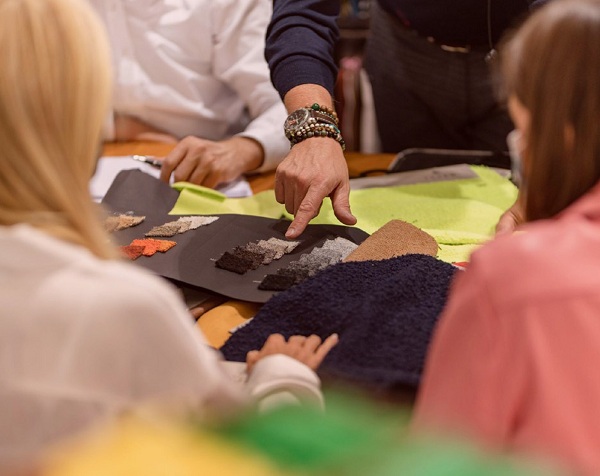
Scheduled from January 25, to 27, the Munich Fabric Start and Bluezone exhibitions by Munich Fabric Start Exhibitions will attract 600 suppliers from 33 countries including around 90 international suppliers of denim fabrics. The organizers are highly motivated to offer the industry a safe and inspiring trade show to build on their previous success, says Frank Junker, Creative Director, Munich Fabric Start.
2G+regulation to maintain safety standards
Aware of their great social responsibility, the organizers have planned to implement the 2G+ regulation at all upcoming events. As per this regulation, only vaccinated and recovered people with an additional valid COVID-19 test will be able to access the exhibition grounds. With its effectiveness proven at the last trade shows, this extensive hygiene concept is being regularly adapted at all upcoming trade shows.
Combining cosmopolitanism with tolerance
The theme of this year’s Spring/Summer edition is: ‘Every Body’ it denotes a new feeling, a new definition of individuality and community, a new balance and an individual self-image. It combines the newly learned cosmopolitanism of the industry with tolerance. Combining the needs for personal exchange and the tactile experience of textiles, the theme focuses on collecting new information and inspiration, without a screen or headphones. The event will attract many experts who will offer international visitors insights into latest trends and topics relating to digital solutions and future-oriented innovations. The program of the event will be published in early January.
Simplifying sourcing solutions
The recently relaunched Resource area and the Sustainable Innovations area, presented the latest sustainable alternatives in a modern surrounding to simply the latest sourcing solutions and help shape the sustainable development of the industry. “We managed to hold successful trade show even in these challenging times,” says Sebastian Klinder, Managing Director Munich Fabric Start, Bluezone shows.
The main theme of both events, the New Balance, highlights the brighter but changed future. The Bluezone event looks forward to bringing together all the leaders in technology, quality, product, saving resources, style etc, under one roof in Munich. With over 90 denim exhibitors, the event uses the coal bunker and the Zenith hall to showcase its products. Numerous premium mills, CMT solution and finishing providers as well as innovative start-ups have registered to present their novelties in the events.
adidas to launch € 4 billion share buyback program until 2025
The executive board of adidas has decided to launch a multi-year share buyback program. Starting in January 2022, the company plans to buy back shares worth upto € 4 billion until 2025. Taking into consideration the € 1 billion share buyback completed in 2021 already, the company intends to return up to € 5 billion to its shareholders through regular share buybacks alone during the five-year strategic cycle. The buyback activities are complemented by the company’s annual dividend payouts in a range of between 30% and 50% of net income from continuing operations.
Strong shareholder returns are a key component of adidas’ new strategy ‘Own the Game’. As part of ‘Own the Game’, adidas plans to generate substantial free cash flow until 2025 and return the majority of it – between € 8 and 9 billion – to its shareholders via dividend payments and share buybacks. In addition, the company plans to return the majority of the cash proceeds from the Reebok divestiture to the shareholders after closing of the transaction, which is expected in the first quarter of 2022.
“Over the next couple of years, our business will become significantly more cash generative than ever before”, says Harm Ohlmeyer, CFO of adidas. “And we will hit the road running in 2022: Driven by strong top- and bottom-line improvements, we will once again generate a high free cash flow, which we will almost entirely return to our shareholders next year.”
adidas intends to cancel most of the shares repurchased during the program, which would reduce the number of shares as well as the share capital accordingly.
Janet Brady awarded with AATCC Student Chapter Faculty Advisor Award
 In recognition of her active leadership, participation, and support of the AATCC Student Chapter at Thomas Jefferson University, Janet Brady has been awarded with this year’s AATCC Student Chapter Faculty Advisor Award. A member of AATCC since 1975, Brady has been an advisor with the AATCC Student Chapter at Thomas Jefferson University since 1996.
Brady received an AAS in Textile Technology from the Fashion Institute of Technology in 1977, where she graduated cum laude. She completed a BS in Textile Technology from Philadelphia College of Textiles and Sciences in 1979 and an MS in Textile Engineering from Philadelphia University in 1999.
The AATCC Student Chapter Faculty Advisor Award recognizes and promotes the work of AATCC student chapter faculty advisors who are active AATCC members and who work to ensure their AATCC student chapters are active and growing.
CITI elects new office bearers for 2021-22
One of the leading industry chambers of the textile and clothing industry, THE Confederation of Indian Textile Industry (CITI), held its 63Rrd Annual General Meeting (AGM) on December 15, 2021, through virtual platform. At this meeting, CITI elected the new office-bearers that included T Rajkumar as the new Chairman.

Chairman, Sri Mahasakthi Mills, Kerala and Foundation One Infrastructures Tamil Nadu, T Rajkumar was re-elected as Chairman of CITI. He is currently the Chairman of the Textile Sector Skill Council (TSC) and the Director in National Skill Development Corporation (NSDC). He is also the Former Chairman of The Southern India Mills’ Association and The SIMA Cotton Development Research Association (SIMA CDRA) and the current e Chairman & Managing Trustee of Global Pathway School, Coimbatore and Secretary of Nachimuthu Gounder Rukmani Ammal Charitable Trust, Pollachi, Tamil Nadu
A graduate from the PSG College of Arts and Science and Masters in the Business Administration from the PSG College of Technology, T. Rajkumar is a Member of the Governing Council of The Cotton Textiles Export Promotion Council (TEXPROCIL) and The South India Textile Research Association (SITRA), Coimbatore. He is a Member in the Academic Council of PSG College of Arts and Science and also a Member in the Board of Studies of Bharathiyar University and PSG Institute of Management. He is the Joint Secretary of Sri Purandaradasar Sangeetha Vidyalaya, Coimbatore, a social and cultural organization, which is dedicated for the cause of development of Arts and Music. He is the Former Chairman of Board of Trustees of Arulmigu Masani Amman Temple and Charities, Anamalai.

Rakesh Mehra, Chairman, M/s. Banswara Syntex., Mumbai has been elected as Deputy Chairman of CITI. Since 2018, Mehra is the President of Indian Spinners Association (ISA), Mumbai an association of MMF Yarn Spinners of the country. He is the Former Chairman of The Synthetic & Rayon Textiles Export Promotion Council (SRTEPC). With his guidance and support CITI was instrumental in removing the ADD on Polyester Staple Fibre (PSF) & Viscose Staple Fibre (VSF), rationalization of GST rates and many other policy initiatives benefitting the MMF Textile Value Chain.

Ashwin Chandran, Chairman and Managing Director of M/s. Precot Meridien Limited, has been elected as the Vice Chairman of CITI. having textile units in Tamil Nadu, Kerala, Andhra Pradesh and Karnataka. A B.Sc, (Hons) Graduate in Textile Technology, UMIST, UK and Post-Graduate (MBA) from University of Illinois, US, Chandran is a Member of Cotton Textiles Export Promotion Council (Texprocil), Mumbai. He held the position of the Chairman of The Southern India Mills’ Association, Coimbatore for two years during 2019-2021.
Fit technology is important.
The size inclusivity and sustainability movements have made a garment’s fit more crucial than ever. Fit technology—which includes solutions like sizing recommendations and digital fitting rooms—could be the key to developing more sustainable products as proper fits can lower return rates and the associated environmental impact as well as keep consumers wearing their clothing longer.The technology includes sizing systems at stores, the availability and quality of size charts, the use of supporting visuals, fit-advising customer reviews and the integration of sizing technology.Customers are more likely to trust size recommendations when faced with a nicely fitting visual example. Fit preferences can vary, making measurements and visuals crucial for a number of reasons.
Modern fashion has a fit problem. And while it does affect men, whose shirts and jeans rarely bear honest measurements, it’s a much more sweeping issue for women. The debate over sizing is an emotional one, especially right now, when so many shoppers are rejecting labels of all kinds, from sexual orientation to gender to size. Women prefer to buy clothing labeled with small sizes because it boosts their confidence. People buy more clothes online, try them on at home, realize nothing fits, and send them back. And retailers get stuck with bills—for two-way shipping, inspection and repair.
Euratex promotes industrial initiative
Pact for Skills is part of the EU industrial strategy, addressing the competitiveness of 14 critical ecosystems, including textiles.
The main aim of the pact is maximising the impact of investments in improving existing skills and training in new skills. Pact for Skills is an initiative promoted by the European Commission and coordinated by Euratex and has more than 100 organisations as members. The signatories acknowledge the skills challenge in the textiles ecosystem, and have committed to invest in reskilling and upskilling workers, integrating green and digital skills and improving the attractiveness of the sector. Members of the pact will benefit from the networking, guidance and resources offered by the EC to implement the targets which are proposed in the Pact.
The industry, employers, social partners, national and regional authorities, education and training providers will work together and invest in large-scale skill partnerships, guarantee the exchange of best practices and increase the attractiveness of the sector.
As the voice of the European textile and clothing industry, Euratex works to achieve a favorable environment within the European Union for design, development, manufacture and marketing of textile and clothing products.The EU textile and clothing industry has around 1,60,000 companies employing 1.5 million workers.
PSI to be held in April
PSI will be held in Germany, April 26 to 28, 2022.
This is a leading European trade show for the promotional product industry. It was scheduled for January 2022 butthe ongoing pandemic made a re-scheduling necessary. The new dates provide both exhibitors and visitors with more planning safety.In the meantime, exhibitors and visitors can continue to learn about the latest trends and innovations across the industry by connecting with PSI’s online platform.
With PSI scheduled next April, the organiser offers the industry the best conditions possible for a successful, safe and secure event.The postponement from January to April was decided in close consultation with exhibitors and partners as well as promotional product distributors and consultants.Attracting over 350 exhibitors and numerous visitors, PSI is known and popular well beyond the borders of Europe. PSI is organised by RX Austria and Germany. Although the current health and safety measures implemented at the trade show venue have proven to be highly effective RX aimed at putting attendees’ minds at rest by deciding on the postponement.
Pandemic developments across Europe are affecting planning for trade show organisers, exhibitors and visitors alike. The new wave of cases is causing major uncertainties among both exhibitors and visitors.
Garment exporters want wastage rate raised
Knitwear garment exporters in Bangladesh want the permissible wastage rates to be raised from the current ceilings.
They say the wastage rates for knitwear-making from yarn are unrealistic and that if they are to meet the apparel export targets, business activities need to be simplified and that they will not be able to reach the goals if they have to face a fault-finding attitude. Exporters often run out of lead time to settle the HS code issues and get the orders cancelled eventually. They also say they miss the export lead time due to raw materials and accessories stuck up at ports and a lengthy supervision by revenue officials of cutting at factories.Garment entrepreneurs saythey are put into trouble since most of the applications by export-oriented industries seeking their raw materials to be enlisted with the harmonised system code are not accepted. Owing to a constantly changing market apparelmakers need to import new types of raw materials that are not in the harmonised list. According to them, imported raw materials need to be released without any bank guarantee or duty if the harmonised system code of the product is mentioned in the utilisation declaration by the BGMEA or the BKMEA.