


FW
D2C brands to drive India’s retail market growth as big players enter the space

The current D2C market in India is being driven by Gen Next enterpreneurs who are inspiring traditional conglomerates with their New Age approach. Tata and Reliance have already announced plans to launch super apps while the Aditya Birla Group has decided to increase focus on the D2C and e-commerce space.
Aditya Birla Fashion and Retail (ABFRL) recently announced plans to set up a new subsidiary for building a portfolio of New Age, digital brands (D2C) across fashion, beauty and allied lifestyle segments. To be known as the House of Brands, the initiative will help it align itself with evolving markets, says an Inc4 report. ABFRL will join startups such as Globalbees, Mensa Brands, Thrasio, Good Glamm Grup, GOAT Brand Labs to build a new brand portfolio, says Ashish Dikshit, Managing Director, ABFRL.
New Age consumers in focus
Many of these brands may not be able to expand their operations in digital space. Yet, they can leverage ABFRL’s tradition, experience and network by acquiring a plethora of brands like the company. Most of these brands are launching products targeting a specific set of consumers. They aim to tap evolving group of New Age consumers by growing their digital operations over the next five to seven years. They also plan to help ABFRL grow its brand portfolio by investing in other selective brands, adds Dikhshit.
The House of Brands business of Aditya Birla Fashion subsidiary will initially include 8 to 10 brands acquired through own capital. These small companies will have the required potential to become large brands over the next 5-10 years.
E-commerce majors take to D2C
With an expected market size of $100 million by 2026, D2C brands are expected to be the biggest drivers of retail market. In 2021, these brands clinched around 174 deals to raise $1.81 billion capital. This not only resulted in the creation of thousands of new brands but also gave enablers and digital sellers new growth opportunities by launching new disruptive models such as ecommerce roll-ups, houses of brands, etc.
The first D2C Fulfilled by Amazon (FBA) brand was acquired by US-based Thrasio. The concept was later popularized by other models set up by Nykaa, GlobalBees, Mesa Brands, etc. In 2022, Mensa Brands acquired Florona, an aromatherapy D2C, Estalon, a Kolkata-based leather brand and TrustBasket, a gardening startup. Now, the D2C space is being coveted by even e-commerce majors like Flipkart which has launched the Flipkart Boost program for these brands. Last January, Amazon India also introduced the Amazon Global Selling Propel (AGSP) Accelerator with around 10 startups.
Best products at affordable rates
Through its D2C foray, Aditya Birla Fashion aims to become not just a marketplace or a platform for brands but also facilitate brand-building and provide consumers with best products at affordable prices. An expert in building brands, it plans to focus on building distinguished brands for consumers, adds Dikshit. ABFRL also plans to scale up existing brands with the help of Rs 1,500 crore investments made by Flipkart last year. Other plans include tapping emerging high-growth categories such as innerwear, athleisure, casual wear and ethnic wear.
The brands recently acquired by ABRFL for its D2C foray have already raised investments worth millions form VCs. The company plans to use these funds for expansion over the next 12-18 months. It will raise external funds once it manages to scale up its D2C operations.
More collaborations, new markets can boost European textile’s global market share
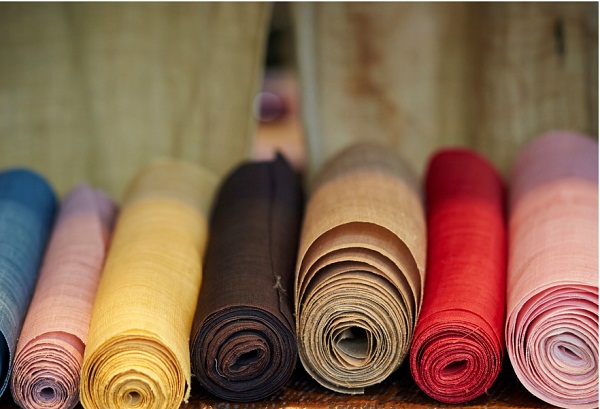
As reiterated at the recent EU-Africa Business Summit, the textile industry is the second most globalized sector of the European economy. Supported by a dramatic increase in medical textiles imports in 2020, Europe’s textile imports touched new heights at €115 billion. The region imports 22 billion pieces of textile and garment products every year.
Growing demand for technical textiles
However, the region is also experiencing more completion from other importers. To deal with competitive pressures, Europe needs to step up investments in good quality and innovative products made in a sustainable manner. The region is expected to increasingly focus on products with good quality comfort and design. It is also expected to witness increased demand for technical textiles for more durability and improved performance.
To increase the region’s share in global textile industry, Euratex needs to strengthen relations with neighbouring North African countries and Turkey. This will provide more nearshoring opportunities. The industry can also benefit from the trade and investment opportunities offered by the African continent to create a stable and transparent environment.
Optimize relations with UK and Switzerland
Euratex also needs to optimize relations with the UK and Switzerland. This can be done by ratifying the Mercosur FTA and a mutual recognition of standards with the US and setting of global environmental and social rules. The industry also needs to sign new FTAs with India to obtain full and fair access to domestic market.
Explore Indian market
The Indian market can be explored in collaboration with European textile and apparel companies who need protection from unfair competition. For this, Euratex would need to survey the market more effectively. General Dirk Vantyghem, Director, Euratex believes, the industry would need to embrace a more global outlook. Aiming to achieve a favorable environment within the EU for making clothing and textile products, Euratex also collaborates with EU institutions and other European and international stakeholders to develop an ambitious industrial policy. Other areas of focus include research, innovation, skill development, free and fair trade and sustainable supply chains.
Vandewielenv, Savio India finalize merger
Vandewielenv and Savio India have finalized the merging process, creating a global network for their customers. The two companies will operate under the new name of Vandewiele-Savio India Private Limited.
Vanderweilebuilds carpet looms, velvet looms, jacquard machines and integrate innovative textile systems for flooring qualities, home linen, fashion fabrics and technical textiles. Sharing inspiration and expertise with its customers worldwide, the company shapes the textile industry of the future. Its Research and Development department and test-engineers are continuously developing new applications. The innovative breakthroughs of Vandewiele give a boost to the textile industry.
Over its 110+ years history, Savio acted as technological leader and most innovative player in attractive niches of the textile value chain. Savio leverages on the best value-for-money proposition in the industry. It has a consolidated presence in all relevant geographies with a local-for-local approach, allowing Savio to promptly address market demand and requirements. Savio is specialized in the textile machinery sector for the yarn finishing segment being the leading supplier of winding and twisting machines with manufacturing plants in Italy, China and India.
The merger of the Group activities has resulted in a wide range of synergies in the service, care solutions and developments, with benefits for the customers. Vandewiele-Savio India is ready to provide the region with high class textile machines with cost effectiveness and the best support.
Thailand garment exports surge by 26.9 million baht
Thailand’s garment exports increased by 28,8 million baht in the first 11 months of 2021, As per a Textile Focus report, the country sold 64.8 billion baht ($1.95 billion) in garments and 188.6 billion baht ($5.67 billion) in textiles during the time, according to the Thai Garment Manufacturers Association.
Thailand’s garment and textile exports were strongly impacted in 2020, according to the US Department of Agriculture Foreign Agricultural Service. Around 3,000 firms scrambled to sew face masks and PPE suits to survive. Renewing demand from other apparel-producing nations, on the other hand, allowed these factories to reopen at full capacity. India,
Vietnam, and Indonesia drove demand for textile items from the nation, with businesses in Europe and the United States also boosting their orders for products created from recycled fibers, organic cotton, and environmentally friendly materials. These companies are now short of up to 50,000 workers and rely on overtime labor, which might result in a return of migrant workers to Thailand in search of work now that the sector has recovered.
CEPA will boost India’s apparel exports: AEPC
The Indian apparel industry believes, the India-UAE Comprehensive Economic Partnership Agreement (CEPA) will boost apparel exports as well as employment generation.
NarendraGoenka, Chairman, Apparel Export Promotion Council (AEPC) said that it will further strengthen India’s dominant position in the UAE. It will result in a 5 per cent drop in import duty on Indian apparels. This will further strengthen the dominant position of Indian apparels in the UAE,
The key factors that would determine the extent of benefit from CEPA are the import demand of specific RMG products in UAE, production strength/export capability of Indian companies in these products and acceptance of Indian products into UAE, he added.
India’s apparel exports to the UAE also cater to the apparel needs of Saudi Arabia, Kuwait, Bahrain, Oman and the UK. The UAE is a large retail market with players across the value chain including big western fashion chains, wholesale buyers from North Africa and the Middle East, he added further.
Italy: White Sign of The Times to organize 20th edition from February 24
Milanese contemporary fashion event, White-Sign of The Times, will hold its 20th edition physically from February 24-27, 2022. As per a Spin Off report, the event will be held on 18,000 sq. mt. area at Superstudio Più and Ex Ansaldo in addition to two brand-new destinations: MUDEC and Padiglione Visconti, in the Tortona Fashion District. On the occasion of its 20th anniversary, the show will organize an exhibition dedicated to the salient moments in the history of the Salon. An integral part of the show, the project Sustainable Milano will focus on sustainability and technological innovation.
WSM-White Sustainable Milano will showcase the best of complex supply chain of sustainable fashion and the latest technological revolutions capable of reducing environmental impact of the entire sector in this long value chain. It will showcase artistic displays and multimedia content of British designers (including Stella McCartney, Ahluwalia, Anya Hindmarch, Burberry, Christopher Raeburn, Helen Kirkum) that have already participated in November at Cop26 in Glasgow.
The show will also host a project created together with 032c, a Berlin-based studio. They will present a creative expo-installation designed to express the spirit of our times and the evolution of costume through seven cutting-edge, established brands – Acne Studios, SR STUDIO LA. CA., Le Cavalier, Entire Studios, 44 Label Group, Kasia Kurchaska and Phipps International – presented in collaboration with Dimore Studio.
Also focusing on sustainability, there will also be Changing Room, the installation created by Michelangelo Pistoletto's B.E.S.T. Città dell'Arte with CRTLZAK. Ten new generation brands selected by the British Fashion Council, will participate in London Showroom for this edition, too. They belong to the London fashion community and they are Carlota Barrera, Chet Lo, Eftychia, Feben, Jordanluca, Labrum Londoin, Robyn Lynch, Roker, S.S. Daley, Yuhan Wang.
Ashley Goldsmith appointed to Kontoor Brands’ Board of Directors
US apparel firm Kontoor Brands has appointed Ashley Goldsmith, Executive Vice President and Chief People’s Officer as its new Director. As per a Textile Value Chain report, Goldsmith will serve as director on the company’s talent and compensation and nominating and governance committees. She has been the executive vice president and chief people officer of Workday, since 2013.
Prior to joining Workday, Goldsmith was with Polycom for three years with Polycom as its executive vice president and chief human resources officer. She led the company through a high growth phase. She also worked at Ventana Medical System for three years as senior vice president, human resources, corporate communications, environmental health and safety.
From 1995 to 2007, Goldsmith held various leadership positions with Home Depot, most recently serving as vice president, human resources, northern division. Beginning her career at Great-West Life & Annuity, Goldsmith holds a bachelor’s degree in psychology from Vanderbilt University, a master’s degree in human resources development from Georgia State University and a master’s degree in business administration from North western University.
Production caps cause Hermes to miss sales targets in Q4
Hermes’ sales in the fourth quarter missed market forecasts, leading to a 7 per cent decline in the brand’s shares as it imposed various caps on production that prevented it from meeting targets. The brand’s sales from leather goods and saddlery division declined 5.4 per cent over the period, as the company faced capacity constraints. However, the volume of leather goods production increased by 7 per cent annually, informs Axel Dumas, Executive Chairman. Compared to 13 per cent in Q3, Hermes’ sales increased only 11 per cent during the fourth quarter to €2.38 billion with US and Chinese shoppers driving growth.
However, Hermes sales grew 42 per cent in 2021from a year earlier and 33 per cent from 2019 levels. The brand’s revenues exceeded their pre-pandemic levels in all regions except France, where business has been dented by the absence of deep-pocketed tourists. The brand does not plan to increase prices to boost results as it is less exposed than rivals to increasing costs of energy and primary materials, adds Dumas.
Pakistan to adjust anti-dumping duties on polyester filament yarn from China
At the request of the Pakistan Court of Appeal, Pakistan National Customs Commissioner plans to reopen the anti-dumping investigation of polyester filament yarn and adjust the anti-dumping duty on the products involved to 2.78-6.82 per cent for China and 3.16 per cent for Malaysia. The measure is valid until August 25, 2022. The anti-dumping investigation initiated by Pakistan against China's PFY found the adjusted anti-dumping duty rate has declined.
In recent years, Pakistan’s exports of PFY grew year on year due to rapidly growing demand for textiles. Reduction of anti-dumping duty rate is undoubtedly a great boon. In 2021, China's PFY exports to Pakistan reached a record high of 257kt, accounting for nearly 9 per cent of exports, most of which need to be subject to anti-dumping duties.
With adjustment of anti-dumping duty rates at the beginning of the year, it means most PFY exported to Pakistan before August 25, 2022 can enjoy the dividend of reduced anti-dumping duties, which to a certain extent increases the export competitiveness of China-made PFY.
CEPA to unleash India, UAE’s textile potential
Signed between India and UAE, the Comprehensive Economic Partnership Agreement (CEPA) will unleash the infinite potential that both nations hold in the textile sector. The trade agreement has been built on the three pillars of trust, transparency and talent, says Piyush Goyal, Minister of Textiles and Industry. It will boost India’s textile exports to $ 2 billion over next 5 years. Duty-free exports are projected to rise to $650 million/year over next 5 years
Indian textile and apparel industry will also benefit through this initiative as now India will not face 5 per cent duty on textiles and garments, which will be a big advantage for Indian companies. India’s total apparel export to UAE was $1,609.4 million in 2020-21 (HS code 61, 62 combine) and 1,436.64 in 9 months of 2021-22. Its home textiles exports to the country increased by 32.46 per cent y-o-y to $259 million.
Negotiated in just 88 days, the 880-page deal also features a permanent safety mechanism to protect domestic businesses in both nations against sudden surges in trading volumes.











