FW
Cambodia’s garment exports get a boost with new initiatives
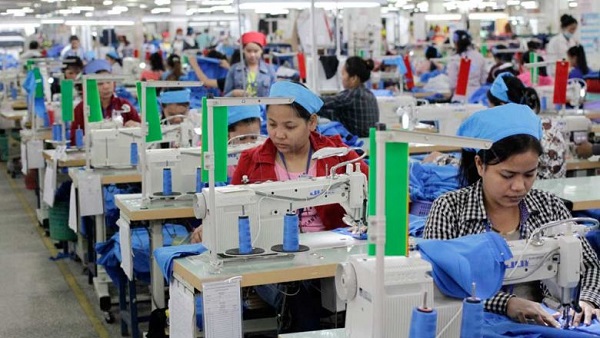
Garment industry experts from Cambodia opine, recent surge in exports may not boost profit margins as production costs in the country have increased simultaneously. Data from the Garment Manufacturers Association in Cambodia (GMAC) shows, Cambodia’s exports of textile-related products increased 15.2 per cent to $11.3896 billion in 2021. Garments exports increased to $8.017 billion, footwear shipments surged to $1.390 billion, export of travel goods amounted to $1.490 billion while exports in other categories grew to $0.49 billion.
Surge in logistic costs dent profit margins
However, the garment sector’s profit margins failed to grow in tandem with exports, says Kiang Monika, Secretary General, GMAC. The garment industry has invested a lot of money on measures to prevent COVID-19 transmissions. However, surge in logistic costs have dented profit margins. Effective coordination between ministries and sectors can stabilize garment production in Cambodia, adds Kong Sang, Chairman, GMAC.
The Cambodian government has launched several initiatives for the garment sector, says Ith Samheng, Minister of Labor and Vocational Training, Cambodia. These include a comprehensive roadmap titled ‘The Strategic Framework and Program for Economic Recovery in the Context of Living with COVID-19 in a New Normal 2021-2023’.
Initiatives to boost sector growth
The government also plans to introduce a 2021-2024 labor sector strategy to boost employment and vocational training for garment workers over year the next three years, adds Samheng. Additionally, the labor ministry has urged the National Employment Agency (NEA) and private recruitment agencies to supply workers to factories and enterprises in order to increase their various production capacities.
The primary voice for garment sector investors in Cambodia, GMAC has established a new forum to discuss various issues impacting Cambodia’s overall investment climate. The association acts as the sole representative of investors in the garment sector and protects their legitimate rights and interests, adds
Cambodia’s textile exports to US surge by 30%: Ambassador
W Patrick Murthy, US Ambassador to Cambodia says, Cambodia’s textile exports to the US have surged to 30 per cent.
This increase is a testament to the good cooperation between Cambodia and the United States, despite some other issues that are problematic and which takes time to discuss appropriate solutions together, adds Murhty.
Dr Ith Sam Heng, Minister of Labor, Vocational and Training, Cambodia, appreciated the Ambassador Murphy for his diplomatic mission, strengthening the cooperation between Cambodia and the United States which has achieved remarkably results.
Cambodia continued to focus on combating human trafficking through labor trafficking and the elimination of child labor has made significant progress, despite some challenges and issues, added Sam Heng.
To achieve this goal, it has promoted these activities responsibly, ensuring the protection and promotion of the rights and benefits of migrant workers, protection from labor exploitation or discrimination in the workplace, providing legal assistance and well-being, assist workers in obtaining proper legal documents and assist undocumented migrant workers, facilitate access to social security and other benefits in accordance with the laws of the target country, he added.
Textiles to spur Kenya’s exports in next decade
According to a report by the Standard Chartered Bank, textiles and minerals could spur Kenya’s exports in the next decade.
Titled Future of Trade 2030: Trends and Markets to Watch, the report identifies major corridors and five trends shaping the future of global trade. The research also finds that 10 percent of global companies currently are or plan to manufacture in Kenya within the next five to 10 years.
Kenya’s exports are projected to grow annually at more than 7 percent to cross $10.2 billion by 2030, with Pakistan, Uganda and the US the fastest growing export corridors for Nairobi.
Kenya’s business with Pakistan is set to grow to 10.7 percent of total exports by 2030, followed by Uganda at 11 percent and the US accounting for 9 percent of exports.
During the past 24 years, Kenya’s exports to Uganda have increased at an average annual rate of 4.85 percent, with data indicating that the country exported goods valued at more than $635 million to Uganda in 2021.
The US is the largest export destination of Kenya’s apparel, accounting for over 90 percent of garment exports every year. Of the total $667 million US imports from Kenya, nearly 70 percent ($453 million) was apparel, making the sector the single largest stakeholder in the proposed Free Trade Agreement.
Coats’2021 Sustainability Report details company progress against targets
World’s leading industrial thread company, Coats has published its 2021 Sustainability Report.
Titled ‘Pioneering a Sustainable Future: Accelerating our Journey,’ the report details the progress made against Coats’ Sustainability Strategy launched in 2019. The Strategy set out ambitious targets to be achieved by the end of 2022. The progress achieved in 2021 included 22 per cent reduction in water usage; 6.9 per cent reduction in kWh per kilogram of production against a target of 7 per cent by the end of 2022; 82 per cent of effluent was compliant with ZDHC against a target of 100 per cent by the end of 2022; 83 per cent of employees worked in an accredited ‘Great Place To Work’ exceeding the target of 80 per cent; 3 per cent reduction in waste
The 2021 Sustainability Report outlines the company’s social impact ambitions including maintaining a workplace where every single employee is free from discrimination, feels respected and is treated fairly and equally and striving to achieve gender parity in all managerial roles, and higher than local labor market representation for all other underrepresented communities at Coats locations.
Close cooperation can boost apparel and textile sector in Bangladesh, Indonesia: BGMEA
Close bilateral cooperation between Bangladesh and Indonesia can help both countries derive mutual trade benefits, especially in the apparel and textile sector, says Faruque Hassan, President, Bangladesh Garment Manufacturers and Exporters Association (BGMEA).
Hassan also emphasized on the need for identifying and removing trade barriers, especially to Bangladesh's apparel exports to the Indonesian market. He was a discussion organiZed virtually by the BGMEA and Indonesian Textile Association (API).
Heru Hartanto Subolo, Indonesia Ambassador to Bangladesh; Jemmy Kartwa Sastraatmaja, Chairman, API and Anne P Sutanto, Chairperson and representatives of Indonesian textile companies also joined the discussion.
Faruque said Bangladesh's apparel industry is pursuing the next level of its growth through diversification of products, especially high-end non-cotton apparel products and technical textiles, which has created a demand for man-made fibres and fabrics.
Indonesian textile can meet the demand of Bangladesh's apparel sector, he added.
Global formal wear to reach $99,423 million value by 2023
Despite the slow growth rate against casual wear, the global formal wear market is expected to grow at 4.8 per cent CAGR to reach $99,423 million by 2023. Formal wear segment is expected to dominate the Western wear market during the forecast period. This growth will mostly be driven by luxury brand awareness and social media trends. E-retail will also propel the growth of western wear market, as this channel makes products available to consumers across various regions. Correspondingly, social media platform provides emerging new fashion trends, thus increasing promotion and product.
In terms of value, the formal wear segment is expected to grow at a CAGR of 4.40 per cent during the forecast period. Asia-Pacific will dominate this market growth with 6.2 per cent CAGR. The online platforms segment is likely to account for more than one-fourth share of the total market in 2016. Some major players operating in the western wear industry include: Benetton Group Srl., Diesel SpA, The Gap Inc, Aditya Birla Fashion and Retail Ltd. Bestseller, Forever21, Inc., Marks and Spencer plc., Hennes & Mauritz AB, Mango, and Inditex SA.
Other western apparel brands such as Gianni Versace S.p.A., Chanel S.A. LVMH Mot Hennessy Louis Vuitton SE, and Herms International S.A. are gaining popularity among the youth population, propelling growth of western wear market.
India’s commerce ministry proposes new incentives for Europe
India’s Commerce Ministry plans to grant few new incentives to textile exporters to expand their business in European and other markets. As per an Apparel Resources report, Europe is a major market for Indian textile products including apparels. Incentives for this market will help India boost exports and help Indian textile companies enter the European markets that currently charge heavy duties on Indian exports. The proposed incentives will be aimed to offset these levies.
While the rate of incentive is still being debated, it would be big enough to offset the proposed carbon tax of the EU and a few other levies. The proposed incentives are being discussed at a time when the European Union’s proposed Carbon Border Adjustment Mechanism is likely to increase tariffs on Indian goods.
India has opposed the proposed tariffs, saying they make it difficult for Indian companies to compete against China and other manufacturing hubs. The incentive will help India support a level playing field for Indian companies, exporting textile products to Europe.
India’s home textile exports surge to $7.34 billion in 2021
India’s home textile exports surged to $7.34 billion during 2021 as the country benefitted receding pandemic and countries adopted the ‘China Plus One’ strategy. As per an Apparel Resources report, the US emerged the top export destination for India with 58 per cent of total export value, India recorded revenues worth $2.60 billion from its home textile exports to the EU.
Compared its Asian counterparts, India’s home textile exports to the US’ surged past Bangladesh’s of $450 million in 2021 and Vietnam’s $ 17.77. India’s linen exports grew 45.83 per cent to $2.45 billion in 2021. On the other hand, China’s linen exports declined 17.58 per cent to $889.64 million in the four aforementioned categories in 2021 from $1.08 billion in 2019, though it upped shipment by 15.60 per cent compared to 2020.
Of all major players in the segment, Welspun Group is moving towards touching $1 billion revenue targets for the first nine months of current fiscal, the company’s revenues climbed 35.80 per cent to approximately $955 million. It is also expanding its manufacturing footprint, with capacity increase in towels, bedding, rugs and carpets in the coming months.
PVH Corp closes stores in Russia
American clothing giant, PVH Corp has closed all its stores in Russia and Belarus following Russia’s invasion of Ukraine. PVH is primarily concerned about the people’s suffering due to the war in Ukraine and escalating humanitarian crisis. The company has committed to provide comprehensive financial, operational and moral support to all associated impacted by the war.
The retail group has assured that all associates will continue to receive their salary and benefits. It continues to make corporate donations to the Red Cross and supporting relief organizations in the region. The group’s associates are donating to organizations in Europe through Global Giving’s Ukraine Crisis Relief Fund.
Founded in 1881, PVH is one of the world’s largest and most admired fashion companies, connecting with consumers in over 40 countries. Some of its iconic brands include the likes of Calvin Klein and Tommy Hilfiger.
Decentraland to host Metaverse Fashion Week from March 24
Virtual social world Decentraland will host a digital fashion week called ‘Metaverse Fashion Week (MVFW)’ from March 24-27, 2022. As per a Spin Off report, the fashion week will include runway shows, fashion experiences, pop-up shops, and afterparties over four days. It will hold numerous catwalks in Decentraland’s newest district, the ‘Luxury Fashion District,’ presented by UNXD and Vogue Arabia.
The Fashion Week will kick off with the inauguration of Selfridges’ flagship metaverse store on March 23. The launch features an immersive experience with Paco Rabanne + Victor Vasarely. MVFW will also host futuristic runway shows daily by fashion houses, such as Dolce & Gabbana, Dundas, and Etro, as well as digital fashion brands like The Fabricant, new designers making their digital wearables debut at MVFW like Kid Super, and NFT celeb Fewocious.
The CashLabs Space will host a confluence of exhibitions highlighting the intersection of fashion and art from a mix of renowned artists and designers, as well as up-and-coming talent. The event will conclude with after-parties by brands such as Dolce & Gabbana, Hogan+Exclusible, Faith Connexion and Faith Tribe + Blondish in Decentraland.