


FW
Fendi to set up new factory in Italy
Luxury label owned by the LVMH Group, Fendi plans to expand production capacityby setting up a new factory in Fermo, Italy. As per Fashion Network, the brand recently inaugurated its first flagship store for its furniture line, in Milan
The new factory, equipped with solar panels, will extend over 7,000 sq m, including production facilities, offices and a warehouse. The façade will have a corrugated aluminium surface for an effect akin to draped leather, and the interiors, benefiting from plenty of natural light thanks to glass walls and skylights, will be exceptionally bright, and distinctive for their minimalist style, enhanced by steel furniture and quartz cement floors.
The Fermo factory will be inaugurated in autumn 2022, as will the other new Fendi facility being built in Bagno a Ripoli, near Florence. The latter is a new design and production plant specialised in leather goods, called Fabbrica, which is being constructed on the site of the old Fornace Brunelleschi blast furnace.
The former industrial wasteland will be transformed into a sustainable factory extending over an area of 12,000 sq m, almost entirely covered with vegetation, designed by Milanese architecture studio Piuarch. Fabbrica will initially employ nearly 250 people, growing to 400-500 at full capacity and supplementing the output of the other Fendi factory in Tuscany, located in Ponte aEma.
Bangladesh cotton imports to rise to 9 million bales
A sudden rise in demand will boost Bangladesh’s cotton imports for the first time to 9 million bales of cotton. says Mohammad Ali Khokon, president of Bangladesh Textile Mills Association (BTMA).
In 2021, Bangladesh imported 8.5 million bales of cotton at a cost of over $3 billion. This year, cotton import will surge in the country as the export of Bangladeshi made garment items rose significantly with the gradual reopening of the global economies, he adds.
For instance, between July and December last year, the first six months of the current fiscal year, garment export grew by 28.02 per cent year-on-year to $19.90 billion.
Of the amount earned from the garment shipment, $11.16 billion came from knitwear, a 30.91 per cent rise year-on-year.
In the period, $8.73 billion came from woven, which is also 24.50 per cent higher year-on-year.
Vietnam: Vinatex revenues rise by 144.2 % in Q1 FY2022
Revenues of the Vietnam National Textile and Garment Group (Vinatex) rose 144.2 per cent to over VND5.15 trillion ($224.26 million) in Q1FY 2022. As per a Saigon Online report, the Group’s pre-tax profit increased by 173.9 per cent to VND376.7 billion ($16.4 million) against the same period last year. Profits in the textile segment increased 139 per cent, garment segment profits rose 167 per cent over the same period last year.
Huu Hieu, General Director believes, growth can be attributed to the efficient control of COVID-19, which enabled businesses to deliver completed orders and accept more orders, along with stable prices of cottons and labor cost. This year, Vinatex plans to accelerate digital transformation to improve operating efficiency. The group has achieved 63 per cent of target in annual textile production while apparel segment reached pre-pandemic levels of growth, according to Le Mac Thuan, General Director.
Revenues of garment companies grew 1.2-1.5 times and two-times over the same period last year. Foreign partners have returned to Vietnam with big orders. In future, Vietnam will invest in the two industrial clusters of Thanh Hoa and Thai Binh, Thuan affirms.
Control rising raw material prices, urges AEPC
To control rising raw material prices, apparel exporters’ body AEPC has urged the government to take immediate measures as the entire textile value chain is getting affected by the price hike. AEPC says, cotton yarn prices rose to Rs 406 per kg in April from Rs 376 per kg in March. Prices doubled from Rs 200 per kg recorded 18 months ago, the council says.
Narendra Goenka, Chairman, AEPC affirms, the industry is making adequate efforts to increase production capacity. However, buyers are abstaining from placing new orders due to high cotton prices. Lack of FTAs in leading EU markets is adding to the woes of Indian traders. This threatens to increase competiveness gap for Indian products, diverting its orders to competitors.
The price realization and foreign exchange of garment exports is much higher than raw material exports as they are value-added products, adds Goenka. Instead of raw materials, the government should increase exports of value-added products like apparel, he opines.
CAI to address quality issues in collaboration with ICA
Apex trade body for cotton in India, Cotton Association of India (CAI) has signed an MoU with International Cotton Association (ICA) to increase co-operation and address quality issues. Headquartered in Liverpool, ICA is the world’s leading arbitral body for cotton. Majority of cotton trading across the world is done as per the ICA by-laws. Currently, an ICA delegation comprising Alex Hsu, President and Bill Kingdon, Managing Director is meeting various stakeholders in India.
As per Atul Ganatra, President, CAI, the MoU between the two trade bodies focuses on organizing yearly meetings to discuss mutual interest issues and increasing co-operation between the two trade bodies. It also includes organization of training programs in India; exchanging and disseminating available information, liaising with the government to addressing quality-related issues. The ICA delegation also discussed a proposal to organize training programs in India, ICA Bremen certification of a few CAI laboratories and their recognition. It also discussed a proposal to organize events, adopt by-laws for amending the CAI by-laws relating to international trade, etc, says Ganatra.
The delegation also plans to meet members of Confederation of Indian Textiles Industry (CITI), North India Textile Mills Association and multinational cotton companies. It also plans to visit the Central Institute for Research on Cotton Technology.
Lenzing Group posts 25.7% revenue growth in Q1FY’22
Global market leader in wood-based cellulosic fibers, the Lenzing Group posted a 25.7 per cent Y-o-Y revenue growth Q1, FY’22. Group revenue grew to €615 million, during due to a rise in demand for wood-based biodegradable specialty fibers and higher fiber prices. The group’s earnings before interest, tax, depreciation and amortization (EBITDA) decreased 7 per cent year-on-year to €88 million. Its EBITDA margin reduced from 19.3 to 14.3 per cent. Lenzing reported a 14.3 per cent growth in net profit for the quarter. Profit surged to €34.1 million, while earnings per share increased to €0.87.
Like the entire manufacturing industry, the Lenzing Group too was significantly affected by the extreme developments in global energy and commodity markets during the quarter. However, the group continued to focus on specialty fibers like Tencel, Lenzing Ecovero and Veocel that along with a positive market environment helped ensure a solid revenue and earnings trend. Gross cash flow increased 2 per cent to €86 million during the quarter. Cash flow from operating activities decreased 28.5 per cent to €79.7 million. The group continues to launch climate-neutrality initiatives across operations.
In 2019, Lenzing set a target to reduce its carbon emissions by 50 percent by 2030 and to become climate neutral by 2050. It also plans to generate electricity from renewable energies in future. Currently the group is involved in the construction of several photovoltaic systems at its site in Upper Austria.
Global economy is forecast to grow 3.6 per cent in 2022, predicts IMF. Currently, the manufacturing industry is being challenged by the deep recession caused by COVID-19, the Russia-Ukraine, global supply chain constraints, etc. Liquidity crisis are expected to persist in all regions relevant to Lenzing.
Lenzing also expects demand for environmentally responsible fibers for the textile and clothing industry as well as the hygiene and medical sectors to grow. However, the market remains challenged due to the rising energy and raw materials costs as well as disturbances in the supply chain.
AAFA appoints Corinne Suder new Vice President
Corinne Suder is the new Vice President-Events and Programming Department, American Apparel & Footwear Association (AAFA) effective from June 13. A Certified Meeting Professional (CMP), Suder has over 25 years experience and was earlier engaged as the senior director at AAFA. In her new role, Suder will preside over several annual events and webinars, as per a Textile World report. The events will align with AAFA’s Strategic Plan across the priorities of brand protection; supply chain and sourcing; trade, logistics, and manufacturing.
AAFA organizes all events under a capable leader to support members’ growth and sustain inclusive and diverse cultures, meet and advance ESG goals, and draw upon the latest technology. The association plans to continue engaging members through collaborative meetings, webinars, and a hybrid calendar of virtual and in-person events.
Suder joins AAFA’s senior leadership team that currently includes: Steve Lamar, President and CEO; Nate Herman, Senior Vice President – Policy; Maureen Storch, Senior Vice President – Membership; Natalie LaBella, Vice President – Communications and Marketing; and Agata Borradori, Vice President – Finance.
Lifting international ban on Uzbek cotton will push up India’s cotton stocks
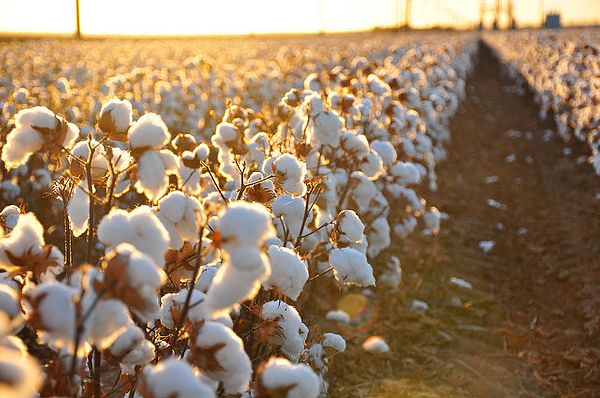
Last month, international brands and retailers decided to lift the ban on cotton grown in Uzbekistan. The decision came as a huge relief to the country as cotton is the main cash crop in Uzbekistan, one of the main pillars of its economy. As per a daijiworld.com report, cotton cultivation in Uzbekistan dates back a few centuries. The crop is important to Uzbekistan’s national economy. However, since its independence in 1991, Uzbekistan has been accused of using forced labor, especially child labor for harvesting of the crop.
Ban drives elimination of child labor in Uzbekistan
The accusation led to 331 international brands and retailers banning cotton products from Uzbekistan since 2011. The Cotton Campaign was established to improve human rights in Uzbekistan while International Labor Organization (ILO) allowed to monitor production in the country. The boycott also led to around two million children and a million adults being taken out of forced labor by the ILO. In its ‘2021 ILO Third-Party Monitoring Report of the Cotton Harvest in Uzbekistan’ based on 11,000 interviews with cotton pickers, ILO says, 99 per cent workers involved in the 2021 cotton harvest worked voluntarily. Majority of cotton pickers also reported a marked improvement in working conditions since 2020.
Reforms eradicate child laborv In a joint press briefing held in March 2022, the Ministry of Employment and Labor Relations of the Republic of Uzbekistan noted in the last five years, the country has launched a massive drive to eliminate forced labor from the country. A leading partner of the Cotton Campaign Coalition, the Uzbek Human Rights Forum also denies the presence of forced labor in the country.
This accomplishment is credited to Uzbek President Shavkat Mirziyoyev, who has initiated several labor reforms. In a decree issued in 2012, Mirziyoyev banned children from working in cotton fields. He also launched numerous reforms as the President of the country to modernize Uzbeistan’s former agricultural economic model and eradicate child and forced labor from. The government banned adults from being forced to work in fields. It abolished the quota system for cotton production and as recommended by the ILO and the World Bank, increased salaries. Eradication of forced labor also led to the lifting of the international ban on cotton by the International Coalition Cotton Campaign.
ILO move to boost cotton consumption
Jonas Astrup, Chief Technical Advisor, ILO TPM Project in Uzbekistan says, the labor market in Uzbekistan is being democratized with minimum wages being raised by the government. Despite lifting the ban, brands continue to source from buyers diverting from China. The brands that have banned Uzbek cotton included H&M, which acted on the advice of industry certification agent, Better Cotton Initiative. Other brands like Nike, Ralph Lauren, Gap and American Eagle Outfitters, also banned vendors and suppliers from sourcing products or raw materials from Xinjiang. The ban is likely to boost cotton exports from Uzbekistan and create jobs in the country.
Lifting the ban may also help stabilize global cotton prices by boosting both consumption and production. The move is also advantageous to India which expects cotton yield to decline this year. India can purchase cotton from Uzbekistan at affordable rates. This strengthen bilateral economic relations between the two.
Denim demand to revive with ‘business comfort’ dominating office style

As consumers sought to refresh their wardrobe post pandemic, they mostly shopped for denim, reflecting their desire to retain comfort in their ensembles. Comfort will continue to be a dominating factor in consumers’ clothing choices, says Elizabeth Spaulding, CEO, Stitch Fix. However, they may also add new styles in office wear. Hence, ‘business comfort’ is likely to emerge as the new office style, adds Spaulding.
Over 70 per cent consumers to opt for jeans as office wear
Consumers’ eagerness to restock their wardrobes offers brands and retailers significant opportunities to cater to changing preferences, avers Spaulding. As per a Stitch Fix survey, denim sales increased 30 per cent Y-o-Y this year. Sale of straight jeans increased 30 per cent while wide leg denim sale rose 79 per cent. The company also recorded a 23 per cent rise in sale of men’s relaxed fits while sale of straight leg jeans grew 21 per cent.
In the next few months, over 76 per cent consumers surveyed by Cotton Incorporated said, they plan to wear jeans more often than they do now. Titled, ‘Coronavirus Response Survey’, it showed, in the last one month, around 44 per cent consumers wore jeans to work.
Future dressing style to be hybridized
The survey also revealed, only 16 per cent consumers wore sweatpants at home last month. On the other hand, 39 per cent wore denim to office. The pandemic has casualized officegoers’ dress code with 25 per cent opting of less formal clothes to office. Employees capable of working remotely plan to adopt the hybrid style of dressing to office in future, shows a research report by Gallup. Stitch Fix also indicates a growing preference for denim, dresses and a combination of knit and woven garments in offices.
Denims to top purchases in next three months
Around 30 per cent respondents to the Coronavirus Response Survey said they plan to prioritize denims as their top clothing purchases in the next three months. This will followed by sweatpants at 27 per cent, activewear at 25 per cent and athleisure at 21 per cent.
Pent-up demand for denim jeans was highlighted when consumers returned to their offices and social gatherings, states the NPD Group. In 2021, sale of classic bottoms in the US increased 36 per cent to $18.4 billion. Sale of women’s jeans grew 9 per cent while men’s jean sale went up 12 per cent, as against 2019 figures. Jeans manufacturers continue to be leading innovators as they offer new styles and options to consumers to up their comfort quotient.
NCTO issues statement on USTR review of China 301 tariffs
Kim Glas, President and CEO, National Council of Textile Organizations (NCTO) representing the full spectrum of U.S. textiles from fiber through finished sewn products, issued a statement on the US Trade Representative’s statutory four-year review of the China 301 tariffs.
According to this statement, NCTO has long advocated for the 301 penalty tariffs to remain on finished textile and apparel products from China. Not only do they increase the government’s negotiating leverage to address the Chinese government’s serious predatory trade practices that have hurt our domestic manufacturing sector and that of its free trade agreement partners for decades; they also send a strong message to China that the United States is committed to addressing systemic predatory trade practices that have undermined domestic industries and their workers.
For decades, China’s illegal actions have undermined virtually every domestic manufacturing sector and contributed to the direct loss of millions of U.S. jobs. These devastating state-sponsored practices, which include intellectual property theft, pervasive state-ownership of manufacturing, industrial subsidies, and abhorrent labor and human rights abuses in the Xinjiang region, have allowed China to dominate the global marketplace, which has had severe ramifications on American workers and our Western Hemisphere trade allies. As sourcing executives seek to de-risk out of China for these products, our sector is experiencing massive investment in the U.S. and Western Hemisphere supply chains. In fact, we expect approximately $1 billion of investment announced in the United States and Central America this year alone, as penalty tariffs have played a key role in sourcing shifts.
Tariffs are a reasonable and necessary mechanism to support U.S. jobs, offset unacceptable practices, and strengthen the national economy. They help partially level the playing field for American manufacturers and workers trying to compete against unfair and illegal trade practices – ranging from intellectual property theft, forced labor, to state-sponsored subsidies – that have been perpetuated by the Chinese government. These products have flooded the U.S. market and put our domestic producers and their jobs at risk and have significantly contributed to offshoring and the destruction of the middle-class jobs. It’s critical we maintain key negotiating leverage to address these predatory trade behaviors.
NCTO has also strongly advocated for a fair, transparent process to remove tariffs on certain limited textile machinery, chemicals and dyes that cannot be sourced domestically to help U.S. manufacturers compete against China.
The review process, which is required by statute and being undertaken by the U.S. Trade Representative’s office, will allow domestic manufacturers to weigh in on whether removing the tariffs will be harmful and trigger USTR to do a further review.











