


FW
US passes new law to prevent imports made with forced labor
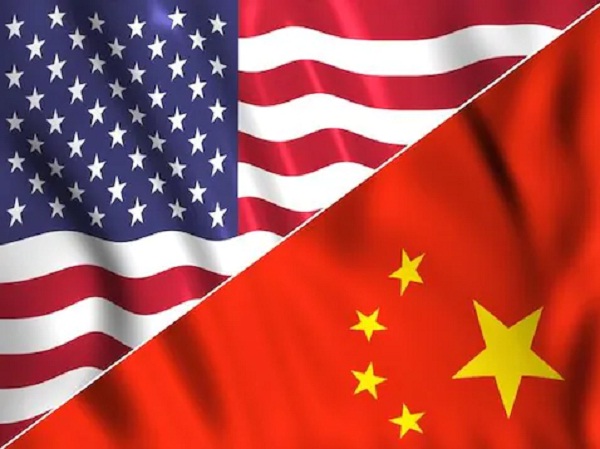
From June 21, the US government has passed a new law to prevent import of goods made by forced labor in China’s Xinjiang, reports Human Rights Watch. Known as the Uyghur Forced Labor Prevention Act (UFLPA), the law enables US authorities to block imports of goods made by forced labor in China. It prevents Chinese authorities from committing atrocities against Uyghurs and other Turkic Muslims in northwest Xinjiang region by preventing them from exporting these goods to the US.
Jim Wormington, Senior Researcher and Advocate for Social Accountability, Human Rights Watch warns, companies engaged in doing business with Xinjiang should immediately cut links with the region, else their goods might be detained at US borders.
Transparency over suppliers needed
On June 13, The US Customs and Border Protection Agency issued guidelines on the implementation of the law. These emphasize, importers need to be transparent about their supply chains right down to raw material suppliers. Companies importing goods from other countries also need to monitor their supply chain to avoid links with China. For products identified as being made partly or wholly in Xinjiang, importers need to provide evidence of them being free from forced labor.
No audits and certifications in Xinjiang
A multiagency group, the federal Forced Labor Enforcement Task Force issued additional guidelines on the law’s implementation. These include: banning brands, retailers, industry organizations and multi-stakeholder initiatives from conducting and commissioning audits and certifications in Xinjiang.
For effective implementation these laws, US customs officials need to correctly identify products made in Xinjiang amongst numerous other goods imported by the US, says Human Rights Watch. Customs officers also need to identify sectors at risks of being subjected to forced labor, and request information on suppliers. They should publish this data on their websites every monthly.
Penalize violators
Financial penalties should also be imposed on companies for importing goods made by forced labor in China. The US government should implement the Trafficking Victims Protect Act to punish corporations and company leaders engaging in business with forced labor perpetrators.
How effectively the US government implements the new law will be monitored by companies, says Wormington. The government should implement the law strictly and prevent import of goods made with forced labor, says Human Rights Watch. The UFLPA Act will help them in achieving this, it assures.
Global luxury fashion prices on four-year high in 2022: Study

Luxury has just become more expensive, says a new report by Edited. Prices of luxury fashion products have surged 7 per cent above 2020 and 25 per cent above 2019, the report analyzes. They are currently at a four-year low though there’s less than 1 per cent year-on-year difference from last year.
Women’s outwear dominates price-rise
Prices of women’s outerwear have surged most during the three-year period increasing 20 per cent over 2019 to $3,395.12 on average. Products like Dolce & Gabbana’s Jacquard coat with embroidery are retailing at $66,000 now; these are followed by menswear retailing at $3,053.94.
Known for denoting a women’s status symbol, handbags are retailing 20 per cent higher than 2019. The highest prices are being commanded by Louis Vuitton followed by City Steamer and Capucines BB bags. These handbags and outwear have traditionally been more expensive than other products as they are delicately designed and made from expensive materials including animal fur. Though, the industry is largely going fur-free, a few brands continue to include fur in their collections, making their items more expensive. However, this is set to change with Italian brand Fendi opting for animal and plastic-free, lab-grown fur. The brand believes this can help restructure the prices of fur products across the globe.
Rising prices of affordable designer items
The prices of not just luxury but also affordable items from designer brands have also increased in the last few months. In women’s wear, price of trainers have increased 2 per cent while for men it has grown 10 per cent since 2019. Once again, the highest prices are being commanded by Louis Vuitton with its Luxembourg Samothrac e and Aftergame trainers recording the highest online price increase.
Prices for men’s T-shirts have gone up 55 per cent over 2019 while those of women’s T-shirts have grown 15 per cent. A Balenciaga cotton logo T-shirt that retailed at $595 years ago currently retails at $650 with Demna Gvasalia being considered one of the most high-profile designers currently.
However, the price hike isn’t discouraging customers. While consumer spending halted for some time due to fresh lockdowns in China and the Russia-Ukraine war, US sales of brands like Prada were strong enough to offset losses.
Rely on available data
As per the latest data from Edited, so far in 2022, luxury retail has surged 21 per cent over 2019. Prices will continue to rise despite the economic fallout triggered by Russia-Ukraine war and rising oil prices, says the report. With added sanctions across other nations, the war could lead to a decline in globalization and invite sanctions on more nations, adding to the strain on the supply chain. To avoid passing these costs onto customers and keeping their margins sustainable, retailers need to keep a close watch on available data.
Itema to showcase weaving machines at Techtextil
Itema, the leading Italian manufacturer of advanced weaving solutions, including weaving machines, spare parts, and integrated services, will showcase the most comprehensive weaving portfolio in the market to weave technical fabrics at Techtextil, from June 21 to 24in Frankfurt, Germany. lications.
Thanks to this forward-looking choice, Itematech offers nowadays the most complete weaving machines portfolio to weave technical fabrics, ranging from Negative and Positive rapier, to Monorapier for carbon fiber and fancy styles, Airjet and the legendary Projectile.
Itematech representatives will be on site to present in detail all the Itematech weaving solutions and the widest range of fabrics that it is possible to successfully weaving thanks to the Itematech technology.
Particularly, Techtextil is the perfect occasion to discover more about the new entries in the portfolio, that along with the rapier R9500-2, the airjet A9500-2 and the projectile P7300HP make up the range of Itematech weaving machines:
Cambodia’s garment industry to grow 8.1% in 2023
The Cambodian garment industry is expected to grow by 8.1 per cent in 2023 with support from improved external demand that help boost garment and non-garment manufacturing. Growth in the sector will be triggered by a demand in the United States, the European Union and the Southeast Asian region, primarily Myanmar.
The country’s economy will grow by 6.6 per cent in 2023, 1.2 per cent higher than the projected 5.4 per cent this year, supported by better trends of global demand and higher confidence of investors amid the relaxed and controlled COVID-19 pandemic situation, the government said recently while releasing its macroeconomic and budget strategy.
Inflation is estimated to drop to 2.5 per cent this year from the projected 5 per cent in 2022 as this year the prices of oil and commodities have steeply increased in the international market due to the Russia-Ukraine war and the exchange rate will stay around 4,065 riel against the US dollar
Uster launches EVS Fabriq Vision
Uster has launched a new product -- the Uster EVS Fabriq Vision -- that makes producing quality fabrics much easier. The product gathers quality data and presents it in an album used to certify the quality of each fabric roll with traceability. The machine combines quality assurance and process optimization.
Uster EVS Fabriq Vision ensures reliable quality by using automated control during intermediate and final inspection, removing the need for manual inspection. The material is inspected by multiple spectroscopes while the unique image processing algorithms identify all defects automatically, recording them in a dataset for each produced roll – which is also used for traceability.
The machines generate a defect map automatically generated, to help operators understand the allocation of defects in the fabric roll. This information is also available at an offline PC in the Fabriq Album software, which is a valuable tool for optimizing data for final cutting or further processing steps.
The Fabriq Album software ensures optimum inspection efficiency and throughput. Machine learning capabilities and the implementation of AI-assisted defect classification extend the use of quality data generated by Fabriq Vision. Uster Fabric Inspection solutions bring the added benefit of helping customers to prepare for a digital future.
UP government plans textile and apparel parks in the state
The Uttar Pradesh government plans to attract more investments by building new textile and apparel parks in the state. This will help the government to transform the sector from unorganized to organized. It will also boost exports by offering all facilities in one place.
As per FY2021-22 data, textiles and apparels accounted for 9 per cent of the state’s exports during year and totaled Rs 12,996 crore. They were the third most exported items from the state after electronic and electrical products. Compared to 2020-21, UP’s textile and apparel exports grew 40 per cent. The jump was more than the rise seen in exports of electronics and electrical products as well as meat during the same period. Gautam Buddha Nagar and Ghaziabad emerged amongst the state’s top 10 export cities with 41 per cent and 11 per cent shares respectively.
The apparel park in Noida will be set up with an investment of Rs 3,000 crore. It will house 115 export-oriented units of readymade garments. Commercial production in the park will begin by September 2025.The government also plans to make five textile and apparel parks through the public-private partnership (PPP) model. For this, the tender process will begin after identifying land by September next year. The aim is to begin production by 2026.
The government will set up flatted factories in or around Kanpur Nagar, Gorakhpur, and Agra. It will also build a world-class textile park at a cost of Rs 10,000 crore under the PM Mitra scheme.
67th IIGF to feature 1,189 buyers from 59 countries
The upcoming 67th India International Garment Fair (IIGF) will feature around 1,189 international buyers from 59 countries, says Naren Goenka, Chairman, AEPC. The event will provide a direct marketing platform to MSME exporters from across the country. It will bring together around 500 exhibitors and over 2,000 overseas buyers and buying agents, he adds. Buyers will hail from countries like: US, Brazil, Japan, UK, Spain, Australia, Poland, Colombia, Greece, Italy, Egypt, Chile, Argentina, UAE, Thailand, France, Germany, Canada and Iran, etc
Held in January 2020, the last physical fair generated business worth $166.17 million. AEPC expects a 10 per cent growth this year despite adverse marketing conditions in various countries.
The global apparel market is expected to generate revenues of around $1.8 trillion in 2022 and $1.9 trillion in 2025 before it closes to $2 trillion in 2026, adds Goenka. AEPC has put up a stall for start-ups to showcase their innovations in the textiles and garment sector. Currently, there are 600 textiles start-ups in India and the Production Linked Incentive scheme would be a window to the investment flow into India and thrust exports of MMF Apparels and Technical Textiles along with scaling their production to match global demand, opines Piyush Goyal, Textile Minister.
The View Premium Selection ends on a successful note
View Premium Selection, the Preview Textile Show of Munich Fabric Start Exhibitions GmbH, ended on a successful note. Held from June 21-22, 2022, the event showcased over 300 pre-collections, from Akris, Baldessarini, Bogner, Calvin Klein, Cinque, Comma, Drykorn, Escada, Hugo Boss, Lala Berlin, Lagerfeld, Laurél, MAC, Marc Cain, Marc O'Polo, Riani, Schumacher oand Strells.
The View Premium Selection is divided into four areas: Fabrics, Additionals, Design Studios and Denim & Sportswear. Together, these form the trend and a business platform for information and inspiration for Europe's fashion experts.
Nick Müller, Max Müller Agency says, the event provides an initial orientation. Many people decide on their basic qualities here, thus know at an early stage how they will create their collection at an early stage. The atmosphere at the event is great with everything from maxi checks to metawear, from enthusiastic colors and shiny, moving surfaces to high-tech and textile being showcased, he adds.
C&S consolidates with Texo acquisition
C&S, a manufacturer of Italian fashion garments has consolidated its position in the formalwear segment by acquired Texo SRL, a cagli-based company with 10 years experience in the production of fashion apparel for Texo and for third parties.
C&S has also expanded its Style Services Luxe division by adding the Style Services Denim and C&S Experience initiatives in collaborations with the Haikure brand, and has signed license agreements for Europe for Jeckerson and Purple.
C&S was incepted over 40 years ago in Trestina, in the Perugia province. The company has revolutionizing itself by embracing the luxury segment, establishing itself as a special partner for the creation of jackets, shirts, outerwear, and denims. It has become an essential point of reference due to its unique approach, oriented toward sustainability and the Made in Italy supply chain. It is also the main interpreter of jeans’ evolving world, as well as luxury and formalwear.
Consumer behavior will remain unpredictable in future, say experts
Top industry executives at a recent Dublin conference said, they expect consumer behavior to remain unpredictable for the foreseeable future as global retailers and consumer goods makers continue to remain in a crisis mode. Since the beginning of 2020, the STOXX Europe 600 Retail EUR Price Index has stabilized at one-fifth its original value. The equivalent index for European food and beverage makers has declined by over 4 per cent
The faltering supply chain has also threatened the manufacturing and consumer goods industry over the past year as shipments remained trapped in log jams due the pandemic-induced lockdowns, panic buyers and sanctions on Russia. Shipping costs have increased by around 30 per cent, says logistics giant Maersk, which transports goods for companies like Walmart and Nike. Consumers goods companies are struggling with issues like soaring inflation, climate change and global food crisis, says Alan Jope, CEO, Unilever.
Inflation is rising, particularly in Europe, says Ayla Ziz, Global Head-Sales, Danone. Tobias Wasmuht, CEO, Spar International adds, the supermarket chain owner is trying to mitigate the impact by cutting costs and becoming more efficient. But, the increased raw material costs are likely to be passed onto shoppers, he warns.











