FW
Italy’s C&S acquires luxury denim manufacturer Texo Srl
At the end of April 2022, Italian fashion brand C&S, international acquired Texo Srl, a Pesaro and Urbino-based manufacturer of luxury denim collections for prestigious international brands for the last 10 years. Based in Central Italy, C&S has been, for the last over 40 years, producing high-quality jeans and streetwear apparel, while it also owns, produces and distributes its own premium denim brand Haikure.
The agreement enables the company to broaden and consolidate its market presence, says Federico Corneli, main shareholder of C&S. It will also help the company restructure operations according to three main branches involving its own brand, the premium denim and luxury denim segments, he adds.
The value addition by Texo will allow C&S to grow further and accelerate its establishment as special partners for the most important luxury brands, he adds further. C&S is embracing the premium denim segment and establishing itself as a special partner for the creation of jackets, shirts, outerwear, and denim – that still remains the strong point of the company.
The company has recently started a process to achieve the GOTS certification for both C&S and Texo in order to enrich the sustainability of its products, an acknowledgement that it aims to complete by October 2022.
India’s basic textiles exports decline 25% Y-o-Y in May 2022
India’s exports of basic textiles declined 25 per cent Y-o-Y and 6 per cent M-o-M in May 2022 to $573 million or Rs 4,448 crore. As per a Textile Beacon report, they accounted for just over 1.5 per cent of total merchandise exported from India during the month. Exports of India’s spun yarn declined 30 per cent Y-o-Y to 71 million kg worth $320 million or Rs 2,480 crore. Bangladesh emerged the largest market for spun yarns during the month, followed by Turkey and Egypt.
Exports of cotton yarn declined 58 per cent in volume and 40 per cent in revenues to $237 million or Rs 1,840 crore. Bangladesh remained the top importer of cotton yarn, followed by Egypt, Portugal, Vietnam, and Italy. China reduced import from India by 97 per cent in May 2022. Shipment to Bangladesh also declined 30 per cent and Egypt too saw a dip of 15 per cent.
Exports of 100 per cent man-made fibre yarn totaled 10.19 million kg, comprising over 5.72 million kg of polyester yarn, 2.72 million kg of acrylic yarn and 1.41 million kg of viscose yarn. Major markets included: Italy, followed by Bangladesh, Sri Lanka and Turkey. Polyester spun yarns s worth $15 million was exported at average unit price of $2.68 a kg. Turkey was the largest importer of polyester yarn, followed by USA and Morocco.
Blended spun yarns worth $50 million were exported in May, including 8.55 million kg of PC yarns and 3.76 million kg of PV yarns. Honduras was the top importers of PC yarn from India followed by Egypt and Bangladesh while Turkey was the single largest importer of PV yarns from India followed distantly by Vietnam. Filament yarns exports totaled 49 million kg, worth $97 million or Rs 755 crore.
China’s polyester yarn exports surge 56.9% in May
China’s polyester yarn exports grew 56.9 per cent Y-o-Y and 29.6 per cent M-o-M to 56,000 tons. Amongst the total, exports of polyester single yarn surged to 27,000 tons, registering up 135 per cent Y-o-Y increase while the exports of polyester ply yarn rose 21.5 Y-o-Y to 15,000 tons and exports of polyester sewing thread went up 9 per cent Y-o-Y to 11,000 tons.
As per a CCF Group report, the share of polyester single yarn exports increased to 52 per cent Y-o-Y and 8 per cent M-o-M in total polyester yarn exports from that in Apr, while the shares of polyester ply yarn decreased by 4-5 per cent Exports of polyester single yarn were mainly directed to the Middle East and Southeast Asia. The export volume to Jordan climbed up to 8 per cent. Among major exporters, Fujian accounted for nearly a half, followed by Jiangsu and Zhejiang. Polyester ply yarn was mainly exported to South Asia and Southeast Asia.
In May 2022, China polyester/cotton yarn exports increased 61.9 per cent Y-o-Y and 30.9 per cent M-o-M.to 3,991million tons. Imports totaled 546 million tons, declining 7.3 per cent Y-o-Y and 10.6 per cent M-o-M,
EU finalizes corporate sustainability deal with large companies
The European Union has finalized a deal with large companies ensuring their compliance to corporate sustainability from 2024. As per reports, the agreement aims to end greenwashing and lay the groundwork for sustainability reporting standards at the global level.
It urges listed or unlisted companies with over 250 staff and turnover of €40 million ($42.13 million) to disclose environmental, social and governance (ESG) risks and opportunities, and the impact of their activities on the environment and people.
Some smaller listed companies will be subject to a lighter set of reporting standards, which they can opt out of until 2028. Having a clean human rights record will become just as important as having a clean balance sheet, says Pascal Durand, who led negotiations for parliament. Disclosures will have to be externally audited, Durand added further stating the rules make room for new players offer this service.
ASW 2022 to be attended by over 10,000 brands
Scheduled from July 01-02, 2022 at Sheraton Grand in Bengaluru, the Apparel Sourcing Week (ASW) will be attended by over 10,000 brands, retailers, manufacturers, D2C brands, and think tanks from over 15 countries.
To be organized by Apparel Resources, the two-day platform will include 10 seminars, 12 open house discussions, vendor sessions and workshops; accelerator program for start-ups, etc.
It will be attended by popular and established brands from the apparel retail industry such as Shopper’s Stop, Being Human, Tata Cliq, Fab India, ACE Turtle, Amazon (Private Brands), Myntra, Zivame, Clovia, Nykaa Beauty Vardhmann textile, etc.
MayankMohindra, Director, Apparel Resources says, the event will be introduced in a fresh and completely upgraded format to cater to the needs of industry 4.0. The transformation of apparel retail has further accelerated due to the pandemic, he adds.
The event will help industry and businesses to decode the post-pandemic business ecosystem and markets. It will generate productive and effective business opportunities, he adds.
Insightful sessions on pivotal topics such as ‘Reinventing physical retail’, ‘Fashion innovation using AI’, ‘Upcycling – the new frontier for sustainability, ‘Sourcing in times of Industry 4.0’, will be the hgihlights of the event.
ASW 2022 will also take India-Bangladesh collaboration to next level and make South Asia, the global hub for apparel and textile innovations.
Increase in source tax may lead to huge losses in the industry, warn Bangladesh RMG exporters
Bangladesh apparel industry may face huge losses despite incorporating some initiatives to support businesses if the source tax on export proceeds is doubled as proposed in the fiscal budget for 2022-23, warned RMG exporters in webinar organized by The Business Standard. Exporters argued, a two-fold hike in source tax amidst rising production costs, may add more stress on already ailing businesses. It may compel garment factories to shut down, the exporters added.
The webinar was attended by Mohammad Hatem, Executive President, Bangladesh Knitwear Manufacturers and Exporters Association (BKMEA), and Fazlul Hoque, Managing Director, Plummy Fashion. It was moderated by Sharier Khan, Executive Editor. The Business Standard
Hoque said, rising product costs may lead to buyers from America and Europe buying fewer products from Bangladesh exporters. It may also lead to future recession, affecting the exporters’ production costs. He urged the government to consider the issues judiciously. Terming the move as a big blow to export trade, Hatem said, the proposal has overshadowed many other good aspects of the budget.
He alleged, Bangladesh taxation system is not conducive to investment and business. That is why exporters are unable to attract foreign investments despite efforts. The two entrepreneurs, however, hailed the continuation of export cash assistance.
They said, although orders for garments products from the main export destinations of the country are declining due to inflation and recession, there is a possibility of orders being diverted from China to Bangladesh in future. Hatem urged the authorities, including the NBR, to be business friendly in capturing these possibilities.
China’s spandex imports decline 7.4%
Latest data from China Customs shows, China’s spandex imports declined 7.4 per cent or 853 tons Y-o-Y to 10.6,000 tons during January-May period. Exports declined 15.8 per cent to 24.4000 tons on annual basis. Imports of spandex touched bottom in Feb and gradually increased, while exports of spandex kept falling month by month. Net exports also tended to decrease.
As per a CCF Group report, exports of spandex decreased 13.4 per cent Y-o-Y to 35.1000 tons in the January-May, 2022 period. The average export unit price increased to $9.007/kg during the period. Exports of spandex reduced month by month during January-May, 2022. Although production of textiles and apparels recovered in Vietnam and India etc, replenishment of spandex dropped with rapidly declining spandex price. Spandex exports were especially low in May, at 5,417 tons, down 8 per cent M-o-M and 30.2 per cent Y-o-Y respectively, and the average export unit price at $8.715/kg, up $0.187/kg.
Spandex was exported to 91 nations or regions in Jan-May, 2022, flat on the month. Turkey remained the biggest export destination, followed by South Korea and Vietnam. The proportion of the top three nations amounted to 46.5 per cent of the total.
Exports to Brazil, Columbia, Bangladesh, Egypt, Taiwan, China and India all decreased by 30-70% on annual basis, down by 451-1,532 tons on the year. Vietnam, Singapore and South Korea remained major import origins of spandex, with proportion of these three nations as high as 80 per cent in January-May.
Imports from Vietnam rose by 11.5 per cent to 5,038 tons, those from Singapore reduced by 12.7 per cent, and those from South Korea and Japan apparently dropped by 15.1 per cent and 23.5 per cent Y-o-Y respectively.
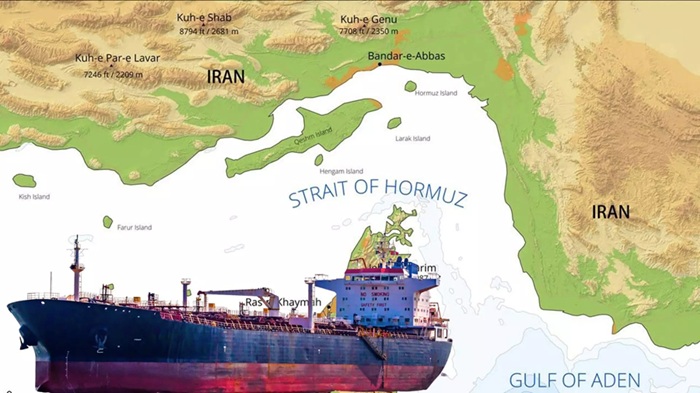
Iran’s apparel exports increase 61.4% in March 2021-22
Iran’s apparel exports increased 61.4 per cent to $113 million in the last Iranian year spanning March 2021-22 compared to $70 million worth of garments exported the year before, informs Majid Nami, Head-Board of Directors, Iran Apparel and Textile Production and Exports Union.
Iraq, Afghanistan, the littoral states of Persian Gulf as well as Central Asian countries emerged the major export destination, adds Nami. The strict sanctions imposed on Iran, makes import of raw materials, production lines and required machinery difficult and expensive. Hence, Iran has not been able to boost the quality and volume of its apparel exports and lower the end prices, Nami adds.
Nobody Denim reintroduces menswear
Known for its dedication to local manufacturing and timeless denim pieces, Nobody Denimhas re-introduced menswear after debuting its winter collection at Melbourne Fashion Festival this year.
The entire range is focused on mid-rise cuts, made with dull antique and nickel hardware, with handmade whiskering and brushing for that authentic vintage look, entire process, including sewing, washing and finishing, is completed at the Fitzroy factory.
The collections can be styled with jumpers, jackets, tees or coats, and fall to an ideal length. As the styles boast a classic look and are made to stand the test of time, they’re the ideal staple for not only this winter, but all seasons to come.
Founded by the Condilis brothers l in ’99, Nobody Denim initially outsourced fabric and cultivated designs in the back streets of Melbourne.
By focusing on quality materials and adhering to customer needs, the brand quickly grew to establish a strong following across the country to sustainability and accredited with Ethical Clothing Australia, meaning employees are paid fairly and work in a safe environment.
Nike to exit Russia market permanently
Nike has announced plans to permanently exit the Russian market, and will not reopen stores shut after Moscow started a military campaign in Ukraine.
As per a First Post report, the US sports apparel giant is among a growing list of Western companies -- including McDonald's and Starbucks -- that decided to pull out of Russia over Ukraine.
Nike added that its website and app will no longer be available in the country.
Last month, Nike said it will not be renewing licensing agreements with Russian retailers.
Russia's President Vladimir Putin ordered troops into pro-Western Ukraine on February 24, triggering unprecedented sanctions and sparking an exodus of foreign corporations including H&M, Adidas and Ikea.