FW
Winter wear market on a new high, retail and online sales expected to grow: Study
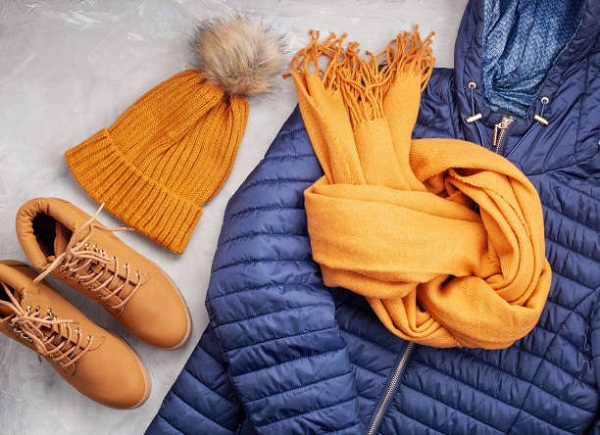
The global winter wear market is always a lucrative one because as temperatures start to drop, sale of most apparel brands through its retail and online channels keeps rising. Not only the climate change needs a whole new wardrobe, but the festive season of Christmas in Europe, Thanksgiving in America and the wedding season in India among others also makes people splurge on occasion-specific garments during the winter months. c As per latest Future Market Insight study, the global winter wear market is projected to grow at a CAGR of around 5 per cent through 2031, surpassing a valuation of $280 billionin 2020. To reduce the volatility of raw material prices, restrain the rise of the market’s volume and satisfy rising demand for premium brands, manufacturers are limiting their efforts on premiumizing their winter wear brands.
When the temperatures start to drop, sales through retail and online channels are projected to grow. Gap, for example, introduced the ‘Hill City’ menswear brand in 2018 to meet increased demand for premium men’s gear that combines highly technical fabrications, style, and high performance throughout the winter months.
Focus on innovation for sports brands
Winter sports as a cold-weather recreation sector is a huge profit-making segment for many brands as the younger generation in their fitness journey and more disposable incomes expect trendy high branded winter wear. The European and the US economy earns billions of dollars each year from winter recreational sports such as hiking, fishing, snow skating, ice fishing and outdoor ice hockey which continue through the long months of low temperatures, and plenty of snowfall. Some of these sports are now catching on in some states of North India as well which has high mountains, although even the general winter clothing industry of thermals and sweaters does extremely well.
To cash in on the winter sports segment, some brands such as Oros Apparel in November 2018, had released Solarcore insulation, a space-based insulation material that makes one of the warmest winter jackets in the market. The company cleverly utilized aerogel material technology, which was originally designed for spacesuits for NASA astronauts into making smart winter wear gear for young people.
Wellness is the key focus this winter
With wellness being the main focus after Covid years, almost all age-groups are now participating in winter activities that includes games and fun in the snow which has increased the demand for a winter portfolio of woollies, jackets, shoes, gloves, socks and many other products. Just like long walks, trekking and picnics in the sun were the highlight in summer, bracing the cold with appropriate clothing while being active is the focus for all age-groups.
The study reveals, stakeholders are focusing on a variety of marketing methods, including celebrity endorsement, product premiumization, marketing campaigns, events, and developing digital presence to engage with customers directly. The market for winter clothing will probably expand faster in the near future as a result of these factors.
The study estimates, the market for winter wear’s jackets and coats accounts for a rather high value share. And throughout the projection period, the category is anticipated to maintain its dominance. In North America, the US is expected to have a significant share of 83 per cent of the market.
The two Covid years made consumer purchasing behavior of winter clothes more thoughtful rather than impulsive and made them suffer losses. However, there is always light at the end of the tunnel as this same pandemic has now increased the profits of winter wear brands as there has been a greater shift to the ease of online shopping along with a greater urge to be out in the snow this winter of 2022.
AEPC encourages sustainable processes
The Apparel Export Promotion Council has launched Apparel Industry Sustainability Action 2022-2023.
The aim is to encourage textile companies which are working with sustainability as the country’s textile and apparel industry can reduce its footprint on the environment and can bring economic viability through sustainability of its processes.The initiative aims at evaluating the existing status of the Indian garment industry, encouraging wider penetration of these measures among the micro, small and medium units, hand holding these units with demonstrations and solutions, enhancing the brand visibility of sustainable companies on a global platform, and brainstormingthe necessary policy focus towards a wider and smoother adoption of sustainability measures among Indian garment units. AEPC will encourage sustainable companies which will be showcased on the dedicated sustainability social media platform for wide publicity and will finally culminate as Sustainability Awards. The award-winning Indian companies will finally get an opportunity to showcase their collection in a specially curated Sustainability Corner of India Pavilion in Pure London, UK, and Who’s Next, Paris, the world’s biggest fashion hub.
The textile industry is one of the major polluting industries, accounting for four per cent of greenhouse gas emissions and 20 per cent of industrial water pollution globally.
Monforts to exhibit at Igatex
Monforts will exhibit finishing technologies at Igatex, Pakistan.
These include Montex stentering equipment, Monfortex sanforizing units and Thermex dyeing ranges. Monforts will emphasise the robustness and versatility of the Montex stenter for essential processes such as drying, stretching, heatsetting and coating. Monforts has also achieved considerable success in Pakistan with its Econtrol dyeing system – an effective and established dyeing process.
More than 40 Thermex continuous dyeing ranges have been installed in Pakistan in recent years and operator training on the Econtrol process by sophisticated technologists is an additional service. The Econtrol pad-dry process has a number of immediate benefits. Compared to the common pad-dry-pad-steam process, no salt is used and no steamer is required for a separate fixation step. Compared to the pad-dry-thermo fix process, no urea is used and no smoke or deposits are generated, and unlike with the cold pad batch process direct feedback of the dyeing results ensures no batching time is necessary and guarantees good reproducibility from the lab to bulk production. Waste water treatment is also improved by this technology. Monforts provides a range of further resource-saving and energy recovery options tailored to each individual line installation.
Igatex is a textile machinery exhibition which will take place in Pakistan, December 1 to 4, 2022.
Portugal textile exports up 16 per cent
Exports of textile products from Portugal are 16 percent higher than they were the previous year.
Shaken in the last 20 years by competition from Asia, Portugal’s textile industry has found its footing again and become a major player, supplying firms not just in Europe but also in the United States.The industry has benefited from its flexibility and inexpensive labour along with a spirit of innovation focused on limiting damage to the environment. The textile industry’s advantages are reactivity and the capacity to adapt. Firms have the ability to use new techniques for sustainable output without compromising on aesthetics.
There is also increased demand from firms in Germany and Italy as well as in the United States. Portugal has the advantage of a workforce that remains competitive by offering quality products at reasonable prices. Portugal’s textile sector has made a dramatic comeback. The sector has resumed hiring.
Following the pandemic, which led to delays in deliveries, the industry prefers to use supply chains that are closer to home. Companies have understood that they need to find solutions and partners to reconcile sustainable development with competitiveness. However, the sharp gas and electricity price increases caused by the war in Ukraine penalise a sector heavily dependent on energy.
Inter Ikea faces fall in pretax profit
Inter Ikea had a 45 per cent fall in pre-tax profit for the year 2022 up to August. The fall reflected higher raw material and transport costs as well as the closure of its factories in Russia. Operating profit margin narrowed to four per cent from seven per cent. Inter Ikea is the owner of the world's biggest furniture brand.
Retail sales hit new records in the year, but that was thanks to price hikes, not volume growth. Inter Ikea’s annual sales volumes to retailers fell by seven per cent to eight per cent, half of that due to pausing of most Ikea operations in Russia in March.
Inter Ikea may raise prices to retailers again later this year if input costs rise further, but would again not pass on all the costs. Over the past two years, Inter Ikea has absorbed a billion euros in cost inflation itself. Though purchasing costs have now topped out at an elevated level this has not happened at the speed and magnitude hoped for. With continued high costs and falling consumer confidence, Ikea is bracing for another tough year. Promotion campaigns - something Ikea usually doesn't do - and lower prices on some popular products would now be the key to attracting cash-strapped shoppers.
Australia expects large cotton crop despite floods
The Australian cotton industry is still expecting a large cotton crop despite persistent rain which has delayed picking and planting.
Only two years after a severe drought, cotton farmers celebrated good water availability resulting in a record crop of 5.5 million bales last season. However the rain has persisted. Every inland river catchment is either full or flooded with 99 active warnings and nine major flood warnings in place. Farmers have suffered loss and damage due to the floods but at this stage the major damage appears to be to winter crops like wheat and barley.The northern half of NSW has a wider planting window and that means growers have till the later half of November to get their crops in and maintain a healthy yield for the coming season.
They can achieve that if the rain holds off long enough to get out on their fields and get their crops in the ground. But in the Macquarie Valley south to the Victorian border the planting window closes earlier and yields decrease the later crops are planted in the region.Overall at this stage a ten per cent reduction on crop forecasts for 2023 is expected , and with about a third of that crop forward sold, expectations are for a strong ongoing global demand for the cotton.
Former Lenzing executive joins Renewcell
Tricia Carey is Chief Commercial Officer of Renewcell.
She is a seasoned fashion industry executive with more than 25 years of experience promoting more circular and more sustainable materials within fashion. She has also been a catalyst for the industry-wide conversation around the shift to more climate-friendly and resource-efficient materials. Prior to joining Renewcell, Carey was Director of Global Business Development at Austrian fiber producer Lenzing.
Renewcell is an award-winning textile-to-textile recycling company based in Sweden. Renewcell’s product is called Circulose. Brands use it to replace high impact raw materials like fossil oil and cotton in their textile products. Circulose is a branded dissolving pulp product that Renewcell makes from 100 per cent textile waste, such as worn-out jeans and production scraps. Dissolving pulp cellulose is what the textile industry uses to make viscose, lyocell, modal, acetate and other types of regenerated fibers. The only difference with Circulose is that it’s made from textile waste instead of wood.
Renewcell functions as an ingredient brand that helps people find the most sustainable virgin-quality fashion pieces available – those made with Circulose. Cellulose is the most abundant organic polymer in the world. It’s what makes up the cell walls of most plants and trees. The purest cellulose found in nature is cotton.
Lenzing Q3 revenue up 24 per cent, profits fall
In the first three quarters Lenzing revenue was up 24 percent. This was primarily due to higher fiber prices. Lenzing was increasingly affected by the extreme developments in global energy and raw material markets in the first three quarters of 2022, in line with the impact on the whole of manufacturing industry.
The market environment deteriorated sharply, especially during the course of the third quarter, and the worsening consumer climate placed additional pressure on Lenzing’s business performance. In addition to lower demand, the earnings trend particularly reflects the sharp rise in energy and raw material costs.As a consequence, earnings before interest, tax, depreciation and amortization (ebitda) decreased by 11 percent yearonyear. Net profit for the period decreased by 33 percent.Adjusted equity grew by six percent as a consequence of the operating profit trend as well as positive currency effects. As a consequence, the adjusted equity ratio is at 37 percent.
Lenzing stands for the ecologically responsible production of specialty fibers made from the renewable raw material wood. As an innovation leader, Lenzing is a partner to global textile and nonwoven manufacturers and drives many new technological developments. Lenzing’s high-quality fibers form the basis for a variety of textile applications ranging from elegant clothing to versatile denims and high-performance sports clothing.
Cambodia- RCEP trade up 11 per cent
In the first nine months of 2022, Cambodia’s trade with Regional Comprehensive Economic Partnership (RCEP) member countries was up 11 percent from the same period last year.
Cambodia’s exports to RCEP member countries were up six percent while its imports from RCEP member countries were up 12 percent. Cambodia’s top five trading partners under the RCEP are China, Vietnam, Thailand, Singapore and Japan. The RCEP is a key instrument to boost economic recovery in Cambodia and in the region.This regional mega-trade deal is very beneficial to Cambodia as it has provided the country bigger market access with tariff concessions. For the long term, it will be a main driving force for Cambodia’s economic growth.
The Regional Comprehensive Economic Partnership is the world’s largest free trade agreement and is set to eliminate 92 percent of tariffs on goods traded among its 15 members. The garment, footwear and travel goods industry is the largest foreign exchange earner for Cambodia, accounting for nearly 60 percent of the country’s total export value. The growth can be attributed to the full resumption of socio-economic activities in the country, trade preferences, and rising global demand as the global Covid pandemic has waned.
US manufacturing picks up pace, albeit low
The US manufacturing sector continues to expand, but at the lowest rate since the coronavirus pandemic recovery began. So says the Institute for Supply Management.
Customers’ Inventories Index remained at a low level, with the same reading as in September and the Backlog of Orders Index slipping into contraction.
Despite this, the apparel manufacturing industry stood out. Apparel headed the nine industries reporting employment growth in October, followed by leather and allied industries.The same two industries also reported growth in new orders in October, while textile mills were one of 12 industries to report a decline.Apparel, textile mills, and leather and allied industries reported slower supplier deliveries in October, but the former two reported paying less for raw materials.
There has been expansion in the overall economy for the 29th month in a row after contraction in April 2020 and May 2020. However the figure is the lowest since May 2020, when it registered 43.5 per cent. The New Orders Index remained in contraction territory at 49.2 per cent, 2.1 percentage points higher than the 47.1 per cent recorded in September.The Production Index reading of 52.3 per cent is a 1.7percentage point increase compared to September’s figure of 50.6 per cent while the Prices Index registered 46.6 per cent, down 5.1 percentage points.