FW
Steve Madden's Kuwait Flagship Revealed
Leading fashion and lifestyle company, Apparel Group announced the global debut of Steve Madden's ground-breaking flagship concept store design in the Middle East region.
Two new Steve Madden stores have opened their doors in Kuwait spanning 2,164 square feet at Avenues Mall and 1,593 square feet at Assima Mall, these stores introduce a fresh and captivating retail concept that aims to elevate the customer experience through ingenious designs and unique visual merchandising. The strategic expansion follows the success of Steve Madden's existing stores at Al Kout Mall and Al Khiran Mall, bringing the brand's presence to a total of 25 stores across the GCC.
This achievement showcases the brand's popularity and robust growth in the region, further strengthened by its partnership with Apparel Group reinforcing its commitment to deliver global fashion experiences to its customers.
This ambitious growth strategy positions the brand at the forefront of the ever-evolving retail fashion industry.
Sri Lanka's Garment Exports Plummeted 16.5%
Sri Lanka's garment exports faced a significant setback in January to May 2023, recording a sharp decline of 16.5% to reach $1.84 billion. The challenging global economic conditions contributed to this decline, as revealed by data released by the Central Bank of Sri Lanka.
Comparatively, the previous year saw garment exports amounting to $2.21 billion during the same period. May 2023 alone witnessed a 14.2% decrease in garment exports, reflecting the ongoing global economic slowdown. In addition, textile exports from Sri Lanka fell by 3.1% year-on-year, totaling $144.6 million in the first five months of 2023.
The report further disclosed that exports of other manufactured textile articles reached $42.7 million, marking a decrease of 19% during the same period.
Despite the decline, textiles, garments, and other textile articles accounted for 53.07% of all industrial exports from Sri Lanka. Total textile product exports summed up to $2.03 billion, while the country's overall industrial exports reached $3.83 billion between January and May 2023.
Furthermore, Sri Lanka experienced a substantial drop of 28.8% in textile imports, amounting to $999.9 million. Similarly, clothing and accessory imports declined by 35.1% to $71.2 million during the same period.
Renewable jacket made with bio-mass material
UPM Biochemicals, in partnership with Vaude, a leading sustainable outdoor apparel supplier, aims to revolutionize the textile industry by producing eco-friendly outerwear made with bio-based chemicals.
Their joint effort will introduce the world's first fleece jacket constructed from wood-based polyester, marking a significant stride towards closing the gap between recycled fibers and sustainable virgin fibers in the fashion industry.
Traditionally, polyester resin contains 30% monoethylene glycol (MEG) derived from crude oil. However, UPM and Vaude 's innovative approach will entirely replace this component with a novel bio-monoethylene glycol called BioPura, developed by UPM.
This drop-in solution seamlessly integrates into existing polyester manufacturing processes due to its molecular compatibility with conventional MEG. To bring this vision to life, a collaboration across the entire value chain is crucial. Indorama Ventures, a prominent chemical company, will polymerize and spin a polyester yarn containing UPM's BioPura BioMEG at its German facility in Guben.
The resulting yarn will be processed by Pontetorto, a renowned textile manufacturer in Prato, Italy, to create a unique bio-based polyester fabric. Finally, VAUDE will utilize this fabric to craft the ultimate sustainable garment.
VAUDE products are renowned for their timeless design, robust materials, and ease of repair. By incorporating UPM's bio-based materials, Vaude aims to unlock the potential of renewable circularity, prioritizing reduced resource consumption, renewable sourcing, and the ability to keep products in the value chain even after their useful life.
The partnership between UPM Biochemicals and VAUDE signifies a significant step towards a future where sustainable fashion becomes the norm, reducing reliance on fossil fuels and minimizing environmental impact.
UN’s playbook recommends end of excessive consumerism in fashion

In the real world, despite pledges and commitments, the fashion industry continues its various strategies and tactics to sell more. Social influencers are working overtime recommending ‘look of the day’ and ‘look of the occasion’. Digital engagements have found newer avenues like the Metaverse and other augmented-reality based experiences. AI has been harnessed to provide well-executed prompts to purchase more through bespoke recommendations following specific algorithms. In short, fashion is marketing itself to the point where gullible consumers find themselves with pointless purchases through impulse buying.
The UN is rightly concerned. It does not see the outcomes of the Paris Agreement or the much-celebrated and elaborate COP gatherings every year. The time has come for fashion to walk the talk on being a sustainable global industry. The UN acknowledges the steps fashion industry leaders and policymaking bodies in different parts of the world are implementing but doesn’t see why brands must promote over-consumerism, knowing the consequences.
The Sustainable Fashion Communication Playbook comes into play
The Sustainable Fashion Communication Playbook, co-published by UNEP and UN Climate Change, provides a shared vision, principles and guidance on how to align consumer-facing communication across the global fashion industry with sustainability targets. It shows how fashion communicators – marketers, brand managers, image-makers, media, influencers and beyond can help advance towards the Paris Agreement and Sustainable Development Goals through countering misinformation, reducing messages perpetuating overconsumption, redirecting aspiration to more sustainable lifestyles, and empowering consumers to demand greater action from businesses and policymakers.
It acknowledges the fashion sector as one of global importance but struggling to address its wide-reaching impacts, with unsustainable patterns of consumption and production contributing directly and significantly to the triple planetary crisis, as well as the interlinked issue of social injustice. While addressing production impacts is essential, doing so alone will not be sufficient to transform the industry in time. Shifting consumption patterns must be a core priority that means confronting the dominant linear economic model and its accompanying narrative of newness, immediacy and disposability.
The playbook invites all fashion communicators to the table, emphasizing for the first time in the sector the importance of the role of storytellers as enablers and drivers of systemic change. Steven Stone, Deputy Director, Industry and Economy Division, UNEP has officially stated addressing consumption is a central part of reducing climate impact - from the volume of new products purchased to the carbon footprint of how we use these products. We must work together to align all stakeholders across the fashion sector towards the 1.5-degree pathway of the Paris Agreement.
Fashion must lead sustainability conversations
Fashion possesses one of the most powerful marketing engines on earth. Brands, designers, image-makers and the media have a major influence on the identities, values and actions of billions of people across all segments of society. This in turn impacts consumption patterns, which is a central factor in reducing the climate impact of the sector.
UNEP is examining the role of sustainable fashion communication as a highly visible engine for lifestyle change and consumer education, and a core component of achieving systemic change in the sector. Steven Stone reiterated that the aim is to shift the fashion narrative from one of extraction, exploitation and disposable consumption, towards regeneration, equity and care by increasing consumer awareness, industry accountability and policy breakthroughs.
The first milestone in this work was a communication commitment added to the upgraded UNFCCC Fashion Industry Charter for Climate Action during COP26. What will follow is a guideline on how to align consumer-facing communication across the global fashion industry to sustainability targets, with examples of best practices for implementation and measurement.
Indonesian Apparel Exports Soar 45.92%
The Indonesian textile industry, specifically the apparel sector, witnessed a remarkable surge in exports, reaching a value of US$700.7 million in May 2023. This represents a substantial monthly growth of 45.92% compared to the US$480.2 million recorded in April 2023.
Retailers played a crucial role in this success by depleting their remaining clothing stocks from the Eid Al-Fitr production, which concluded in April 2023. Additionally, the ongoing implementation of the government's P3DN (Increased Use of Domestic Products) policy, supplying public school and government employee attire, prompted manufacturers to ramp up production.
Despite this growth, the textile industry still faced challenges, primarily stemming from high import levels that hindered the absorption of domestic product sales. Adie acknowledged that the industry's performance has not yet reached its peak, although imports increased in May to 133,000 tons compared to 106,000 tons in April, leading to a surplus of textile stocks in the market.
However, as the new school year commences, expectations are high for an improved performance in the textile industry.
Bangladesh's FY23 export earnings: $55.55B, fall short
Bangladesh's export earnings for the financial year 2022-23 reached $55.55 billion, according to data released by the Export Promotion Bureau. However, this figure fell short by 4.21% of the government's target of $58 billion.
Despite the shortfall, there was a growth of 6.67% or $3.47 billion compared to the previous year's earnings of $52.08 billion. In June 2023, export earnings experienced a year-on-year growth of 2.51%, totaling $5.03 billion, compared to $4.90 billion in June 2022. Nevertheless, June's earnings were 9.61% below the government's target of $5.56 billion.
Notably, the export earnings from readymade garments in FY23 increased by 10.27% to $46.99 billion, while earnings from woven garments grew by 9.65% to $21.25 billion. Additionally, earnings from knitwear exports rose by 10.87% to $25.73 billion, as per the EPB data.
Overall, Bangladesh's export sector demonstrated growth in the financial year, albeit falling short of the government's set targets.
Hong Kong retail sales skyrocketed
In May, Hong Kong experienced an impressive 18.4% year-on-year increase in retail sales, driven by a resurgence in inbound tourism and a shift towards more optimistic local consumption sentiment. Government data reveals that sales soared to HK$34.5 billion (US$4.4 billion), marking the sixth consecutive month of growth following a 14.9% rise in April.
According to a government spokesperson, the upward trend in retail sales is expected to continue in the coming months. Factors contributing to this growth include a projected increase in incoming visitors as transportation capacity expands, enhanced labor market conditions, the disbursement of the second installment of consumption vouchers, and the combined promotional efforts of the government and industry.
As anticipated, jewelry and watch sales experienced the most significant surge, soaring by 51.8%. Apparel sales also witnessed a notable rise of 38.5%, while department stores experienced a solid 9.9% increase, and cosmetics saw an impressive boost of 51.5%.
However, some sectors experienced a decline, with supermarket sales decreasing by 0.2%, electrical goods by 5.6%, and furniture and fixtures by 8.6%. Online transactions accounted for 6.3% of May's total retail sales, reflecting a 3.7% year-on-year decline.
Spandex market experiences versatile growth
The global spandex market will reach $9,100.0 Mn by 2023, with steady growth of 8.3%. By 2033, it is expected to soar to $20,198.8 Mn, according to Persistence Market Research. Spandex or elastane gains popularity for its exceptional stretch and recovery properties, finding applications in clothing, sportswear, swimwear, and more.
Challenges include fluctuating raw material prices and environmental concerns. Asia Pacific leads the market, followed by North America and Europe. Trends include sustainable practices, smart textiles, customization, and technological innovations.
Recent developments focus on sustainable fibers, enhanced products, and collaborations for innovative solutions.
H&M battles Shein at a garment price of less than $2
In a bid to compete with Shein, the Chinese discount e-retail powerhouse that thrived during the pandemic, H&M has drastically reduced prices on select clothing items to under $2. The Swedish fashion retailer now offers ribbed crop tops for a mere $1.70, marking a 70% discount from its regular price of $4.99.
Shein's rock-bottom prices have made it popular among US shoppers, propelling its valuation to a staggering $66 billion, as reported by The Wall Street Journal. Last year, Shein was even estimated to be worth $100 billion, surpassing the combined market capitalization of H&M and Zara.
While Shein has faced criticism for its questionable business and labor practices, it recently secured $2 billion in its latest fundraising round. Meanwhile, H&M has been implementing cost-cutting measures and shuttered 303 stores across its brands in the year leading up to May 31.
Despite economic challenges and adverse weather conditions, H&M reported better-than-expected second-quarter profits, resulting in an 18% surge in shares. Sales during June 1-27 increased by 10% compared to the previous year, boding well for the start of the third quarter. H&M faces stiff competition not only from Shein but also from Temu, another controversial Chinese fast fashion retailer.
Recent data indicates that Temu surpassed Shein in terms of US-based spending in May. However, both companies have faced scrutiny over alleged unethical practices, with Temu accused of lacking a meaningful compliance program to prevent goods made with forced labor from being sold on its platform. As H&M strives to achieve an operating margin of 10% by 2024, it continues to grapple with intense competition and the need to adapt to a rapidly evolving retail landscape.
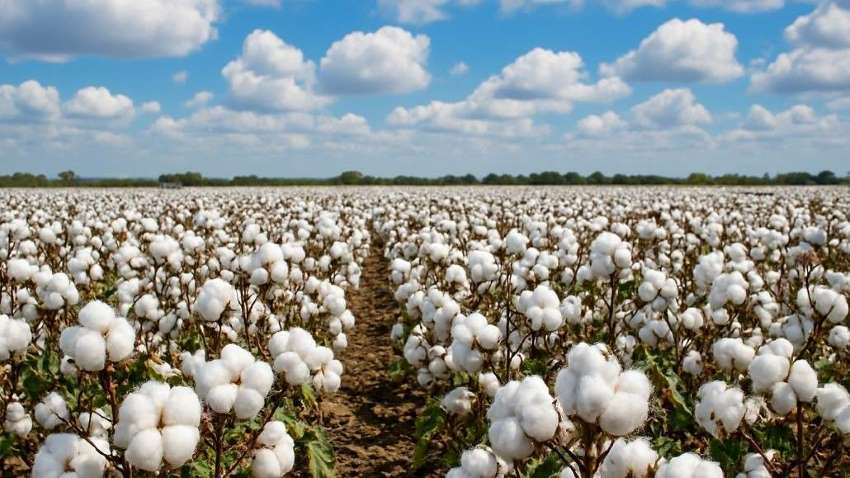
Cotton textile industry embraces transparency amid challenges
The textile industry is responding to consumer demands for transparency, with fashion brands adopting QR codes on garments to disclose information like fiber content, country of origin, and recycling instructions.
However, achieving transparency remains a challenge, as indicated by a recent report from #WhoMadeMyCotton. The report highlights the industry’s size as a major obstacle, leading to fragmentation that hinders transparency efforts.
The lack of a standardized tracking system for cotton across countries is a significant roadblock. Varying farm sizes and cotton bales with multiple sources make accurate measurement difficult, especially in countries like China, India, and the U.S.
The study emphasizes that the lack of collaboration among entities perpetuates the transparency issue. This opacity benefits producers involved in fraudulent practices, such as India’s organic cotton fraud and China’s labor law violations. To improve transparency, the report suggests harmonizing tracing technologies, but acknowledges that achieving this goal will take time.
Creating networks of smaller systems through organizations like Cotton-Connect, Better Cotton, and Cotton Made in Africa, leveraging blockchain technology for accurate tracking, could be a solution. While the demand for certified organic cotton exceeds current production, the industry is gradually adopting digitalization to enhance data availability and accountability.
Companies like Ecom have implemented blockchain-based traceability systems, allowing clients access to relevant documents for their cotton purchases. Other initiatives are underway, utilizing DNA markers and blockchain platforms to authenticate cotton origins.
However, the cotton industry’s established practices prove resistant to change, with cotton merchants remaining largely unknown to denim professionals. The report suggests that building partnerships between brands and cotton traders can drive progress, facilitating traceable sourcing methods and advancing sustainability goals.