FW
Messe Frankfurt postpones Intertextile Shanghai and Yarn Expo fairs
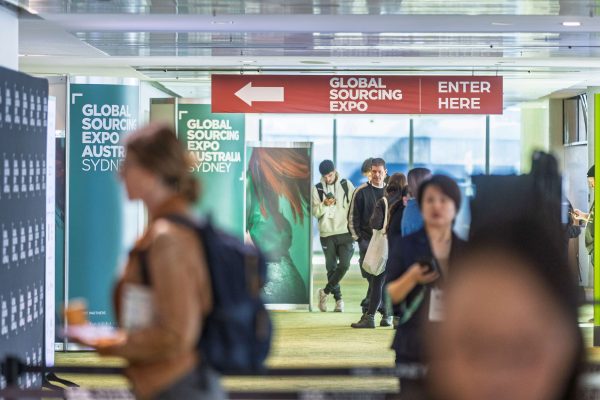
 Originally scheduled to take place in March, Intertextile Shanghai Apparel Fabrics – Spring Edition, Yarn Expo Spring and Intertextile Shanghai Home Textiles – Spring Edition have been postponed over concerns surrounding the COVID-19 outbreak.
Intertextile Shanghai Apparel Fabrics and Yarn Expo will now merge with Intertextile Shenzhen Apparel Fabrics and the debut Yarn Expo Shenzhen, which will be held from July 15 – 17, 2020, with exhibitors of the Shanghai fairs given the option to participate in the Shenzhen editions instead.
Exhibitors of Intertextile Shanghai Home Textiles – Spring Edition have the option to partake in the Autumn Edition instead, which will be held from August 24 – 26, 2020.
The fairs will take place in the brand-new Shenzhen World Exhibition and Convention Center.
Intertextile Shenzhen Apparel Fabrics will take place from 15 – 17 July with an estimated 2,000+ exhibitors expected to join a space of 60,000 sqm. In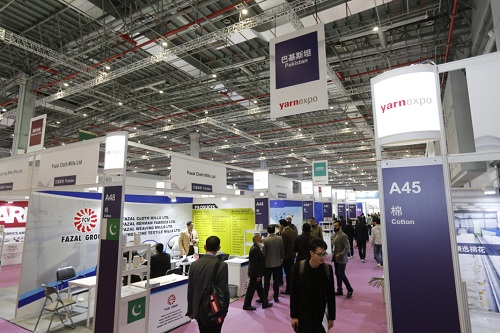 addition to being held with the first Shenzhen edition of Yarn Expo, CHIC and PH Value will also take place concurrently.
The Autumn Editions will take place from September 23 – 25, 2020 at the National Exhibition and Convention Center in Shanghai. In 2019, the Autumn Edition of Intertextile Shanghai Apparel Fabrics saw 4,422 exhibitors from 33 countries and regions, along with 89,662 trade buyers from 120 countries and regions. Yarn Expo Autumn 2019 welcomed 543 exhibitors from 14 countries and regions, and 19,155 trade buyers from 93 countries and regions. The fairs will be held concurrently with CHIC and PH Value. Intertextile Shanghai Home Textiles – Autumn Edition
The 2019 edition featured 1,147 exhibitors from 27 countries and regions, and 35,390 trade buyers from 117 countries and regions. The Autumn Edition of this fair is due to take place from 24 – 26 August. Intertextile Shenzhen Apparel Fabrics and Intertextile Shanghai Apparel Fabrics are co-organised by Messe Frankfurt (HK) Ltd; the Sub-Council of Textile Industry, CCPIT; and the China Textile Information Centre.
The co-organisers of Yarn Expo Shenzhen and Yarn Expo Autumn are Messe Frankfurt (HK)and the Sub-Council of Textile Industry, CCPIT. Intertextile Shanghai Home Textiles is co-organised by Messe Frankfurt (HK); the Sub-Council of Textile Industry, CCPIT; and the China Home Textile Association (CHTA)
Big retailers should focus on ‘value’ to help tide over crisis
 With customers dwindling and stocks rising, the retail sector was already facing a crisis. Covid-19 has only added to their woes. The pandemic has forced people out of public sphere as only stores selling essential goods remain open, department stores are worst hit.
Major retailers like Nordstrom, Macy's, J.C. Penney and Kohl are taking desperate measures to deal with the crisis. Besides halting their growth plans they have also furloughed most workforces and potentially skipping rent. Neiman Marcus and Southern department store Belk have also furloughed some workers and introduced temporary cut salaries.
Credit Suisse analysts say, department stores are the worst hit in this scenario. Not only do these stores face high debits but also their discretionary costs too remain low. Their relatively low rents in many areas also work against them as at only about 1.5 per cent sales, any relief won't make much dent.
However, Thomas Serdari, Professor at New York University’s Stern School of Business believes the main problem these stores face is their dwindling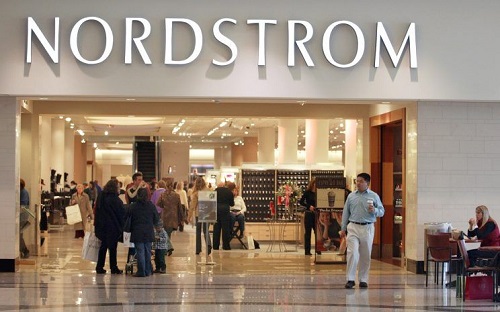 popularity even before the Convid-19 outbreak. The outbreak is only partly to blame for their' current woes as most of them have been running too many locations, without regard for local culture or the basic merchandising practices,
Thus, these stores are unlikely to come out of this unprecedented moment unscathed. They may never be able to go back to business again. Some of these players also face profit declines of 30 to 50 per cent or even more. That makes trimming their fleets a top priority.
Retailer shut stores as demand dwindles
JC Penny’s flagship store in New York’s Fifth Avenue too is likely to face a decline in profits. As retail consultant Sanford Stein, Author of Retail Schmetail told Retail Dive in an interview, the retailer is unlikely to resume business even after 18 months from now. Similarly, Nick Egelmian, President of SiteWorks predicts at least a major debt restructuring.
According to Egelanian, Kohl's is likely to be acquired, possibly by Amazon. However, Nordstrom would be a survivor; though it would have to close stores. The store is also likely to be privatized though it would have to do some recalibrating. Macy’s , which expanded exponentially early this century by gobbling up local and regional department store chains nationwide, is destined to either shed as many as 500 stores or shut up locations where the demand for its products is dwindling.
Customer service to gain prominence
However, this could also be a blessing in disguise for retailer as it would enable them to finally understand problems in their business model. According to Sanford Stein, Retail Consultant and Author of Retail Schmetail, go-to customer bait, promotions, may lose some of their draw, despite the financial pressures looming for many consumers. He advises companies to relook internally at their operations, value and future aspirations. The retailer believes henceforth the whole aspect of what a retailer will become far more important than it ever was before. Providing value will gain much more importance than price as customers will emphasise on a positive shopping experience above everything else.
Inditex ramps up Asia operations
Inditex SA’s main import and export airport hub in Spain is ramping-up as business in Asia picks up, following restrictions due to COVID-19 earlier in the year. The pick-up in traffic in Zara offers a window into the notably tight-lipped company’s operations, notably in the Eastern Asian market. The retailer uses the airport as a base to import textile products and export apparel. Under Inditex’s unique distribution model, the vast majority of its apparel manufactured outside Spain has to be sent to the country and then exported to stores around the world.
The company has been able to continue certain operations in Spain in spite of a government order to place non-essential economic activity on standstill. With the slowdown in Spain and other countries, Inditex has re-assigned the majority of its space in the airport as a base of imports of medical goods.
The Zaragoza airport is one of Spain’s three largest cargo airports, and had the second highest cargo traffic in February, before the Coronavirus crisis hit the country in full.
Munich Fabric Start to hold fairs on schedule
Munich Fabric Start (MFS), the international fabric trade fair, is organizing the next two fairs as usual and are working at full capacity to ensure that View Premium Selection in July 2020 and Munich Fabric Start in September 2020 can take place on the planned dates.
MFS is currently examining various scenarios with which it can react flexibly and in a solution-oriented manner to any changes in government guidelines for events. The organizer is taking a proactive approach to the opportunities which may open up here in the future. At the same time, it is convinced that a digital solution can never completely replace its core business, textile products. Therefore, its Plan B is not necessarily completely digital – in view of the fact that a digital format involves many different parameters and functions that have to interlock perfectly.
MFS is in close contact with other trade fair organisers and relies on the findings of experts and political decisions, without own interpretations or statements on the current social and political issues.
Levi Strauss to furlong staff as profits decline
Levi Strauss plans to use the pandemic as an opportunity to come out stronger on the other side. It plans to furlough its retail store staff in the US. As its bricks-and-mortar stores across Europe and North America, in addition to other parts of the world, remain closed, Levi Strauss expects to take a materially significant hit during the second quarter of 2020.
The company recently reported its first-quarter 2020 results, for the period ended Feb. 23. However, COVID-19 outbreak that started in China roughly during the middle of the quarter hit the period’s net revenue in Asia by about $20 million.
The company reported net income of $153 million, or 37 cents per share, compared with $147 million, or 37 cents a share, a year earlier. Its adjusted quarterly earnings were 40 cents per share, 5 cents better than analysts were expecting, based on Refinitiv data. Revenue rose to $1.51 billion from $1.44 billion a year ago, better than the $1.47 billion analysts were anticipating.
The brand has reopened all its stores in Mainland China after the lockdown to stop the spread of Coronavirus, including its biggest China location in Wuhan, where the virus emerged. Traffic there is still below year-ago levels, but is progressing week by week, according to Bergh. E-commerce remains strong, he said.
Convid-19: IAF urges for supply chain solidarity
In the face of the Covid-19 crisis, the International Apparel Federation (IAF) has urged the apparel supply chain and its stakeholders to enact sufficient supply chain solidarity. According to the federation, as stores close around the globe and orders stop, brands should collaboratively search for ways to reduce the damage to suppliers. Operating with the objective of moving as much of the pain upstream in the supply chain will create breaches of trust that will be difficult to repair when we emerge from this crisis, IAF stated.
In addition to calling on the industry to enact supply chain solidarity, the IAF is also urgently asking the appropriate multilateral organisations and the financial support of national governments to step in to quickly make an industry-wide support plan for the most vulnerable parts of the global apparel and textile industries.
Convid-19: Apparel production halts in Tirupur
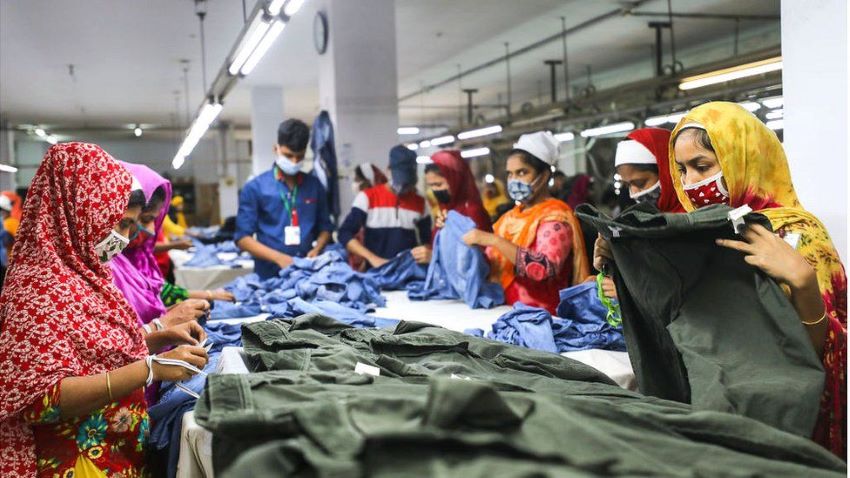
The Covid-19 pandemic has completely halted production in Tirupur with payments delayed for the shipments sent before the lockdown. Exporters say some customers are not taking delivery of the shipments because they have shut shop. Ready-made garment players had been hoping for a revival in demand in China but with the virus spreading to Europe, the US and other major markets, there are no orders coming from the major retailers.
India Ratings and Research has revealed that for FY20, profit margins in the city are likely to be impacted by 120-150bp and credit metrics to moderate with pressure on liquidity and higher working capital utilizations
The agency assumes that India’s exports — already reduced by more than 40 per cent till January 2020 owing to the US-China trade war —will be substantially hit till H1FY21. The agency assumes Ebitda will drop at least 15 per cent in FY21 across its textile portfolio.
Clarks to shut few stores permanently
British shoe brand Clarks is planning to permanently close some of its stores as the footwear retailer has struggled to deliver a turnaround plan and has consequently made the decision not to reopen a small number of its 347 UK store estate once the government-mandated lockdown ends.
Clarks had appointed investment bank Rothschild to manage the business financing options, as well as access new borrowing facilities. The retailer has furloughed thousands of its store staff under the government’s Coronavirus Job Retention Scheme, and is currently assessing options for the remainder of its workforce.
Clarks has been working with the management consultant McKinsey on a new corporate blueprint. However, the footwear retailer is now prioritising how best to survive during the pandemic. It is reviewing all stores to ensure that they are the right size and located in the right areas. As a part of this review, he retailer decided not to renew the leases on a small number of stores.
2nd ITMF survey reveals 31 per cent drop in textile orders
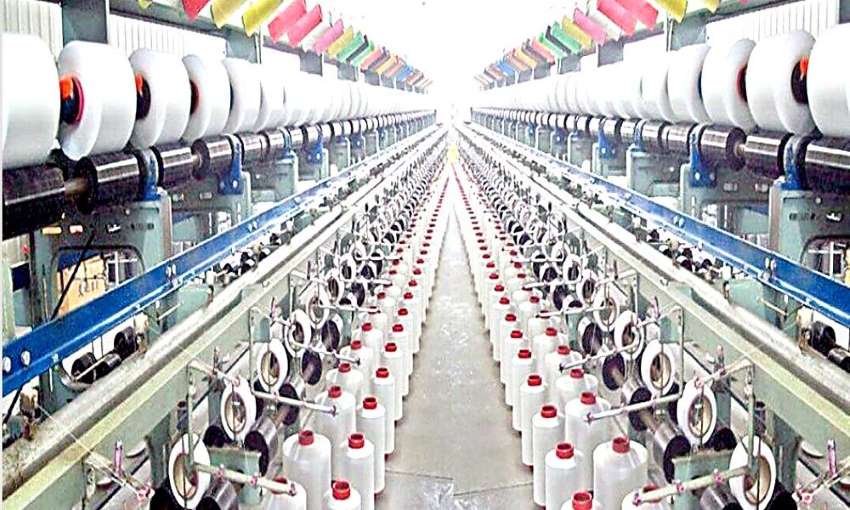
The International Textile Manufacturers Association (ITMF) has conducted a second survey of members and affiliated companies and associations, about the impact the COVID-19 pandemic on the global textile value chain, especially on current orders and expected turnover in 2020. In total 700 companies from around the world participated between March 28 and 6 April 2020.
The results show that companies in all regions of the world suffered significant numbers of cancellations and/or postponements of orders. Globally, current orders dropped 31 per cent on average. The severity of the decrease ranges from 20.0 per cent in East Asia to 41 per cent in South America.
The results show that companies in all regions of the world are expecting their turnovers in 2020 to be significantly lower than in 2019. On average worldwide, turnover in 2020 is expected to be 28 per cent lower than in 2019. While in South Asia the expected turnover will fall by 15 per cent, companies in Africa are expecting a drop of 45 per cent.”
According to the ITMF, companies around the world have highlighted the challenges like lack of current demand and/or fear that future demand will drop significantly and lack of liquidity.
‘Future apparel sale will depend on the sentiment that prevails after COVID-19’
R K Rewari, Managing Director, Morarjee Textiles
 “It is wait and watch strategy as we have been informed by customers due to the pandemic all orders are on hold. We can prepare ourselves for future challenges of low demand. Low demand means markings are also low and competitiveness is higher in the market this puts pressure on us to go back to basics to see our cost structure, ways of doing business etc. Many things might change. One is low demand, and the other is new rules of conducting business, most of which will be through video conferencing etc. It looks like there could be a systematic change in overall structure. We are preparing ourselves by keeping our morale high, think positive and identifying the gaps that need to be filled to enable us to meet the challenge of demand whether it is low or high.”
With a lockdown, what is the current status of India’s garment and textile industry?
COVID-19 is one of the deadliest disruptions in decades. However, how much it will affect and for how long is difficult to gauge. Indeed it is a serious disruption and will affect most businesses including the textile industry adversely.
Does India have the capability to fill China’s space as a sourcing destination?
If China loses the confidence of consumers and big retailers only then will India be able to fill its space. However, their cost structure and prices are so attractive and they are efficient product producers. So, unless we match their productivity level and speed it will be difficult for us to get any space from China. Other countries like Vietnam, Cambodia even Bangladesh, are far above us in productivity levels for apparels which is the ultimate engine of our exports. In a market place your position is not granted by just the availability of space. Your space is granted by the competitiveness of your production ability. So, while this is an opportunity for India to grab more market share; it is a greater opportunity for us as a country to enhance our productivity levels, train ourselves more and get into this with a winning streak. Only, then it will be possible, else it will be like the old quota system where business comes as quota as we have never concentrated on technological development, production development etc.
The retail industry will also face a big hit because of the lockdown. Future sale of apparels will largely depend on the sentiment that prevails after COVID-19 is eliminated or some kind of vaccine is invented. Till then, we all will be in a troubled zone, as we are an industry that has high fixed costs and margins are low. So, if we cannot handle fixed costs then there is no revenue generation. Therefore, most industries will be on the path to sickness.
What steps has Morarjee Textile taken to overcome the challenging times?
It is wait and watch strategy as we have been informed by customers due to the pandemic all orders are on hold. We can prepare ourselves for future challenges of low demand. Low demand means markings are also low and competitiveness is higher in the market this puts pressure on us to go back to basics to see our cost structure, ways of doing business etc. Many things might change. One is low demand, and the other is new rules of conducting business, most of which will be through video conferencing etcc. We are preparing ourselves by keeping our morale high, think positive and identifying the gaps that need to be filled to enable us to meet the challenge of demand whether it is low or high.
Spring/Summer seems to be goner; how do you foresee Autumn/Winter?
Autumn/Winter season is not so big in India because we are largely cotton or cotton-polyester based. Our country’s textile production mix is not too suited to meet the demand of winter season. Hence, jacket, suits and woolen goods manufacturing capacities are not as good as far as exports are concerned. In domestic market, we will have to see how big retailers like Reliance, Madura Garments, Pantaloons, Max and Future come out of this situation. Roughly, their overall sales may be down 20 per cent, even if things become normal in a month or so. We have to be hopeful and positive for the Autumn/Winter season. I feel there will be less travel, less interaction in the next six months. Most retailers will like to clear their inventories and there will still be big demand supply gap. Demand is not going to be high as per supplies.
Indian government has been given some incentives. Do you feel the government done enough for the textile industry during this challenging time? What are your expectations?
The government’s top priority is to save people and they have not looked very seriously at the economic aspect of it. Whatever is available with them, they are doing it for everyone. At this moment I don’t think the Central or State government has taken any sectorial view, specifically for the textile industry. They are just in the process of giving general relief like, a shift in the time line or installments etc, they are positive measures, as they will help us breed well and think for the future. However, so far I don’t think there has been any specific incentive or relief for textile industry. Our associations are engaging with the ministry on this but it appears to me that for a couple of weeks the government will be watching and gauging seriously how to fight COVID-19 and looking at relief. Also, they have given first priority to the have nots, the daily wage earners etc, and are trying to look after them and with the progressive political leaders we have at this moment. I hope they will soon look at different segments with more relief packages. I think it is a matter of time.