FW
Bangladesh garment exports to decline by 40 per cent: BGMEA
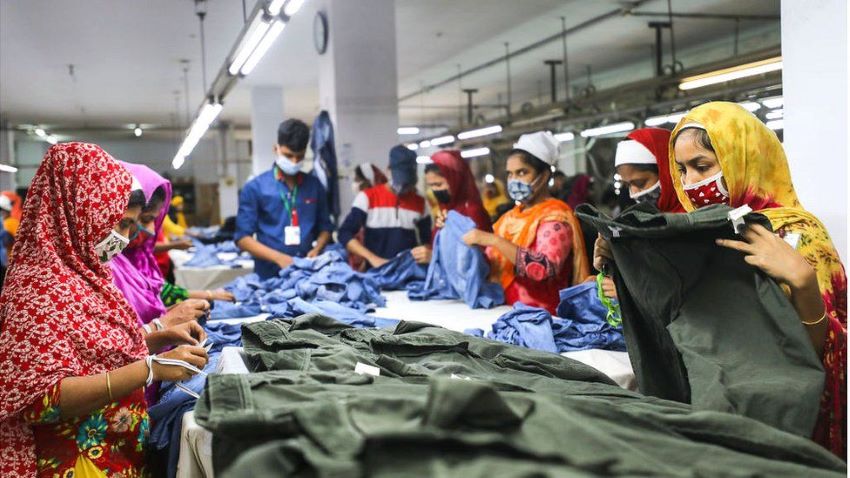
According to Rubina Haq, President of the BGMEA, Bangladesh’s garment exports may plummet almost 40 per cent in the next few months as the retail market in the country is yet to rebound. The impact of the COVID-19 on consumers’ behavior is still unknown and factories in the country are still struggling with cash flow and credits to make a turnaround.
Export Promotion Bureau (EPB) revealed that Bangladesh’s export earnings from knitwear garments declined by 5.17 per cent to $1.89 billion during July-May of FY 2019-20.
Similarly, the exports of woven products by the country declined by 14.31 per cent while its overall exports declined by 14.08 per cent compared to the last financial year. Huq further revealed inflow of new orders has also declined by 45 per cent compared to last year.
Around 50 per cent Indonesian textile factories to close by September
The three-month pandemic has led to a 90 per cent drop in production utilization causing 50 per cent of textile factories in Indonesia to permanently close in September. The Indonesian Textile Association (API) revealed the utilization of large industrial production is only 10 per cent remaining. This is lowering the industry financial condition to run low. API estimates the industry to last only until next September.
The pandemic had launched export markets and domestic products. As a national strategic industry that requires a large workforce, this industry needs serious attention from the government. Therefore, in order to ease business, some entrepreneurs have asked for the assistance in the form of easy banking loans, postponed payment of electricity tariffs during April-September and provided Corporate Tax PPH tax relief for 2020.
Since production in China has been disrupted, the Association noted around 17 containers of textile products coming from China. This number has increased with illegal smuggling. Some of the products are finished goods, so it is increasingly difficult for domestic industries to sell goods. This condition is exacerbated by the sluggish demand for textile products.
China is the largest exporter of textiles and textile products (TPT) to Indonesia. In 2018, the volume of TPT imports from China reached 4.392 tonne.
Mulberry to cut global workforce by 25%
British luxury fashion brand Mulberry plans to reduce employee count by nearly a quarter across its global business. Most of the brand’s stores were closed since March 24. However, it has now reopened some of its stores in China, South Korea, and parts of Europe and Canada. Restructuring of workforce is another dent in what was supposed to be a big year ahead of Mulberry’s 50th anniversary in 2021, in preparation for which it had considered moving more of its manufacturing to the UK as part of a sustainability push.
The brand reported a net loss of £10m in the six months to September 2019 on sales of £69m. International revenues, led by Asia, grew in the double digits, but were offset by a 4 per cent decline in the UK. However, Mulberry continues to conduct business in all markets through its digital channels. So far, its digital sales performance has been good though it cannot fully offset the fall in demand witnessed from store closures.
Bangladesh to increase source tax rate on exports
The Bangladesh government plans to increase tax rate at source on exporters’ earnings to 0.5 per cent tax from the existing 0.25 per cent. The government has also extended the existing corporate tax benefits for garment and knitwear for another two years to 2022 after it expires on June 30.
Apparel manufacturers in the country currently enjoy 12 per cent corporate tax on incomes, nearly a third of the current corporate tax of 35 per cent for non-listed companies. According to recent media reports, the export earnings of these manufacturers declined by 18 per cent year on year to $31 billion in July-May of the current fiscal over figures during the same period in the previous fiscal.
However, their shipments trebled to nearly $1.5 billion in May from just over half a billion in April this year, according to Export Promotion Bureau data.
Though the income tax law in the country stipulates that exporters pay a 1 per cent source tax on the proceeds of their exports, the National Board of Revenue (NBR) cut the rate on several occasions during the past two years in the face of demands from exporters.
Provide facilities similar to RMG industry, urges BGAPMEA
Bangladesh Garment Accessories and Packaging Manufacturers and Exporters Association (BGAPMEA), has demanded the same facilities as the readymade garment (RMG) industry in the proposed budget for FY20-21, urging the government to reduce the corporate tax rate to 12 per cent. Currently, the apparel sector pays 12 per cent corporate tax, while accessories and packaging makers make 35 per cent tax. This backward linkage industry for the apparel sector also urged the government to keep source taxes unchanged at 0.25 per cent instead of the proposed 0.5 per cent for FY20-21.
According to BGAPMEA data, there are about 1,700 small and medium accessories and packaging makers, who are capable of providing 95 per cent supply of accessories products to the country’s $34 billion apparel industry and other export oriented packing industries, including frozen foods and pharmaceuticals.
Though the government has announced a 1 per cent cash incentive in the proposed budget, the RMG's backward linkage industry is not getting it.. BGAPMEA also urged the government to include the sector for cash incentives as it exports its goods directly as part and parcel of exports themselves.
In the last fiscal year, the sector contributed over $7.5 billion to the exports of the apparel sector, of which nearly $1 billion came from the direct export of accessories goods.
Canton Fair hosts online events
With the 127th China Import and Export Fair (Canton Fair), an international trade fair, just a few days away, several online events were held for global buyers at multiple locations.
Welcoming business associations, buyers and entrepreneurs from Africa, Germany, and other "Belt and Road" initiative countries, these online events not only aim to facilitate better communications between buyers and sellers but also create a channel for global partners and companies in the post-Covid-19 era.
The online introduction events connecting traders in South Africa, Kenya and Egypt attracted more than 150 buyers and company representatives across Africa. Egypt is also looking forward to the first virtual Canton Fair that will bring more business possibilities to African businesses, said Alaa Ezz, first under secretary of state of the Egyptian chamber of commerce and industry..
Africa is also an essential source of buyers for the Canton Fair, with the number of importers from the region standing at more than 15,000 every year. The trade volume of Central Africa has also achieved a record high in 2019, totalling $20,87 billion, a 2.2 per cent increase year-on-year.
Cone Denim unveils new Pride Selvage Denim
Cone Denim® has launched its Pride Selvage Denim in honor of Pride Month. Pride Denim is the newest fabric in the Cone® Community Collection to show Cone’s support of a wider and more inclusive community. Cone will donate a portion of proceeds from the sale of its Pride fabric and accessories to the HRC Human Rights Campaign whose work focuses on achieving equality for the LGBTQ Community.
The Cone® Community Collection fabrics are designed with neutrality in mind and are perfect for both Men’s and Women’s collections. These limited edition fabrics have a timeless authentic character and a brilliant optimistic indigo shade with just the right stretch for comfort. The Pride Denim incorporates the rainbow colors of the Pride flag into the selvage of the fabric.”
Pride Denim fabric and accessories made with the special denim are available on the White Oak Shop. Accessory items include a large tote bag, wallet and travel kit, all crafted using the unique rainbow colored selvage. Smaller quantities of Pride denim fabric are also available on the Shop. Larger volumes of Pride Denim are available for order through a Cone Denim sales representative.
Morrisons launches new portal for Nutmeg clothing label
UK supermarket chain Morrisons recently launched a new portal for its Nutmeg clothing label to make it more easily available to customers as people continue to stay home amid the COVID-19 pandemic. The new website will allow customers to buy from Nutmeg’s range of quality essentials and fashion range without the need to visit a Morrisons store.
The Nutmeg babywear and kids range is currently available in all 494 Morrisons stores, with the label’s womenswear collection present in around half.
The online store will be updated regularly throughout the seasons. It will deliver clothes at £2.97 with items arriving within 14 working days of purchase and customers have 30 days in which to return the clothes, either online or in store.
A £3.97 next day delivery option, as well as a click-and-collect service, will be available from all Morrisons stores in the near future.
Carvico launches Xlance range of eco-sustainable fabrics
Leading Italian knitter Carvico has launched Xlance, a whole range of eco-sustainable fabrics designed to promote re-use, recycling and respect for our environment. According to Carvico, the fabrics boast extraordinary performance in terms of resistance to chlorine, ensure perfect fit, exceptional comfort and a unique, contemporary and elegant ‘Made in Italy’ style, and they are bound to revolutionize the worlds of swimwear and sportswear.
These fabrics put together a unique, high-tech elastomeric fibre and a selection of exceptional and eco-sustainable yarns to meet the requirements of the market and the latest swimwear and sportswear trends. They are resistant to chlorine, suntan creams and oils and are also UV protective (UPF 50+).
Moreover, they are eco-sustainable. Carvico has always operated in the view to safeguarding the environment promoting a more sustainable fashion. XLANCE fabrics stem from a long and thorough research process for fully sustainable raw materials and production processes.
Xlance fabrics ensure a perfect fit and maximum comfort and fit the body like a second skin adapting and shaping its curves and offering athletes support and maximum freedom of movement, Soft and pleasant to the touch, all these fabrics are suitable for printing (sublimation and digital). XLANCE ECO is also available in 15 amazing colours.
NGOs, retailers sign circular economy pact
A group of retailers and non-governmental organisations including CEOs of global businesses including Inditex, Nestle, Unilever, H&M Group, Danone, Coca-Cola, PepsiCo, L’Oreal, Ikea, Stella McCartney and Barclays Bank, as well as organisations such as WRAP and Global Fashion Agenda, have signed a joint statement committing to building a circular economy as industries begin to recover from the coronavirus pandemic.
The Ellen MacArthur Foundation, a charity that promotes the move towards circularity, will release the joint statement on 13 June. The statement commits retailers to transition to a more circular model of production, across the food, plastics, finance and fashion sectors.
The businesses have also committed to address other global challenges, including climate change, waste and pollution.
Their statement marks the start of an ambitious programme of work that will turn the call to ‘build back better’ - the campaign for a coronavirus recovery plan that embraces positive chang- into a tangible effort, by giving the recovery phase a clear pathway.