FW
Exploitation and abuse rampant in Myanmar's garment industry after COVID-19 and coup
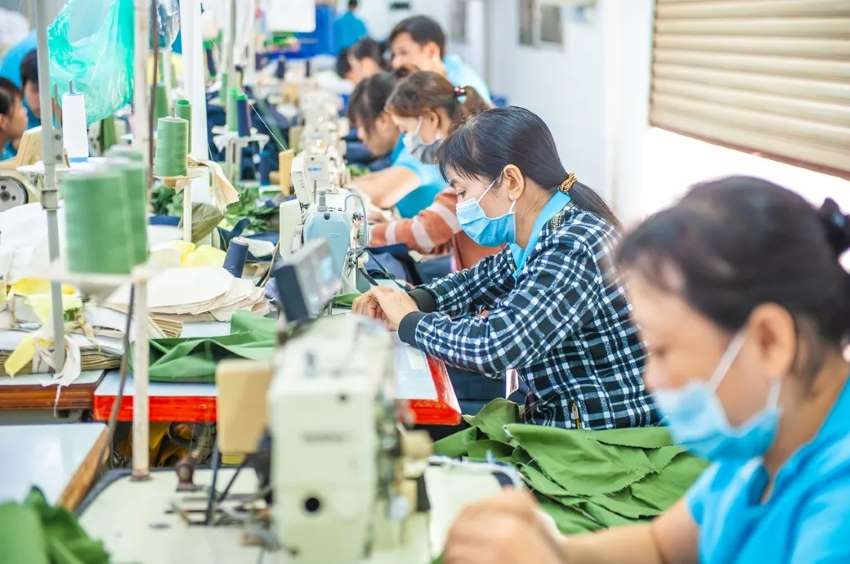
Myanmar's garment industry has been plagued by multiple crises, from the COVID-19 pandemic to the 2021 military coup, leading to widespread exploitation and abuse of workers.
The industry was once a thriving export sector, generating $6.7 billion, but since the coup, it has seen a 25% decrease in the labor force. The situation has been exacerbated by the prevalence of "nameless factories" that operate as unlicensed workshops, where workers are more vulnerable and struggle to identify their employers when making complaints.
However, the exploitation and abuse in Myanmar's garment industry go beyond the lack of regulations and legal protections for workers. Human rights organizations have reported cases of forced labor and child labor in the industry, especially in remote areas where factories operate with little scrutiny. Workers often receive meager wages and work in hazardous and unhealthy conditions, with minimal access to healthcare or other benefits.
The COVID-19 pandemic has further worsened the situation, with factories suspending or terminating workers' contracts without proper compensation, and travel restrictions making it difficult for workers to return home or access medical care if needed. On top of these challenges, the 2021 military coup has brought increased harassment, intimidation, and violence, with some workers coerced into participating in protests or threatened with losing their jobs if they refuse to do so.
Despite these challenges, there are initiatives underway to improve the situation for workers in Myanmar's garment industry. International organizations are partnering with local groups to promote labor rights and better working conditions in factories, while others are advocating for greater accountability and transparency in the supply chain. Nevertheless, there is still a long way to go to ensure that the workers in Myanmar's garment industry receive fair treatment, decent wages, and safe working conditions.
Pure London wins Best Trade Show Marketing Campaign at EN Awards 2023
Pure London, the UK's largest festival of Fashion, has won the Best Trade Show Marketing Campaign at the EN Awards 2023. Pure London was recognized for its July 2022 marketing campaign, beating out stiff competition in the highly coveted category.
The EN Awards, often referred to as 'The Oscars' of the global exhibition industry, is a prestigious event that attracts ambitious directors, marketing teams, suppliers, and individuals to recognize standout achievements of the year.
Gloria Sandrucci, the Event Director of Pure London, expressed her excitement, stating that she is "absolutely thrilled that Pure London won such a prestigious award and has been recognized by our industry peers." Sandrucci also praised the team for their "creativity, dedication, and hard work" in producing such a fantastic campaign.
In addition to winning the Best Trade Show Marketing Campaign, Fran Lister, Marketing Executive at Pure London, also received recognition at the event, taking second place in the awards for Best Newcomer.
Pure London provides a global platform for womenswear, accessories, and shoes brands and designers to meet with buyers, showcasing the best of the season’s must-have collections, latest trends, and exclusive business insights. The next edition of Pure London will take place at the iconic Olympia London from July 16-18, 2023.
Pure London has a 25-year heritage and over 50 shows under its belt, delivering two inspirational events each year at the iconic Olympia London. The event welcomes thousands of order-ready buyers from the UK and internationally looking to source new brands for their stores.
Spring & Autumn Fair launches dedicated Community Development to enhance visitor experience
Spring & Autumn Fair, the UK's leading wholesale marketplaces for home, gift, and fashion, has recently announced the launch of a dedicated Community Development team to improve the buying experience of visitors.
The team aims to enhance the visitor experience and strengthen the relationship with the show. Additionally, Autumn Fair's new meetings programme, Connect @ Autumn Fair, is set to revolutionize the way buyers shop the show by providing detailed information on over 600 exhibitors, allowing buyers to filter through them and request 15-minute meetings.
The meetings are double opt-in, arranged only when both parties express mutual interest, and all take place on exhibitor stands. This allows buyers to see and feel the products, inspiring them to discover new products and trends. The meetings are designed to make it easier for buyers to find the right products and brands that their customers will love.
The Autumn Fair is the definitive 'shop for shops' and runs from September 3rd to 6th, at the NEC Birmingham
Digital textile printer manufacturer ColorJet Group recognized for export contributions
ColorJet Group, a prominent digital textile printer manufacturer, has been awarded the State Export Award for its exceptional performance in international trade.
The award recognizes companies that have significantly contributed to the country's export earnings by successfully expanding their businesses overseas. ColorJet Group has been acknowledged for its commitment to quality and innovation in its products and services, enabling the company to establish a strong reputation in the international market.
M.S Dadu, Chairman of ColorJet Group, attributed the company's success to the hard work and dedication of the entire team and its investment in developing indigenous technology to meet international standards and regulations, enabling it to expand its business across 30 countries worldwide.
The company's Innovation Laboratories, recognized by the Ministry of Science & Technology, Govt. of India, constantly innovate and integrate digital print technology that wins world markets.
Since its establishment in 1995, ColorJet Group has been providing complete fabric printing solutions and is one of the top global exporters of wide-format printers. The company markets its products in about 30 countries worldwide and has installed over 5,000 printing solutions and products in 450 cities worldwide, supported by a strong team of 350 members.
Munich Fabric Start changes date offering flexibility and more time for further developments
Munich Fabric Start Exhibitions GmbH has announced its plan to offer full flexibility with the positioning of its trade show formats for sourcing Autumn/Winter 24/25 collections. In a correction of the previous press release, the date of BLUEZONE, KEYHOUSE, and THE SOURCE has been changed to 18-19 July 2023.
The trade shows will continue to maintain their importance in the international trade show scene, moving ahead and increasing their relevance in the fashion industry. The international fabric trade show, MUNICH FABRIC START, along with KEYHOUSE, THE SOURCE, and BLUEZONE, making it an impulse generator for the fashion industry.
Meanwhile, the September date will continue to serve as an important time for follow-ups and for picking up on new and short-term market developments with reVIEW, the new concept of the VIEW PREMIUM SELECTION.
The new schedule offers full flexibility to visitors, including internationally important fabric and trim exhibitors, renowned agencies, top European weavers, and textile designers, providing them with more time for further developments.
Important exhibitors, including returnees, such as Ballesio, Cadica, Discovery Denim, East & Silk, Fauck, Lanificio Campore, Mapel, Naveena Denim, Pricoh’s, Sintopel, Sourcetextile, Studio 9, Taiwan Textile Federation, and YKK, as well as new entries like Esdigital, IBERIS Lda, Jeanius, Jersey Print Factory, Lucky Textile Group, Marjomotex, Neelams Itl, Splash by Lo, Victor Texteis, and Wouters have already confirmed their participation, along with many others.
Fashion sector projected to dominate online retail spends in India by 2025
The fashion and apparel category is projected to have the highest share, at 25%, of the estimated overall online retail spends of $140 billion to $160 billion by 2025, according to a report by Boston Consulting Group and Matrix Partners India. This growth is expected to replace the mobile devices category, which is expected to fall to 23% in 2025 from 32% in 2021.
The COVID-19 pandemic has had a significant impact on the fashion industry in India, accelerating the shift towards e-commerce. To sustain growth in the fashion sector, the report recommends maximizing customer lifetime value by expanding offerings, driving loyalty through customer retention, and focusing on cross-selling and up-selling.
The report also suggests that as affluence in the country increases, discretionary spending will drive growth in categories beyond food and clothing. High-affluent households are expected to spend a lower percentage of their income on food and clothing and more on discretionary purchases such as transportation, communication, leisure, education, and more.
The adoption of AI and analytics across the value chain, alongside expanding distribution across channels and geographies, will also be essential for driving sustainable growth.
Largest textile, garment exhibition in Southeast Asia kicks off in Ho Chi Minh City
The Vietnam Textile & Garment Industry Expo (Saigontex) 2023, Southeast Asia's leading textile and garment exhibition, kicked off in Ho Chi Minh City on April 5 with over 1,300 businesses from 21 countries and territories participating.
The event has the largest scale since 1991, featuring almost 2,000 booths and a new "dye, yarn and chemicals" display area with 75 international suppliers.
Saigontex 2023 showcases the latest technology solutions aimed at ushering in a new era of sustainability for the textile industry. For the Vietnamese textile and garment business community, it presents an excellent opportunity to find partners, access modern technologies, and stay up-to-date with the global textile industry's current trend.
In addition, a four-day thematic conference will be held to provide updates on the world economic situation and the garment and textile market.
Apparel and footwear brands shift towards sustainability, reduce carbon footprint in response to consumer demand
The fashion industry, known for its significant carbon footprint and contribution to waste and pollution, is undergoing a shift towards sustainability in recent years. With increased awareness among consumers about the industry's environmental impact, apparel and footwear brands are taking steps to reduce their carbon footprint.
The shift towards sustainability in the fashion industry has been driven by the need to meet demands and regulations set by governments and consumers. As a result, brands are looking for ways to reduce waste and improve recycling.
The global apparel and footwear market has experienced significant growth due to strong consumer relationships and technological advances.
This shift towards sustainability is not only necessary for the environment, but it also provides a unique opportunity for the industry to drive innovation and develop new and exciting products for consumers.
India’s textile sector SMEs faces challenges with demand drop in global markets

India's textile industry faces tough times as international consumers cut spending on non-essentials and import orders of both textiles and garments contract worldwide. This leaves the sector vulnerable. It can no longer be denied that the $200 billion textile and apparel industry is facing a crisis as consumers in the United States, Europe and other big markets have cut spending on clothing following a surge in inflation after the war in Ukraine.
While the overall Indian economy is relatively strong and is outperforming major economies, the textile sector is a notable exception and orders suggest the downturn will continue well into 2023, raising the risk of layoffs in an industry that employs over 45 million people, reveals various reports. Expert say, exports, which constitute about 22 per cent of the industry, fell over consecutive months, declining over 15 per cent year-on-year in November 2022 to $3.1 billion. A McKinsey report too has confounded the fear that export of textiles and garments did not have a good outlook in 2023.
This manifests in the production of textiles as measured by the Index of Industrial Production (IIP) for textile has seen a consistent decline since March 2022. On a cumulative basis from April to October, 2022, the index value was lower than the corresponding period in 2021.
Cost-attractive imports surge
As per CRISIL SME Tracker, in FY24, cotton yarn prices are projected to fall almost 15 per cent due to a high base and subdued export demand and this will affect price realization. The textiles sector could see a moderation in revenue growth in 2023-24 (FY24) as export demand, which usually accounts for a fourth of the total market, is expected to be limited due to a slowdown in US and Europe. However, domestic demand is expected to grow at a steady pace.
For small and medium enterprises (SMEs), which make up around 75 per cent of the textile value chain and are estimated to have seen robust revenue and profit growth in FY22 on the back of a post-pandemic surge in exports will be adversely affected.
Meanwhile, while production has taken a hit, imports of textiles have increased. In the period from April to November, 2022, imports of textiles were valued at Rs 433 billion according to findings by The Print. In the same period of last year, imports of textiles were valued at Rs 313 billion. In recent months, particularly after the onset of the Russia-Ukraine war, imports have risen consistently.
The steady rise in textile imports is not just a recent phenomenon. It owes its origin to policies of the past few years. India allowed duty-free import of readymade garments from Bangladesh under the South Asian Free Trade Agreement (SAFTA) in 2006. This has resulted in an increase in imports of apparels made with Chinese fabrics and yarns. Bangladesh imports Chinese fabrics, converts them into garments using its cheap labour and exports the garments so made to India, without paying any import duties. Thus, the duty-free market access given to Bangladesh is facilitating indirect entry of Chinese textiles into India.
Can domestic consumption rescue the sector
According to CRISIL SME Tracker, FY 2024 will show a boost in textile sector led by domestic consumption. With Indian consumers upping spends on readymade garments, festive wear and occasion wear, this is bound to affect the textile sector’s plunging production in a positive manner. This is why domestic production hubs like Kolkata, Kanchipuram and Ludhiana are likely to outperform the export-centric clusters. The proliferation of local labels for mass and high fashion, thanks to e-commerce, has also increased, adding to greater demand for domestic textiles.
If this trend continues upwards, the domestic textile sector will have to pull through 2023 for good times next year.
Waste hair to create high-performance gear for extreme environments
Human Material Loop, a company focused on utilizing waste keratin protein fiber to develop high-performance products for the textile industry, is set to take its material innovations to new heights.
The company's focus on utilizing waste keratin protein fiber from hair is an innovative solution to the problem of hair waste. Millions of pounds of hair from salons and barbershops end up in landfills or incinerators all over the world, but Human Material Loop aims to change that by collecting waste hair and treating it to provide thermal protection in extreme environments.
With their prototype jacket and pants filled with waste hair collected from local hair salons, Human Material Loop is ready to prove that their technology can move mountains – or at least protect those who climb them. The company recently took prototype gear created using the company's technology to the Andes and Aconcagua, the highest mountains.