FW
Welspun Living reports 16% rise in Q4 net profit
Indian textile giant Welspun Living has announced a significant 16 per cent rise in consolidated net profit to Rs 146 crore ($17.5 million) for the fourth quarter ending March 31. This growth, from Rs 125 crore in the same period last year, reflects the company's robust performance amidst challenging market conditions. Revenue for the quarter also witnessed a substantial uptick, soaring by 19 per cent to Rs 2,617 crore compared to Rs 2,195 crore in the previous year.
For the fiscal year 2024, Welspun Living's total income reached Rs 9,825 crore, with a net profit of Rs 681 crore. Dipali Goenka, the Managing Director and CEO, attributed this success to the company's relentless pursuit of excellence. She highlighted the achievement of the highest quarterly and yearly revenues in Q4 and FY24, with a remarkable 20 per cent yearly growth and a sustainable EBITDA of 15.4 per cent.
Despite subdued retail market sentiments, Welspun Living's domestic retail business demonstrated resilience. With its flagship brand 'Welspun' solidifying its leadership position across the country, the company achieved its highest-ever revenues in FY24. Welspun Living, renowned for its home textiles offerings, continues to strengthen its presence in the market with a wide array of products including bed sheets, bath linen, and curtains under its private labels.
Home Textile Exports: A revival story across India, Pakistan & Bangladesh
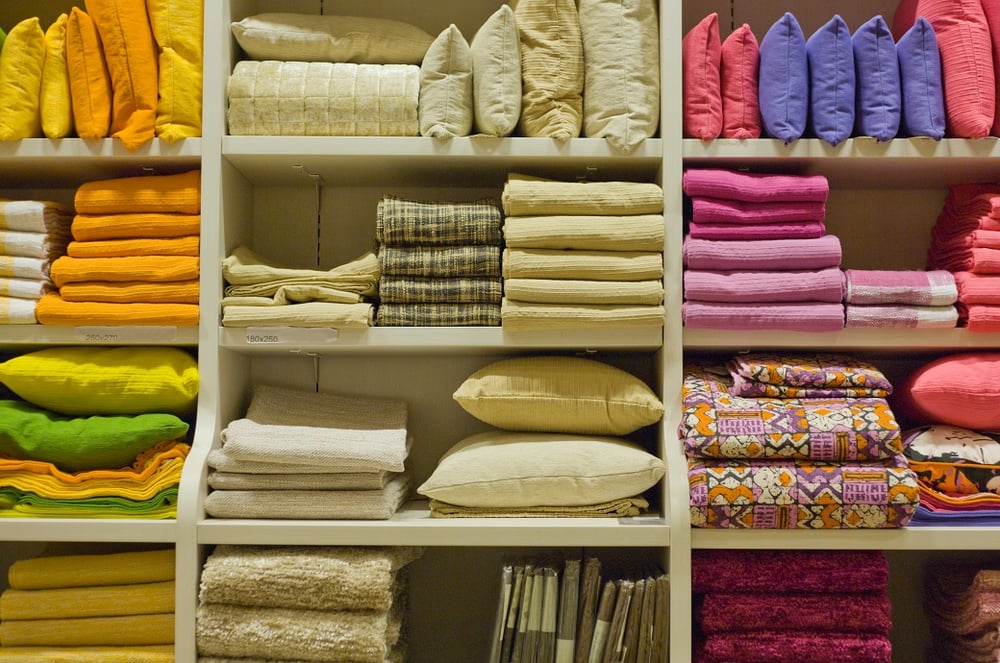
The home textile industry, once a bright spot in global exports, faced a slump for over a year. However, there are signs of revival, and three South Asian countries – India, Pakistan, and Bangladesh – are vying for lead in this resurgent market.
Growth Champions: Bangladesh takes the lead
While all three countries experienced a decline in 2022-23, Bangladesh stands out for its export growth. Pakistan saw a modest increase of 2.17 per cent in 2022 reaching $5.64 billion, while India's exports dipped by 9.88 per cent. Notably, Bangladesh's exports rebound the fastest, with a 9.9 per cent YoY increase in February 2024 compared to the previous year. This can be attributed to several factors, including:
Cost-competitiveness: Bangladesh boasts lower labor costs compared to India and Pakistan, making them attractive to budget-conscious buyers.
Government support: The Bangladeshi government actively promotes the textile industry through various incentives and schemes.
Focus on diversification: Bangladesh is actively expanding its product portfolio beyond basic items, catering to a wider range of consumer preferences.
Shifting market dynamics
The Russia-Ukraine war significantly impacted traditional strongholds like the EU and US. However, other markets are emerging as bright spots.
US, despite the overall decline, the US remains a significant market for all three countries. However, growth rate might be slower compared to other regions. Southeast Asia and the Middle East are presenting promising opportunities due to their growing disposable incomes and rising demand for home goods.
Product prowess
There is strong competition between these three countries but each has its strength in terms of products.
India excels in premium bed linen due to its expertise in fine cotton and intricate craftsmanship. While Pakistan is a leader in furnishing & upholstery segment, known for its high-quality fabrics and diverse designs. Both Pakistan and Bangladesh are strong contenders in towels, offering a range of options at competitive prices. As for other articles Bangladesh is making strides in diversifying its offerings, including kitchen textiles and bathroom essentials.
An optimistic yet cautious future
The global home textile market is expected to rebound in coming years. Factors like rising disposable incomes and increasing urbanization in developing countries will drive demand. However, certain key factors will remain top focus.
Sustainability: Eco-friendly and ethically sourced products will gain traction, which could benefit Bangladesh with its initiatives in this area.
Innovation &design: Continuous product innovation and trendy designs will be crucial for staying ahead in the competitive landscape.
Technological advancements: Embracing automation and digital tools can enhance efficiency and productivity for all three countries.
Indeed, the home textile industry revival bodes well for India, Pakistan, and Bangladesh. By capitalizing on their strengths, adapting to market trends, and focusing on innovation, these countries can solidify their positions as leading global players in the years to come.
SEAMS President Britt Moore drives growth amid industry challenges
Britt Moore, Vice President of Sales & Customer Support at Minnesota Knitting Mills (MKM), is poised to lead SEAMS (Seams Educational Association of Machinery and Supplies) into a new era of growth and expansion. With his upcoming inauguration as SEAMS President at the Spring Networking Conference in Myrtle Beach, SC, Moore discusses his vision for the organization and the challenges facing the textile industry.
Moore acknowledges the honor of leading SEAMS, emphasizing the rich history and knowledge within the organization that benefits the entire textile industry. His extensive background in the textile, apparel, and cut-and-sew sectors positions him well to steer SEAMS towards continued success.
Minnesota Knitting Mills, a 116-year-old family-owned company specializing in circular knitting products, underscores Moore's commitment to the industry. He highlights the importance of fostering relationships within the industry, a goal he aims to achieve through SEAMS' networking opportunities.
Central to Moore's agenda as President is the expansion of SEAMS membership across the United States. He envisions SEAMS as the premier association for textile companies, offering valuable networking, sourcing tools, and a robust calendar of events, including SEAMS Pavilions at industry trade shows.
Moore attributes SEAMS' success to the dedication of its member companies and the support of its Board of Directors. He praises his predecessor, Ron Roach of Contempora Fabrics, for his visionary leadership and mentorship, which has facilitated a smooth transition.
Addressing the current economic downturn, Moore stresses the importance of collective action within SEAMS. In challenging times, SEAMS' events provide invaluable networking opportunities and support, essential for navigating industry headwinds.
Looking ahead, Moore identifies offshore production as a significant challenge for the US textile industry. He emphasizes the need for quality products and adherence to trade laws to counter the influx of cheaper imports. Encouraged by the growing awareness among the next generation, Moore believes in the potential for consumer-driven initiatives like "Buy American" to drive change.
As SEAMS prepares for its upcoming networking conference, Moore promises an enriching experience for attendees. The event will feature comprehensive discussions spanning the textile supply chain, fostering collaboration and innovation within the industry.
Britt Moore's presidency heralds a new chapter for SEAMS, marked by growth, resilience, and a steadfast commitment to advancing the textile industry in the face of evolving challenges.
EU law holds companies accountable 11 yrs after Rana Plaza collapse
On the 11th anniversary of the tragic Rana Plaza industrial collapse, which claimed the lives of 1138 workers and left thousands injured, the European Parliament has made a significant stride in corporate accountability. The approval of the Corporate Sustainability Due Diligence Directive (CSDDD) signals a pivotal moment towards ensuring global value chains are free from human rights abuses, labor violations, and environmental degradation.
This landmark legislation, hailed as a historic shift, mandates stringent human rights and environmental due diligence for large companies operating within the European Union, both domestically and internationally. However, while the directive represents progress, it falls short of its initial ambition.
Critics highlight that the version endorsed by the Parliament lacks the robustness of the original agreement reached in December 2023. Key concerns include its limited coverage of EU companies, overlooking crucial aspects of the value chain, and significant gaps in protecting workers' and victims' rights.
Muriel Treibich, Corporate Accountability Coordinator at the Clean Clothes Campaign, acknowledges the directive's innovative nature but voices concerns over its limited impact. She notes that many intermediary and smaller operators may evade responsibility, undermining the directive's effectiveness.
While the directive offers avenues for enforcement and justice for victims, including a civil liability regime, it still falls short in removing obstacles for victims seeking justice in European courts. Giuseppe Cioffo, Lobby and Advocacy Coordinator at the Clean Clothes Campaign, emphasizes the need for Member States to address these issues during the directive's transposition into national law.
Despite efforts to broaden the scope of international instruments, crucial International Labour Organization conventions on occupational safety and health remain excluded. This omission poses risks to workers' safety, as demonstrated by the Rana Plaza tragedy.
Despite its imperfections, the CSDDD represents a crucial milestone in recognizing the human rights and environmental impacts of corporate activities, particularly within the garment industry. The Clean Clothes Campaign vows to continue advocating for more ambitious regulations during the directive's implementation by Member States.
The Lycra Company introduces new denim fit technology at Kingpins Amsterdam 2024
Marking a significant leap forward for the apparel industry, the Lycra Company unveiled its groundbreaking Lycra FitSense® denim technology at the Kingpins Amsterdam 2024 trade show. This innovative shaping technology addresses common fit issues like the waist, thighs and rear by offering tailored support to various body types while maintaining the beloved look and feel of authentic denim.
Ebru Ozaydin, Global Strategic Marketing Director-Denim, The Lycra Company explains, this discreet and invisible solution is integrated into stretch jeans through advanced fabric construction and precise garment making. Designers can now enhance the fit and comfort in specific areas, providing consumers with a personalised experience that boosts confidence and reduces returns due to poor fit.
Steve Stewart, Chief Brand & Innovation Officer, The Lycra Company, adds, the technology has the potential to reshape the apparel industry. He also highlighted the company’s plans to debut the new technology at upcoming Kingpins events in China and New York.
In collaboration with the House of Denim Foundation and Jean School students, The Lycra Company showcased ‘Stretch Yourself #3: Denim of the Future, Designed by Gen Z,’ featuring cutting-edge designs powered by their technologies, demonstrating their commitment to nurturing talent and pushing boundaries.
Attendees at Kingpins also had the opportunity to learn about the development of bio-derived Lycra® fiber made with Qira®, a sustainable initiative set to launch in early 2025. By using field corn, this product aims to significantly reduce the carbon footprint of Lycra® fiber while maintaining its performance standards.
Sales updates from Europe’s luxury brands cast shadow over China’s recovery
Sales updates from Europe's major luxury brands have offered little comfort regarding the recovery of Chinese demand for high-end fashion, casting a shadow over the industry's prospects.
Citing low demand in Asia, particularly in China, Kering warned that its first-half profits would significantly decline
Italian luxury group, Ermenegildo Zegna also witnessed a revenue decline in the first quarter, attributed to decreasing sales of its Thom Browne label in the Greater China region. However, family-owned Italian brand, Prada reported strong demand for its Miu Miu fashion brand and sustained growth in Asia.
Despite solid reports from luxury bellwethers LVMH and L'Oreal, concerns persist regarding Chinese consumers' appetite for premium goods and the broader sector.
The luxury industry had anticipated a challenging first quarter compared to the same period last year when business surged following the lifting of stringent COVID lockdowns in China. However, various factors, including a property crisis, stagnant private sector investment, and trade disputes, are impeding Chinese economic growth, according to Ira Kalish, Chief Global Economist, Deloitte.
The luxury goods sector had been heavily reliant on rapid growth in China, which tripled in size between 2017 and 2021, according to Bain consultancy. However, in an environment of slower Chinese growth, Jacques Roizen, Managing Director –Consulting, Digital Luxury Group, anticipates that leading brands will widen their leads while others may experience negative year-over-year results.
LVMH noted a 6 per cent decline in first-quarter sales in Asia (excluding Japan) but highlighted an increasing proportion of Chinese shoppers purchasing goods outside the region, particularly in Japan and Europe. Similarly, Prada too echoed this trend.
Analysts believe that fashion brands like Chanel, Hermes, and LVMH's Louis Vuitton are well-positioned to strengthen their presence in China due to their base of older, affluent clientele, which is less susceptible to economic uncertainties. These brands can invest in marketing events and upscale retail spaces to capitalize on this advantage.
Despite the challenges, LVMH remains committed to expanding its retail network in mainland China, although internal discussions have occurred regarding the pace of these projects, according to Jean-Jacques Guiony, CFO.
Kering has also intensified its efforts in China by expanding its management team and resuming in-store training, albeit cautioning that results will require patience to materialise, according to Armelle Poulou, CFO.
Foot Locker unveils new store concept to enhance customer experience
Showcasing a cutting-edge shopping experience, Foot Locker unveiled its latest store concept at the Willowbrook Mall in Wayne, New Jersey. Introducing a sleek, modern layout, the store concept aims to encourage customers to explore the store from the moment they step inside.
Bright, attention-grabbing displays near the entrance of the store highlight the newest sneaker releases and trending products. Throughout the space, dynamic storytelling elements shine a spotlight on Foot Locker's brand partners, enhancing product presentations and helping customers grasp the unique features and benefits of each item.
A central communal try-on area fosters connections among shoppers, inviting them to experience the inclusive spirit of sneaker culture firsthand. At the heart of the store lies the Sneaker Hub, a dedicated destination offering specialised lacing customisation, expanded ordering options, and personalised experiences tailored to deepen connections with customers.
Equipped with advanced technology, Foot Locker's staff can seamlessly access omnichannel inventory availability, providing customers with a range of fulfillment options to suit their preferences. Mary Dillon, President and CEO, Foot Locker, Inc., emphasises, this innovative store concept consolidates Foot Locker's leadership in sneaker culture, delivering an engaging and forward-thinking retail experience.
Aligned with Foot Locker's Lace Up Plan introduced in 2023, the new store concept underscores the company's commitment to reshape its real estate footprint and deliver a consistent, elevated brand experience.
Bangladesh struggles to seize a share of the global apparel market in 2024
Facing stiff competition from China, Bangladesh struggled to seize a larger portion of the expanding global apparel market in 2024.
As per a report by Quality Inspection Management (QIMA), China bagged maximum export orders during the first quarter of the year despite a 20 per cent increase in demand for textile and apparel inspections and audits from garment manufacturing countries like Bangladesh.
Though both the US and EU-based companies increased procurement from Bangladesh during the year, the government’s policy shift to reduce cash incentives for garment exports led a rise in China’s popularity among apparel brands.
Industry insiders like Fazlul Hoque, former President, BKMEA, also cited increasing production costs and aggressive pricing strategies by competitors as factors contributing to Bangladesh's loss of competitiveness in the global market.
Meanwhile, China witnessed a rebound in demand from Western markets, with US-based buyers showing a 12 per cent Y-o-Y growth in inspections and audits, and European brands experiencing even faster growth rates. Other regions, including Asia, Latin America, and South America, also displayed significant interest in China's manufacturing capabilities.
Recent data from the US Department of Commerce’s Office of Textiles and Apparel (OTEXA) and Eurostat highlights Bangladesh's declining apparel exports compared to its counterparts. In Jan-Feb’24, Bangladesh experienced a significant drop in exports to both the US and the EU, while China and Vietnam managed to maintain or slightly increase their export volumes during the same period.
These challenges underscored the need for Bangladesh to address rising production costs and enhance competitiveness to reclaim its position in the global apparel market.
India’s cotton production declines to 31.6 million bales in FY’23-24
In FY’23-24, until November 2023, India's total cotton production decreased to 31.6 million bales of 170 kg each from 34.3 million bales in FY’22-23.
The Central Zone, encompassing states like Gujarat, Maharashtra, and Madhya Pradesh, emerged as the largest producer of cotton in India during FY’22-23. Within this zone, Gujarat was the highest contributor, producing 9.49 million bales. Saurashtra, comprising 70 per cent of Gujarat's cotton production played a pivotal role in this achievement.
In Maharashtra, Vidarbha's districts, including Yavatamal, Buldhana, Akola, Amravati, Nagpur, Washim, and Wardha, were significant contributors to the state's cotton production.
The Southern Zone, consisting of states like Telangana, Andhra Pradesh, Karnataka, and Tamil Nadu, ranked as the second-largest producer of cotton in India, contributing approximately 28.5 per cent of the nation's cotton output. Telangana emerged as the leading producer in this zone and the third-largest nationally, with a contribution of 5.31 million bales
The value of India's cotton exports reached $5.3 billion in the 2023-2024 period until January 2024. However, there has been a fluctuation in export values over recent years, with $5.66 billion in 2022-23, a decline from $10.78 billion in 2021-22, and US$ 6.3 billion in 2020-21. Despite these fluctuations, cotton exports remain a significant component of India's total exports.
To further enhance the textile industry's performance, the Government of India, in collaboration with the Export Promotion Council, has set a long-term target of achieving $100 billion in textile exports by 2025-26. This objective involves increasing productivity from the current level of around 450 kg lint per hectare to at least 800-900 kg lint per hectare.
Gants opens new exhibition and installation in Berlin
One of the oldest US and most authentic sportswear brands, Gant is celebrating its 75th anniversary with the opening of an exhibition and installation in Berlin.
Being held at Highsnobiety's new flagship store in Berlin from Apr 12-May 8, 2024, the exhibit tells the story of this authentic American East Coast brand since its inception in 1949.
Curated by Herbert Hofmann, VP creative and buying, Highsnobiety, the exhibition sheds light on the history of one of the first American sportswear brands, examines its influence on the fashion industry and shows iconic pieces like Old Oxford button-down shirts, college classics and Ivy League memorabilia from its founding in New Haven in 1949 to the present day.
The exhibit was created by Christopher Bastin, Creative Director, Gant who aimed to open the brand’s archive and show it to a vast number of consumers and insiders.
The installation is accompanied by an exclusive interview with one of the founders, Marty Gant, which takes visitors on a journey back to 1950s Americana.