FW
Premal Udani is new chairman of AMHSSC
Apparel Made-Ups and Home Furnishing Sector Skill Council (AMHSSC) has appointed Premal Udani, MD, Kaytee Corporations, Mumbai the new chairman. Udani will take over from from Virender Uppal, Chairman, Richa Global Exports, Gurugram.
Udani has a four decades industry experience, and is a veteran of the apparel and textiles industry. Formerly he was chairman of Apparel Export Promotion Council (AEPC) and President of the Clothing Manufacturers of India (CMAI). Currently he is the Chairman, Board of Trustees of and Member of the Board of Directors, AEPC. Apart from this, he is also founding member of the India Knit Fair Association and was appointed by the Gujarat government for special projects pertaining to apparel industries. He has been on the Board of major trade associations such as the Federation of Indian Export Organisations (FIEO), Federation of Indian Chambers of Commerce (FICCI) to name a few.
Launched in December 2013, AMHSSC was established to train, assess and certify personnel in the apparel and home furnishing sector.
Apparel & Footwear industry welcomes Biden’s mask mandate
American Apparel & Footwear Association has welcomed President Biden’s move to strengthen the federal face mask response to mitigate COVID-19. The association went further to suggest governors and mayors around the country should follow the President’s lead.
The Association feels it has become clear that face masks and coverings play an important role in keeping COVID-19 infections down, key to keeping American businesses open, workers employed, and consumers protected. The apparel and footwear industry is strongly in favor of this requirement, and encourages the adoption of similar measures in areas outside of the President’s jurisdiction by state and city leaders. More than 400,000 Americans have died because of this pandemic. If simply wearing a mask can slow that down, then there is no debate to be had on the subject. During the next 100-plus days, President Biden’s priority will be the COVID-19 crisis and AAFA will do everything it can to support and propose measures that improve the health and livelihood of all Americans.
AAFA has been calling for consistent face mask guidance since July 2020, when the association sent a letter to President Donald Trump and the nation’s State and City leaders emphasizing the importance of such measures for American businesses and American workers. The association has also been on the front lines connecting manufacturers and businesses to supply bulk mask orders, and assisted brands as they adjusted supply chains to meet the increased mask demand. AAFA’s members have also donated masks and other needed goods during the pandemic.
AFWA, CCC and WSRN launch public website WageForward.org
Asia Floor Wage Alliance (AFWA), Clean Clothes Campaign (CCC) and the Worker-driven Social Responsibility Network (WSRN) launched a website that sets out a concrete proposal for enforceable, binding agreement between global brands and unions on payment of living wages to garment workers. The groups represent a broad coalition of unions, advocacy groups and NGOs and have received tremendous support from other allies across the globe. By launching this public website all actors can provide input and suggestions, and engage in discussions as well as offer support and endorsement.
Brands are the primary profit accumulators in the garment supply chain, dictating what prices are being paid while barely abiding by minimum wage standards. Because of the extremely low prices brands pay for labour, most workers are forced to work overtime hours in order to make ends meet. Voluntary brand or multi-stakeholder initiatives have thus far failed miserably to address this core issue of the garment industry and not led to any wage increases for workers and certainly not to payment of a living wage
WageForward.org highlights the important benefits of the Enforceable Brand Agreements (EBA) and Worker-driven Social Responsibility (WSR) approach. Just as the Accord on Fire and Building Safety in Bangladesh and the Fair Food Program have dramatically improved the safety and living conditions of supply chain workers, EBAs within the garment industry holds a real promise for addressing the crises caused by poverty wages.
The proposed agreement will also include strong protections for workers’ right to organize and the guaranteed access to a 24-hour complaint mechanism to report violations to the agreement. Grassroots unions, brands and labor rights groups will be signatories to the agreement and signatory brands will be required to terminate business with suppliers that violates the agreement. If they don’t, they will face legal action as the agreement is legally-binding.
WageForward.org has launched during a time in which many workers’ main concern has shifted from the lack of payment of a living wage to sometimes a lack of any payment whatsoever. The Covid-19 pandemic has hit the sector brutally hard: hundreds of thousands of garment workers are owed billions of dollars.
WageForward.org highlights how immediate action is required from brands to ensure workers receive full wages and benefits, including severance, during the pandemic. Proposals have been developed for an enforceable Severance Guarantee Fund, a Wage Assurance and a Supply-Chain Relief Contribution. The remedy for workers’ immediate needs must be combined with these types of enforceable measures in order to prevent future human rights violations in the global garment industry.
Accelerating Circularity Receives $1.2MM from Walmart Foundation
The Walmart Foundation awarded Accelerating Circularity, collaborative industry project developed to accelerate the textile industry’s move from linear to circular, a grant of $1.2 million for circular textile-to-textile systems trials using spent textiles generated on the East Coast of the United States.
Accelerating Circularity’s 2020 research on spent textiles, collectors, sorters, pre-processors and recyclers showed opportunities and gaps. It plans to create links through multi-party collaborations as part of newly identified circular models. The grant has been awarded to validate circular systems models through trials, which aim to move spent textiles through the key nodes of circular systems: collecting, sorting, pre-processing, and chemical and mechanical recycling through fiber, fabric and garment making and -- to close the loop -- brands and retailers. Accelerating Circularity is collaborating with product digitization pioneers Eon, leveraging their CircularIDTM Protocol to support the implementation of circular product passports. Validated systems can help with the uptake of new circular business models and employment opportunities for each of these new or expanding businesses.
Circular systems success requires industry wide collaborations. It has already engaged industry organizations and individual companies throughout the supply network, and it will recruit new participants who recognize that working together is essential through open calls. Connection at each step from collecting spent textiles to demand is the key to success.
The open calls will include - brands and retailers who want to offer circular products to their customers. Cut and sew manufacturers who can make circular products and others who have technologies and processes that will support circular systems.
Brands need to rework strategies in a post-pandemic retail world
 The pandemic has changed retail across the world, especially with the huge push for online shopping, and consumers shifting to digital channels due to the lockdown. An analysis by Nick Everitt, Director of Ddvisory, EMEA, Edge by Ascential looks at what actually changed last year and how should retailers ensure continuity and for their e-commerce reveals a year where bricks and mortar e-commerce gained significant share, as retailers were forced to increase capacity overnight with demand switch from stores to online, reports UK-based Retailtimes.
E-commerce, shopping festivals and more
The study shows in the past year consumers worldwide flocked to e-commerce. What’s more ecommerce moved much beyond its traditional focus on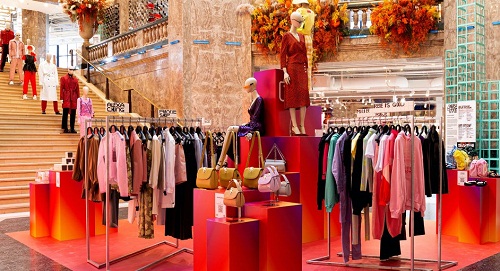 functional shopping events and greater interaction. “One component was a renewed effort in shopping festivals, resulting in the festivalisation of retail in the fourth-quarter peak,” it says. The popularity of shopping events indicated how shoppers will predominantly make more non-essential purchases like apparels and beauty products in future.
Even though Amazon’s Prime Day was postponed due to the pandemic, the delay and short run did not deter shoppers with the biggest Prime Day ever – achieving sales worth $10 billion. And sales from third-party sellers were 60 per cent higher than last year.
Similarly, Alibaba’s Single’s Day also broke records, with sales exceeding $74 billon (up to 26 per cent versus the same period a year ago). And this year’s event was extended to 11 days indicating a change seen in other markets towards more prolonged promotional calendar, while JD.com also posted record results for its event with GMV of $41bn (up 33 per cent).
At Alibaba’s sale day saw global brands gain with over 31,000 brands participating and benefitting from the significant demand from Chinese consumers unable to travel. US brands led the way, generating sales worth $5.4 billion– the largest contribution of any overseas market. Apparel and beauty brands showed strong results, with Adidas, Nike, L’Oreal and Estee Lauder achieving sales of over $14.9 million.
Moreover, this year Black Friday and Cyber Monday’s events too indicated significant growth, and as per Adobe’ estimates US spending on Black Friday was up 22 per cent, a new record. “However, it is the growth of Single’s Day in China which shows the scale and power of coordinated online-first events. As Alibaba continues to evolve the festival, we will see more brands partnering to drive their digital transformation in the world’s largest ecommerce market,” says the Retailtimes report.
No wonder many retailers are now putting in place more personal e-commerce experiences, as store closures and social distancing rules impact footfalls. The Edge by Ascential analysis indicates in 2025, digital purchases will make up 50 per cent of sales. This raises questions about physical stores and their importance for shoppers in their retail journey. If stores become simple parts of the brand’s relationship to customers, chances are that luxury brands will be stronger in negotiating with retailers.
In 2020, 57 per cent luxury customers were below 35 years. They came with their own set of values about inclusion, activism, sustainability that imply adaptation from brands and retailers. Therefore, many luxe brands diversified into fresh millennial-rich territories to broaden their audience and future-proof by going beyond hospitality. For example, Balenciaga showcased its collection through a video game and launched collectible items; Dior launched a homewear line; Gucci launched a film festival GucciFest featuring Harry Styles, Billie Eilish and more.
Global demand, rising prices augur well for Indian cotton this year
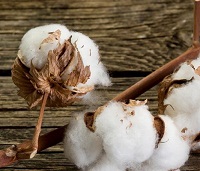 With US Department of Agriculture (USDA) projecting lower opening stocks, production and ending stocks this cotton season from October 2020 to September 2021, global cotton prices shot up from the beginning of this year. This surely is good news for Indian cotton exports. As a Rajkot-based raw cotton, yarn and spinning waste trader Anand Poppat says based on these trends, India’s cotton exports can touch 65 lakh bales (170 kg each) and this can help reduce the country’s huge carryover stocks from last season, reports Moneycontrol.
However, as per Cotton Association of India (CAI) president Atul Ganatra export demand is slow at the moment due to the pandemic and ongoing lockdown in Europe and other countries. CAI pegs exports at 54 lakh bales this season.
Global cotton prices on a high
A little number crunching reveals as on January 19, 2021, cotton prices in New York were 81.29 US cents or (Rs 47,075 a candy of 356) per pound for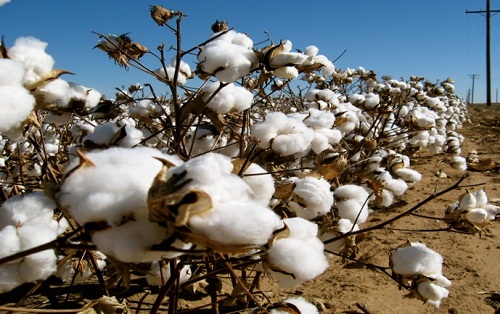 delivery in March against the previous close of 80.70 cents. For May delivery of cotton for May the prices being quoted is 82.60 cents (Rs 47,850/candy) and July delivery stood at 82.91 cents (Rs 48,025). All these figures are above previous close. In comparison, India’s Shankar-6 variety, a benchmark for exports, was quoted at Rs 43,400-43,600 a candy.
Ganatra says cotton prices in India are steady after some correction last week. On MCX, cotton for delivery next month was traded at Rs 21,420 a bale (170 kg), which converted to candy is Rs 44,856. In fact, raw cotton prices are regaining after a drop.
Chinese demand good for India
The USDA in a recent outlook projected lower production in the US, Pakistan, and Mali could offset the higher production in Greece, Turkey and Australia. In fact, Turkey’s higher production levels were revised later from 16 per cent increase to four per cent. While consumption estimates for China, the world’s largest consumer, and Turkey were increased. As per USDA, China is expected to import 135 lakh bales.
The world’s largest producer of cotton, India, whose production is pegged at 377 lakh bales by USDA, could export nearly 64 lakh bales. CAI however does not want to speculate on Indian cotton exports just yet. However, other stakeholders are more optimistic and expect prices to rise further with reports of China’s textile exports being higher than last year. Chinese are importing yarn from Bangladesh and Pakistan with growing demand and depleting stocks. While Ganatra expects cotton prices to rule steady, others say chances were bright for a rise in rates and exports soon.
Poppat explains as of now exporters can avail CCI’s huge inventory and this is keeping prices on a leash, as the CCI has fixed a cap for daily sale. If the cap is removed, prices will go up. If cotton futures in the global market rise another 3-4 cents, it could tend to push up Indian prices, he feels.
Lower carryover stocks
Poppat also believes export demand will not affect domestic spinning sector, which has two to 2.5 months inventory. He also expects premium for quality cotton to increase as availability is low. And with higher exports cotton carryover stocks will go down to 85 lakh bales this season against 125 lakh bales last season. However, CAI, projects carryover stocks at 113.50 lakh bales estimated based on India’s cotton production which is pegged at 358.50 lakh against 360 lakh bales last season.
Meanwhile, the Ministry of Agriculture in its first advance estimate of commercial crops for 2020-21 season, projects cotton production at 371.18 lakh bales. Carryover stocks are higher as the textile industry had to shut during due to the pandemic and lockdown.
Manmade yarn makers want anti-dumping duty on yarn
India may impose anti-dumping duties on viscose spun yarn to protect domestic players from cheap imports from China, Indonesia and Vietnam. The Manmade Yarn Manufacturers Association of India have urged the government for this as the viscose yarn imports from these countries hurt domestic manufacturers. Following the investigation, the Department of Trade Remedies under India’s Ministry of Commerce & Industry recommended the move.
Viscose spun yarn originating or exported from China, Indonesia, and Vietnam will attract duties ranging from $0.25 to $0.80 per kg for five years from the date of notification issued by, DGTR said in its final investigative data. The product under consideration is viscose spun yarn, which is not kept for retail except sewing thread by weight of synthetic viscose staple fiber by 85 per cent or more by weight. Demand for viscose fabric has risen sharply in recent months.
Viscose-cotton blended yarn production is currently limited to a few spinning mills in and around Erode. These spinning mills can meet only 50 per cent of the domestic demand, which has resulted in increased imports.
The price of viscose yarn, which was around $1.98 per kg, has risen to $3.01 per kg today due to the government announcement. However, industry experts feel that now is not the right time to impose anti-dumping duty on viscose cut yarn. As the proposed tariff would affect viscose garment production in the domestic and export markets.
Myanmar’s garment workers get financial aid from EU
The European Union plans to extend a helping hand to Myanmar’s garment workers, especially women. An additional €5 million from its Myan Ku Fund will be used to help Myanmar’s garment workers, who continue to struggle from factory closures and lay-offs amid COVID-19. The EU has now channelled €10 million in support of the mostly unemployed women migrant workers in the sector. Some 60,000 workers have already received financial assistance since the funds were first distributed last year.
In May 2020, the EU disbursed a total of 108,320 cash assistance payments to over 60,000 garment factory workers from every State and Region of Myanmar. 84 per cent of the beneficiaries were women, and the greatest support went to those who were pregnant and to those workers who received little or no severance pay.
Migrant workers and workers willing to complete skills training programmes will also be supported. The scope of expert nutritional support services is also expanding, with 2,000 women targeted to receive maternal counselling and direct nutritional support from the project’s doctors.
Cotton yarn price to keep rising in India
The price per kg of Indian woven cotton yarn rose from $2.65 in August last year to $3.65 in January this year an increase of 37.7 per cent. The price per kg of combed cotton yarn of 30s count is now $3.55 per kg with an increase of 8.33 per cent over December.
The price of Indian cotton fiber has not increased significantly but the price of cotton yarn is higher than domestic and export prices. The problem is exacerbated by uncertain demand in supply chains. International buyers resumed their orders in the second half of 2020. Already inventories have dried-up as supplies failed to match demand and spinning mills resumed operations late across India.
The demand for Indian yarn is growing with a large number of orders coming in from Bangladesh and Vietnam. Bangladesh is already planning to buy from the stock market as the price of cotton has skyrocketed.
Manpower was limited at the time of the lockdown-induced factory closure resulting in limited production. Later when demand increased, traders and agents started selling more to those who were willing to pay higher prices and, therefore, prices have risen significantly in the last six months.
According to experts, the price may rise further by March 21. This could lead to further difficulties in the Indian textile and garment supply chain. Already weaving price increased from 12-15 paisa/pick to 20-24 paisa/pick in India.
H&M partners Lee for eco kids wear and Daley-Ward for loungewear
Encouraged by the growing demand for loungewear and sustainable fashion H&M has linked with Lee jeans for kids wear and a loungewear deal with Yrsa Daley-Ward. The Lee kids’ collection is a holistic collaboration with advances at every stage of design and production, with every single material made more sustainable. For the first time, it will also share Life Cycle Assessment (LCA) data on hm.com indicating the water, C02 and energy impact of each denim garment from raw materials to end of use.
The collection features, jeans, jersey pieces and accessories, with a 80s and 90s throwback feel. It includes relaxed-cut jeans, as well as a workwear influence in dungarees, dungaree dresses and jeans with cargo pockets. There’s a kids’ take on Lee’s classic Rider jacket, cut with a slightly cocooning shape. Jersey pieces play with the heritage of Lee’s world famous logo with relaxed tees and hoodies with pops of purple and cobalt blue. Accessories include knit beanies and a mini sports bag.
Meanwhile, the Yrsa Daley-Ward collection uses quotes from her powerful poetry. Key pieces include the longline Bermuda shorts with co-ord slogan sweatshirt, oversized T-shirts and seamless crop tops, and a drop-shoulder hoodie, all made with materials such as organic cotton and recycled polyamide.