FW
Raw material price hike threatens Bangladesh RMG growth: Experts
Experts sat, the steep rise in prices of yarn, kraft paper, polyester and other accessories in the global market are threatening Bangladesh’s local apparel industry. Experts believe soaring raw material prices in the international market have hit the country's apparel accessories and packaging manufacturers. They lament the recent hike of cotton prices in international market has impacted yarn prices in Bangladesh. Accessories and packaging industry owners are incurring losses as they have to import raw materials at a higher price, but are deprived of a fair price from domestic clients
SM Amzad Hossain, Managing Drector, Al Muslim Accessories, said although RMG exports from the country have increased accessories manufacturers have to sell their products at losses as their domestic buyers are not ready to pay higher prices. Md Arif Hossain, Owner, Bengal Labels and Accessories Industries, added, the rise in raw material prices has increased the cost of production by 40-50 per cent. Abdul Quader Khan, President, BGAPMEA urged the government to offer a 1 per cent cash incentive against exports and reduce corporate tax to 12 per cent for the garment accessories sector in the proposed budget. Syed Nazrul Islam, First Vice President, BGMEA, said, they cannot buy accessories at high prices as they are getting lower prices for RMG items from foreign buyers.
AEPC urges for a new export policy in Tamil Nadu
A Sakthivel, Chairman, The Apparel Export Promotion Council (AEPC) has urged industry minister Thangam Thennarasu to introduce a new a policy to promote exports in Tamil Nadu. Sakthivel also urged the government to establish parks in the southern districts of the state for different segments of textiles and clothing, such as man-made fibre apparel manufacturing, sewing, heavy textile machinery, textile accessories, etc. He feels, the government can set up these parks under the MITRA scheme.
Sakthivel further requested the government to provide housing and hostel facility for men and women workers at existing and upcoming parks. Thennarasu assured Sakthivel he would consider the suggestions positively and the government would extend its support for the growth of industries and exports in the state. Incorporated in 1978, AEPC is the official body of apparel exporters in India that provides invaluable assistance to Indian exporters as well as importers/international buyers who choose India as their preferred sourcing destination for garments.
In recent years AEPC has worked tirelessly in integrating the entire industry - starting at the grass root level of training the workforce and supplying a steady stream of man power to the industry; identifying the best countries to source machinery and other infrastructure and brokering several path breaking deals for its members and finally helping exporters to showcase their best at home fairs as well as be highly visible at international fairs the world over.
Bangladesh needs to conform to changing trade rules to arrest falling RMG exports
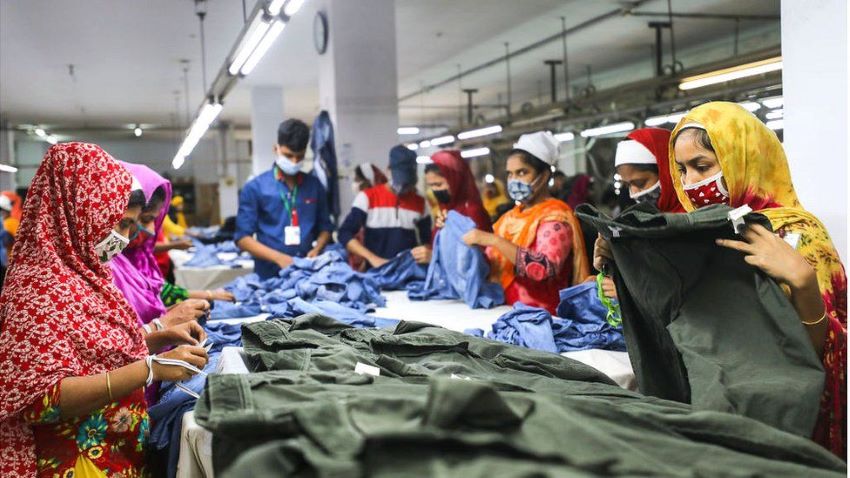
 The pandemic proved to be a death knell for Bangladesh RMG industry as exports dropped almost 18 per cent in FY2019-20. Factories were closed for almost 45-75 days as exporters faced order cancellations and payment delays. Reopening of factories also proved to be a challenge for owners as they had to comply with stringent health protocols. Statistics show, Bangladesh’s RMG exports to the world dropped 10 per cent from $31,733 million during July-May 2018-19 to $28,561.85 million during July-May 2020-21. Knitwear exports dropped from $15,682.45 million in July-May 2018-19 to $15,362.32 million during July-May 2020-21 indicating a 2 per cent year-on-year drop. Export of woven garments dropped almost 17 per cent from $16,051 million during July-May 2018-2019 to $13,100 million during July-May 2020-21.
Award for promoting green industrialization
However, it was not all gloom for Bangladesh RMG as BGMEA received the ‘2021 USGBC Leadership Award’ during the year for promoting environmental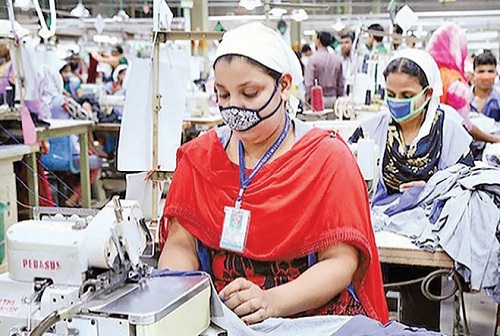 sustainability and green industrialization. BGMEA became the only association in the world to receive this award, states Faruque Hassan, President, BGMEA.
Hassan goes on to state, recognized as the pioneer in global green industries, Bangladesh houses the highest number of green garment factories in the world. Around 144 of its LEED factories are certified by the US Green Building Council (USGBC). Of these, 41 are Platinum, 89 Gold, 12 Silver, and 3 certified factories. Environmentally-safe, these factories also meet international standards in workplace safety and hygiene. Their sustainability and resource-friendliness indicates the tremendous made by Bangladesh in this domain in the last 10 years.
Strong supporter for ethical manufacturing
Bangladesh is also known for its ethical manufacturing process. The country has been ranked second in Ethical Manufacturing by a Hong Kong-based supply chain compliance solutions provider ‘QIMA’. With a score of 7.7, Bangladesh is rated only behind Taiwan which scored 8.0. The country scores in a vast range of parameters including hygiene, health and safety, waste management, child labor, labor practices including forced labor, worker representation, disciplinary practices, discrimination, working hours, wages, etc. Its scores in this report testify to the resilience of its garment industry, and commitment to improve workers’ standard of living.
Adjusting to changing trade rules
Currently, Bangladesh is the second-largest exporter of basic garments in the world, Hassan points out. It is also one of the most safe, secure, environment friendly, trusted, sustainable and dependable sourcing countries in the world. A recent McKinsey and Company study, ‘What’s next for Bangladesh’s garments industry after a decade of growth,’ highlights the transformation in garment industry in terms of transparency, safety and security, diversification and management over the past 10 years.
The report urges industry leaders to continue with these transformations and upgrade their business models. Experts need to focus on innovation, up-gradation, value addition, diversification, and the fourth industrial revolution, the report says. They also need to conform to Europe’s double transformation rules of origin after 2029. Another issue experts need to think about is making investments feasible, adds the report.
Shein’s popularity at stake as physical stores open in US, and footfalls increase
 One of the world’s largest online fashion retailers, Shein recently out-performed Amazon to become one of the most downloaded shopping apps in the US. A favorite amongst Gen Z and young millennial shoppers, Shein offers an endless variety of clothes at affordable rates. Its clothes are affordably priced to suit even the most constrained budget, says a report by Bloomsberg Quint.
Change in China’s tax code helps Shein lower operation costs
The pandemic proved to be a huge boon for Shein as it spurred annual sales to almost thrice of previous year. The company also became the biggest web-only fashion brand in the world last year, shows recent data from Euromonitor International. Investors including IDG and Sequoia have already invested around $30 billion in the company.
In January 2021, Shein bid for the iconic British clothing retailer Topshop. The company is also invigorating the fast-fashion trend by combining supply-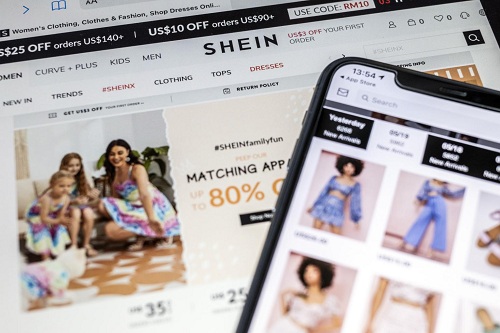 chain savvy, data-driven clothing design with the tax loopholes in the US and China. The company doesn’t divulge anything about its origins to customers. Its success can be mainly attributed to the change in China’s tax code that helps the company reduce operational costs and enables it to counter global competition.
Shein does not pay export taxes on any of its products. It also does not pay any tax on imports from the US. Government’s unwavering support helped the company boost online exports by 67 per cent in 2018. Its value has grown to over $265 billion in the last few years making it a formidable rival to competitors, says Michael Horowitz, Former Senior Executive, Global Brands Group.
Proprietary technology boost design, production capacity
Shein was founded by Xu Yangtian in 2008. The company was initially known as Sheinside. Its initial years of operations were difficult as the company’s products were not available in the Chinese market. However, Shein explored its vast and well-developed supply chain to hire manufacturers based near souring hub in the southern Chinese city of Guangzhou. These suppliers complete the design and production process in around 10 days.
Shein’s proprietary technology also helps make decisions about design, capacity and production. It offers suggestions for the type of raw materials and where to buy them. This helps Shein respond immediately to shoppers’ preferences. Its registered headquarters in Hong Kong helped meet growing demands during the pandemic.
Shein’s reluctance to divulge financial details about its operations has many US competitors hopping mad about China’s fapiao practices or Hong Kong’s tax regime. The recent $800 import tax exemption granted by the government has further raised their hackles leading them to urge the US government to take mitigating steps.
Though its recent success has made Shein one of the most happening destinations for US shoppers, the future of this success remains uncertain as reducing number of pandemic case is once again is encouraging customers to revisit physical stores. Whether consumers continue to be attracted to its cheaper offerings remains to be seen.
Isko’s Volume 2 collection expands product lines in Volume 1
Isko’s Volume 2 Collection expands on the four product lines it introduced in its Volume 1 collection in February with additional colors and technical features.
As per Sourcing, the Denim Lovers range which features authentic fits and modern-vintage washes that range from blue to black and create a naturally green cast. The range’s fabrics are enhanced with stretch technologies such as Isko Recall, a durable shape memory fabric, and Isko Reform, a shaping and defining fabric with exceptional recovery.
Isko’s Simplify range offers an assortment of its best-selling stretch, comfort and rigid fabrics—reliable favorites for core items. It uses Isko EFD technology—known as “eco for dye”—to achieve intricate washes, from pale pastels to more vibrant colors that are becoming post-pandemic consumers’ preference. The technology skips the pre-bleaching process normally used for RFD fabrics. By doing this, it reduces the use of energy, chemicals and water.
Isko Comfy range delivers fabrics for loose and sporty silhouettes. The soft and drapey fabrics add an elevated look and touch to relaxed yet versatile garments. Using Isko BlueJym, the collection preserves the original look of denim while offering a soft hand feel typically associated with knitwear. The collection is updated with metallic finishes, colorful dye effects and soft rinses geared toward the youth market.
Isko’s updated Euphoria collection is an assortment of fabrics that channels runway-ready looks with glitter, eye-catching coatings and other expressive details. Isko’s Jeather, a vegan alternative to real leather, lives here. The stretch fabric provides a figure-hugging, flattering fit” and is available in a range of finishes, including matte and shiny.
The fabrics in all four product lines are made entirely with Isko’s R-Two Platform, which incorporates a mixture of reused cotton from Isko’s own production waste, and recycled polyester derived from PET bottles. Certified to Textile Exchange credentials, the collection ensures complete traceability of raw materials.
Duarte teams up with C.L.A.S.S ecohub
Ana Duarte, Founder and Head-Design, Duarte has teamed up with C.L.A.S.S ecohub and the prestigious award partners. For one year, Duarte and C.L.A.S.S ecohub will work together, implement, develop and communicate the label’s values and responsible collections with one important mission: raising consumers’ awareness on design-driven sustainable fashion.
The designer (b.1991) launched her label DUARTE in 2016 just after graduation. Since then, the fresh, colourful and power-propelling brand has conquered both catwalks and cities’ streets with a responsible message Her collection is the result of a virtuous balance between production and locally-sourced, recyclable high-quality materials harnessed from factories’ deadstock.
The C.L.A.S.S. ICON AWARD is a project led by C.L.A.S.S. with the special support of Idee Brand Platform which assists fashion brands in commercial activity, White Milano, international fair supporting the new generations and independent brands with special projects since its inception and responsible shopping platform Renoon. Together they will all support Duarte for a full year at 360°, from consultancy to communication
BGMEA urges Switzerland to extend duty-free access under EBA scheme
BGMEA has urged Switzerland to extend duty-free access to Bangladeshi apparels for 10 years under the Everything but Arms (EBA) scheme to ensure smooth transition of Bangladesh to a developing country.
In a recent call to Swiss Ambassador Nathalie Chuard, Faruque Hassan, President, BGMEA, discussed progress of garment industry in the area of social and environmental sustainability, highlighted the future potential of the industry. They also talked on the need for an industry upgrade particularly in the area of skills and efficiency enhancement, technological expertise, and diversification of products (especially non-cotton).
Hassan sought the industry’s support to develop a unified code of conduct for the social audits and collaboration to promote the untold stories of the industry's transformation.
The Swiss ambassador expressed her satisfaction about the progress of the industry in the area of sustainable manufacturing and assured providing support of her government.
Sri Lanka’s JAAF looks for continuation of GSP+ status
Tuli Cooray, Secretary General, Joint Apparel Association says, the resolution adopted by the EU commission to withdraw Sri Lanka’s GSP+ status might lead to a 12 per cent increase in Sri Lanka’s exports to the EU. In 2020, Sri Lanka’s apparel exports declined 21 per cent to $ 4.4 billion after increasing 5.1 per cent in 2019. This year, the industry aims to export apparels worth $6 billion. The withdrawal of GSP+ status might make achieving this target difficult for Sri Lanka, adds Cooray.
The textile and garment industry is the most significant and dynamic contributor to Sri Lanka’s economy, accounting for nearly 45 per cent exports. Corray says, his association will request the government to ensure that the GSP+ status is not withdrawn. JAAF also plans to discuss it with other export sectors that enjoy GSP+ benefits and make submissions as a joint effort, he adds.
The EU resolution urges the Commission and the European External Action Service (EEAS) to use the preferential trade concessions as leverage to push for advancement on Sri Lanka’s human rights, and demand the repeal or replacement of the PTA.
Pandemic offers India an opportunity to dominate global textile machinery exports
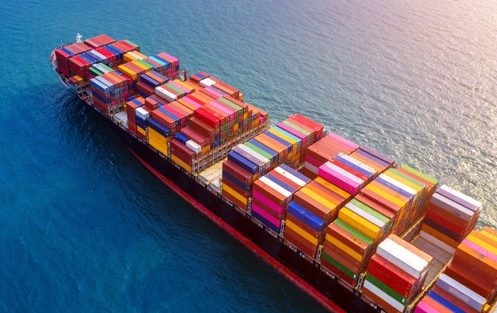
COVID-19 has given Indian textile machinery manufacturers a rare opportunity to expand their share not just in the domestic but also international market. In FY2021, India’s textile machinery exports did not perform as per expectations. As per Textile Value China, machinery exports to all major destinations except Turkey dwindled. Exports to Germany declined to $5 million during the year from $6million in FY20 and $7 million in FY19. Oman imported the least number of machines in FY21 with purchases amounting to $17 million.
Malaysia, the largest importer of textile machinery from India
India’s textile machinery exports to Vietnam dropped from $30 million in FY19 to $15 million in FY20 and further to $6 million in 2021. Exports to the Netherlands also dropped from $20 million in FY19 to $6 million in FY21. Indonesia’s imports dropped from $10 million in FY19 to $9 million in FY20 and further to $7million in FY21. By value, Malaysia was the largest importer of textile machinery from India. Imports increased from $4 million in FY20 to $18million in FY21. Imports by Benin also increased from $2million in FY20 and $1 million in FY19 to $16 million in FY21. Uzbekistan’s import decreased from $19 million to $8 million.
Weaving machine exports to all expect Bangladesh decline
In FY21, India exported weaving machines worth $3 billion to Vietnam. This was a $2 million decline from exports worth $5 billion in FY20. India’s export of weaving machines to UAE and Turkey during FY21 amounted to $2 million while during FY20 it amounted to $1 million. Among these two countries, UAE imported weaving machines worth $19,000 while Turkey imported machines worth $95,000 during FY19. Bangladesh’s import of weaving machines during FY21 increased to $4 million from $2 million in FY20. Exports to Tanzania, Brazil, Egypt and Mexico dwindled by $1 million in FY21 while exports to Indonesia dwindled from $2 million in FY19 and 2020 to $91,000.
Germany imports highest number of knitting machines
Germany emerged the highest importer of knitting machines from India in FY21. The country’s imports of knitting machines increased from $1 million in FY19 and $18,000 in FY20 to $2 million in FY21. The second highest importer of knitting machines from India was Nepal which imported machines worth $45,000 in FY21.
Ethiopia imported knitting machines worth $27,000 in the FY21 while Malaysia imported machinery worth $22,000. Turkey’s import of knitting machines declined to $3,000 in FY21 from $25,000 in 2020. Japan imports declined from $44,000 in FY19 to $16,000 in FY21. Italy’s imports drastically fell from $1 million in FY20 to $3,000 in FY21.
Netherlands tops auxiliary machine imports in FY21
Netherland was the highest importer of auxiliary machines from India in FY21. Imports increased from $14 million in FY19 to $19 million in FY20. Germany’s imports declined from $30 million in FY19 to $10 million in FY21. China’s import of auxiliary machines dropped from $19 million in FY19 to $12 million in FY21. Japan’s imports surged ten times to $10 million in FY21 as did Malaysia’s imports which reached $7 million in FY21 from $1 million in FY20.
Bangladesh’s imports dwindled to $8 million in FY21 from $11 million in FY19. Similarly, Italy’s imports declined from $13 million in FY19 to $7 million in the next financial years. Auxiliary machine imports by Indonesia, Turkey and Singapore declined to $6 million, $5 million and $4 million during the year.
While the pandemic has led to wide decline in demand for textile machinery business, future prospects for India appear to be brighter with the country expected to be one of the leading exporters of textile machines in FY21.
MarediModa 2021 to be held as a physical event in November
After last year's digital edition, MarediModa 2021 will be held in person and will take place in the traditional venue of Cannes at the Palais des Festivals from November 9-11, 2021.
Claudio Taiana, President, MarediModa , says, the decision has come after a long deliberation both of board of directors and a survey among visitors and exhibitors. The organization has come to the conclusion that logistics in Cannes are crucial apart from any emotional motivation. Cannes seems to be in a better geographical position for the most important countries attending the trade show i.e. Italy, France and Spain and it offers an extraordinary position as being on the Cannes promenade.
MarediModa is a leading international B2B trade show dedicated to fabrics and accessories for beachwear, underwear and sportswear. It represents both a not-to-be-missed event for primary international brands of the industry and a showcase for the best European companies and garment manufacturers from the Euromed area.