FW
Ludhiana's hosiery industry faces squeeze from cheap Chinese imports
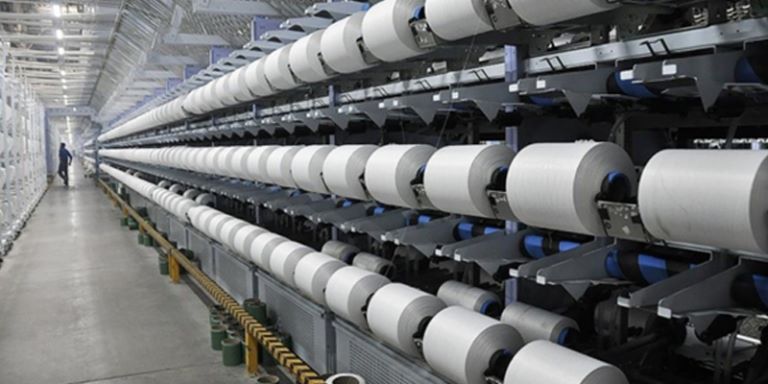
Ludhiana, India's garment hub, grapples with rising imports of man-made fibers (MMFs) from China, threatening local weavers, spinners, and exporters. Cheap Chinese polyester cloth undercuts domestic prices by 10-15%, raising concerns of job losses and business closures.
Manoj Jain of Vallabh Yarns demands government protection for Ludhiana's hosiery industry against rampant fabric dumping from China. Unchecked imports threaten to cripple the sector, he warns.
Ludhiana enjoys advantages like ample skilled labor and accessible raw materials, making it an ideal hosiery destination. However, alleged mislabeling of Chinese polyester as cotton (subject to lower duty) further compounds the issue.
Improving credit access for small hosiery units could also boost the sector, suggests Sudhir Nayyar of Kapil Hosiery Works.
With its prime location and strong entrepreneurial spirit, Ludhiana's hosiery industry needs urgent support to overcome this critical challenge and preserve its legacy.
Puma becomes a global top employer titan
The sportswear giant known for its sleek designs and fierce marketing campaigns, Puma has being named as a Top Employer globally, across four regions, and in a 24 countries. Bestowed by the Top Employers Institute, this prestigious recognition is a testament to Puma’s unwavering commitment to creating a workplace that's truly exceptional.
The secret behind Puma’s success lies in a multifaceted approach to employee well-being and satisfaction. From a diverse training buffet to free gym access and sports courses, the brand invests heavily in its people's professional growth and physical fitness.
With work-life balance being a living reality in Puma, the brand offers flexible hours, mobile office options, and part-time/sabbatical flexibility to help employees to carve out their ideal work-life blend. It also offers dedicated parent-child offices, nursing rooms, daycare spots, and even summer camps for parents.
Dietmar Knoess, Vice President-People and Organisation, sums up, Puma is one of only 17 companies globally to receive this Top Employer award. This further propels us to keep making Puma the most fantastic place to work in the world.
When it comes to employee care, Puma truly walks the talk. The brand’s dedication to creating a thriving, supportive, and enriching work environment helps it attract and retain the best of workforce.
Looming crisis in Sircilla: Polyester production grinds to a halt
The textile industry in Sircilla, is facing a major crisis. Most powerloom units in the town have been shut down due to lack of orders and a surplus of unsold cloth. This has caused distress among the owners of the units and thousands of powerloom workers.
The Sircilla Polyester Cloth Manufacturing Welfare Association attributes the current situation to a lack of private orders, a slump in prices, and a pile-up of unsold cloth. The association hopes that the government will place bulk orders for school uniform cloth and Bathukamma sarees, which would help to restart the closed units.
KT Rama Rao, Former Minister and MLA, Sircilla has appealed to the government to support the textile industry in the town. He said, the industry has seen great growth and expansion since the formation of Telangana, and that it has the potential to compete with the Tirupur cluster in Tamil Nadu.
The crisis in Sircilla is a reminder of the challenges facing the textile industry in India. The industry is facing competition from cheaper imports, as well as from the rising cost of raw materials. The government has taken some steps to support the industry, such as introducing a duty-free import scheme for man-made fibres and yarns. However, more needs to be done to help the industry compete in the global market.
Gujarat's textile industry booms with strong cotton arrivals
Gujarat's textile industry is buzzing with optimism this season, fueled by a robust arrival of cotton at market yards. Contrary to last year's sluggish pace, farmers are readily selling their crop despite lower prices, leading to a healthy 38 lakh bales (170kg each) reaching market yards from October 1 to January 15.
This translates to an impressive daily average of 45,000 bales, contributing significantly to India's total cotton arrivals of 1.35 crore bales by mid-January. This surge in supply is a welcome change from 2022, when farmers held back their crops, leading to a price spike of Rs 1.10 lakh per candy due to scarcity.
As a positive sign for the entire value chain including farmers, spinners and textile manufacturers, Gujarat will see around 85 lakh bales for pressing this season, says Ajay Shah, Secretary, GujCot Association.
Contributing to the improved sentiment are stable cotton prices. Good quality raw cotton fetches around Rs 1,450 per 20kg, while the lower quality variety commands Rs 1,250. Processed cotton prices have also remained steady at Rs 55,000 per candy for a month, providing much-needed stability to the industry.
Ensuring better capacity utilisation in the spinning sector, the stable prices improve market conditions for everyone involved from farmers to weavers and garment manufacturers, adds Naresh Sharma, Secretary, Maskati Cloth Market Association.
Further bolstering the optimism is the recent surge in cotton yarn export orders. The Spinners Association Gujarat (SAG) reports a significant increase in demand since December, indicating a revival of international interest in Indian textiles.
With a strong cotton season underway, stable prices, and rising export orders, Gujarat's textile industry is poised for a significant rebound. The optimism is palpable, and the future looks bright for the state's textile players.
Government boosts technical textiles with 11 R&D projects worth Rs 103 crore
The Indian government has approved 11 R&D projects worth Rs 103 crore to boost the country's technical textiles sector. This move aims to accelerate the development of indigenous technical textiles products, making India self-reliant in this strategic field.
Union Minister for Textiles, Commerce and Industry, and Consumer Affairs, Food and Public Distribution, Piyush Goyal, emphasized the importance of collaboration between the government and industry in this endeavour. He chaired the 8th Meeting of the Mission Steering Group (MSG) of the National Technical Textiles Mission (NTTM) where the project approvals were announced.
One of the key projects focuses on developing high-strength carbon fiber for strategic applications. This will reduce India's dependence on imports and strengthen its defence capabilities. The other projects cover a diverse range of areas within technical textiles. These projects will be led by renowned institutions and research bodies like CSIR-NAL, ATIRA, NITRA, IIT Delhi, ICT Mumbai, NIT-Jalandhar, and Colorjet India.
The technical textiles industry has immense potential to contribute to India's economic growth and strategic autonomy. It is used in various sectors like defense, healthcare, automobiles, construction, and infrastructure. By supporting the development of this sector, the government is paving the way for a more self-reliant and technologically advanced India.
Turkish textile exports slip in 2023, despite bright spots
While Türkiye's overall exports edged up in 2023, the textile and raw materials sector faced a 2.3% decline, slipping from $12.9 billion to $12.6 billion. The biggest drop came in December, with a 6.2% decrease to $927 million.
Despite the industry's struggles, some positive signals emerged. Exports to Iran surged 29.9% in December, making it the only major market to see growth. Additionally, garment sub-industry exports and fibre exports both increased.
The EU remained the top destination for Turkish textiles, although exports there shrank 17.6% in 2023. Italy retained its spot as the top individual market, despite a 24.9% decline compared to the previous year.
Key product categories also saw mixed results. Woven fabrics remained the dominant export, while technical textiles dipped slightly. Yarn exports fell, but synthetic filament yarns performed well. However, knitted fabrics and home textiles experienced significant declines.
Looking ahead, the Turkish textile industry faces challenges like inflation and global economic uncertainty. However, its resilience and adaptability have been proven in the past, and positive developments like the Iranian market growth offer hope for future recovery.
Luxury Gets a Makeover in 2024: Bridge-to-luxury fashion takes centrestage

Key Takeaways:
1. Bridge-to-luxury is a dominant force in the global fashion market.
2. Regional variations in consumer preferences and market maturity exist.
3. Major brands exhibit mixed performance, with bridge-to-luxury showing strong growth.
4. The outlook for 2024 is cautiously optimistic, with sustained growth anticipated.
Move over, conspicuous consumption. In 2024, luxury is getting a makeover, with a focus on quality, sustainability, and accessibility. The rise of "bridge-to-luxury" fashion is reshaping the industry, blurring the lines between high-end and high-street.
This trend is driven by a growing awareness of fast fashion's environmental and ethical costs, coupled with a shift in consumer values. Shoppers seek today pieces that are well-made, long-lasting, and tell a story. They're willing to invest in quality over quantity, even if it means stepping outside the traditional luxury brands.
Enter bridge-to-luxury. These brands occupy the sweet spot between mass-market and high-end, offering premium materials, sophisticated designs, and elevated craftsmanship at a more accessible price point. Think of it as luxury's "gateway drug," enticing younger consumers with a taste of the good life without breaking the bank.
Forget the days of stratospheric price tags and unattainable exclusivity. The fashion world is undergoing a revolution, and at the forefront is a new breed of brands democratizing luxury: the bridge-to-luxury players. Think Michael Kors, Tory Burch, and Coach – these brands are making high-end fashion accessible to a wider audience, blurring the lines between luxury and everyday wear.
Three years of shifting sands
1. Year 2021: A post-pandemic rebound saw double-digit growth for luxury brands like Louis Vuitton and Hermès, with China leading the charge. Bridge-to-luxury brands like Michael Kors and Tory Burch also thrived.
2. Year 2022: Geopolitical tensions and inflation impacted luxury spending, particularly in Europe. Asia-Pacific remained resilient, with China and Japan holding steady. Bridge-to-luxury brands provided a more value-conscious alternative.
3. Year 2023: Cautious optimism prevailed, with the global luxury market expected to reach €1.4 trillion by year-end. China's growth moderated, while Japan and India emerged as potential bright spots. Bridge-to-luxury brands continued to see sustained demand.
A look at the past three years reveals a nuanced picture for luxe brands
1. LVMH (Louis Vuitton Moët Hennessy): Steady growth of 16 per cent (2021), 23 per cent (2022), and an expected 15 per cent in 2023.
2. Kering (Gucci, Saint Laurent): Impressive growth of 17 per cent (2021), 26 per cent (2022), with a projected 12 per cent in 2023.
3. Capri Holdings (Michael Kors, Versace): Strong growth of 24 per cent (2021), 29 per cent (2022), expected to reach 18 per cent in 2023.
4. Tapestry, Inc. (Coach, Kate Spade): Striking growth of 32 per cent (2021), 25 per cent (2022), with a projected 16 per cent in 2023.
Bridging to luxury, a flourishing market
Nestled between premium and high-end brands, bridge-to-luxury offers quality materials, trendy designs, and a touch of exclusivity at a price point that doesn't break the bank. This resonates with millennials and Gen Z, who value both style and affordability. No longer content with fast fashion, they seek pieces that are well-made, on-trend, and make them feel special.
The impact of bridge-to-luxury goes beyond just fashion. It's a cultural shift that reflects a changing definition of luxury. No longer solely about exclusivity and ostentatious displays of wealth, luxury is now about mindful consumption, conscious choices, and lasting value.
This trend is poised to reshape the fashion landscape for years to come. As bridge-to-luxury brands continue to innovate and cater to the evolving needs of discerning consumers, the lines between high-end and high-street will continue to blur. The future of luxury is one where quality, sustainability, and accessibility reign supreme.
A global phenomenon
The bridge-to-luxury segment is experiencing explosive growth, fueled by rising disposable incomes, urbanization, and the power of social media. By 2025, the global market is expected to reach a staggering €120 billion, at 5 per cent CAGR. China, with its burgeoning middle class, is a major driver while Japan's mature market favors established luxury houses. India, a rising star, is witnessing the ascent of brands like Coach and Kate Spade.
Outlook for 2024: Cautious optimism in a dynamic landscape
Despite geopolitical uncertainties and inflation, the bridge-to-luxury segment's long-term trajectory appears promising. Brands that adapt to evolving preferences, leverage digital platforms, and present compelling value propositions are poised for success.
As the luxury landscape continues to evolve, the bridge-to-luxury segment will play an increasingly pivotal role. Understanding diverse consumer needs and aspirations across regions will enable brands to establish a strong foundation for success in this vibrant and ever-changing market.
And there will be a harmonious coexistence in 2024. Luxury fashion is no longer just about opulent labels and sky-high prices. The bridge-to-luxury segment has emerged as a powerful counterpoint, offering premium quality, trend-driven pieces at accessible price points. This makes luxury an achievable dream for a wider audience, fostering a more inclusive and dynamic fashion landscape.
Scoop's stunning designer showcase at Olympia West
Scoop's Founder and Managing Director, Karen Radley, has unveiled a captivating array of international and UK designers set to dazzle visitors at the show's return to Olympia West, Kensington, from the 11th to the 13th of February 2024.
Leading the stellar lineup is Desmond & Dempsey, showcasing London-designed, hand-painted luxury pyjamas made from sustainably sourced materials. Their collection, dubbed 'art for pyjamas,' features intricate botanical and animal prints, embodying organic elegance. The Lonely Suit, an emerging German designer, aims to redefine female style with vibrant dresses and jumpsuits, celebrating femininity and individuality through vivid colors and opulent materials.
Copenhagen's DAWNxDARE specializes in hand-knitted and crocheted styles, presenting joyful and colorful essentials. Edblad, Sweden's largest jewelry designer, offers iconic, timeless pieces inspired by 70s LA, combining urban chic with natural glamour. Vaincourt, from Paris, unveils an exceptional collection of handmade luxury belts merging contemporary essentials with assertive creativity.
Rainbow Colours, a UK-based brand, produces directional sweatshirts and t-shirts using recycled materials, boasting a celebrity following. Radley expressed her excitement about the diverse talent, promising visitors an extraordinary experience at 'A Return to Wonderment.'
Scoop, recognized globally, will showcase 250 new designers in premium women's fashion, luxury home, beauty, lifestyle, and men's collections at Olympia West in February 2024. Concurrently, Pure London x JATC will run from the 11th to the 13th of February 2024 at Olympia.
Global contest for Cellulose Fibre Innovation Award at upcoming Conference
The highly anticipated “Cellulose Fibres Conference” in Cologne on March 13 and 14, 2024, promises to showcase cutting-edge advancements in the cellulose industry, with six remarkable products contending for the prestigious "Cellulose Fibre Innovation of the Year" award. The event, organized by nova-Institute, attracts global leaders and experts in the cellulose fiber sector.
This year’s nominees include innovative solutions such as the “Straw Flexi-Dress,” a sustainable garment using cellulose filaments from unbleached straw pulp; the “HONEXT Board FR-B,” a flame-retardant board crafted from upcycled paper industry waste; and Lenzing's “Cellulosic Fibres for Glacier Protection,” addressing the environmental impact of synthetic fiber-based geotextiles on glaciers.
PANGAIA and Evrnu collaborated to introduce the “RENU Jacket,” a 100% chemically recycled denim jacket, showcasing the potential to replace traditional virgin cotton materials. VTT Technical Research Centre of Finland presents “Textiles Made from Easy-to-dye Biocelsol,” offering eco-friendly dyeing solutions by reducing water usage and incorporating chemically modified Biocelsol fibers.
TreeToTextile introduces a revolutionary, sustainable fiber with characteristics resembling cotton and viscose, aiming to complement or replace existing fibers in various applications. The innovative “TreeToTextile Technology” boasts a low environmental impact, relying on bio-based and traceable resources.
The conference not only highlights these groundbreaking innovations but also explores the broader landscape of cellulose-based nonwovens, packaging, and hygiene products. Sustainability, fiber-to-fiber recycling, and alternative fiber sources are key themes, reflecting the industry's commitment to environmental responsibility.
The conference's success is evident from the previous year, attracting 230 participants from 27 countries. With support from sponsors such as Andritz, Lenzing, and GIG Karasek, the event continues to serve as a vital platform for knowledge exchange and industry development. As cellulose-based solutions gain prominence, the cellulose fiber industry anticipates another fruitful year of collaboration and progress at the upcoming conference.
Fashion for Good expands Circularity Sorting in Europe for rewearable textile crisis
Fashion for Good, a global initiative for sustainable fashion, is amplifying its Sorting for Circularity framework to combat the growing crisis of rewearable textiles ending up in landfills. The 18-month Sorting for Circularity Europe: Rewear Project focuses on automated sorting technologies, employing artificial intelligence and machine learning to optimize the sorting of rewearable garments, ensuring they remain in circulation rather than contributing to global waste streams.
The global textile industry has witnessed a doubling in production and consumption over the past 15 years, with garments now being worn 40% less, averaging a mere seven uses before disposal. In the EU, the export of used textiles has tripled since 2000, reaching almost 1.7 million tonnes in 2019. Legislative changes in the EU, such as Extended Producer Responsibility schemes and stricter regulations on textile exports, underscore the urgency for effective solutions to the textile waste issue.
Fashion for Good's innovative project aims to address the root causes of waste mismanagement by establishing a framework for quality and resale potential in key export regions. The incorporation of AI sorting technologies will enhance the efficiency of sorting processes and enable better decision-making based on product data and resale market requirements.
The initiative, backed by major brands like adidas, C&A, and Levi Strauss & Co., seeks to generate insights that inform policy developments and guide investments toward a circular economy. The Sorting for Circularity Europe: Rewear Project not only contributes to sustainable fashion practices but also aligns with impending legislative changes, emphasizing the importance of collaboration between brands, sorters, and innovators to meet evolving regulations and drive positive change in the textile industry.