FW
Upcoming Performance Days to highlight new concepts
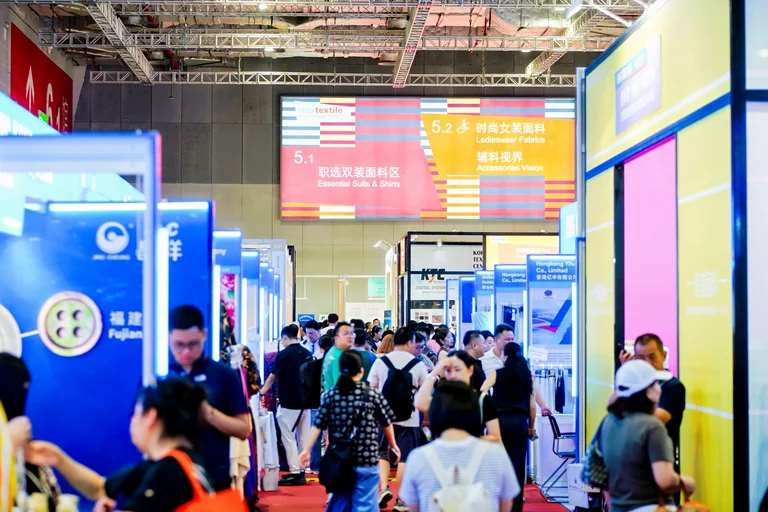
Performance Days will be held in Germany, November 13 to 14, 2019. The trade fair for functional fabrics for sports and work clothing will present sustainable materials. Only sustainable materials will be presented in the curated Performance Forum. All aspects of sustainability will be explored such as recycled fibers, natural fibers from renewable resources, recycling qualities, bio-degradables or compostables, microplastics, product life cycles, water conservation, energy savings, CO2 emissions and chemicals. The current state of the art will be highlighted in all these topics as they pertain to the textile industry.
On the assumption that sustainability should be seen in all stages of the textile production process, and that sustainability is much more than simply using recycled fibers and fabrics, Performance Days will provide the impulse in various directions for sustainability research and development. The trade fair itself will be generally more sustainable. A comprehensive overall concept is designed to avoid unnecessary waste, for example, generated from disposable products. In the past the fair has stimulated exhibitors to create new developments. It now looks forward to guiding fabric manufacturers in the right direction and inspiring yet more innovation. And the show has the leverage to make a difference in the entire value chain.
Strike on Saudi Arabia’s oil facility rattles fashion sector
The attack on a major hub of Saudi Arabia’s oil production has shaken up the fashion industry. The first impact be on the fashion industry as it increases logistics costs. Since fashion is a completely globalized sector, both in supply as in distribution, higher gas prices will make transport more expensive. Fearful of any impact on their margins, fashion giants are scared of a rise in logistics prices in the short term. In the long term, the fear is that it might eventually impact fashion’s main raw material, polyester.
Polyester is the star fiber of the fashion industry. Since the ’70s, its production and consumption have kept growing. Between 2000 and 2017, its production tripled. Polyester demand in the fashion industry skyrocketed in 2011 because of the escalation of cotton prices. However, this market didn’t seem to be touching the ceiling. Until now. Synthetic fibers are expected to grow an average five per cent a year until 2022. Polyester has brought about significant changes in how apparel products are made, priced, and distributed. China accounts for 69 per cent of all polyester fiber production globally, and if India and Southeast Asia are added to the equation, these three regions represent 86 per cent of global polyester production.
Markische Faser partners Kelheim Fibers for innovative fibers
Two German manufacturers Märkische Faser and Kelheim Fibers are offering spun dyed fibers in polyester and viscose. Textiles made from a blend of spun dyed polyester and viscose fibers combine the advantages of both fibers. They are easy-care and dimensionally stable yet feel pleasantly soft on the skin and offer high wearer comfort. They are ideally suited for all applications that need large quantities of fabric of a precisely defined shade and that must deliver comfort and wear qualities as for example professional clothing or uniforms, but also furnishing or upholstery fabrics.
Spun dyed fibers have always been an important part of the range of products both of Märkische Faser and of Kelheim. Here, color pigments are incorporated in the spinning mass before the spinning process and are therefore homogenously distributed in the whole fiber. These fibers – and the final product – offer a particularly high color and light fastness. The colors do not bleed during washing and they keep their brilliance even after many washing cycles. In contrast to a conventional dyeing process, the colors can be reproduced exactly. Besides the usually lower production costs and a shorter throughput time, this is one of the main advantages for the further processing chain.
Lycra gives jeans shape and fit
Jeans with Lycra dualFX technology deliver a comfortable, lasting fit for all body types regardless of their shape or size. This technology combines two Lycra brand stretch fibers to add extra flexibility and bounce back recovery to denim. This means jeans hold their shape all day, every day resisting bag and sag while delivering exceptional comfort and fit.
Lycra has been successfully growing its branded differentiated fiber business for 60 years but has had particular success in the last five years in shifting from a mix of commodity and differentiated fiber business to nearly all differentiated or specialty fibers. Lycra is at the forefront of stretch denim and the athleisure trend that followed getting its name known through the intimate apparel and swimwear sectors. Product innovation, long at the core of the company and what set the Lycra brand apart from other spandex and elastane companies, is even more of a focus now. The company is even more committed to bringing out category-changing products that create premiums for its customers. One of the newest innovations is Lycra Fitsense, which allows Lycra fiber technology to be screen-printed onto a fabric or garment for targeted support. Lycra Fitsense allows designers to create lighter weight, breathable, cooler fabrics that offer targeted compression and support.
Finland’s LSJH develops infrared textile recycling
LSJH has developed technology for sorting textile waste. This is an infrared-based technology that promises to give textile recycling a giant leap forward by replacing manual sorting with an automated method.
LSJH, based in Finland, is a recycling firm and is in the pilot phase of a processing plant that aims to accelerate the textile circular economy. The goal is to create a facility that will be able to use the new infrared sensor to process all discarded textiles from Finland as well as textile waste from abroad. The recycling firm will deploy the new technology to sort waste textiles starting this autumn. Different fibers will be used for different products, with better quality material reserved for thread that could be used to manufacture new clothing.
So far, waste textiles have been manually sorted in Finland as well as in other parts of Europe. This means that workers have checked labels to identify different kinds of materials. However, labels can be inaccurate or may even be missing. This becomes problematic given that industries using recycled fibers to manufacture new products need to be certain of the raw material they are using. The optical recognition technology currently under development will improve the reliability of identification of fibers in fabrics and will help ensure better quality textile products.
Consumers force fashion brands to change ways
Myanmar Garment Entrepreneurs Association targets $10 billion exports
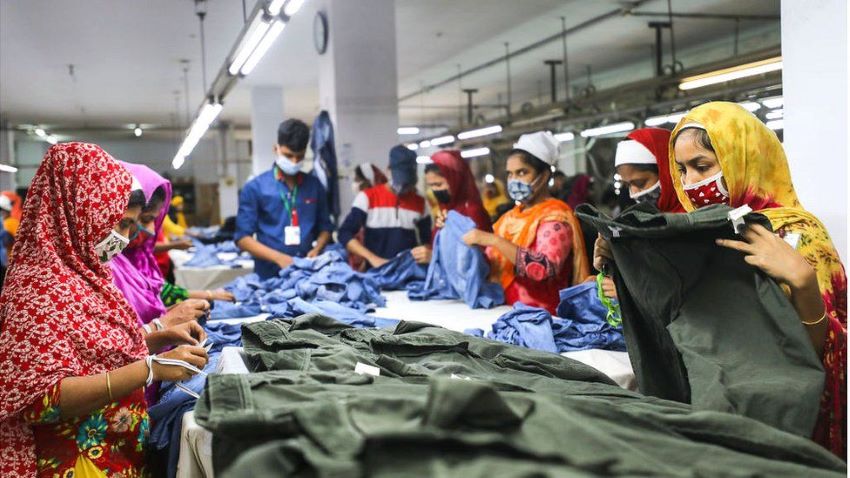
The Myanmar Garment Industry Strategic Plan 2014-2021 laid out by the Myanmar Garment Entrepreneurs Association has set an export target of $10 billion and a goal to create one million job opportunities in the sector. The report further reveals that the export volumes for the 2018-19 fiscal year up to August 2019 have hit $4.37 billion, compared to $3.2 billion in the same period a year ago, an increase of $1.17 billion.
Garment exports have been rising annually in Myanmar, especially since 2013, when the European Union granted goods from Myanmar preferential access to the EU market under the Everything But Arms tariff scheme. The industry in Myanmar is being boosted by factors such as Thai cut-make-pack companies setting up shop in Myawaddy, Kayin State, near the Myanmar-Thai border to gain benefits from the EU’s preferential treatment for Myanmar. New factories are also boosting volumes.
China’s share in Indian yarn exports plummets
China was a major buyer of Indian cotton yarn. But of late, its share has dwindled to less than one-fifth. The recent slide can be attributed to overall macroeconomic conditions globally, the falling manufacturing sector in China, and most crucial the US-China trade war. On the textile front, China has started sourcing more yarn from Vietnam, which in turn is one of the major importers of Indian cotton. The other factor is duty free access given for import of cotton yarn by China to countries like Pakistan and Vietnam. While Indian yarn incurs 3.5 per cent to four per cent duty in China, the levy is nil for yarn exported to China from Vietnam, Bangladesh and Pakistan.
There is a mismatch between the counts required by China and Indian supplies. The majority of spinners in China want 32s count yarn. On the other hand, India majorly produces and exports 30s count.
India is among the largest producers of cotton in the world. But there has been an increase in the minimum support price of cotton by 25 per cent to 28 per cent while prices have fallen sharply in the global market. So the production cost of yarn has gone up in India and Indian prices are now not viable in the international market.
China can misuse RCEP clause
The rules of origin clause will determine the fate of the Regional Comprehensive Economic Partnership (RCEP). This provision determines the country of origin and in turn the economic nationality of goods.
Deliberations during this phase could be chaotic for three reasons. In the present global value chain, no good is entirely produced or manufactured in any single country. Second, neither the country of origin nor production is defined. Last, China desperately needs access to Indian markets more than the other way round. And India is offering very few concessional tariff lines to China to prevent any onslaught of Chinese duty-free goods. China may set up manufacturing and assembly plants in Asean countries to exploit the China-Asean compensatory tariffs (for raw materials and intermediate goods). It may then make the most of Asean-India concessions (finished products) under the RCEP umbrella. The RCEP region will get access to Indian markets irrespective of which RCEP country exports to India. If electronic goods from China, after retail packaging in Vietnam, get imported to India, it can rightfully claim zero-duty offered to Asean, even though no such concession is offered to China.
The argument that substantial reduction in tariffs pertains only to Asean countries -- and not China -- appears farcical in this context.
Bluesign to update system criteria
For the first time, Bluesign is holding consultations with both external and internal stakeholders to update its Bluesign system criteria. The consultation which has been extended from system partners, to NGOs, trade associations, and various textile industry authorities has also been extended to September 30, 2019.
Bluesign takes a holistic look at environmental health and safety in the textile industry with strict criteria placed on input streams, raw materials, chemical formulations along with resource use. A draft version of the updated criteria is still available on the Bluesign website. The latest revision includes language refinements for better understanding, specific changes in content, and the development of new criteria to ensure the Bluesign System is ‘better aligned’ with the textile industry and related areas.
Bluesign regularly revises limits and usage bans for chemical substances that are published in the Bluesign system substances list (BSSL) for consumer safety limits to produce a comprehensive restricted substance list (RSL) for download that brands can use to improve chemical management in their supply chains.