FW
MarediModa links talent with brands
MarediModa will be held in Cannes, November 5 to 7, 2019. This is a trade fair dedicated to underwear and beachwear textiles. More than 100 European companies will showcase their collections for summer 2021. There will be a selection of private label manufacturers from Italy, Spain, Portugal, Morocco and Tunisia. MarediModa is a great opportunity for all visitors. They can enjoy the widest and most qualified textiles for beachwear, underwear and athleisure universes of controlled origin. MarediModa Talking Fabrics, a project created for visitors, is a journey through the trend forum.
Link will be an integral part of MarediModa. Link is a search for creatives from all over Europe. It involves over 100 European schools of creativity, in order to intercept the most talented students of style and design and put them in direct contact with fashion brands. Nine finalists (three for each of the categories of beachwear, underwear and athleisure) will exhibit their mini collections, an exceptional visibility and a fashion show after the vote of the public and the technical jury.
Last year, the event hosted over 100 exhibitors, highlighting the need for multi-tasking garments fulfilling multiple purposes, delivering comfort, performance and simple yet unique designs. Over 40 exhibitors presented fabrics and accessories highlighting the world of athleisure.
Shoddy audits lead to disasters
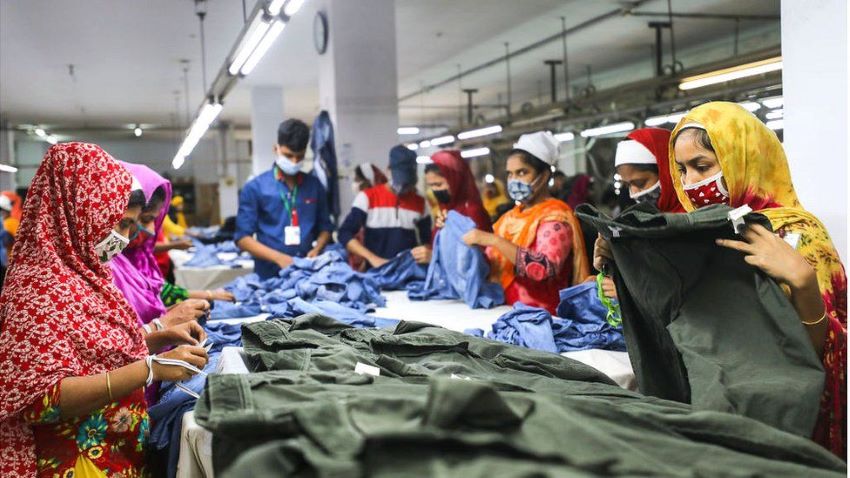
Social audit firms are responsible for a number of fatal accidents in the readymade garment sector in countries like Pakistan, Bangladesh, Vietnam and Malaysia, says a global worker rights group Clean Clothes Campaign. These firms protect the profit and reputation of brands but fail to protect garment workers’ safety and improve working condition in the supply chain. The audits stand in the way of more effective models that include mandatory transparency and binding commitments to remediation.
Examples are the Ali Enterprises factory fire in Pakistan in September 2012, in which over 250 workers died, unable to escape due to bars on exits and windows; the devastating collapse of the Rana Plaza building in Bangladesh in April 2013, which killed 1,134 workers and left thousands more injured and traumatised; and the July 2017 boiler explosion in the Multifabs factory in Bangladesh, killing and injuring dozens of workers. Each of these factories had been assessed and declared safe by auditing companies. In the case of both Ali Enterprises and Rana Plaza, accredited auditors had deemed these facilities safe just weeks or months before they were reduced to ruins. In the case of Ali Enterprises, this assessment was made by auditors who reportedly never even visited the building.
Indonesian textile industry grows 20 per cent
The textile and apparel industry in Indonesia grew 20.71 per cent in the second quarter of 2019.However, Indonesia’s share in the global textile market is around 1.6 per cent. In comparison, China’s share is 31.8 per cent; Vietnam has a 4.59 per cent share and Bangladesh 4.72 per cent share.
The poor growth of exports of Indonesian textiles and textile products is due to the high cost of local production, facilities and trade policies that favor imports, and a lack of long-term planning which has deterred investment. The performance of the Indonesian textile industry sector continued to decline in the last 10 years. The trade war was an opportunity for Indonesian textiles to take over the Chinese market. But the competitiveness of its products is still weak. Costs of energy, logistics, and labor are the inhibiting components. Yarn, fabric, and garment products from China are expected to flood Indonesia because of the trade war. It will lead to an oversupply of domestic textiles, making the price drop and hit Indonesian textile companies. This market is an easy target for China since Indonesia does not apply trade barriers, unlike Brazil or Turkey. Indonesia remains an open market, and the most affected will be companies that rely on the domestic market.
Indonesia turns to rayon for growth
Indonesia will use locally sourced textiles, such as rayon and polyester fibers, to lessen its dependence on imported products and boost textile exports.The increased use of viscose rayon, or rayon, in manufacturing is expected to boost production output of the textile industry, especially as the textile can act as a substitute for polyester and cotton. Production of polyester and cotton still does not meet the demands of the country’s textile and garment industry. Polyester production is not well developed enough, while cotton fabrics are still nearly 100 per cent imported. Rayon is produced in abundance in Indonesia and is competitively priced and a widely available eco-friendly fabric. Players from upstream to downstream are being encouraged to pursue research and development into sustainably produced rayon. One such player, Asia Pacific Rayon, which began production last year, has already produced 1,20,000 tons of rayon fibers. Almost half the output goes to the local market, while the rest is shipped to 14 countries, including Turkey, Pakistan, Bangladesh, Vietnam, Germany and Italy.
Of Indonesia’s total exports, clothing comprises 63.1 per cent. Indonesia’s textile industry experienced its heyday in the 1980s, when it recorded excellent performance and healthy growth to rank above Vietnam and other neighboring countries. This was a result of effective policies on import substitution and effective industry cooperation.
Indian woven fabric exports up 27per cent
Indian woven fabric exports were up 27 per cent in terms of shipment and 15 per cent in terms of value in July 2019. Bangladesh was the largest importer, followed by UAE and Sri Lanka. The three together accounted for 27 per cent of total woven fabrics exported during the month. Djibouti, Seychelles, Romania, Latvia, Suriname, Ukraine, Botswana, Mali, Burkina Faso and Hungary were the fastest growing markets for woven fabrics, and accounted for two per cent of total value exported during the month. Woven fabrics made of 100 per cent cotton accounted for 54 per cent of all fabrics exported.
Cotton fabrics were followed by fabrics made of blended spun yarns and filament yarns in July. Plain fabrics accounted for 65 per cent of all kinds of woven fabrics exported in July 2019 and were up 15 per cent in year on year comparison. Bangladesh, Afghanistan, United Arab Emirates, Senegal, Sudan and the US were the top markets for plain fabrics. Denim was the second largest woven fabric exported in July, posting an increase of 48 per cent year on year. The largest export market for denim was Bangladesh, followed distantly by Egypt and Colombia. Shirtings/suitings and saris were the other top fabrics exported from India in July this year.
IIT generates power from clothes
IIT Kharagpur has developed a method of generating electricity from clothes.Using clothes being dried in tandem by washermen in a remote village, researchers were able to reliably charge up to around 10 volts in almost 24 hours. This stored energy is enough to glow a white LED for more than an hour. The innovation demonstrates that ordinary cellulose-based wet textile, commonly dried in natural atmosphere, might be capable enough to serve the underprivileged community at large in terms of addressing the essential power requirements in remote areas.
Researchers utilised tiny channels in the cellulose-based fabric network, traditionally woven, to generate electrical power through guided movement of saline water amid continuous evaporation. The process is very much analogous to water transport across the parts of a living plant. The regular cellulose-based wearable textile, in this case, acts as a medium for the motion of salt ions through the interlace fibrous nano-scale network by capillary action, inducing an electric potential in the process.
Textiles capable of harnessing energy from both sunlight and wind are not new. A fabrication strategy has merged two different lightweight, low-cost polymer fibers to create energy-producing textiles. The first component of the textile is a micro cable solar cell, able to gather power from ambient sunlight. The second is a nano generator capable of converting mechanical energy into electricity.
Flat knitting machine manufacturers aim at competitive edge
Flat knitting machine manufacturers are spending on R&D in order to incorporate new technologies and products with more features and increase their customer base and revenue shares, thus gaining a competitive edge in the market.
A flat knitting machine is a two-bed machine used to create flat knitted fabric. The advantage of a flat knitted machine is that it has vertical and horizontal stationary threads which can be combined into the fabric. It has two stationary beds, which are arranged in an inverted V formation. The machine has tracks in which the needles can be moved. Jumpers, pullovers, cardigans, dresses, suits, trouser suits, hats, and scarves are some common products produced using flat knitting machines. These machines are available in a variety of options in terms of price, size, and other facilities.
Staggering growth of automated flat knitting machines is expected due to rising labor cost and market shift toward automation. Large and growing domestic and global demand combined with increasing purchasing power of people is also anticipated to drive the global flat knitting machine market. The growing apparel market, automation of the textile industry, rising demand for fabric cloths, and increasing disposable income are the major factors expected to influence the global market.
Egypt aims to be aglobal textile hub
Egypt plans to develop its textile industry with the objective of becoming the next textile factory of the planet. More factories will be opened. Machinery will be renovated and workers will be trained. The vision is to quadruple exports of textiles and garments by 2025, have a million employees in the industry and attract investment worth 17.5 billion dollars.
Egypt is upgrading its upstream textile industry. The aim is to support the country’s private upstream manufacturers’ competitiveness in world markets. The restructuring program aims at restoring Egypt’s prominent position in the world market and capitalising on the globally renowned fine Egyptian cotton fiber. The program includes the modernisation of spinning, weaving, knitting, dyeing, finishing, printing and confection, based on a product line definition which brings forth added value to Egyptian cotton, from cotton farming to readymade goods with world class levels in terms of quality and efficiency. The total value of the program includes around 7,80,000 new spindles and 1,250 new looms, dyeing, printing and finishing machinery and state-of-the-art cutting and sewing equipment.
The investments will stimulate the dynamism for upgrading technology in the entire industry and ensure a continual increase in productivity as well as technical and management skills, to maximise value creation within the Egyptian textile value chain. It will affect Egypt’s vertical integration and competitiveness.
Crop damage leads to price rise
Cotton prices are rising in India.
Among the reasons are crop damage following erratic rainfall and pink bollworm attacks on standing crops in major growing regions. Raw cotton prices have turned around from below the minimum support price, due primarily to a surge in mills’ demand. The lower output last year and delayed arrivals this year have helped the price rise. A continuous downpour in major growing regions has flooded cotton fields.
Rising cotton prices are likely to compound the woes of spinning mills, which have been facing weak demand from China and Bangladesh, which buy over 75 per cent of India’s cotton yarn. Some mills have already reduced their production capacity. But the rising prices have raised hopes for a further increase in the use of manmade fiber in the Indian textile industry. Shortage of cotton yarns and high prices are major factors which have led to a better demand for polyester yarns. Moreover, domestic manufacturers of polyester yarns have been able to increase their capacity utilisation as the anti-dumping duty imposed on China led to a pick-up in demand for domestic yarn compared to imported yarns.
In the international market, cotton continues to trade lower on the US-China trade war.
Russia offers ample scope for Indian leather exporters: CLE
According to the Council for Leather Exports (CLE), Russia offers ample export opportunities to Indian leather and footwear industry. Though Russia imported leather and footwear worth $3.9 billion in 2018, India’s exports to that country stood at only $52.6 million, clearly pointing to prospects of penetration. Russia is the 13th largest global importer of leather, leather products and footwear.
India’s total export of leather and footwear products was worth $5.7 billion in 2018-19. The current major export destinations for the sector include Europe and the United States.