FW
US’ brassieres import grow by 7.18%: OTEXA
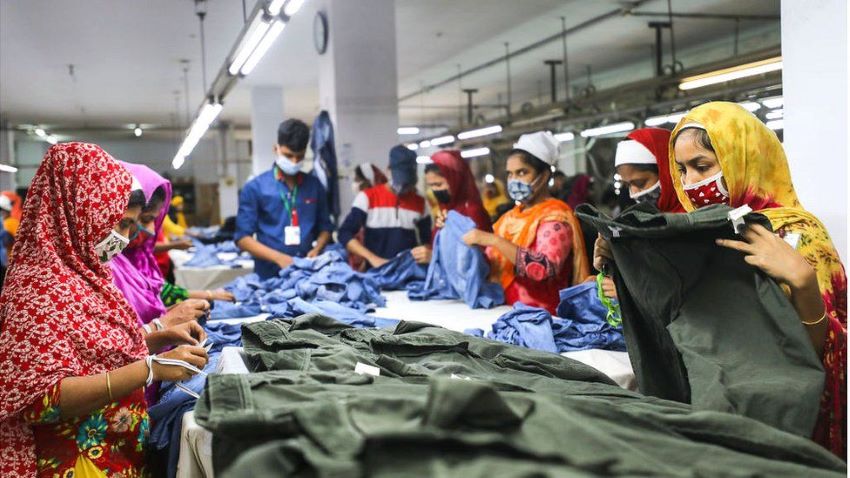
As stated by OTEXA, brassieres import by the US grew by 7.18 per cent in August ’20 over August ’19 to $186.46 million. Bangladesh’s contribution to this value was $12.82 million and this value is 146 per cent greater than what Bangladesh had exported in August ’19.
Even volumes-wise, Bangladesh recorded 145 per cent growth in August ’20 over August ’19 and shipped 490,505 dozen of brassieres to the US. In YTD period, Bangladesh shipped $76.32 million worth of brassieres to the US, noting 7.92 per cent Y-o-Y growth from the same period of 2019. However, in volume terms, the growth was negative as the country tumbled by 5.12 per cent on yearly note.
These statistics clearly state that Bangladesh, despite shipping less volumes in 2020 than in 2019, has seen positivity in value-wise export all because of a sharp rise of 13.75 per cent in unit prices.
Unit prices of shipped brassieres from Bangladesh valued $25.70 per dozen in January-August ’20 period, while the prices were just $22.59 per dozen in the corresponding period of 2019.
California Market Center hosts LA Textile on CMC Uploaded virtual platform
The California Market Center once again used the CMC Uploaded virtual platform to host the CMC’s popular biannual textile-and-fabrics show, LA Textile. During the virtual show, which ran from October 07–09 and was called CMC Uploaded x LA Textile, Matthew Mathiasen, the CMC’s manager of buyer and community relations, conducted interviews with various exhibitors. After each 30-minute talk, titled “Exhibitor Spotlight Sessions,” attendees had opportunities to submit questions to the exhibitors, said Moriah Robinson, the CMC’s event director.
Exhibitors included Japanese companies Hokkoh Co and Shindo. Hokkoh makes prints and solids for men and women, with bright colors informing its looks for the Autumn/Winter 2020 and Spring Summer 2021 seasons. Shindo devoted time in its presentation to its expanded sustainable program, which included trims, tapes and ribbons made out of organic cotton and recycled polyester.
Firms based in the United States included the Los Angeles–based apparel-manufacturing company Fil & Needle as well as the New York City–headquartered Buttonology, which exhibited a selection of buttons including novelty metals and eco-friendly offerings made out of coconut and other sustainable materials.
CMC Uploaded x LA Textile also served as a platform for apparel technology. Ohzone Inc, a Sunnyvale, Calif.–headquartered startup, made its debut earlier this year. Ohzone made a presentation showcasing its 3DREAL proprietary technology. Alison Lewis, the company’s design strategist and new business development, who gave the presentation, explained that Ohzone developed virtual environments that can show photorealistic representations of clothing and exhibit details such as the drape of a garment. The virtual samples can then be distributed to clients and displayed in digital showrooms.
IIan Elad appointed President, KDAP
A worldwide market leader in digital textile printing technology, Kornit Digital has appointed Ilan Elad as the president of its Asia-Pacific (KDAP) division. Based in Tokyo, Elad has served Daimler Trucks Asia since 2013, and most recently he was the vice president of Sales Africa, SAARC, Oceania.
Prior to this, Elad served as the Founder and CEO of Vision India, as well as Regional Managing Director NEU, Ciena.
Elad has successfully spearheaded go-to-market strategy and execution across multiple continents, with a specific focus on Asia and Oceania in the past 12 years, accumulating vast market insights and leadership instincts that will serve Kornit’s commitment to growth and industry leadership in Asia-Pacific territories particularly Japan.
In recent months, Elad has served as a consultant to Kornit Digital in support of several expansion opportunities, allowing him to become acquainted with Kornit’s global business, in addition to giving Kornit full confidence in Elad’s qualifications as an executive leader.
Indian market eyes festive season as online sales and relaxations boost demand
 Ratings agency Icra estimates Indian apparel exports will decline 20-25 per cent in 2020-21. Due to the COVID-19 pandemic, the agency expects domestic revenues to decline by 30-40 per cent. To recover from this downtrend, apparel players bank on the upcoming festive season as they witness an encouraging buildup in their order books.
Domestic sales to recover in Q3
The recovery curve for Indian apparel exporters has been better this festive season though they remain concerned about a second wave of the pandemic, says Jayanta Roy, Senior Vice President and Group Head, Icra. Economic and retail recovery has accelerated sales in the last few months with exporters diversifying across customers and geographies.
During the pandemic, value brands benefitted from increased downtrading in metros coupled with faster recovery in Tier II and III cities and rural markets. However, domestic retailers suffered due to the lack of online presence, segments being catered to and their presence in Tier II and III cities and rural markets. These retailers are expected to recover sales in the third quarter of FY 21.
Government schemes to boost cash flows
Roy believes, extended online festive sales and further relaxations under Unlock 5.0 will support demand in H2 FY21. Rollback of previously announced pay cuts by some corporate entities and government's festive advance schemes will further improve cash flows and support discretionary spending, he adds.
Although revenue contraction in FY20-21 is likely to translate into at least 600 basis points (bps) correction for domestic retailers, the impact on operating profits will be lessened by companies’ cost rationalization initiatives like renegotiation of rental agreements and transition to revenue-share arrangements, employee-base optimization, salary cuts.
As profit margins shrink and operating cycles stretch, domestic apparel retailers will increase their dependence on debts this year, further weakening their coverage metrics, says Icra.
Louis Vuitton returns to growth in Q3
With travel abroad nearly impossible, Chinese consumers who’ve driven the luxury industry’s growth are spending more at home. Pent-up spending desire during COVID-19 lockdowns earlier this year is also now being unleashed in so-called “revenge shopping”. The Louis Vuitton brand returned to growth in China in the third quarter.
Organic revenue at LVMH’s fashion and leather goods unit jumped by 12 per cent in the third quarter as the world’s largest luxury company cited strong sales of items like Christian Dior’s $3,000-and-up Bobby bags.
The upbeat report by LVMH, the first of the major European luxury players to report quarterly results, bodes well for others in the sector, said Luca Solca, an analyst at Sanford C. Bernstein.
LVMH’s divisions had sharply mixed results in the latest period, with the wines and spirits unit -- which houses Hennessy Cognac and Moet & Chandon Champagne -- also resisting better than expected. Organic revenue fell 3 per cent, less than half the decline analysts were expecting.
However, some businesses fared worse. LVMH’s selective retailing unit -- which includes DFS duty-free outlets and Sephora cosmetics store networks -- saw organic revenue slump 29 per cent amid a halt in international tourism.
H&M aims to source 100% sustainable materials by 2030
As part of its bid to become more eco-friendly, H&M has set a target of achieving 100 per cent recycled or other sustainably sourced materials by 2030, along with the ambitious goal of becoming climate positive by 2040. The brand ultimately aims to move to a 100 per cent circular model — one in which all products can be reused or fully decomposed.
In February, H&M became the first retailer to sell a dress made from Circulose—a fabric that’s 100 per cent recycled cotton—and sustainably sourced pulp. This month, the retailer also launched a new in-store recycling system called Looop, which allows customers to bring in their old garments and see them transformed into something new, right in front of their eyes.
Its Conscious collection is currently made from at least 50 per cent sustainably sourced materials, such as organic cotton and recycled polyester, apart from in the case of recycled cotton, which currently only makes up 20 per cent of a product due to quality restraints (although new technologies such as Circulose will aim to change that). However, the brand doesn’t currently give any specific details on the sustainable materials that each product contains, meaning customers aren’t able to assess the eco-credentials of the item they’re buying.
China warns mills against buying Australian cotton
As the latest sign of worsening trade relations between Australia and China, Chinese cotton mills have been ordered to stop buying Australian cotton. China is the biggest buyer of Australian cotton and the trade worth was worth about A$900 million ($637.4 million) during the 2018/19 crop year.
Australia’s relationship with China soured after Canberra accused China of meddling in its domestic affairs. Relations worsened when Prime Minister Scott Morrison called for an independent inquiry into the origins of the COVID-19 pandemic, which originated in the Chinese city of Wuhan.
China warned its millers of being hit with a 40 per cent tariff if they continue to buy from Australia. The suspension of cotton purchases comes just days after Canberra scrambled to confirm reports that China ordered the suspension of coal purchases from Australia.
IAF to host pre-convention event at 36th World Fashion Convention
International Apparel Federation (IAF) will host a digital ‘Pre-convention Event’ at its 36th World Fashion Convention from November 10- 11, 2020. The Fashion Convention is expected to take place from June 7 to 9, 2021 in Antwerp. The digital pre-convention event will consist of two components. On November 10, IAF will present five- minute movie clips by seven prominent IAF members. Speakers will make visionary statements on the industry’s future. IAF will also organize four different online sessions, each tackling a major issue facing the global apparel industry
The flagship session will be an IAF-MOTIF webinar titled ‘Shared Risk and Reward in the Fashion Supply Chain’. The three speakers at this session are: John Thorbeck, CEO, Chainge Capital; Liz Simon, Chief Sustainable Transformation Officer, Fashion3, and Anne Patricia Sutanto, Vice President, PT Pan Brothers. The webinar will answer the question of whether the balancing of risk ánd reward is one of the keys to unlocking a better overall performance of the supply chain.
The session will see IAF connecting members and relations to the Fashion Technology Alliance project, a major global project bringing together educators, large and small brands and fashion technology providers. The session will shed light on some of the new job descriptions and requirements required by the apparel industry because of the 3D digital design.
The third session will discuss industry standards for digitization of product design and development, particularly the communication on digital fabric characteristics. The fourth and the final session will tackle the issues of audit and standard fatigue.
Coats’ H1 FY20 revenues decline to $536 million
Revenues of Coats Group, decreased to $536 million during the first half (H1) of FY20 that ended on June 30, 2020 compared to $705 million in the same period previous year. The company’s operating profit for the six months period slipped to $34 million. Its Asia sales fell by 27 per cent to $283 million due to severe lockdown measures in key A&F markets and some offset from Vietnam.
During the period, Coats Americas sales dropped by 6 per cent to $149 million while sales in EMEA slipped by 24 per cent to $104 million ($137 million) with Italy (zips) impacted by lockdown.
Sales in apparel and footwear segment sales plunged by 29 per cent to $372 million ($523 million). However, sales of performance materials grew marginally 2 per cent to $164 million ($160 million). The company accelerated investments in digital and sustainability initiatives which have resulted in huge commercial gains.
Coats Group is the world's largest manufacturer and distributor of sewing thread and supplies. It is also the second-largest manufacturer of zips and fasteners, after YKK. The company is listed on the London Stock Exchange and is a constituent of the FTSE 250 Index.
Wall Street Journal ranks Gilden Activewear 32nd on sustainability score
Gildan Activewear has been ranked 32nd in The Wall Street Journal’s new ranking of the Top 100 Most Sustainably Managed Companies in the world. The company has also bagged the 6th spot among the top 10 companies in the world in the business model/innovation sub-ranking. These rankings highlight the effectiveness of the company’s vertically-integrated operating model and supply chain from a sustainability standpoint. Gildan was the second among three apparel companies to be included in the top 100 ranking and was also the only North American apparel company.
Based on the review of 500 publicly traded companies, the Wall Street Journal’s inaugural ranking of the World’s Most Sustainably Managed Companies evaluated companies for their disclosure standards for data showing what programs, policies and performance metrics they have in place for several key sustainability dimensions, including environment, human capital, social capital, and business model/innovation.
The scores take a broad view of sustainability that assesses a company’s ability to create value over the long term, using criteria considered most financially relevant as defined by the Sustainability Accounting Standards Board (SASB), a nonprofit organization that works with companies and investors to create a framework for reporting on sustainability.