FW
Nocta to launch on December 18
Nocta, the new sportswear sub-label created by Drake and Nike will launch globally on December 18. The Nocta collection includes functional co-branded winter jackets, hoodies and tracksuits, while the name ‘Nocta’ is a nod to the Canadian artist’s "nocturnal creative process". The collection is about creating something for people on the move. It comprises functional, comfortable fits that are adaptable from one environment to the next. The collection includes hardest jacket, the hardest tracksuit, the hardest gloves.
Drake, who founded his label October's Very Own (OVO) in 2012 together with producer Noah "40" Shebib and Oliver El-Khatib, also owns a clothing line of the same name. Since its launch, OVO has introduced several label collaborations, including DSquared2, Canada Goose and Bape.
China records deflation for the first time since 2009
China recorded deflation for the first time since October 2009. Its headline CPI contracted -0.5 per cent y/y in November, compared with consensus of a flat reading and a +0.5 per cent gain in October.
Separately, China’s trade surplus widened sharply to $ 75.4B in November, beating consensus of 53.8B and October’s 58.4B. Exports jumped +21.1 per cent y/y, accelerating from +11.4 per cent.
Geographically, exports to the US jumped +46.1 per cent y/y in November, following a +22.5 per cent growth in October. Export growth to ASEAN also accelerated to +10 per cent y/y from +7.3 per cent in October. Exports to EU expanded +8.6 per cent y/y in November, after contacting -7 per cent in the prior month. Shipments of pandemic-related goods expanded last month, resulting from the resurgence of coronavirus cases globally. Exports of textile & fabric goods rose +21 per cent yy, up from +14.8 per cent in October. Meanwhile, exports of plastic articles jumped +112.9 per cent y/y, following a +97.9 per cent growth in October. Regarding working from home-related goods, exports in automatic data processing machines accelerated to +34.3 per cent y/y in November from +26.7 per cent in the prior month. Meanwhile, exports of plastic articles jumped +112.9% y/y, following a +97.9 per cent growth in October.
The sharp widening in trade surplus in November was driven by the strong rise in exports. This could be driven by front-loading of demand amidst concerns over the possibility of further lockdown measures. For now, we believe the strength in exports was an one-off event, rather than a trend in coming months.
Sri Lanka’s apparel exports to decline 25 per cent: JAAF
A Sukumaran, Chairman, Joint Apparel Association Forum estimates a 25 per cent decline in apparel exports this year. Addressing a media round table conference in Colombo, Sukuraman said he expects further demand contractions that could result in reductions in apparel exports by an additional 30-40 percent after June, in its best-case scenario.
He said that COVID 19 affects the apparel supply chain, the export market and due to that the industry is unable to fulfill certain obligations. His Minuwangoda factory is functioning on a small scale even after detecting the first COVID 19 patient in October. His company is looking after all employees and police, CID, PHIs, Labor Department and other relevant parties are closely watching our operations, which follow all Health Ministry protocols.
Noel Piyathilake, Chairman, JAAF said, the disruption of the supply chain due to the global outbreak of the virus affected exporters severely in the first half of this year. There are 81 factories out of which 37 are direct exporters and 41 subcontractors, which provide 25000 employment and 15 percent export earnings. The SME sector is also supporting the informal sector as well.
Sri Lanka last year earned $ 5.3 billion from apparel exports, an increase of 5.1 per cent from 2018. Prior to the COVID-19 pandemic the industry originally expected a 6 per cent increase in exports for 2020. However, its export earnings from apparel and textiles in October declined by 18.93 per cent to $356.52 million and by 21 percent to $3.6 billion in the first 10 months of 2020 from a year earlier.
32nd Milano Unica to be held digitally
The 32nd edition of Milano Unica will be held digitally in February 2021. The event will showcase Spring/Summer 2022 collections of brands. In September, Milano Unica had launched the e-Milano Unica Connect website in partnership with Pitti Immagine. The organizers indicated that the site will be operational again in January, with the Spring/ Summer 2022 collections.
The next physical edition of Milano Unica will coincide with the event’s 33rd edition, and will be staged in July 2021 at the Rho Fiera Milano exhibition centre. Pitti Uomo, originally scheduled in early January, will now be held on February 21-23, 2021, just before the Milan Fashion Week, and will be staged jointly in Florence with its two companion events, Pitti Filati and Pitti Bimbo.
Likewise, the Milanese shows Micam, Mipel, Homi, Lineapelle and TheOneMilano have postponed their February dates to March 20-24.
Meghalaya to set up garment making unit at Ampati
The Meghalaya government will set up an apparel and garment making unit at Ampati. The 45,000 sq ft unit will be set up under the North East Region Textiles Promotion Scheme (NERTPS). The Union Ministry of Textiles has sanctioned Rs 18 crore for the project. It had earlier released Rs 14 crore for the development of the apparel unit’s infrastructure.
The Meghalaya government aims to create a unique brand for the state and is currently exploring various options for promotion of value chain. The new unit is an indication to investors across the country that the Northeastern region is ready for economic engagement and expansion. The unit will employ people once it becomes operational.
Coterie holds first digital edition
The Coterie tradeshow held its first digital edition from September 1-November 1. Organized by Texbrasil, the event was supported by Fashion Label Brazil and Precious Brazil an internationalization programs carried out through partnerships between Apex Brasil (Brazilian Trade and Investment Promotion Agency) and Abit (Brazilian Textile and Apparel Industry Association), ABEST (Brazilian Association of Stylists), and IBGM (Brazilian Gems and Precious Metals Institute), respectively.
The Brazilian delegation at Coterie included brands like Ampersand, Andreza Chagas, Adriana Degreas, Dalai, B Luca, Maria Pavan, Daniella Martins, Leafy, etc. The event took place through the NuOrder platform and yielded $200,000 in business for the delegation. The brands expect to close an additional $530,000 over the next 12 months. They had a pavilion which enabled them to showcase their portfolio on the NuOrder marketplace, 24 hours a day.
Muveo postpones January edition of Innatex
Muveo has postponed the upcoming January edition of Innatex due to COVID-19 spread in Germany. As per Sportswear International, the event, earlier scheduled from January 23-25, 2021 will now be held from February 27- March 1, 2021. A survey conducted by Muveo to ask for the preferences of exhibitors indicated that the original trade show format should be retained with a postponement to the end of the ordering season. Thus, the company would continue to be flexible with regard to a conceptual adjustment of the February date to the then existing situation.
Innatex is the only natural textiles fair in the world to feature not only fashion, but also other textile product categories such as accessories, home textiles, fabrics, toys etc. Organized under the auspices of the IVN (International Association of the Natural Textile Industry) and providing exhibitors with information about product certification, the fair stresses the importance not only of ecological factors in the supply chain, but also social aspects.
ECTIHC ropes in Itema as weaving partner
Egyptian Cotton and Textile Industries Holding Company (ECTIHC) has roped in Itema to supply weaving machines for the first phase of the Egypt Army Textile Park in Robbiki. Itema be the weaving partner for the colossal modernization program of the public sector of the Egyptian textile industry. Entrusted to the Cotton and Textile Industries Holding Company (CTIHC) and supported directly by President Abd El Fattah El Sisi and by the Minister of Public Enterprises Hisham Tawfik, the program includes setting up of a state-of-the-art, fully vertically integrated textile park encompassing spinning, weaving, knitting, dyeing, finishing, printing and confection activities.
Worth approximately €1 billion, the project will establish increasing the competitiveness of the country in the textile industry. It will upgrade the Egyptian textile industry production capacity and unleash the value of one of the country real treasures, cotton. The program was launched in 2019 and the first phase of the supply process was finalized during ITMA Barcelona.
Sri Lanka hopes for $3.7 billion apparel export revenue in 2021
The Sri Lanka Apparel Association hopes to secure $3.7 billion revenue from apparel exports in 2021. In 2019, Sri Lanka exported apparels worth $5.6 billion. And in 2020 the figure was around $750 million mainly earned from Personal Protection Equipment (PPE). However the association believes this segment is drying up since Chinese products are now available in the global market.
During the first COVID wave the industry recovered faster than the present second wave, said the association. Currently there are around 365,000 factories involved in the large and SME garment sector and around 28,000 in BOI zones, but there were no significant salary and job cuts. There are around 21 factories currently closed temporarily with 20,000 in them being unemployed.
The Minuwangoda Brandix Factory which first reported COVID clusters in the apparel sector is now operational with around 20 per cent staff back at work. Brandix group took and are still taking all precautionary measures and to protect employees and there are no job or pay cuts.
Many companies are planning to relocate out of the BOI and restart operations in outstations due to logistic reasons. And companies are looking at investing in own hostels to accommodate employees. In 2019, Sri Lanka imported 255,437 MT of fabric for both export-oriented apparel manufacturers and for consumption in the local market. The net export value against import value was over 52 per cent of the apparel’s $5.6 billion in exports.
RCEP to boost textile trade in the region, China to gain substantially
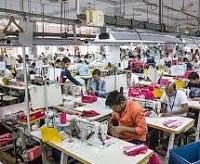 Offering zero tariffs on over 90 per cent goods, the Regional Comprehensive Economic Partnership (RCEP) agreement promises to reduce trade tax within the in the region in the next 10 years. As per a CCF Group report, the agreement was signed by China and 14 other countries on November 15. As mandated by this agreement, all RCEP members except Japan have signed free trade agreements with China, with limited marginal improvement.
However, for the first time, China and Japan have reached a bilateral tariff reduction arrangement. This entail, Japan to reduce import tariffs on Chinese textiles and apparels to zero. This will encourage local Chinese mills to export textiles and apparels to Japan. In addition, it will also reduce its textile and apparel export limit to South Korea, Australia, New Zealand and other countries.
Encourages investments in the ASEAN region
Besides promoting export of high-value added Chinese products, RCEP also encourages textile and apparel export mills to increase investments in ASEAN countries. With this agreement, China can export 20 per cent of functional fabrics produced in Jiangsu Suzhou mill to Southeast Asia. The main products exported by this mill to Vietnam market include functional down jacket fabrics whose exports may increase by 40 per cent after the signing of RCEP. In addition, the agreement will also lead to a drop in prices of high-end looms imported from Japan.
Unifies trade rules in ASEAN
Earlier, one of the biggest hurdles in export of textiles and apparels overseas in terms of non-tariff measures was the varying nature of international trade standards of different countries. These trade agreements were changeable, such as the original rules of origin and investment policies. However, signing of RCEP will unify these rules in the region and improve the level of trade facilitation.
The agreement will also facilitate the clearance of suppliers, logistics and customs in China's textile and apparel export mills. To determine rules of origin, RCEP uses the principle of regional accumulation to accumulate the value components of products of origin in the region composed of 15 members, and the value components from any party of the RCEP.
The rules of origin of previous bilateral free trade agreements recognized a product whose origin country could not be recognized as the regional origin of RCEP after its regional value was accumulated. This enabled the product to enjoy RCEP’s preferential tariff, reduce production cost of the final product, and effectively avoid trade barriers of European and American countries. Now, companies aim to retain part of the labor-intensive section in Vietnam for processing, and transfer the latter process to China for further processing, so as to maximize the benefits through regional coordination and cooperation.
Enriches certificate of origin
The RCEP also enriches the types of certificate of origin. It allows the declaration system for country of origin to be changed from the official authorized visa agency's issuing mode to the enterprise's credit guarantee independent declaration mode. This allows the government to save administrative management and enterprise's operating cost to further improve the clearance time of goods.
Another benefit of RCEP is that it stimulates the flow and complementarity of goods, technology, services, personnel and capital among members. In the long run, the agreement will help to enhance the ability to resist global systemic economic risks.
RCEP is beneficial for not only China's textile and apparel exports, but also for Vietnam and other ASEAN countries. The agreement helps these countries increase their market share in RCEP region. It also helps China's textiles and apparel to compete with Japan, South Korea and Australia. Hence, the strategic significance of RCEP is greater than the promotion of exports.