FW
Almost 80% of Bangladesh’s apparel exports are low-priced items: BGMEA
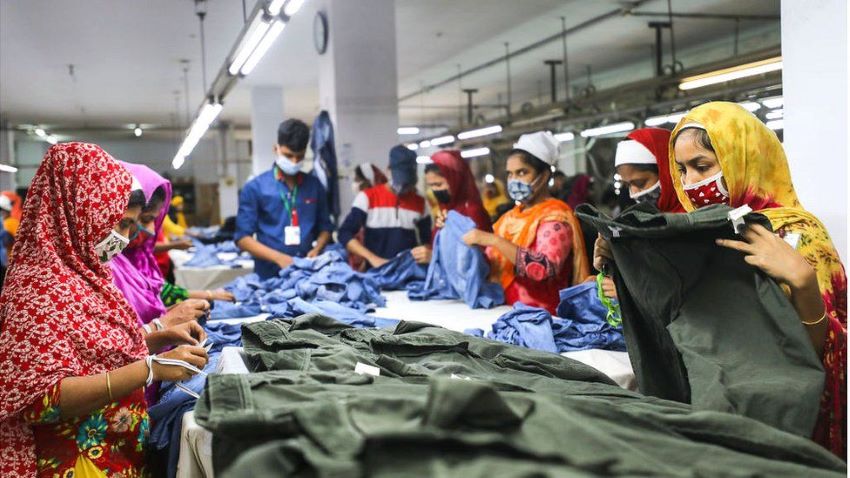
Despite being in the business of garment manufacturing for over 40 years, Bangladesh still manufactures low-value garment items. According to BGMEA, around 80 per cent of country’s garment exports fall within the price range of $15 per kilogram, and only 20 per cent items get a price more than $15 and a tiny fraction gets $35.
BGMEA attributes this to the country’s lack of innovative capabilities in areas of designing and product development and expertise, skills and technologies, and limited diversification in the area of non-cotton area.
Ahsan H Mansur, Executive Director, Policy Research Institute of Bangladesh, to produce high-end garment items, Bangladesh needs manmade fibers, which are not produced by the country. The country is strong in making apparels from cotton fiber as nearly 80 per cent of Bangladesh’s garment items are manufactured from cotton.
Pandemic calls for full exploration of Sri Lanka apparel manufacturing potential
 Considered the backbone of its economy, the Sri Lankan apparel industry is often misunderstood for its employee treatment and sustainability standards. The industry directly employs 350,000 people and a double of this indirectly. Female workers make up 34 per cent of the industry’s total workforce and the apparel industry employing 40 per cent of Sri Lanka’s female workforce. A Kantar study done in January 2018 revealed though current employees within the Sri Lanka apparel industry are satisfied with their condition; communities around them tend to perceive female employees negatively. This negative perception emerges from a lack of knowledge about the industry’s true nature.
Practitioner of ethical labor standards
Renowned for their ethical practices across the world, Sri Lankan apparel manufacturers adhere to rigorous labor standards. They operate employee councils under the Board of Investments (BOI) guidelines to mutually resolve disputes with employees. Most of their plants undergo independent third-party audits to ensure compliance to both local laws and buyer stipulated requirements. As per The Worldwide Responsible Accredited Production (WRAP) website, Sri Lanka currently has 112 WRAP Gold or WRAP Platinum certified facilities.
Also, the industry’s compensation structure is often misrepresented. On average, the industry pays factory employee Rs 40,000 per month, which includes transport, meals, medical, insurance and several other benefits, not offered by other industries reports Daily FT.
Pioneer of sustainability initiatives
The Sri Lankan apparel industry is also a pioneer of environmental sustainability initiatives. The country has several carbon neutral and LEED certified facilities that operate as net zero carbon emitters. It also has South Asia’s first Passive House certified project and the world’s second Passive House certified factory building in the world, reports AIA New York. An energy-efficient construction, this building follows stringent standards for quality, comfort, and energy efficiency.
From May to September 2020, Sri Lanka exported apparels worth $1.85 billion. This made the industry one of its most significant foreign exchange earners. The country has been able to grow its apparel exports year after year despite being the highest wage payers in the Asia-Pacific region.
Even, though the industry is facing its biggest challenge due to COVID-19, it is confident of bouncing back soon. Time and again, experts have advised Sri Lankan government of reducing its dependence on the apparel industry. However, the government should aim to boost the industry instead of replacing it. It needs to recognize the strength of this industry and explore it to its fullest potential.
With the pandemic sustainability has become a strategic objective for brands
 COVID-19 has given the fashion industry an opportunity to reiterate its commitment to sustainability. The US Cotton Trust Protocol highlights, three key fashion trends are likely to emerge from this pandemic that would help drive sustainability in the industry. As per Sustainable Brands, a premier global community of brand innovators, demand for sustainable fashion is growing with 51 per cent of respondents to a Trust Protocol/Economist Intelligence Unit (EIU) survey saying customers are the main drivers of sustainability in fashion.
Customers driving sustainability decisions
As per a Sourcing Journal survey, 49 per cent brands and retailers fear losing customers if they fail to meet their customer’s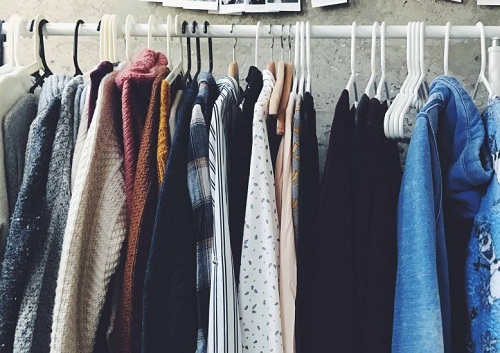 sustainability demands. Around 54 per cent said, there has been an increase in demand for sustainable products since the outbreak of the pandemic. And a McKinsey survey indicates 31 per cent customers are willing to pay a premium for eco-friendly products; 57 per cent shoppers plan to make significant changes in their lifestyles to lessen their environmental impact; 64 per cent shoppers hope to reduce their expenditure on clothing and footwear. In fact, 60 per cent respondents to the EIU survey ranked sustainability the second most strategic objective after improved customer experiences.
Data to help improve sourcing decisions
In the EIU survey, seven out of 10 respondents opined, brands and retailers can make fast fashion both affordable and sustainable. Almost three-quarters of them agreed, a brand’s sustainability level can be measured through global standards and certifications. A quarter of them emphasize on the need for reliable data to help brands make informed decisions to improve sustainability over the next decade. In fact, Tara Luckman, Director, Flourish CSR and Advisor, US Cotton Trust Protocol expects this data to be a valuable tool for brands to demonstrate the quantifiable impact of their sourcing decisions.
Gary Adams, President and CEO, US Cotton Trust Protocol points out, the objective of the protocol is to help brands meet consumers’ demands by driving continuous improvement in key sustainability metrics. Through its combination of a unique credit accounting system and the Permanent Bale Identification (PBI) system, the protocol enables brands to ensure transparency throughout their supply chain.
The protocol also gives members access to the Trust Protocol credit system that helps them validate the consumption of cotton and associated credit. It enables brands and retailers to show progress against their committed pledges and goals. It also validates the sustainability credentials proven via Field to Market: The Alliance for Sustainable Agriculture aligned with the UN Sustainable Development Goals.
Going forward, the protocol can help the global apparel industry more sustainable by providing valuable insights into its worldwide supply chain, thus helping it to protect the planet.
Secondhand luxury market to grow by 12%
As per a new report from fashion search engine Tagwalk and “contemporary vintage” retailer Byronesque, the luxury secondhand market is estimated to grow 12 percent by 2021, compared to the overall luxury market at 3 percent. And looking even further ahead, by 2024, the secondhand market size is expected to spike 61 percent to a value of $50 billion.
This estimate closely follows the denim industry’s takeover of vintage denims that’s been snowballing over the past few years as sustainability shifts to the forefront. Tommy Hilfiger teamed with vintage retailer Procell last year to offer vintage pieces from its archives. Levi’s and Guess also announced their own vintage resale offerings earlier this year. Resale success, even during pandemic times, indicates a fruitful future for the category.
According to Byronesque, consumers aren’t looking for classic vintage denims. They’re specifically looking for creative pieces, such as Vivienne Westwood’s iconic slashed denim suit from the S/S 1991 show, Alexander McQueen’s bum-baring “bumsters” look from F/W 2000, Margiela’s oversized jeans from F/W 2000 and Helmut Lang’s paint-splattered splash jeans from S/S 1998.
Ted Baker’s half-year losses widen as COVID-19 impacts sales
As per an Economic Times reports, British fashion retailer Ted Baker’s half-year losses ballooned as coronavirus-led lockdowns dented retail sales.
The company had already being hit by profit warnings, management changes and an accounting scandal since founder Ray Kelvin stepped down as CEO in 2019 after misconduct allegations, before coronavirus compounded difficulties.
This year, the company overhauled its top management team and raised about 95 million pounds in equity to bolster its pandemic-hit finances. It expects its three-year turnaround plan to deliver £31 million in annual savings. Its pretax loss widened to £39 million in the six months ended August 8, from £2.7 million a year earlier.
Jeanologia co-founder Jose Vidal Royo passes away
José “Pepe” Vidal Royo, Co-founder, Jeanologia, passed away on November 30, at the age of 85.
The Spanish businessman started his career with the family business Tejidos Royo. He was the architect for the international expansion of the company and transformed it into a key denim player worldwide.
He co-founded Jeanologia in 1994, Royo alongwith his nephew Enrique Silla. This started a relevant movement in the fashion industry aimed at making denim manufacturing more responsible and sustainable.
In the ’90s, Royo, together with the Japanese Omori San, became an active promoter of Tencel, the fiber that revolutionized denim shirting and introduced the soft jean concept.
His continuous concern for the planet and the people led him to create the “Amigos de Rimquieta” Foundation in Burkina Faso, an organization dedicated to improving the quality of life in one of the poorest areas on the planet.
He also built wells and set up handlooms and traditional dyeing with natural indigo in Africa.
KPR Mills to set up new garment production facility
As per a report by the Hindu, Coimbatore-based KPR Mill plans to invest Rs 250 crore this financial year to set up a new garment production facility.
The plant will produce 42 million pieces of garments a year and will take the total garment production capacity of the company to 157 million pieces a year. The additional capacity produced by the plant will be exported to new and existing customers. The plant will commission production in the first quarter of next financial year.
Earlier, the company had planned to expand its facility in Ethiopia too. However, it finally decided to concentrate only on India. It will ramp up the capacity of its new plant gradually.
There was a lot of panic and fear in the market in March-April because of the spread of COVID-19. The market started picking up in August and the company has been registering good demand for its products since.
Hyosung forays into Brazil and Turkey markets
South Korean textile leader, Hyosung has forayed into the Brazil and Turkey markets to better serve clothing brands that depend on European and South American textiles in their performance material development. The company is expanding its creora elastane manufacturing facility in these two markets. The Brazil project will increase its elastane capacity to 22,000 metric tons after completion by mid-2022.
On the other hand, the Turkey project will increase the company’s elastane capacity to 40,000 metric tonne by Q3 ’21. These expansion plans are a result of rising demand for elastane in the global clothing sector due to consumers’ pick for comfort and athleisure segment in wake of pandemic. As per a Wood Makenzie report informs demand for elastane has been growing by 9 per cent per annum, which is more than three times of the growth rate of standard apparel fibers.
Growing trust between India-Canada opens door for apparel manufacturers
Addressing an AEPC event, Indian High Commissioner in Canada Ajay Bisaria said Canadian companies growing trust in India gives Indian apparel manufacturers a huge opportunity to increase market share in Canada.
Biseria explained, there is a great deal of faith amongst Canadian companies in the medium- and long-term prospects of India. Partnership between the two countries is propelled by India’s growing apparel exports to Canada. India currently exports apparels worth $318 million to Canada. Many top quality brands including GAP, M&S, Uniqlo and Calvin Klein already source from India.
A Sakthivel, Chairman, AEPC opined said, Canada is a thrust market for India and the country is taking continuous efforts to increase its share in the Canadian market. India is focusing on higher value and specialized products like manmade fibre (MMF) apparels, medical textiles and technical textiles. It is encouraging Canadian investors to set up manufacturing facilities in India directly or through joint ventures, Sakthivel informed.
Since India’s share in Canada’s MMF garments imports is only 1.5 per cent, it is working on expansion and improving MMF products in India’s apparel export basket, said Sudhir Sekhri, Chairman, AEPC. There are 1,000 Canadian companies doing business with India. Trade between the two countries amounts to $100 billion.
CFMB to launch Biodiversity benchmark
Textile Exchange’s Corporate Fiber and Materials Benchmark (CFMB) program plans to launch a tool to help the fashion and textile industry take urgent action on biodiversity, reports Sourcing Journal. Known as The Biodiversity Benchmark, the tool will be launched in partnership with The Biodiversity Consultancy and Conservation International, and supported by Sappi. It will allow companies to deliver positive biodiversity outcomes and benchmark their progress.
The Biodiversity Benchmark was co-created by Textile Exchange and The Biodiversity Consultancy, technical and policy specialists in biodiversity and ecosystem services, and Conservation International, a global nonprofit working to protect nature. Generous support was also provided by bio-based materials provider Sappi, as a corporate partner.
The Biodiversity Benchmark integrates biodiversity into business strategy and operations before making commitments, setting targets, and aligning with the Sustainable Development Goals (SDGs). It then explores the mapping of sourcing locations against the biodiversity value of the location. This helps companies make good intervention decisions, prioritize, and design actions.
The Biodiversity Benchmark was developed with the support of a multi-stakeholder advisory group, involving some 30 biodiversity experts, NGOs and representatives from across the fashion and textile industry.