FW
Yarn Expo China to showcase latest collections of natural and blended yarns
Latest collection of natural and blended yarns by Asian and European suppliers will be showcased at the upcoming Yarn Expo in China from August 29-31. As per a Textile Value Chain report, the upcoming exhibition will provide overseas buyers with access to leasing domestic players. They will also be able to build stronger relationships in the region besides increasing their market presence.
Kelly Gao, Executive-IBD Yarn, Texperts India, an exhibitor who participated in the previous edition of the exhibition said, it saw an increase in demand for imported yarns as people demanded more imported due to cost and quality concerns. Yarn Expo has maintained its scale and quality despite the pandemic, he added. Due to pandemic-led disruptions, they focused on sourcing environmentally-friendly and anti-bacterial materials. “The quantity and quality were higher than expected, and although the pandemic impacted international participation, there were still some foreign exhibitors present,” added Jingxiang Lu, Director, Changshu Runfa Textile Co.
Bangladesh apparel industry to continue focus on safety, sustainability
Bangladesh’s garment industry aims to carry forward the achievements of the sector and sustain its reputation as a safe and sustainable industry, says Faruque Hassan, President, Bangladesh Garment Manufacturers and Exporters Association (BGMEA). Hassan was speaking at a discussion titled, ‘On the road to sustainability and a transparent supply chain’ organized by OAV – German Asia-Pacific Business Association, the German importers, and the Embassy of Bangladesh in Berlin, and hosted by Wünsche Group Friday.
Hassan says, Bangladesh has the highest number of LEED Green factories in the world, with 161 green factories certified by the USGBC, of which 48 are platinum-rated and 99 are gold-rated, and these green factories are equipped with all the eco-friendly features and emit 40 percent less carbon than a conventional factory.
The BGMEA has joined the German Green Button initiative which identifies socially and ecologically sustainable textiles that are placed on the market by responsible companies. It publishes all factory inspection reports online, setting an unique example in the world on the issue of workplace safety.
The discussion was also attended by Mosharraf Hossain Bhuiyan, Ambassador of Bangladesh to Germany, Miran Ali, Vice President, BGMEA; Christian Moritz, Managing Director, Wunsche Gruppe;, Almut Roessner, Executive Board Member, OAV, Dr Michael Arretz, CEO, VFI; Christian Ewert, Global Director, TEDD – Trusted Experts on Due Diligence, and Md Saiful Islam, Commercial Counsellor, Bangladesh Embassy in Berlin.
Balenciaga tops as hottest brand on Lyst Index
Balenciaga emerged the hottest brand in Q1 FY22 on Lyst Index. The brand achieved this feat for the third consecutive time. Gucci which collaborated with sportswear giant adidas for its F/W runway show that explored the growing demand for retro sportswear garments ranked second. Diesel emerged the fastest rising brand in the quarter, climbing 31 places to enter the ranking for the first time. Other brands to make it to Q1 ’22’s top 20 hottest brands list include: Louis Vuitton, Prada, Valentino, Dior, Moncler, Bottega Veneta, Fendi, Miu Miu, Off White, Burberry, Loewe, Versace, Diesel, Rick Owens, Adidas, Saint Laurent, Nike and Alexander McQueen.
The hottest products listed on the index reflected the industry’s current obsession with Y2K culture and the influence of TikTok trends on today’s youth population. The Lyst Index evaluates over eight million products by volume of social media mentions alongside searches, page views, interactions and sales within the Lyst app. The list has strengthened its place in the industry by covering the opinions of over 160 million customers every year. It also incorporates social media views, activities and engagement statistics across the world over a period of three months.
India: Cotton prices are softening
Cotton prices have softening falling, says Upendra Prasad Singh, Textiles Secretary as the ministry gears up to introduce the PLI 2.0 for the textile industry During April-February 2022, India’s cotton exports increased 57.6 per cent to $9.9 billion compared with $6.3 billion in the full financial year 2020-21. RMG exporters are demanding a ban on cotton exports as rising prices are causing a severe liquidity crisis, delaying their shipments by over 15 days, as per a News 18 report.
The Indian cotton-based textile industry is facing a crisis on the cotton front as the fiber prices increased from Rs 44,500 per candy in February 2021, when an 11 per cent import duty was levied on cotton, to Rs 90,000 per candy in March 2022. This steep rise in cotton prices is proving a major obstacle in the potential growth of the cotton textile value chain in India.
Pakistan’s textile sector to hit $20 billion exports this year: APTMA
Pakistan’s textile sector is expected to hit the $20 billion export mark by the end of this fiscal year. However, experts are urging the government to provide low cost and smooth supplies of power and natural gas to ensure that Karachi—the country’s financial hub—does not experience the extinction of its industrial sector.
As per a Nation report, Pakistan’s textile sector accounts for about 60 per cent of overall exports from the country; yet, millers claim that they are receiving minimal facilitation from the government. The sector has grown by around $4.6 billion compared to June 2021, as per figures from the All Pakistan Textile Mills Association (APTMA).
Due to poor energy provision, textile mills in the country are operating at less than 75 per cent capacity. A further continuation of this trend may result in a loss of $250-400 million in exports each month, as per ATMA. The ban on energy supply is expected to increase gas prices further with the Oil and Gas Regulatory Authority (OGRA) announcing a 45 per cent hike in the tariff of natural gas for the next fiscal year starting from July 2022.
APTMA urged the government to prioritize sectors on the basis of performance—especially with regards to exports—and facilitate key industries on the basis of economic rationale and nothing else.
Pakistan textile exports reach highest growth of $17.67 billion in FY21-22
Pakistan’s textile exports reached their highest growth levels of $17.67 billion in July-May financial year (FY) 2021-22. As per a report by the All Pakistan Mills Association (APTMA), exports grew 28.5 per cent Y-o-Y over $13.76 billion recorded in the same period last year. The industry grew to $20 billion during the year compared to $15.4 billion in June 2021, says the report. Textile exports grew 59 per cent Y-o-Y from $1.06 billion in May 2021 to $1.69 billion in May 2022, show figures from Pakistan Bureau of Statistics.
On a month-on-month (M-o-M) basis, Pakistan’s textile exports declined by 3 per cent to $1.69 billion as compared to exports of $1.74 billion in the previous month. Despite the tremendous growth achieved by the sector, it had to face shutdown of 25 per cent of the required volumes of gas/RLNG supply in May 2022. The government’s decision to halt the supply of gas/RLNG to exporters was considered highly illogical as it is a critical input to textiles, the single largest contributor to Pakistan’s exports and the mainstay of Pakistan’s economic future.
APTMA has urged the government to restore gas supply to the export industry and recognize the immense loss and damage to Pakistan’s economic this will cause in future. Loss in production will lead to export reduction and drop in forex. Due to poor quality grid electricity and non-supply of gas/RLNG, mills are operating at less than 75 per cent capacity, which if continued will incur a loss of $250-400 million in exports each month.
Supply chain disruptions continue in China as brands struggle to meet demand
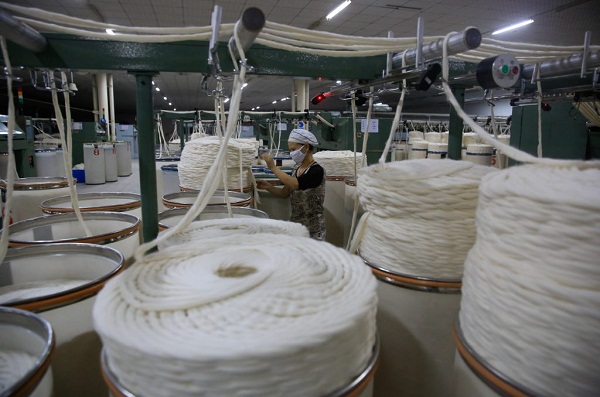
Recurrent lockdowns to curb COVID spread have led to supply chain disruptions in China besides price rise and sales decline. Shutting down of Shanghai, one of the biggest ports in the world caused interruptions in the supply of goods ranging from technology and cars to beauty and fashion in the country. A prominent clothing manufacturer, to US-based brand Under Armour had to cancel several orders owing to the crisis, reports Drapers Online.
China’s supply chains have become hugely disorganized, making it difficult for brands to get required material on time, says Patrik Frisk, Outgoing CEO, Under Armour. Besides production, sales of many global brands operating in China have also been impacted. Adidas China sales declined 35 per cent Y-o-Y during the in the first three months of 2022 due to the challenging environment. Similarly, Moncler had to temporarily close 30 per cent stores in China.
Stock delivery to UK also slowed down, causing delays of four to six weeks for global brands, says Mark Hollis, Shani Group. Supply from China is taking nearly 12 weeks to reach destinations, adds a UK-based clothing supplier. Delays were attributed to slow pace at China’s ports six weeks ago, Hollis says.
Imports from China causing delays for manufacturers
Fashion brands making garments overseas are facing a hard time as components like fixtures and trims need to be imported from China, rue brands. What’s more the uncertainty around lockdown made it difficult for brands to take any long-term decisions. Brands had to also deal with rising cotton prices in the country. As Steve Rowe, Outgoing CEO, Marks & Spencer notes, organic cotton prices have risen almost 40 per cent. Given this situation, Turkey has emerged a more lucrative destination for garment manufacturers with falling production costs triggered by a decline in the value of Turkish lira.
Vietnam gains with brands moving away from China
Manufacturers across UK are looking for local suppliers to reduce their dependence on China. As per a report ‘Make UK, Operating Without Borders: Building Global Resilient Supply Chains’, published in May, around 42 per cent UK manufacturers have increased sourcing from local suppliers in the last two years. The country that has benefitted the most from diversion away from China is Vietnam which bagged many new orders in the last few months. However, Vietnam’s garment factories also import raw materials from China, and have faced shortages in the last few weeks. However, suppliers have been unable to completely severe ties with China as it is a dominant global supplier of many fashion products like silk.
China’s tough times to continue
China’s fashion industry continues to reel under lockdown’s effects despite Shanghai unlocking few key industries. Kasper Rorsted, CEO, Adidas says, his brand will return to growth only during the second quarter as the challenging market environment in China is expected to continue for some time. Inflationary pressures across the world would also force global suppliers to China suffer for a longer time, says Santoshan Sangha, Managing Director of Sweats & Tees. The uncertainty will continue to affect fashion suppliers and retailers sourcing clothing and footwear from China. Unable to shift operations out of the country, they are likely to face rising raw material and production costs and delivery delays over coming months.
INDIASize, the project for standardized body-size charts progressing well
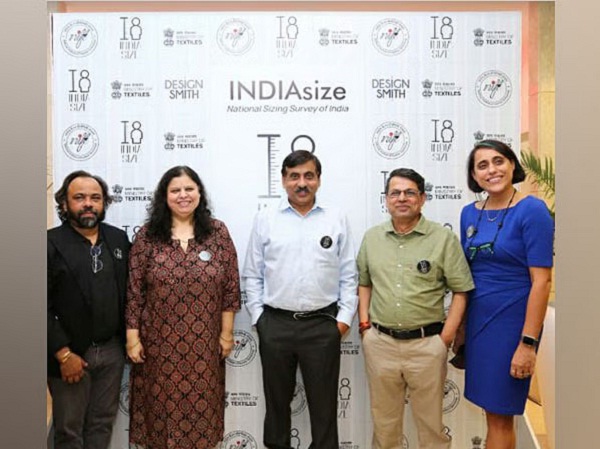
Launched by the National Institute of Fashion Technology (NIFT), the national sizing survey will develop India’s first country-specific size chart to offer Indians better fitting clothes. Targeting various demographics like region, gender, locality and age, the chart will be based on the data collected from Indians aged between 15-65+years of age.
The government approved project is supported by On Ground Execution partner Design Smith. It is also being supported by the CMAI. They will measure over 25,000 people in six different cities including New Delhi (North), Mumbai (West), Chennai (South), Hyderabad (Centre), Kolkata (East) and Shillong (North-East). Non-contact human safe 3D body scanning technology will be used for measurements.
Making Indians aware of their body sizes
Indiasize will make Indians aware of their perfect fits and sizes as per their body types. It will provide branded clothes with perfect fittings. As per Noopur Anand, PI, INDIAsize project, the project will help retailers and manufacturer produce customized merchandize for Indian body types. So far the project has collected over 3/4 of target sample framework of various demographics of age, region, sex, income and community. It will compile and categorize this data shortly following which it will be analyzed and prepared into a report. After completion in the Southern region, the project has been launched in other cities like New Delhi, Mumbai & Chennai. It aims to measure approximately 2,400 people of various age groups in Hyderabad, of which it has already measured 2,330 so far.
Minimizing inventory waste and expenses
Shantmanu, Director General, NIFT informs, INDIAsize is progressing well. It has completed the scanning process in North, West, South region and is currently being done in Central Region. The project team has succeeded in collecting 75 per cent data despite challenges. To be completed by this year-end, the project will provide the Indian apparel Industry with the much awaited standardized body size charts.
Gaurang Shah, Textiles and Fashion Designer, adds, the INDIASize project will help designers and manufacturers minimize inventory waste and expenses on returned goods and improving sales. In turn, this will help reduce final prices paid by the consumers.
Nitin Spinners to invest Rs 955 crore in capacity expansion
Nitin Spinners plans to invest Rs 955 crore to expand its capacity. As per a Textile Magazine report, the capacity expansion will be funded by Rs 300 crore of internal accruals and Rs 655 crore of debt
Nitin Spinners is India’s leading manufacturer of cotton yarn and blended yarn with knitted and woven finished fabric. The company’s leadership in cotton and blended yarn along with fabric manufacturing is driven by delivering international quality standard products with continuous investment in latest technologies. Elaborating, Managing Director Dinesh Nolkha says, “the company has achieved the highest ever revenue of Rs 2,692 crore, growth of 66 per cent over the previous year along with highest-ever profitability. It has doubled exports during the current year as compared to the previous year.”
At present, Nitin Spinners operates at nearly optimum capacity and strategically enhancing capacity in all these segments, including spinning, knitting and woven fabric to meet the increasing market demand. The company is also increasing our blended yarn production capacity substantially and investing Rs 955 crore for capacity expansion, which will be funded by Rs 300 crore of internal accruals and Rs 655 crore of debt. It aims to capture the benefit of growing market opportunity in international as well as domestic sectors and strengthen the company’s position by widening our product portfolio as well
ITMA Services unveils sector plan for the exhibition
A strong response from textile machinery manufacturers has motivated ITMA Services to unveil the sector plan for the exhibition.
As per a Textile Network report, the ITMA sector plan spans 12 halls on the ground levels of the Fiera Milano Rho venue. It features all 20 chapters of the Index of Products, ranging from spinning to finishing, software, logistics, and fibres, yarns and fabrics. The two biggest sectors, finishing and spinning, anchor both ends of the exhibition.
To-date, ITMA 2023 has attracted 1,444 applicants from 42 countries who have booked over 114,230 sqm of net space. The new Start-Up Valley has also garnered keen interest. The closing date for application for start-ups is 30 June.
ITMA 2023 will be held at Fiera Milano Rho, Milan, from June 08 to 14 June 2023.