


FW
Sangam India’s Q1 net profit declines 1.7%
For the first quarter ended June 30, 2022, Sangam (India)’s net profit declined by 1.7 per cent to Rs 52.53 crore against a net profit of Rs 53.44 crore for the quarter ended March 31, 2022.
The company’s total income declined by 2.62 per cent to Rs. 718 crore during the period ended June 30, 2022 as compared to Rs. 737.31 crore during the period ended March 31, 2022.
The company’s EPS declined by 3.10 per cent to Rs. 11.86 for the period ended June 30, 2022 as compared to Rs. 12.24 for the period ended March 31, 2022.
On a year-on-year basis, Sangam India’s net profit surged by 307.53 per cent to f Rs 52,53 crore for the year ended June 30, 2022 as against net loss of Rs 12.89 crore for the year ended June 30, 2021.
The company’s total income increased by 73.87 per cent to Rs. 718 crore during the period ended June 30, 2022 as compared to Rs.412.95 crore during the period ended June 30, 2021.
Its EPS surged by 271.79 per cent to Rs.11.86 for the period ended June 30, 2022 as compared to Rs.3.19 for the period ended June 30, 2021.
Pakistan’s textile exports drop by 10 per cent
Pakistan's textile exports dropped by 10 per cent to $1.54 billion in July 2022 compared to $1.71 billion in June 2022, as per reports by the All Pakistan Textile Mills Association (APTMA).
On a yearly basis, textile exports dropped by 5 per cent, compared to $1.47 billion recorded in July 2021, showed the provisional data released by APTMA. In July 2022, the percentage of textile exports in total exports reached 66 per cent.
The decline in exports can be attributed to lack of energy supplies, which reduced textile export growth from double digits to single digits. APTMA had earlier urged authorties to restore gas and RLNG supply of the export-oriented industry on an urgent basis.
Pakistan’s textile sector accounts for a major share of country’s exports, which are vital for the cash-strapped economy. Pakistan suffers from low foreign exchange with policymakers mostly scrambling to ensure dollar inflows. In such an environment, many experts have stressed on exports, especially in a rupee-depreciating environment.
Indonesia to increase TPT exports by 15%
The Indonesian government aims to increase its national textile and textile product (TPT) exports by 15 percent per year by 2025.
Until now, TPT was considered as a major contributor to the Indonesian economy, along with the recovery from the COVID-19 pandemic. As a social safety net and foreign exchange earner, the textile industry is able to absorb a workforce of 3.65 million people or 18.79 percent of the total workers in the manufacturing industry.
The Minister of Industry also stated that the textile industry has a strategic role in the industrialization process.
With such a large role and contribution, the government spurred the utility of the textile industry to return to its pre-pandemic utilization level, which was between 60-80 percent so that it could support national exports.
Compared to last year, the value of textile exports increased significantly by 28 percent. This increase was driven by apparel and yarn.
Industrial investment also increased by 6.4 percent until the first quarter of 2022 compared to the same period the previous year.
As one of the priority sectors, the textile industry is an inseparable part of the Making mIndonesia 4.0 program.
The Making Indonesia 4.0 agenda for the textile industry in Indonesia is directed at making the national textile industry a leader in the production of "functional" clothing.
Uttar Pradesh to introduce new textile policy for attracting investments
The Uttar Pradesh government plans to introduce a new textile policy to boost investment and increase employment generation capacity in the state.
The state has initiated the process of acquiring land for the establishment of Mega Integrated Textile and Apparel Park in Harodi under the PM Mitra Scheme of the Union Textiles Ministry.
The government also plans to set up an apparel park in Noida with an investment of Rs 3,000 crore. Land for developing the park has been arranged. The apparel park will house about 115 export-oriented textile units with an investment of Rs 3,000 crore, which is likely to provide employment to about two lakh persons.
The policy says that this region is full of skilled weavers but the irony is that because of Banarasi silk saris, the focus is only on Varanasi thus pushing the weavers of other regions into an unorganized sector.
Trousers & Shorts top Germany apparel imports in 3MFY2022
Trousers &Shorts, and T-shirts—together accounted for 40 per cent of total apparel imports by Germany in the first three months of 2022. Trousers & shorts comprised 27.65 per cent of all apparel imports worth $9.755 billion during January-March. T-shirts was the second largest product 13.19 per cent share in total imports.
Germany’s import of trousers & shorts was valued at $2.697 billion during the first quarter of 2022, while T-shirts import was $1.287 billion during the same period,. Among other products, Germany’s import of jerseys was valued at $1.215 billion, shirts $847.579 million, dresses $644.264 million and innerwear $515.516 million, jackets& blazers $371.452 million, socks $328.487 million, coats $303.761 million, accessories $230.369 million and baby wear $197.984 million/
Germany’s total apparel import stood at $39.913 billion during January-December 2021. Of this, trousers & shorts accounted for $9.576 billion, jerseys $5.515 billion (13.82%) and T-shirts $4.396 billion.
India’s RMG exports dip by 0.63% in July 2022
Higher production costs led to India’s export of readymade garments (RMG) dipping slightly in July 2022 over the same month of 2021. The fewer export orders from global brands also caused RMG exports of all textiles to slip by 0.63 per cent to $1380.45 million in July 2022.
The Ministry of Commerce and Industry said, India’s RMG exports were $1389.22 million in July 2021. The exports had increased in previous months over the same period of last year. RMG contributed 3.92 per cent in total merchandise export of July 2022.
The export of cotton yarn, fabrics and handlooms products, etc continued to show down trend in July 2022. The export declined to $943.50 million in July 2022 which was 28.27 per cent lower than $1315.42 million of July 2021. The export of non-RMG textile products contributed 2.68 per cent in total merchandise export of July 2022.
However, RMG exports from India grew by 22.45 per cent Y-o-Y to reach $5871.34 million in the first four months of current fiscal 2022-23. The export was $4794.93 million in April-July 2021. The export of RMG contributed 3.75 per cent in the country’s total merchandise export in April-July 2022.
Garment and home textile export orders decline by 15-29%
Industry experts say, export orders of garments and home textiles from the US and Europe have declined by about 15-20 per cent, as western retail brands are facing slow demand.
In Panipat, export orders have declined by up to 40 per cent. The decline is attributed to the Russia-Ukraine war, and hike in interest rate.
Industry sources said that importers from western countries have not only reduced orders for the next season but also postponed the deliveries of previous orders. Last month, importers of several home textile exporters refused to take delivery. Buyers said that retail sales in western countries slowed down significantly due to high inflation. Warehouses are full of unsold goods. Therefore, it is not possible for them to take delivery immediately.
Exporters from Panipat, who returned after participating in the trade fair held in Germany in June, said that they have received 40 per cent lower export orders for home textiles compared to last year.
Ramesh Verma, Member, Handloom Export Promotion Council says, large companies and retail brands from the US and Europe had procured home textile products in excessive volume last year. But retail sales remained very weak. Therefore, they have to reduce their buying. The exporters are having fewer orders for next season.
The exporters are currently placing orders for Christmas and next summer season.
Address human rights abuse in supply chains , Japan Textile Federation urges companies
The Japan Textile Federation has published new guidelines for companies to pay more attention to human rights abuses in supply chains.
As per a Japan Times report, the guidelines include a checklist for company executives to ensure their supply chains are free of various types of rights abuses, such as forced labor, child labor and harassment.
Specifically, the checklist said that attention needs to be paid to long working hours and delays in wage payments.
The guidelines also said it is important that textile companies make internal rules and human rights policies.
The guidelines came amid allegations of forced labor over cotton production in China’s Xinjiang region.
The government plans to draw up guidelines this summer on human rights due diligence.
The textile industry is lagging behind in addressing human rights abuses. In textile manufacturing in Japan, which is costly compared with foreign rivals, the way in which some foreign technical trainees are treated has raised concerns over human rights abuses.
Vietnam’s textile and garment exports continue to grow despite challenges
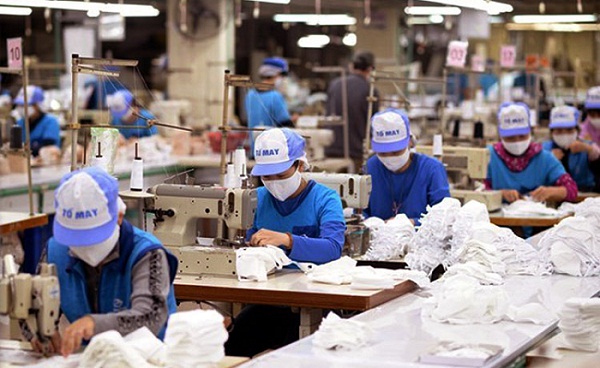
A conference organized by the Trade Promotion Department, Vietnam’s Ministry of Industry and Trade highlighted, the country has grown to be the third largest clothing exporter in the world. Vietnam’s textile and garment exports account for 6.4 per cent of the world’s total after China with 31.6 per cent share and Europe 27.9 per cent share. Exports of textile and garment products to three main markets viz. Europe, US and Japan, says Economist Huynh Thanh Dien. Accounting for 34.1 per cent, 16.8 per cent and 5.3 per cent shares, these three are the largest importers of textiles and garments in the world.
A contributor to economic growth
As per a Saigaon Online report, the textile and garment industry in Vietnam is an important contributor to the nation’s economic growth. In 2021, it exported textiles and garments worth $40.4 billion, accounting for 12 per cent of the country's export turnover. In 2022, the country garment and textile export turnover increased by 21.6 per cent to $23 billion.
Yet, Vietnam’s textile and garment industry continues to face numerous challenges. Inflation in the some of its major markets such as the US and the EU has caused a decline in demand for products, adds Huyun Minh Vu, Deputy Director, Center for International Integration Support-Ho Chi Minh City. The Russia-Ukraine conflict has also pushed up inputs prices.
Strict COVID- measures cause supply chain disruptions
Additionally, high risk of resurgence of the COVID’s sub variant is compelling many partner countries such as China Japan and Taiwan to apply strict anti-epidemic measures, greatly affecting the country's supply chain and consumption of textile products. On the other hand, exports from the country have also been affected by fluctuations in exchange rates, labor shortage and increasing demand for traceability of cotton fabrics, yarns and sustainable textiles and garments.
Trade remedies threat
The new Free Trade Agreement (FTA) is also negatively impacting the industry’s performance in Vietnam. Textile exporters in the country constantly live under the threat of being investigated and applied trade remedies. Vietnam has entered into 15 FTAs with about 60 countries across the world, notes Phan Khanh An, Deputy Head-Legal, Ministry of Industry and Trade.
The country’s exports are currently under the threat of being applied trade remedies act. Vietnam faces over 210 trade remedy cases initiated by foreign countries against Vietnamese exports. Vietnam currently faces 22 cases related to textile products, mainly related to anti-dumping and safeguard measures, mainly in Turkey, US and India.
New policies to boost investments
Vietnam mainly exports recycled yarn to China. The country faces many challenges in China which has introduced the zero COVD policy resulting in market disruptions. It is also facing a rise in raw material costs that have surged past 55 per cent. Textile and garment businesses in Vietnam are currently not accepting any long-term orders over fear of losing low unit prices that fail to match rising inputs costs. Many businesses are urging concerned authorities to introduce new policies to encourage investments in the sector. Domestic enterprises are planning to expand businesses by collaborating with other enterprises, and become self-sufficient in production.
Economic slowdown to impact global luxury sector: Survey

Nearly 59 per cent of respondents to a survey by the Global Expert Network members of the Luxury Institute believe, current economic slowdown will lead to a downturn in the global luxury goods and services sector. Around 41 per cent predict, current situation will lead to a recession in the global luxury sector with aggressive interest hikes from central banks to result in mass scale unemployment, especially in the technology sector. The survey predicts, consumer spending across all income levels will tighten with persistent fluctuations in the stock market to influence the budgets and psyches of rich consumers.
Recession to impact growth in Asia-Pacific
Respondents believe, sales of luxury brands will be affected to a certain extent. Consumers in the Asia Pacific region, led mainly by China, will remain resilient to the COVID-led disruptions, says a report by Bain & Co. Expecting a recession, the survey shows its impact will be particularly strong in the Asia/Pacific region as China continues to remain vulnerable due to its unstable real estate market, a slowing economy, and continuing supply chain issues. Experts say, the impact of recession on the North American market will be relatively less due to America’s stronger economy, including higher energy self-sufficiency and its distance from the Russia-Ukraine war
Luxury sales in Europe to fall
Experts predicting a downturn in Europe believe sales of luxury goods in the region will fall in the medium range, though those expecting a recession expect a stronger impact. They believe, the Russia-Ukraine war will lead to a rise in local energy prices. It will also increase the prices of consumer staples in the middle of Europe and impact the economic drivers of Europe: Germany, France, and UK.
Consumer technology to ride over recession
The category most likely to survive this downturn is consumer technology, say experts. While consumers’ expenditure on many things is expected to decline, they will continue to spend on food, housing, energy and technology goods and services. The travel and leisure categories will be more heavily impacted despite showing strong growth post pandemic.
The fashion and leather goods category will be more impacted by the downturn than necessity categories. Luxury watches and jewelry category will witness medium level impact due to supply shortages and high investment value.
Department stores to remain worst affected
According to the Luxury Institute survey, department stores will remain the most vulnerable category due to historically high overheads, high inventories, and low margins with digital multi-brand luxury retailers failing to make any profits.











