


FW
Levi Strauss & Co collaborates with TGW Logistic Group for distribution center project
Levi Strauss & Co has collaborated with TGW Logistic Group to design, engineer and implement its 1.6 million square-foot highly automated omnichannel distribution center that would be capable of serving all distribution channels from a single location.
The project is split into two phases. In the first phase, scheduled to go live by April, 2024, Levi Strauss aims to achieve a throughput of up to 33 million units per year. In the second phase of the project, additional storage capacity and picking work stations will grow that number to 55 million annually.
At point of receipt, Levi Strauss receives cartons from its international production sites, as well as returned items. After inspection and repackaging, returned goods are placed into an empty mixed container that is then stored in an eight-aisle shuttle system with more than 170,000 storage locations. Up to 70% of the incoming cartons will be reused later as order cartons, saving money and reducing waste. An innovative robotic system by TGW automatically repacks the cartons into totes.
New items move from receiving to storage in either an automatic mini-load warehouse or in a shuttle warehouse with a total of 1.3 million storage locations. The mini-load facility has two functions: it’s both the supply storage for the shuttle system and the buffer storage for ready-to-ship cartons, which are directly forwarded to the shipping area via a cross-docking process.
Vietnam’s garment textile export turnover to reach $45.70% in 2022
Vietnam hopes to clock $45.70 billion export turnover in garment and textile sector during 2022, as stated by the General Department of Vietnam Customs.
As of mid-July, the country posted a 19.70 per cent Y-o-Y rise in garment and textile exports to $20.40 billion.
Its value of garment and textile exports increased by over $1 billion, according to the authority.The customs further added that around 14,000 businesses are operating in the sector, with combined capital of over US $ 46 billion, employing about 200,000 laborers.
Vietnamese garment and textile products are shipped to 55 countries and territories worldwide, including 17 markets with a turnover of more than US $ 100 million each.
Earlier, the Vietnam Textile & Apparel Association said textile and garment producers target to earn up to $21 billion from exports in the second half of 2022, raising total shipments of the year to around US $ 42-43 billion.
The Lycra Company partners with Browzwear
The Lycra Company has partnered with Browzwear, a pioneer of 3D software for the apparel industry. The new partnership will allow customers to digitally create activewear, denim, swimwear, ready-to-wear and intimate-apparel fashions that include Lycra fibers and can be sourced directly from one of 15 global mills.
Lycra will be incorporated into the platform with a special section where designers will be able to choose from a vast certified fabric library to build avatars. The collaboration will further evolve into more knowledge sharing and things that it can develop together to combine Lycra’s science of fit with their science of 3D visualization, says Julian Born, CEO, Lycra.
Creating digital garments via Browzwear streamlines the production process and reduces the need to manufacture samples, saving time and reducing waste for more-efficient and sustainable operations. When paired with fibers that are designed to increase durability and garment life, Lycra states, the partnership will have an outsized impact on elevating the fashion industry’s sustainability efforts.
Founded in 1999, Browzwear is a pioneer in digital solutions for the fashion industry. For technical designers and patternmakers, Browzwear rapidly fits graded garments with accurate, true-motion material replication, while Browzwear’s Tech Pack provides manufacturers with the tools they need to produce physical garments perfectly the first time and at every step from design to production. The goal is to help apparel companies sell more while manufacturing less, increasing both ecologic and economic sustainability.
Japan’s textile, apparel imports grow by 8.8% in June
Japan's textile and apparel imports grew by 8.8 per cent Y-o-Y but declined by 3.7 per cent M-o-M to 209 kt in June. As per a CCF Group report, imports from China surged by 9.3 per cent from the same period last year but declined by 4.1 per cent compared to last month. Japan’s textile and apparel imports during January-June surged by 1.3 per cent to 1,271ktfrom the same period last year and by 10.7 per cent compared with the same period in 2019. Japan's imports in June totaled 331.7billion yen, among which apparel imports grew by 30 per cent last year to 217.8billion yen.
Japan's textile and apparel imports grew by 31.6 per cent in June, a high level even in the same period of previous years.
This year, the proportion of Japan's textile and apparel imported from China maintained at around 56.5 per cent in last two months, which is stable in general.
Global denim market to grow at 6.7% CAGR from 2022-2029
The global denim market is expected to grow at a rate of 6.7 per centCAGR in the forecast period of 2022 to 2029. The rise in the consumer disposable income levels is escalating the growth of denim market.
The size of the global denim jeans market size is projected to reach $88.1 billion by 2030, growing at a CAGR of 4.2 per cent from 2021 to 2030.Rise in spending capacity, per capita consumption of the denim jeans, consciousness regarding the cloths suitable for the body types and acceptance for casual wears for office work is likely to garner the growth of the denim jeans market. In addition, increase in disposable income in the developing countries of Asia-Pacific, such as India and China, has increased the expenditure on personal grooming and clothing, which further drives the growth of the global denim jeans market share, according to Allied Market Research.
With the demand of denim continuing to grow, the annual global production of denim is 15 billion metres with half of the production coming from Asian countries like China, India, Turkey, Pakistan and Bangladesh. China is the largest exporter of denim accounting for around 64 per cent of the world’s total, followed by Pakistan, says Jitender Kumar, Vice President – Raw Materials (Fibres), Sutlej Textiles & Industries. He adds, recycling and embedding circularity in denim is adding a unique sustainability punch to this most popular attire.
Hawico to expand operations
A luxury Scottish Borders cashmere knitwear brand Hawico plans to expand after securing funding to invest in new equipment and move into new products. Hawico manufactures cashmere garments for retail at its own stores around the world. It plans to use funding of around £250,000 from HSBC, provided in the form of an equipment finance loan, to purchase state-of-the-art machines which are capable of creating whole knitted garments
The company has acquired whole garment machines from Shima Seiki to speed up production, reduce material waste and experiment with new patterns as it looks to expand product ranges
Family-owned Hawico can trace its history back to 1874, when the Hawick Hosiery Company was established and opened its mill on the town’s Duke Street. Today, it continues to make its knitwear at the same location, where the outer structure of the building remains the same. It sells its cashmere in its 13 stores, as well as online. The stores are located in Scotland, England, Germany, Italy, Switzerland, the US and Japan.
CISMA held from July 29-Aug 01 in China
After being postponed for three times, CISMA 2021 was finally held from July 29 to August 01, 2022 at Ningbo International Conference and Exhibition Center in China.
As per an Apparel Resources report, the trade fair attracted 22,304 visitors who saw the benefits of integration of technology with sewing processes for the industry.
During the 4-day event, the sewing machine companies of China, together with their foreign counterparts, presented the world with an exhibition that demonstrated topnotch technology solutions for the sewing industry.
The showdemonstrates the sector’s innovation-driven achievements, the commitment of global sewing industry to digital and intelligent transformation, as well as the resolution of China’s sewing machinery sector to overcome any difficulties and its confidence in practicing high-quality development.
Kontoor Brands expects FY22 revenues to grow by 6%
Amidst supply chain constraints and growing inflation, Kontoor Brands has lowered its full-year outlook and now expects FY 22 revenues to grow by 6 per cent Y-o-Y.
The Q2 revenues of the renowned clothing retailer from the US surged by 25 per cent to $613.6 million.
The apparel retailer attributed the good numbers to its US business that grew by an impressive 40 per cent to post $510.2 million.
Notably, the retailer’s net income grew to $62 million from $23.6 million a year earlier.
Brand-wise, Wrangler’s revenue rose by 34 per cent to clock $417.9 million, with Lee posting a growth of 10 per cent to touch $193.1 million.
While revenue from China fell by 50 per cent owing to pandemic-induced restrictions, international revenue, on the whole, dipped by 18 per cent to $103.3 million.
North Carolina-based retailer, Kontoor Brands is known for marketing denim clothing under brand names Lee, Wrangler and Rock & Republic.
Physical stores continue to remain relevant as new retail trends emerge

Major retail destinations across the globe struggled to sustain demand throughout 2020 and 2021 as they continued to grapple with domestic lockdowns and international travel bans. Landlords were forced to reconsider rental terms in a few markets as footfalls at stores declined. Extensive vaccination programs helped locations such as the UAE to open international borders and lift restrictions relatively quickly, boosting recovery across sectors such as real estate, tourism and retail. As per international property advisor, Savilles, key trends emerging in the sector post lifting of restrictions include:
Reinforcing their global status
Quicker to recover than other destination cities, New York, Paris and London quickly reinforced their positions as successful retail locations, as per the Savills Retailer Attractiveness City ranking, produced as part of its 2022 global Impacts research program. In contrast, cities dependent on the tourism industry, are likely to take longer to recover.
Expansion opportunities for retailers
The pandemic forced retailers to discover several new markets. These markets are set to present several new exciting opportunities in future. Some of these emerging markets are in the Middle East and China. In, particular, the Middle East market is set to provide retailers strong opportunities with demand shifting away from pure franchises to brand-owned stores in key locations, and a strong focus on luxury. Tier II and III cities in China are also set to provide significant new opportunities.
Stores transforming into experiential centres
Though most brands struggled to sustain demand across the pandemic, performance in sectors such as, athleisure, homeware, wellness, food and beverage and electric vehicles surged both online and offline. Capitalizing on strong revenues and attractive store opportunities, these sectors continue to trade well over the past 18 months. They can now acquire new sites and grow their physical footprints
Luxury brands meanwhile can relocate to large units in stronger locations. This has already transpired in the Middle East and will now accelerate. Physical stores were already transforming before the pandemic. They now expanded into aspirational destinations spanning leisure and entertainment.
New concepts to attract consumers
In the Middle East, retailers and mal operators have introduced several experiential concepts to appeal and stay relevant to their audience. Majid Al Futtaim, Mall Operator, Middle East launched a concept store named ‘That’ in Dubai’s Mall of the Emirates offering goods and experiences. Among other things, the store offers salons, a fitness studio and smart mirrors to try on their products and aims to become a lifestyle destination of sorts. Meanwhile, global sports labels Adidas and Nike also offer experience-based environments in their respective stores in The Dubai Mall where customers can play sports or personalise their products.
The reverse trend of brands taking on stores is also strengthening. These inevitable challenges have introduced many new trends including rationalizing of store footprint by mass-market fashion brands, the emergence of experiential brand spaces, and a refocusing on key streets and city centres.
Physical retail thus continues to remain a relevant tool for brands and retailers to connect with consumers. It helps them drive retail sales and provide consumers with an experiential space to satisfy their needs.
Asia Pacific to dominate global textile growth as market moves to organic clothing
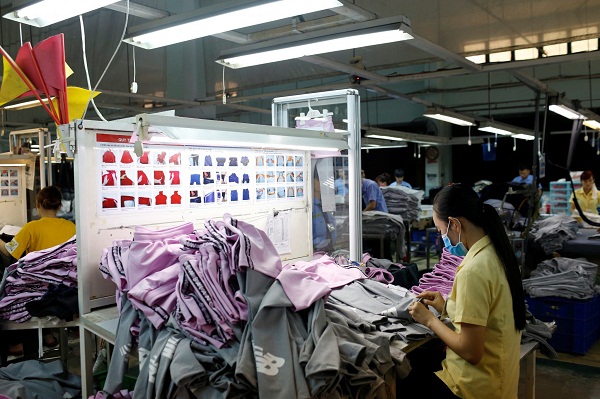
Currently worth $530.97 billion, the global textile market is expected to grow at 8.3 per cent CAGR to reach $575.06 billion in 2022. The sector’s market share is expected to grow at 7.2 per cent CAGR and be worth $760.21 billion in 2026. Growth will be dominated by the Asia-Pacific market valued at $234.2 billion in 2021. The market accounted for 0.69 per cent of the region's GDP during the year, as per a Press News Wire report.
Expanding economy drives textile growth
Rapid economic growth in Asia Pacific is driving textile market growth in these countries. World Bank data shows, in 2020, Bangladesh’s GDP increased to $324.24 billion from $302.56 billion in 2019. China’ GDP also averaged $2,820.59 billion from 1960 until 2021, to reach an all-time high of $17,734.06 billion in 2021.
The textile industry in the Asia-Pacific region is increasingly moving towards making clothes made from organic fabrics as they are easy to maintain and clean. More and more companies are adopting organic fibers such as cotton, wool, hemp, linen, etc as these are grown according to national organic standards without the use of any toxic pesticides.
Demand for organic fibers rising
Companies are using organic fabrics for both apparel and home textiles as demand for products made with natural raw materials is rising.
A Japan-based multinational corporation, Toray Industries is seeing increased demand for organic textiles. The company manufactures industrial products using popular technologies used in the organic synthetic chemistry, polymer chemistry, and biochemistry and other business areas like fibers and textiles, as well as plastics and chemicals.
Established in 1926, the Tokyo-headquartered Toray Industries strengthens its product portfolio by launching new sustainable products. In March 2022, the company developed a new high-strength textile employing Toyoflon™, a low-friction polytetrafluoroethylene (PTFE) fiber. The fiber will be used by Toray to broaden its application into industrial machinery, plant facilities, automotive parts and bearings.











