


FW
Diversification can help Cambodia’s apparel exporters restrict recession effects
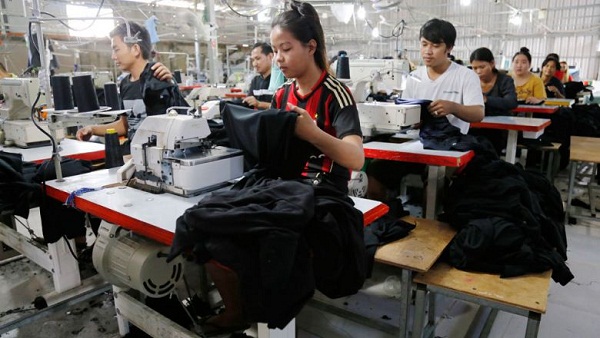
Garment exporters in Cambodia are experiencing a major downturn with Western buyers either reducing or revising orders. Ken Loo, Secretary General, Garment Manufacturers’ Association of Cambodia (GMAC) notes, an unstable global environment and possibility of an economic recession in the West have sparked the decline in export orders.
As per the Phnom Penh Post report, labor costs of garment exporters in Cambodia have surged on account of a new pension scheme being launched for private sector workers from October 1 and sectoral minimum wages will be effective from January 1.
Rising logistics and compliance costs add to woes
This double whammy is being further aggravated by other issues like rising logistics and compliance cost, adds Loo. While exports are growing, the net income of exporters have not grown as much due to rise in other costs. Exporters’ profit margins continue to remain low as seen from the ratio of value added products to labor-related costs, adds Loo. Only 39 per cent companies made profits last year while 43 per cent reported a loss, points out Loo citing a study by the Japan External Trade Organization (JETRO).
Accelerate policies to restrict downturn
To overcome losses, Cambodian garment companies would need to adopt cost-effective measures, opines Loo. He recommends, Cambodia should accelerate the Garment, Footwear and Travel Goods Sector Development Strategy 2022-2027 to help cushion coming downturn. Penn Sovicheat, Spokesman, Ministry of Commerce upholds GMAC’s concerns over the Ukraine conflict and other issues affecting Western countries. These can indeed hamper export orders for Cambodian textile-related products, he adds.
Introduce new FTAs and trade strategies
He urges exporters to opt for nearshoring besides signing free trade agreements with new countries as COVID, the Ukraine crisis and soaring shipping costs threaten to derail trade with more distant markets.
Public and private stakeholders also need to explore new markets and devise new trade strategies, says Hong Vanak, Researcher, Royal Academy of Cambodia.
Besides, stakeholders need to reflect on the investments of Western countries on transportation and encourage manufacturers to step these up, Vanak opines. Cambodia’s garments, footwear and travel goods exports grew 40 per cent to $6.6 billion in the first half of this year compared to $4.72 billion reported in the same period last year, shows data from the General Department of Customs and Excise.
Industry experts concerned about fluctuations in India’s cotton prices
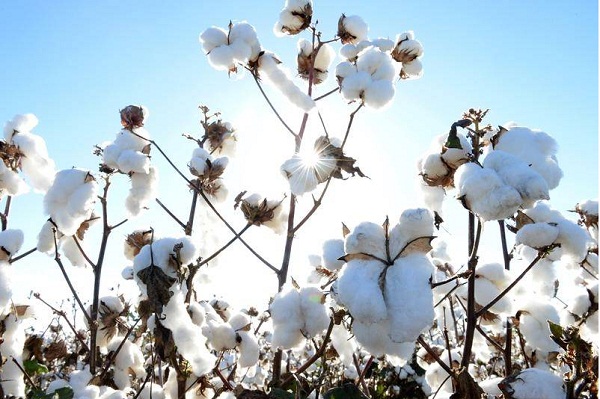
Textile industry players in India have expressed concern over the fluctuations in cotton prices on the Multi Commodity Exchange of India (MCX). In particular, they are worried about the huge difference in cotton prices in the months of August, October, November and December futures, especially the huge premium being demanded for near-term contract. Cotton prices in August are ruling at Rs 48,000 a bale or Rs 1.01 lakh per candy of 356 kg. Prices in October 2021 hovered at Rs 39,250 a bale while those in November declined to Rs 34,300 and to Rs 32,600 in December.
Cotton prices and stocks decline
Cotton prices declined Rs 35,000 from August to October last year and by Rs 30,000 from August to November and Rs 32,000 from August to December futures. Also, open interest in MCX is only 30,000 bales for the August contract with stocks in the exchange’s godown only 3,000 bales, says Atul Ganatra, President, Cotton Association of India (CAI). Prices on the Intercontinental Exchange (ICE), New York hovered at 103.99 US cents a pound in October and at 98.51 cents in December.
Indian cotton being sold at premium
ICE benchmark futures in July and MCX cotton August futures figures reveal, Indian cotton prices are commanding a 60 per cent premium while international yarn buyers are quoting ICE July rates for importing from India, Ganatra rues. Indian cotton is currently being sold at a premium to New York ICE cotton while in the past 10 years, it was sold at a discount, notes Ganatra.
Such artificially inflated cotton prices in India are damaging export competitiveness across all products, says Prabhu Dhamodharan, Convenor, Coimbatore-based Indian Texpreneurs Federation (ITF). Ganatra says, textile industry and spinning mills are compelled to buy cotton based on MCX rates but sell yarn in export market based on ICE futures. This is leading to huge losses.
Prices being driven by speculation
Ganatra explains, the belief that Indian cotton prices are fluctuating on account of loss of the US crop in Texas and China, is completely wrong as prices in India are being driven by pure speculation. Indian cottons premium prices is impacting exports of cotton, cotton yarn, apparel and garments. Cotton and cotton yarn exports dropped in July by 70 per cent due to high cotton prices, he adds.
Recession reduces demand
Dhamodharan attributes the reduced demand for cotton to a recessionary trend with low consumer sentiment. According to him, growth in the Indian textile sector can be boosted by the expectation of robust crop of good quality and removal of import duty on cotton. The Centre raised MSP for cotton to Rs 6,080 from Rs 5,726 a quintal for the medium staple variety. For the current crop year spanning from July 2022-June 2023, the net weighted modal price for cotton across various agricultural produce marketing committee (APMC) yards is Rs 10,621 a quintal.
Rise in prices stalls exportsv The Cotton Committee on Production and Consumption estimates, cotton production this year will total 340.62 lakh bales. However, the CAI pegs India’s cotton production at 315.32 lakh bales. A major reason for India’s cotton prices exceeding Rs 1 lakh a candy in May and June is the unseasonal rains that damaged crop quality. Good quality cotton had commanded a premium throughout the season, with domestic prices ruling at a premium to ICE benchmark futures.
However, rise in domestic prices has brought cotton exports to a halt. Till now, India has exported 40 lakh bales and does not expect to export any more until the season-end in September. Last season, it had exported 77.59 lakh bales.
RCEP and FTA with China boost manufacturing factories in Cambodia
Manufacturing factories in Cambodia have increased on account of the Regional Cooperation Economic Partnership (RCEP) and the Free Trade Agreement with China.
Cambodia has a total of 1,947 factories with a registered investment value of $15.7 billion as of June this year, as per a report by the Ministry of Industry, Science, Technology, and Innovation.
The products made by these manufacturing factories in the first half of 2022 increased by 75 per cent to $7.57 billion. The factors exported products worth $5.26 billion and the rest were sold domestically.
From January to July of this year, 112 new factories opened while 47 factories closed down. FTA with China, RCEP, and strong demand for Cambodia-made products in the US and Europe, which are Cambodia’s main markets, have built confidence in investors to invest in Cambodia, says HengSokkung, Secretary of State and Spokesman.
Securing sufficient raw materials to local production chains is another factor in building bold confidence in investors, he said, citing that those raw materials are imported mainly from China.
The manufacturing sector is estimated to contribute 39.9 percent of the Gross Domestic Product (GDP) in 2022, he said, adding that the sector has created some 1.04 million jobs.
Among the manufacturing plants in Cambodia, 1,100 are garment, footwear and travel goods factories, and the rest are food and beverage, automotive assembly, cement, electronics, and pharmaceutical factories, among others. The garment, footwear and travel goods industry is the largest foreign exchange earner for Cambodia.
Hyosung receives eco-product certification from SGS for creora
The world’s largest spandex manufacturer and the first global developer to commercialize bio-based spandex, Hyosung has received eco-product certification from SGS guaranteeing that creora® bio-based spandex is made with plant-based materials and is produced in a harmless and eco-friendly environment.
Hyosung is a comprehensive fibre manufacturer and its creora® spandex is the world’s leading spandex brand.
Hyosung informed that its creora® bio-based spandex is made by replacing 30 per cent of petroleum-based resources with bio-based raw materials derived from industrial field corn, which is also called dent corn.
According to a recent third-party life cycle assessment, the manufacturer of creora® bio-based spandex reduces its carbon footprint by 23 per cent as compared to the production of regular spandex.
Additionally, the sustainably grown feed-stock used to make the fibre is responsibly grown by farmers who target and measure their efforts to protect the land, air and water.
While ideally used with other bio-derived natural fibres and bio-derived synthetics, creora® bio-based spandex is suitable for all textile applications used for sportswear, ready to wear and loungewear, it provides the same ultra-stretch quality and recovery as Hyosung’s creora® Powerfit spandex.
Hyosung is planning to introduce creora® bio-based spandex made with 100 per cent bio-derived content in the future.
Faulty policies lead textile export earnings declining to $3 billion: APTMA
The All Pakistan Textile Mills Association (APTMA) believes export earnings of the textile sector will decline to $3 billion in the current fiscal year due to government’s policies that have strangulated the largest dollar-earning sector of the economy.
The sector has performed extremely well in the last two years with forex earnings increasing by $7billion. However, the sector currently faces scarcity of working capital, says ShahidSattar, Secretary General, APTMA.
According to Pakistan Bureau of Statistics, Pakistan’s textile exports increased almost 26 per cent to $19.3 billion in 2021-22. The national currency has lost more than two-thirds of its value of late, which means the pre-existing limits on textile mills’ working capital have become redundant. Exporters are facing huge issues in financing the export cycle, which lasts four to six months, adds Sattar
He criticized the government for failing to supply gas and electricity to the textile units that have recently been either upgraded or built anew using the subsidized loans under the Temporary Economic Refinance Facility (TERF).
Bangladesh apparel exports rise by 16.6% in July
Latest data from CCF Group shows that Bangladesh's apparel exports increased by 16.6 per cent Y-o-Y in July 2022 to $3,367 million while it declined by 17.7 per cent month-on-month. And the knitted apparel exports rose by 11.8 per cent Y-o-Y but decreased by 16.9 per cent M-o-M. Bangladesh's woven apparel exports increased by 23.1 per cent Y-o-Y but declined by 18.8 per cent M-o-M.
The fiscal year of Bangladesh was from July last year to June this year. Pants emerged as the largest exported apparel item, accounting for 34 per cent in fiscal year 2021/2022, T-shirts and knitted shirts came second at about 23 per cent, sweaters accounted for 13.2 per cent, shirts and tops accounted for 6.5 per cent, which had been decreasing for years. The growth rate of exports of all categories in the fiscal year 2021/2022 were over 30 per cent, yet the totaled exports only achieved 16.6 per cent growth in July. The growth of Bangladesh’s apparel exports is expected to move down further considering the consumption status in EU and US countries.
During the fiscal year 2021/2022, the European Union was the most important destination for Bangladesh's apparel exports, accounting for over 50.2 per cent of the total, up by 33.9 per cent compared with last fiscal year. The exports to the United States reached $9billion, accounted for 21.2 per cent of the total, and increased by 2.3 percentage points.
China’s textile revenue remains stable in H12022
Revenues growth from China's textile industry remained stable in the first half of this year, official data showed.
Revenues of textile companies with an annual main business income of at least 20 million yuan (about $3 million grew by 5.7 per cent Y-o-Yto 2.52 trillion yuan in the first six months of 2022, , according to the Ministry of Industry and Information Technology.
The total added value of these companies rose 0.9 percent Y-o-Y during the period.
The combined sales of main retailers amounted to 8.12 trillion yuan in the January-June period, up 0.8 percent from a year earlier. The country's garment exports amounted to $156.5 billion, an increase of 11.7 percent.
But the data also showed a 17 percent year-on-year decline in total profits of these companies and slight drops in yarn, cloth and garment output. The textile sector's employment levels also went down mildly.
GSP+ extension for 2023-33 needs Pakistan to implement corrective measures

A recently published policy paper recommends, to benefit from the extension of GSP plus status from 2023-33, Pakistan needs to fill the gaps on issues like honor killing, forced marriages, child labor laws, cancellation of the registration of INGOs and crimes against journalists. The paper was jointly published by Friedrich Naumann Foundation for Freedom Pakistan and Policy Research Institute of Market Economy (PRIME).
Titled, ‘Pakistan and the European Union under GSP+ Policy Paper,’ the paper highlights Pakistan’s trade performance under the scheme. It warns, absence of this scheme would lead to 12 per cent MFN tariffs and to retain the scheme for 10 more years, the country needs to introduce five new laws in addition to the earlier 27.
GSP+ loss threatens $3 billion textile exports
The policy paper also recommends that for the next agreement, Pakistan should negotiate with the EU on tariffs lines not falling under GSP+. Pakistan needs GSP+ status to deal with the current energy crisis, fiscal deficit, balance of payment deficit and depleting foreign exchange reserves. A loss of the facility would cause the textile industry to lose $3 billion worth of exports annually, warns Pakistan Ready-made Garments Manufacturers and Exporters Association.
The paper says, while Pakistan has introduced certain legal and institutional reforms, to comply with GSP+ obligations, it has not made any significant progress on labor rights. One of Lahore’s largest garment manufacturers is currently negotiating with the EU on labor and environmental standards. Meanwhile, presence of women in high-level occupations remains limited and their participation in the labor market less.
The UN Human Rights Convention has made certain positive changes regarding this. It finalized the Federal Domestic Violence Bill in 2019, appointed the first female chief justice of the High Court and incorporated a Transgender Person under the (Protection of Rights) Act 2018.
Little progress on child and forced labor
However, the EU Election Observer Mission in Pakistan claims, election process is military influenced. There is also an increase in child labor and forced labor in the country. As per the Global Slavery Index, Pakistan is one of the top 10 countries with a high presence of modern slavery in the form of threats, violence, coercion, abuse of power or deception to laborers.
UN Conventions on Good Governance opines, European Union can aid the approval of next GSP+ status by making an on-site visit to verify the implementation of the EC recommended reforms. The paper also recommends that the Union amalgamate its demands with Pakistan’s capacity to introduce an effective trade policy. Pakistan’s inability to compete effectively in the EU has already caused the country to lose out on market-enhancing opportunities.
Initiatives to benefit from the GSP+ scheme
In order for benefit from the GSP+ scheme, the policy paper recommends Pakistan implement the following initiatives.
• Urges Pakistan’s Board of Investment to attract Chinese investors to set up textile processing plants in special economic zones.
• Urges Pakistan’s commercial counselors in the EU to increase demand for Pakistani products in Europe.
• Recommends, they should target more SMEs looking to procure from Pakistan. Mandatory power supply to export-led manufacturers is also one of the paper’s recommendations.
• Introduce zero duties on raw materials required to make man-made fibre clothing in the EU market.
• Recommends a reduction in customs duties on imported machinery used in the textile sector.
With the current political turmoil and rising inflation, getting ready for GSP+ 2023-33 status seems more challenging for Pakistan.
Uttar Pradesh signs MoU with Flipkart
The Uttar Pradesh government has signed an MoU with e-commerce site Flipkart to bring state's handicraft products on the platform.
Through this initiative, the state government aims to tap the 40 crore customers on Flipkartto provide a vast market for handicraft products of the state.
Along with handicrafts and handloom and products, the platform will also display products made by Divyangjans of the country.
Flipkart is also training craftsmen for this initiative while the government is providngfacilities and loans to handicraftsmen and weavers and taking their products to the market of the country.
The state government is also organizing camps to give subsidies on loans to weavers. The government is providing a subsidy of up to 20 per cent on loans and up to seven per cent on interest as per rules.
US’ textile and apparel imports grow by 30.97% in H1FY2022
US’ textile and apparel imports grew by 30.97 per cent to $66.308 billion in the first six months of 2022, compared to $50.626 billion in the same period of 2021. With a 26.8 per cent share China continued to be the largest supplier of textiles and clothing to the US, followed by Vietnam with 13.87 per cent.
As per a Fashion Network report, apparel dominated of textiles and garments importsof the US in January-June 2022, and were valued at $49.578 billion, while non-apparel imports accounted for $16.729 billion, according to the latest Major Shippers Report, released by the US department of commerce.
Segment-wise, among the top 10 apparel suppliers to the US, imports from Bangladesh and Indonesia surged by 60.30 per cent and 60.27 per cent year-on-year respectively. Imports from India and Cambodia too grew by 57.27 per cent and 52.52 per cent respectively. Additionally, imports from Pakistan grew by 49.99 per cent compared to the same period of the previous year.
Of the total US textile and apparel imports of $66.308 billion during the period under review, cotton products were worth $29.541 billion, while man-made fibre products accounted for $33.396 billion, followed by $1648.531 million of wool products, and $1721.557 million of products from silk and vegetable fibres.











