FW
Cambodia approves three new projects in garment and yarn production
The Council for the Development of Cambodia has approved three new investment projects with a capital investment of $15.7 million to boost job prospects in the garment and yarn sectors of the country
As per a Khmer Times report, the three projects have been approved in Kampong Speu province and Phnom Penh.
The newly approved garment and yarn factories are Jade Fashion (Cambodia) Garments Company, Hong Yu Fang Garment Co. and Shun Wei Fang ZhiKeJi Co., Ltd.
According to estimates, the projects would help create around 2,279 jobs for the people in the country.
Jade Fashion plans to establish a garment tailoring factory in Phnom Penh, while Hong Yu Fang’s garment tailoring unit is scheduled to be opened in Kampong Speu province.
Meanwhile, Shun Wei Fang’s yarn production factory would also be based in Kampong Speu province.
A report earlier this month showed that the country’s garment, footwear and travel goods industry posted a 40 percent increase in exports in the first half of 2022.
The Kingdom exported products worth $6.6 billion during the January-June period in 2022, compared to exports valued at $4.72 billion for the same period last year.
The Ministry of Commerce’s undersecretary of state and spokesman Penn Sovicheat attributed the growth to the full resumption of socio-economic activities in the country, free trade agreements, and a rise in global demand.
Copenhagen Fashion Week bans fur use in this year’s show
As a sign of commitment to animal welfare Copenhagen Fashion Week has banned the use of fur and fur garments in this year’s show.
The fur ban has become a global movement after many prominent fashion houses, including Gucci, Versace, and Prada, as well as global brands such as Michael Kors and Tommy Hilfiger, make the switch to 100 per cet fur-free fashion.
All over the world, fashion weeks are one of the highlights for designers, buyers, and the public. The decision to ban fur on the catwalk follows changes in consumer preferences and growing activism against animal cruelty in fashion.
In 2018, London Fashion Week became the first fashion week to ban fur on the catwalk, followed by Finland’s counterapart, which even went one step further and banned all animal products, including animal leather, from 2019. In response to growing consumer demand for more animal-friendly fashion, the organizers of Amsterdam Fashion Week banned fur in the same year.
Following its decision to ban fur in the Copenhagen Fashion Week from 2022, the event has received praise from Justice Emma Hakansson, Co-founder, Collective Fashion
BGMEA targets $100 billion revenue from garment exports by 2030
With record export earnings of $42.61 billion in the fiscal year 2021-22, Bangladesh Garment Manufacturers and Exporters Association (BGMEA), has set a target to earn $100 billion by 2030 from the clothing products. In attaining the target of $100 billion export target, the sector has to earn $7.17 billion each year. Against 35.47 per cent growth in FY22, the sector also has to post an 11.26% annual growth in export earnings till 2030. The ambitious target was set at a time when the global economies are bleeding due to the Covid-19 pandemic impacts and ongoing Russia-Ukraine war.
On the other hand, the LDC graduation in 2026 will be another challenge for the exporters. This is because of possible duty free benefits withdrawal by the importing countries in the post-graduation period. Several researches showed, Bangladesh will have to range from 9%-12% duty after Bangladesh’s graduation to a developing country.
In FY22, export earnings from apparel products rose sharply by 35.47 per cent to $42.61 billion, which was $31.45 billion in the previous year. The sector contributed 81.81 per cent to the national exports. Of the $42.61 billion, knitwear products fetched $23.21 billion, up by 36.88 per cent from last fiscal year’s $19.91 billion, while woven items earned $19.39 billion, registering a 33.82 per cent growth. Knitwear products contributed much better than woven products.
Knitwear products contributed 44.56 per cent, while woven products 37.23 per cent. For sustaining the growth and to earn the $100 billion from the sector, there is a strong need to bring balance between woven and knitwear products. Knitwear products did well as the sector has a strong backward linkage and it can meet 85% to 90% demands of raw materials from domestic sources.
On the other hand, the woven sector can meet around 50 per cent raw materials from domestic sources, which is a barrier to growth. To reduce the gap between the woven and knitwear sector, the industry people have to come up with new investments to improve capacity to supply raw materials from local factories.
Decathlon India commits to transform all products into eco-design by 2026
With 103 stores in India and more than 1,600 across the globe, Decathlon, a French sporting goods retailer, is committed to RE 100 by 2026. The brand is engaging with its suppliers to move to renewable forms of energy. All its key suppliers in India are working on reducing their emissions from energy with actions such as onsite energy, PPA (Power Purchase Agreement) or moving to biomass.
The brand is striving to reach -53 per cent carbon intensity target by 2026 to move towards a ‘low carbon +1.5°C’ world,
In 2022, over 1,300 of Decathlon’s products will be eco-design of which over 500 are made in India. Eco-design is an approach that aims to reduce the environmental impact of a product over its entire life cycle while preserving its qualities of use. This is achieved by integrating the product’s environmental impact into its design from the very beginning, taking into account the product’s entire life cycle. The company is committed to transform all its products into eco-design by 2026.
Bhandari Hosiery Exports post Rs1.3593 crore net loss in Q1FY’23
In Q1 FY’23, Bhandari Hosiery Exports posted net loss of Rs. 1.3593 crore as against net profit of Rs. 1.9546 crore for the period ended March 31, 2022.
The company’s income declined by 50.61 per cent to Rs. 46.4127 crore during the period ended June 30, 2022 as compared to Rs. 93.9679 crore during the period ended March 31, 2022.
The company’s EPS declined by 30.77 per cent to Rs. 0.09 for the period ended June 30, 2022 as compared to Rs. 0.13 for the period ended March 31, 2022.
On a year-on-year basis, Bhandari Hosiery Exports posted net profit of Rs.1.3593 crore for the period ended June 30, 2022 as against net profit) of Rs.1.0720 crore for the period ended June 30, 2021.
The company’s total income grew by 7.75 per cent to.Rs 46.4127 crore during the period ended June 30, 2022 as compared to Rs.43.0732 crore during the period ended June 30, 2021.
The company has reported EPS of Rs.0.09 for the period ended June 30, 2022 as compared to Rs.0.07 for the period ended June 30, 2021.
Global players pledge to maintain Sri Lanka’s apparel industry competitiveness
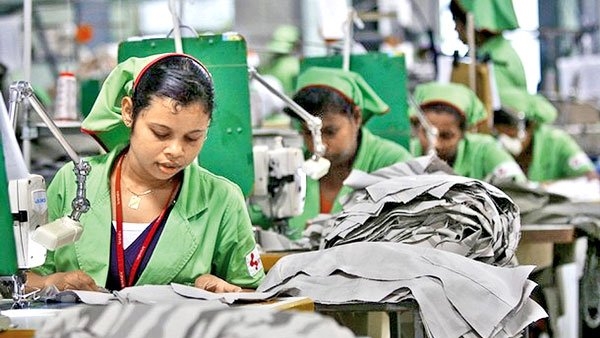
Apparel industry associations, stakeholders from across the world are joining hands to standby Sri Lanka’s apparel industry current facing a tough time due to the ongoing economic crisis which has affected its global competitiveness. Many associations from across the world have come out in support prominent among is the American Apparel and Footwear Association (AAFA) that has expressed strong support through a recent letter sent on behalf of buyers to Sri Lanka’s Joint Apparel Association Forum (JAAF). And as Sri Lanka struggles under the weight of the ongoing economic crisis with power outages, shortages and price increases of essentials, the JAAF has welcomed the call to action by the Ethical Trading Initiative (ETI) and the AAFA to support the apparel sector’s efforts towards ensuring worker welfare.
No changes required in current sourcing patterns
Steve Lamar, President and CEO, AAFA wrote in appreciation of JAAF’s efforts in keeping workers employed and safe during the crisis. It applauds the continuous work being done to ensure the industry’s progress and its ability to create new jobs. Lamar also warns, making significant changes in sourcing at this moment would impact both the country’s garment industry and workers engaged in it. AAFA reiterates its commitment to remain mindful of the current situation and consider the impact on workers before making any sourcing decisions. AAFA also commits to remain in constant touch with its Sri Lankan partners, ensuring timely payments to suppliers and guaranteeing a fair treatment to workers, says Lamar.
ETI meanwhile has commenced a collective response by engaging with economists, industry associations, worker representatives, and member companies operating in Sri Lanka to better understand the implications of the ongoing crisis on workers, suppliers and the industry at large. Distribution of dry rations, medicines, groceries and cooked food has been taken up as an initial step in support.
Supporting Sri Lanka with new initiatives
A supplier to global apparel brands and retailers, the Sri Lankan apparel industry needs to be supported during such tough times. Workers and their families need to be safeguarded and economy set in motion, opines Peter McAllister, Executive Director, ETI that has signed a joint call to action in collaboration with the Fair Wear Foundation, Fair Labor Association and British Retail Consortium.
The joint call for action encourages companies sourcing from Sri Lanka to support workers, suppliers and the sector at large. It encourages companies sourcing from Sri Lanka to introduce new initiatives to assess risks to workers, maintain regular communication with suppliers and make regular payments to suppliers. JAAF has welcomed this collective support as it enhances and compliments worker welfare measures already taken by the industry. Secretary General of JAAF Yohan Lawrence adds, “Factories are encouraged to implement welfare measures to best suit the requirements of their workers. As of June 2022, around 80 per cent apparel manufacturers have made cost of living adjustments to salaries over and above the annual increments. In some instances, these represent increases of 25 per cent from 2021.”
No order cancellation and timely payments
AADA’s letter also urges companies to avoid cancelling orders, ensure continued business to suppliers, pay all pending dues to workers and employees; review negotiated prices and include increase in energy, raw material and labor costs in future price negotiations. One of the most important recommendations of the letter includes exploring innovative remedial solutions to support workers and respecting human rights in these times of economic crisis.
Diversification can help Cambodia’s apparel exporters restrict recession effects
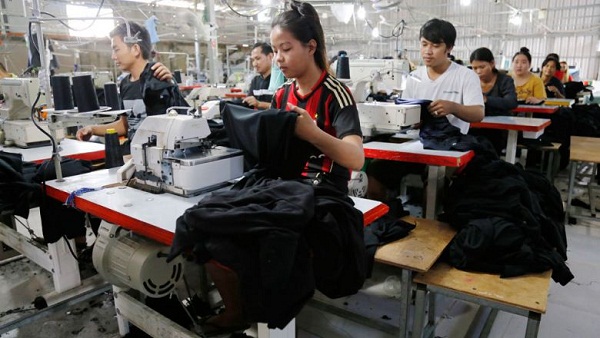
Garment exporters in Cambodia are experiencing a major downturn with Western buyers either reducing or revising orders. Ken Loo, Secretary General, Garment Manufacturers’ Association of Cambodia (GMAC) notes, an unstable global environment and possibility of an economic recession in the West have sparked the decline in export orders.
As per the Phnom Penh Post report, labor costs of garment exporters in Cambodia have surged on account of a new pension scheme being launched for private sector workers from October 1 and sectoral minimum wages will be effective from January 1.
Rising logistics and compliance costs add to woes
This double whammy is being further aggravated by other issues like rising logistics and compliance cost, adds Loo. While exports are growing, the net income of exporters have not grown as much due to rise in other costs. Exporters’ profit margins continue to remain low as seen from the ratio of value added products to labor-related costs, adds Loo. Only 39 per cent companies made profits last year while 43 per cent reported a loss, points out Loo citing a study by the Japan External Trade Organization (JETRO).
Accelerate policies to restrict downturn
To overcome losses, Cambodian garment companies would need to adopt cost-effective measures, opines Loo. He recommends, Cambodia should accelerate the Garment, Footwear and Travel Goods Sector Development Strategy 2022-2027 to help cushion coming downturn. Penn Sovicheat, Spokesman, Ministry of Commerce upholds GMAC’s concerns over the Ukraine conflict and other issues affecting Western countries. These can indeed hamper export orders for Cambodian textile-related products, he adds.
Introduce new FTAs and trade strategies
He urges exporters to opt for nearshoring besides signing free trade agreements with new countries as COVID, the Ukraine crisis and soaring shipping costs threaten to derail trade with more distant markets.
Public and private stakeholders also need to explore new markets and devise new trade strategies, says Hong Vanak, Researcher, Royal Academy of Cambodia.
Besides, stakeholders need to reflect on the investments of Western countries on transportation and encourage manufacturers to step these up, Vanak opines. Cambodia’s garments, footwear and travel goods exports grew 40 per cent to $6.6 billion in the first half of this year compared to $4.72 billion reported in the same period last year, shows data from the General Department of Customs and Excise.
Industry experts concerned about fluctuations in India’s cotton prices
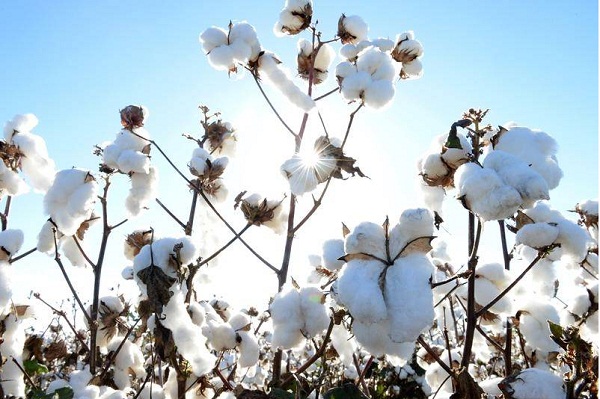
Textile industry players in India have expressed concern over the fluctuations in cotton prices on the Multi Commodity Exchange of India (MCX). In particular, they are worried about the huge difference in cotton prices in the months of August, October, November and December futures, especially the huge premium being demanded for near-term contract. Cotton prices in August are ruling at Rs 48,000 a bale or Rs 1.01 lakh per candy of 356 kg. Prices in October 2021 hovered at Rs 39,250 a bale while those in November declined to Rs 34,300 and to Rs 32,600 in December.
Cotton prices and stocks decline
Cotton prices declined Rs 35,000 from August to October last year and by Rs 30,000 from August to November and Rs 32,000 from August to December futures. Also, open interest in MCX is only 30,000 bales for the August contract with stocks in the exchange’s godown only 3,000 bales, says Atul Ganatra, President, Cotton Association of India (CAI). Prices on the Intercontinental Exchange (ICE), New York hovered at 103.99 US cents a pound in October and at 98.51 cents in December.
Indian cotton being sold at premium
ICE benchmark futures in July and MCX cotton August futures figures reveal, Indian cotton prices are commanding a 60 per cent premium while international yarn buyers are quoting ICE July rates for importing from India, Ganatra rues. Indian cotton is currently being sold at a premium to New York ICE cotton while in the past 10 years, it was sold at a discount, notes Ganatra.
Such artificially inflated cotton prices in India are damaging export competitiveness across all products, says Prabhu Dhamodharan, Convenor, Coimbatore-based Indian Texpreneurs Federation (ITF). Ganatra says, textile industry and spinning mills are compelled to buy cotton based on MCX rates but sell yarn in export market based on ICE futures. This is leading to huge losses.
Prices being driven by speculation
Ganatra explains, the belief that Indian cotton prices are fluctuating on account of loss of the US crop in Texas and China, is completely wrong as prices in India are being driven by pure speculation. Indian cottons premium prices is impacting exports of cotton, cotton yarn, apparel and garments. Cotton and cotton yarn exports dropped in July by 70 per cent due to high cotton prices, he adds.
Recession reduces demand
Dhamodharan attributes the reduced demand for cotton to a recessionary trend with low consumer sentiment. According to him, growth in the Indian textile sector can be boosted by the expectation of robust crop of good quality and removal of import duty on cotton. The Centre raised MSP for cotton to Rs 6,080 from Rs 5,726 a quintal for the medium staple variety. For the current crop year spanning from July 2022-June 2023, the net weighted modal price for cotton across various agricultural produce marketing committee (APMC) yards is Rs 10,621 a quintal.
Rise in prices stalls exportsv The Cotton Committee on Production and Consumption estimates, cotton production this year will total 340.62 lakh bales. However, the CAI pegs India’s cotton production at 315.32 lakh bales. A major reason for India’s cotton prices exceeding Rs 1 lakh a candy in May and June is the unseasonal rains that damaged crop quality. Good quality cotton had commanded a premium throughout the season, with domestic prices ruling at a premium to ICE benchmark futures.
However, rise in domestic prices has brought cotton exports to a halt. Till now, India has exported 40 lakh bales and does not expect to export any more until the season-end in September. Last season, it had exported 77.59 lakh bales.
RCEP and FTA with China boost manufacturing factories in Cambodia
Manufacturing factories in Cambodia have increased on account of the Regional Cooperation Economic Partnership (RCEP) and the Free Trade Agreement with China.
Cambodia has a total of 1,947 factories with a registered investment value of $15.7 billion as of June this year, as per a report by the Ministry of Industry, Science, Technology, and Innovation.
The products made by these manufacturing factories in the first half of 2022 increased by 75 per cent to $7.57 billion. The factors exported products worth $5.26 billion and the rest were sold domestically.
From January to July of this year, 112 new factories opened while 47 factories closed down. FTA with China, RCEP, and strong demand for Cambodia-made products in the US and Europe, which are Cambodia’s main markets, have built confidence in investors to invest in Cambodia, says HengSokkung, Secretary of State and Spokesman.
Securing sufficient raw materials to local production chains is another factor in building bold confidence in investors, he said, citing that those raw materials are imported mainly from China.
The manufacturing sector is estimated to contribute 39.9 percent of the Gross Domestic Product (GDP) in 2022, he said, adding that the sector has created some 1.04 million jobs.
Among the manufacturing plants in Cambodia, 1,100 are garment, footwear and travel goods factories, and the rest are food and beverage, automotive assembly, cement, electronics, and pharmaceutical factories, among others. The garment, footwear and travel goods industry is the largest foreign exchange earner for Cambodia.
Hyosung receives eco-product certification from SGS for creora
The world’s largest spandex manufacturer and the first global developer to commercialize bio-based spandex, Hyosung has received eco-product certification from SGS guaranteeing that creora® bio-based spandex is made with plant-based materials and is produced in a harmless and eco-friendly environment.
Hyosung is a comprehensive fibre manufacturer and its creora® spandex is the world’s leading spandex brand.
Hyosung informed that its creora® bio-based spandex is made by replacing 30 per cent of petroleum-based resources with bio-based raw materials derived from industrial field corn, which is also called dent corn.
According to a recent third-party life cycle assessment, the manufacturer of creora® bio-based spandex reduces its carbon footprint by 23 per cent as compared to the production of regular spandex.
Additionally, the sustainably grown feed-stock used to make the fibre is responsibly grown by farmers who target and measure their efforts to protect the land, air and water.
While ideally used with other bio-derived natural fibres and bio-derived synthetics, creora® bio-based spandex is suitable for all textile applications used for sportswear, ready to wear and loungewear, it provides the same ultra-stretch quality and recovery as Hyosung’s creora® Powerfit spandex.
Hyosung is planning to introduce creora® bio-based spandex made with 100 per cent bio-derived content in the future.