


FW
ILO fund, Nike collaborate on new initiatives to cut deaths amongst garment workers
International Labor Organization’s Vision Zero Fund and Nike Inc have collaborated to launch a new initiative to cut deaths and injuries among garment and footwear workers.
The joint initiative aims to understand the reasons behind the vulnerability of garment and footwear workers to injuries and deaths resulting from commuting accidents, and lessen the adverse impact on workers, their families, and the sector as a whole. It aims tocollaborate for launching a common, standardized approach to reducing these accidents that can be adapted and replicated in different contexts.
According to data from the Organization for Economic Co-operation and Development (OECD), 1.3 million people are killed and up to 50 million people are injured worldwide on roads every year. Commercial vehicles are involved in approximately 10 to 22 per cent of all road crashes globally.
Garment and footwear sector workers are disproportionately involved in road accidents in many countries. The reasons behind this include commuting long distances, using less safe forms of transport such as motorcycles, walking to work, and sharing roads with heavy commercial vehicles.
The project’s approach includes creating a Theory of Change (TOC) on road safety for garment workers, which has been put together after consultations with workers, employers, governments and ILO specialists in a number of countries.
The Theory Of Change aims to throw light on the underlying causes of road accidents involving garment and footwear workers. The partnership will also develop practical, easy-to-use guidance materials on commuting safety, which will be piloted by the Fund and Nike in a country where contract manufacturing facilities produce Nike products.
Demand for textiles fibers to continue growing in China
Demand for textile fibres in China grew at a fast pace in the past decade and is expected to continue growing in the next decade. As per a study by Research And Markets, the Chinese economy maintains a high speed growth which has been stimulated by the consecutive increases of industrial output, import and export, consumer consumption and capital investment for over two decades.
This market research report provides hard-to-find market data and analyses.The primary and secondary research is done in China in order to access up-to-date government regulations, market information and industry data. Data was collected from the Chinese government publications, Chinese language newspapers and magazines, industry associations, local governments’ industry bureaus, industry publications, and the publisher’s in-house databases.
Interviews were conducted with Chinese industry experts, university professors, and producers in China. Economic models and quantitative methods have been applied in this report to project market demand and industry trends. Metric system has been used and valuespresented in either Yuan (RMB, current price) and/or US dollars.
Bed line and bedspread category to grow by 4.31% from 2020-2025
In the home textiles segment, the bed linen and bedspread category is expected to grow by 4.31 per cent from 2020 and 2025. This growth will supercede the annual growth rate of 3.51 per cent of the entire home textiles sector. Bed linen and bed spread constitutes 45.45 per cent of the total home textiles market.
From $48.682 million in 2016, the bed linen market which grew to $60.940 billion in 2021. It is likely to grow to $63.563 billion in 2022, $66.235 billion in 2023, $69.080 billion in 2024, and $72.088 billion in 2025.
The bed linen market accounted for 45.45 per cent out of total home textiles market in the world in 2021. Its market size totaled $60.940 billion, while the size of the home textile market totaled $132.990 billion in 2021. By 2025, the bed linen market is expected to grow by 47.68 per cent. Its total market size will be $72.088 billion, out of total $151.825 billion home textiles market in 2025.
In 2021, the bath/toilet linen market totaled $27.443 billion in 2021. It is expected to grow by 3.40 per cent annually and reach $30.309 billion till 2025. The market for floor segment of home textiles is expected to reach $19.070 billion with annual growth of 1.94 per cent by 2025. Upholstery market size will increase from $15.777 billion to $17.992 billion with annual growth of 3.36 per cent. Kitchen linen market will increase from $11.418 billion to $12.365 billion with growth of 2.05 per cent during the same period.
15th İstanbul Apparel Conference to be held from October 05-06, 2022
15th İstanbul Apparel Conference, TGSD’s flagship eventwill be organized on October 5 and 6, 2022. The Conference will be held at Çırağan Palace Kempinski in İstanbul and will be telecasted live on BloombergHT platform. It will focus on the theme of Green Revolution and cover four key areas including bio-based fibers, green factories, digitalization, and, purchasing practices.
The first day of the conference will feature a series of world-class speakers. In previous years, c-level executives of major brands such as Cerruti, LoroPiana, ErmenegildoZegna, Moncler, Miroglio, J Brand, Alexander McQueen, Tom Ford International, Uniqlo, Adidas, Nike, Polo Ralph Lauren, H&M and Inditex attended the conference as speakers.
The B2B event, which will be executed on the second day of the event, will gather gs manufacturers and suppliers together on B2B meetings to promote mutual business as well as the global industry.
China’s cotton yarn exports decline 5.64% Y-o-Y in July’22
China’s cotton yarn exports in July 2022 decreased by 5.64 per cent Y-o-Y but increased 0.9 per cent M-o-M to 14,200 tons
The structure of export varieties did not change much and continue to remaindominated by combed varieties, especially medium and high counts, and the exports of carded yarns were mainly low-count yarns.
The exports to Indonesia, Thailand, and Malaysia have increased significantly, but the volume is too small to be of little reference. Exports to Pakistan fell by 79 per cent.
Bangladesh cotton consumption constant between Aug’22 – July’23
Bangladesh’s cotton consumption may remain unchanged in the year from August 2022 to July 2023 owing to lower than expected imports.
As per the US Department of Agriculture (USDA), cotton import by Bangladesh was likely to decline to 8.4 million bales during the period from the estimated 8.5 million bales.
The USDA also, reportedly, forecast lower imports for India, Pakistan, Turkey and Vietnam, while adding Bangladesh’s import declined in the same period between 2021 and 2022 along with that of China and Pakistan.
Bangladesh’s imports declined by 8.7 per cent to 7.9 million bales of cotton from 8.7 million tons the preceding period.
A MatinChowdhury, Managing Director, New Asia Group, claims that volume of orders is reducing even if many are using synthetic and blended cotton owing to higher cotton prices.
Birmingham’s Design & Source fair to showcase Indian manufacturers of fashion, homeware, textiles
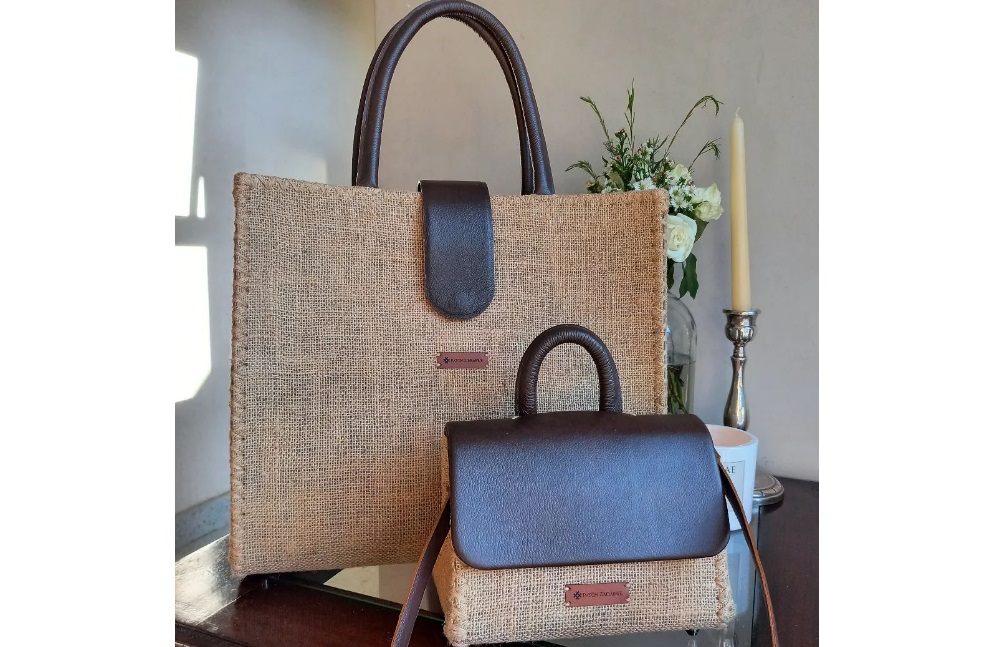
A one stop shop for consumers’ product needs across home, gift and fashion sectors, the Design & Source fair will be held under the aegis of Autumn Fair 2022 at NEC Birmingham from September 04-07, 2022. Featuring over 100 global manufacturers of homewares, textiles, gifts, stationary, fashion and toys, the fair will focus on responsible and sustainable production. With a line-up of top manufacturers, Design & Source will focus on sustainable and ethical production.
Helping young minds and souls evolve and enrich
Offering a wide range of products from dolls and soft toys to outdoor games, educational toys, sound and light toys, India’s Salasar (Webby Toys) will showcase its range that helps enrich and evolve young minds and souls. Funride Toys another Indian toy maker that offers trikes, scooters, walkers and ride-on toys will also showcase its range. Suzanne Ellingham, Sourcing Director, Autumn Fair says, “The Indian Pavilion helps buyers discover more sustainably made products from quality manufacturers. Trade organizers need to encourage more such manufacturers that align with their products with new products in the UK market.’’
Besides sustainable toy manufacturers, the trade fair will showcase Indian manufacturers, of table and kitchenware, sports, clothing, and bag manufacturers, etc including, 3ACE international, ARNIKA-A Designer Studio and Allene Overseas
An able support to the retail industry
UK’s most vibrant marketplaces for wholesale home, gift, fashion and sourcing, Spring and Autumn Fair is the definitive ‘shop for shops’, that supports the retail industry. Located in the centre of the UK at the NEC in Birmingham, Spring and Autumn Fair is accessible to independent, multiple, or online designers, contractors and suppliers from UK and across the world every February and September.
Punjab to set up mega textile park in Fatehgarh Sahib
The Punjab government has decided to construct a mega textile park in Fatehgarh Sahib.
It had earlier planned to construct the park near the protected Mattewara forest in Ludhiana. However, the plan was scrapped following a public outcry.
Bhagwant Mann, Chief Minister will write a demi-official letter to Piyush Goyal, Union Minister of Textiles, Commerce and Industry, requesting him to accept the proposal with a changed location,”said an official.
As per reports, the park will be built in around 1,000 acre in Fatehgarh Sahib. With 700 acre already acquired, another 300 acre will be acquired soon.
The Mega Integrated Textile Region and Apparel Park, under the PM-MITRA scheme will help in generating employment besides boosting exports from the state.
Polyester yarn sales revenues to grow by 20% this fiscal: CRISIL Ratings
Revenues from the sales of polyester yarn will grow by 20 per cent this fiscal on healthy demand, and increased blending with cotton yarn.
As per a CRISIL report, better profitability and expected modest capital spending will improve credit profiles of polyester yarn manufacturers. Last years, revenues from the sector grew by 60 per cent owing to a recovery in demand from end-user segments and price-hikes while sales volumes grew by 15 per cent.
Demand is expected to remain healthy this fiscal too, with garments and home textiles segments expected to grow at 16-18 per cent and 12-13 per cent in fiscal 2023, respectively, driven by recovery in domestic demand and moderate growth in exports.
Gautam Shahi, Director, CRISIL Ratings, says, polyester yarn’s cost effectiveness to blend with cotton yarn has increased its demand in the market.
With an increased differential between cotton and polyester yarn prices to sustain, the ratings agency expects 4-5 per cent of cotton yarn demand to shift to polyester yarn, adds Shahi. This shift is expected to continue for most part of this fiscal as end user segments operate in a price-competitive environment.
Lenzing signs Dutch Denim Deal
Lenzing recently signed the Dutch Denim Deal, a public-private initiative that calls for a new industry standard to use 5 per cent post-consumer recycled (PCR) cotton in the production of all denim clothing.
The deal was originally initiated by the House of Denim Foundation in Amsterdam and later supported by the Dutch government. It was signed in October 2020 by the entire denim industry and some municipal stakeholders in the Amsterdam metropolitan area following the EU Green Deal and the Circular Action Plan, and the brand side includes more than 40 signatories such as PVH Europe, Scotch & Soda and Kings of Indigo, as well as Calik Denim, Mud Jeans, Bossa, AGI Denim, Kipas, Ereks and Recover from the supply chain.
The initiative also includes a goal to produce 3 million pairs of jeans by 2023 using 20 percent post-consumer recycled cotton—brand owners and retailers will achieve a minimum of 5 per cent PCR content in their own denim collections by this time, which seems much difficult. Lenzing’s participation will help bring the initiative closer to its goal.
Lenzing is a raw material supplier ready to help other companies reach this goal. In 2017 Lenzing pioneered Tencel ™ lyocell with Refibra ™ technology, which is now produced with 30 per cent post-industry and post-consumer cotton waste and 70 per cent wood pulp. A Fiber ID has also been added to ensure traceability and transparency.











