FW
Rise in Bangladesh denim exports to the US
Bangladesh’s denim exports to the US in the first seven months of 2022 rose by 46 per cent.
In 2021, Bangladesh became the top denim exporter to the US for the second consecutive year. Currently, Bangladesh holds a 22 per cent market share of the US denim market.
Bangladesh’s denim sector has improved a lot with huge investments in denim processing plants. The fabric used to be imported but now about 60 per cent is being sourced from domestic suppliers.
A number of state-of-the-art fabric mills were established in the country due to the positive growth of denim.Bangladesh’s manufacturers now produce high-end products with increased investment in research and development, in-house design studios, and technologically advanced washing plants. However the ease of doing business needs to be further developed by resolving all the complexities related to infrastructure and ports.
Although, there has been a decline in orders as the global economy is going through an unstable situation due to war, inflation and the energy crisis. Retailers now have a surplus of goods and so are ordering less. Plummeting sales in the West amid rising inflation driven by the Russia-Ukraine war is the big cloud on the horizon for the apparel industry of Bangladesh.
Pakistan eases textile functioning, sector awaits new policy
Pakistan is committed to reducing the cost of doing business for export-oriented sectors including textiles and reducing the current account deficit.
Value-added products are being promoted. Other steps taken include the supply of energy at competitive tariffs, monetary disbursements to mitigate prevailing liquidity issues due to severe economic challenges, duty-free import of cotton and reduction of custom duties on import of dyes and chemicals, and duty-free import of textiles and apparel machinery.
Pakistan’s textile industry is faced with countless opportunities to capture a greater market share, but state reforms in energy, technological upgradation, diversification and value addition will be necessary in order to enhance the potential of the sector and facilitate economic growth.
Pakistan’s exporters handled disruptions such as the Covid pandemic very well especially in comparison to regional competitor Bangladesh.To maintain the current momentum, the textile sector has committed to unprecedented value addition by committing to setting up 1000 garment plants.
A new policy on textiles and apparel would address matters including value addition, product diversification, skill development, productivity and ease of doing business. Investment will be invited in the textiles and apparel sector to enhance manufacturing capacities.
In the global textile market Pakistan has less than a two per cent share, which will be enhanced with practical steps.
Uganda needs more zeal to better utilize AGOA’s duty-free access to US market
In spite of the African Growth and Opportunity Act (AGOA) providing duty-free access to the US market for over 6,000 products, Uganda government believes AGOA‘s potential hasn’t been maximized to its fullest potential even two decades later. The legislation’s primary goal was to promote economic growth through good governance and free markets.
An underutilized opportunity
Although through AGOA, the American market had opened up for micro, small and medium enterprises of Uganda and created a win-win scenario for US and Ugandan businesses, it still isn’t doing as well as expected. Uganda’s export earnings have dropped tremendously in the last two years as a result of the pandemic. Over the last three years, Uganda in particular and the globe in general have been reeling under uncertainties. As other regional countries were finding their feet, Uganda was feeding the US market with coffee, crafts, vanilla, chocolate, tea, textile and dried fruits—all under the AGOA initiative.
As Teddy Ruge, exporter of value-added Moringa products rues, AGOA is a fantastic opportunity but Uganda has not taken full advantage of it yet. Only about 50 companies are exporting to the US under the AGOA initiative. However, by now the number of companies directly exporting to the US by virtue of this arrangement should have been 1,000.
AGOA extension and things to do
Experts are now troubled as the AGOA agreement is set to expire in September 2025 at which stage preferences will fade away, unless renewed or replaced by other preferences, or bilateral trade agreements. In Uganda, there is already increased momentum from the government and sector players to have it extended to at least 2035 or leave it open. According to AGOA in charge in Uganda, Ms Susan Muhwezi, extension is a no brainer, considering its recent success. Experts feel to succeed better, solving challenges such as the skilling gap, shortage of working capital and addressing value chain loopholes, including harnessing interactions with farmers, will go a long way in reaping tangible success out of the AGOA initiative.
Francis Kuluo, Ministry of Trade Principal commercial officer points out, Uganda could have done much better. Now, they need to pay more attention to quality because it is an important market requirement. Uganda has been working on it since 2018 and developed standards for many products, including crafts. The country has also reduced standards and certification costs with a view to growing our exports. The way ahead is to embark on massive sensitization, opines Kuluo. MSMES needs to know there are more than 6,000 products that can be supplied under AGOA to the US market.
Ugandans are still battling post-Covid effects and, since the US economy hasn’t yet fully reopened, the market for these products has dropped. However, there is hope for the future as the duty-free act continues for another new term. Along with the government leading the way, local farmers should take advantage of AGOA. Most of them like the cheaper shortcut route and are inconsistent with their produce. After trying once exporting through AGOA and not making instant profits, they become impatient and leave and try other markets. Thus, with the AGOA settlement being extended, the success of this initiative will now be dependent on the participation of private sector with the government being a facilitator.
Ravi Sam is new chairman, SIMA elects new committee
Ravi Sam is chairman of Southern Indian Mills Association (SIMA). He is managing director, Adwaith Textiles, and is a commerce graduate. He holds a post-graduate diploma in textile technology and is the founder trustee of Siruthuli, the movement for preservation of water bodies in Coimbatore. He is involved in various social welfare activities. He feels the textile industry should give priority in making investments in renewable energy generation (wind and solar power) to remain competitive and fulfill sustainability obligations.
Dr S K Sundararaman, managing director, Shiva Texyarn, is deputy chairman. He holds an MBBS degree and masters in business management from Cambridge University. Dr Sundararaman is a well-known personality in the field of technical textiles in India and also in the field of technical education. He has been a member of various business forums at the national level. Currently, he is the chairman of the Indian Technical Textile Association.
Durai Palanisamy, executive director, Pallava Textiles, has been re-elected as the vice-chairman. He holds a MBA in international business from Southern New Hampshire University. He is the vice-president of CII, Erode zone. He is also on the committee of the Synthetic and Rayon Textiles Export Promotion Council.
SIMA is the single largest employer organization representing the textile value chain.
India focuses on T&A exports amidst constraints
Exports are the core area of focus to make India a developed nation by 2047.
Measures have been taken to take forward domestic manufacturing and exports.However for that raw material prices need to be stabilized. Another urgent area is free trade agreements with developed nations. The textile industry is also pitching for PLI-2, extension of ATUFS, advance authorisation on self-declaration basis, and deletion of the condition making the transferee liable and making this applicable to existing scrips under the RoSCTL for garment exports.
There is a continuous increase in the prices of raw cotton. The trend is expected to continue considering the global shortage of cotton. The crop is under stress this year in Pakistan, Brazil and the US. Plus, the ban on China’s Xinjiang cotton has already disrupted supply chains across the globe.
Textiles contribute about two per cent to the country’s GDP. And as an industry, it is the second largest employer in the country — after agriculture.And growing the textile industry could help solve the employment problem plaguing the country to some extent.But India has lost its sheen when it comes to garment exports.
Just a decade ago, India was the second largest garment exporter in the world. Now, India is sixth in the list of garment exporters.
Inditex H1 sales up 24, profits up 41per cent
In the first half of 2022 Inditex’s sales rose by 24 per cent. Store and online sales were up 11 percent year-on-year. Profits were up 41 percent and gross margin was up 57 percent, marking the strongest first half in seven years.
Inditex has a unique fashion proposition, an increasingly optimized shopping experience for customers and a focus on sustainability. In the face of possible supply chain tensions entering into the second half of the year, Inditex accelerated the current-season inventory flow. Product availability was up 43 percent in the first half of the year.
Inditex is the parent company of brands like Zara, Massimo Dutti, Pull&Bear and Bershka. Zara continues to be the strongest brand in Inditex’s mix. The fashion giant’s sales were up 29 percent as it continues to up its fashion game with a stronger offer of designer-inspired items, including its Night collection, with a much-publicized campaign starring Kate Moss.
Other stores in the group’s portfolio performed well, including the teen-skewing Pull&Bear and Bershka, which were up 19 percent and 15 percent respectively, and its higher-end Massimo Dutti banner, which was up ten percent. Only Oysho, its lingerie and pajama brand, was down four percent as customers moved on from comfort dressing.
GSP aids Pakistan’s EU exports
GSP has helped Pakistan increase its exports to the European Union.
This also means Pakistan has to comply with 32 core international conventions, which were previously 27. This might provide opportunities for new ideas regarding sustainability and circularity which could improve the overall profile of Pakistan’s industrial sector.The European Union has been supporting sustainable and green inclusive growth in Pakistan.
Pakistan is working for the conservation of natural resources and pollution reduction in Pakistan’s textile and leather sectors. The tool kits developed would encourage the private sector to report their best practices at the pilot scale and initiate a healthy competition. Resource efficiency would have to be improved through dashboards.
US Cotton has been visiting Pakistan over the last few years. This interaction is expected to help in resolving issues relating to production of cotton and its trade between the two countries. The USA is Pakistan’s largest trade and investment partner. There will be a technology transfer of high-yielding cotton seeds to Pakistan. The US will introduce improved, genetically modified, and certified seeds in Pakistan and share information on weather forecast. Pakistan will be updated on the best global practices in cotton and textiles being adopted by various countries.
China faces turmoil, exports growth falls
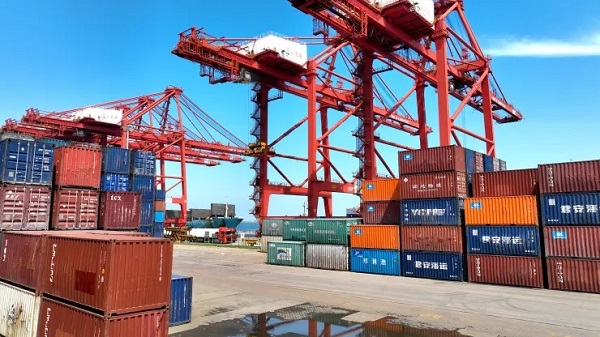
Chinese exporters are having a difficult time. Softer foreign markets are forcing them to shed workers. They are switching to lower-value goods and even renting out their factories. Customers are placing fewer orders and are reluctant to buy expensive products.
Compared to 2020 and 2021, this year is more difficult for exporters. Sales could decline by 20 per cent in the third quarter compared to last year.These alerts echo in workshops in China’s eastern and southern manufacturing centers, in industries ranging from machinery parts and textiles to high-tech household appliances, where businesses shrink while export orders dry up. Export growth has been well below expectations and slowed for the first time in four months.
Export slowdown
It is very likely that Chinese exports will slow down or even contract further in the coming months as leading economic indicators point to a global slowdown in growth and even a recession. To support the sector, export tax rebates were extended, and the country plans to help exporters and importers secure orders, expand markets and improve the efficiency of port operations and logistics.Exports are key to China more than ever, and all the other pillars of its economy are on shaky ground.
The way out
China has moved over the years to reduce its economy’s dependence on exports to increase growth and reduce exposure to global factors beyond its control, while some cheap production is shifting to other countries such as Vietnam as China grows richer and its costs are rising. In the five years before the pandemic, from 2014 to 2019, the share of exports in China’s GDP decreased to 18 per cent from 23 per cent. But that share soared with the advent of Covid, reaching 20 per cent last year, in part because stuck in-home consumers around the world have acquired Chinese electronics and household goods. It also helped boost China’s overall economic growth.
This year, however, the pandemic has returned to bite China. Its strict efforts to contain the country’s Covid outbreaks led to blockages that disrupted supply chains and shipping. But far more ominous for exporters is the slowdown in foreign demand, as the effects of the pandemic and the conflict in Ukraine are fueling inflation and monetary tightening that hold back global growth. The economy has been burdened by a year-long decline in the real estate market and disruptions from the zero-Covid policy. Companies have had no export orders for months. Some exporters are adapting their business in response to the crisis by producing cheaper goods, but this will also affect revenues.
Demand for used clothes in Africa rides on affordability, sustainability: Study
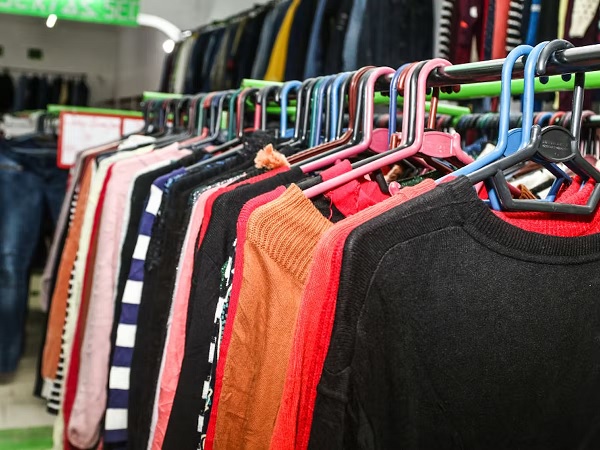
The pursuit of pre-loved clothing is emerging as the most prominent trend in the African market with consumers continually upgrading their wardrobes by donating or reselling used items.
As per an Euromonitor International report, known as Madunusa in South Africa, Okrika in Nigeria, and Mtumba in Kenya, the African secondhand clothing market is diverse. Aimed at all income groups, the market ranges from basic everyday use worn clothes to luxury apparel and thrift clothing. The Voice of the Consumer: Lifestyles Survey 2022 by Euromonitor International shows, Nigerians are the biggest buyers of second-hand clothing with nearly 10 per cent reporting buying and selling used items at least once a week.
Second-hand clothes sold in open markets across Africa are not bought by low-income group consumers only. They are also endorsed by pre-loved clothing shop owners who hunt for well-known brands in excellent condition to resell in their trendier and more upmarket thrift shops.
Uncertainties broadens market
While more formalized markets such as South Africa offer a plethora of options, other African countries offer limited options due to low modern retail penetration. Customers in these markets can buy pre-loved clothes from the few available stores at increased rates.
Recent economic uncertainties have broadened the market for secondhand clothes to include higher income consumers. However, this set prefers to shop either online or in better-maintained thrift stores. Secondhand products are also being bought by aspirational consumers who look to own luxury products at affordable rates.
Anyone can become a reseller in the second-hand clothing industry with little investment. However, some countries have introduced stricter rules for resellers though most of these laws are poorly enforced. For instance, despite a complete ban, import of second-hand clothing continues in Nigeria.
Secondhand clothing bales are handled by multiple people before reaching the final customer either in the same country or neighboring countries that ban secondhand clothes.
An employment, revenue opportunity
In 2019, Kenya spent 42 per cent of expenditure on secondhand clothing and footwear, as per #StateofMitumbaTradeKE. The secondhand clothing industry in the country employs nearly two million people and contributes over KES 12 billion in taxes annually, as per the Kenya National Bureau of Statistics. The market in sub-Saharan Africa offers abundant employment opportunities for governments. However, its growing demand threatens the local textile industry.
Euromonitor has identified other trends as well in Africa. Financial experts are using new services like mobile money to track their transactions. This enables smooth payment transactions, especially in the informal market. Secondhand fashion is being supported by only a small subset of consumers due to sustainability reasons. They consumers are opting for sustainable clothes besides expecting brands to ensure transparency in operations.
As Africans adopt a new path, making drastic personal changes and re-hauling their values, lifestyles and goals, affordability will continue to dominate purchasing decisions. They will continue to shop for pre-loved clothes and to meet their rapidly changing needs businesses will have to customize their offerings.
Fusing street styles with active wear help segment stay ahead in post-pandemic times
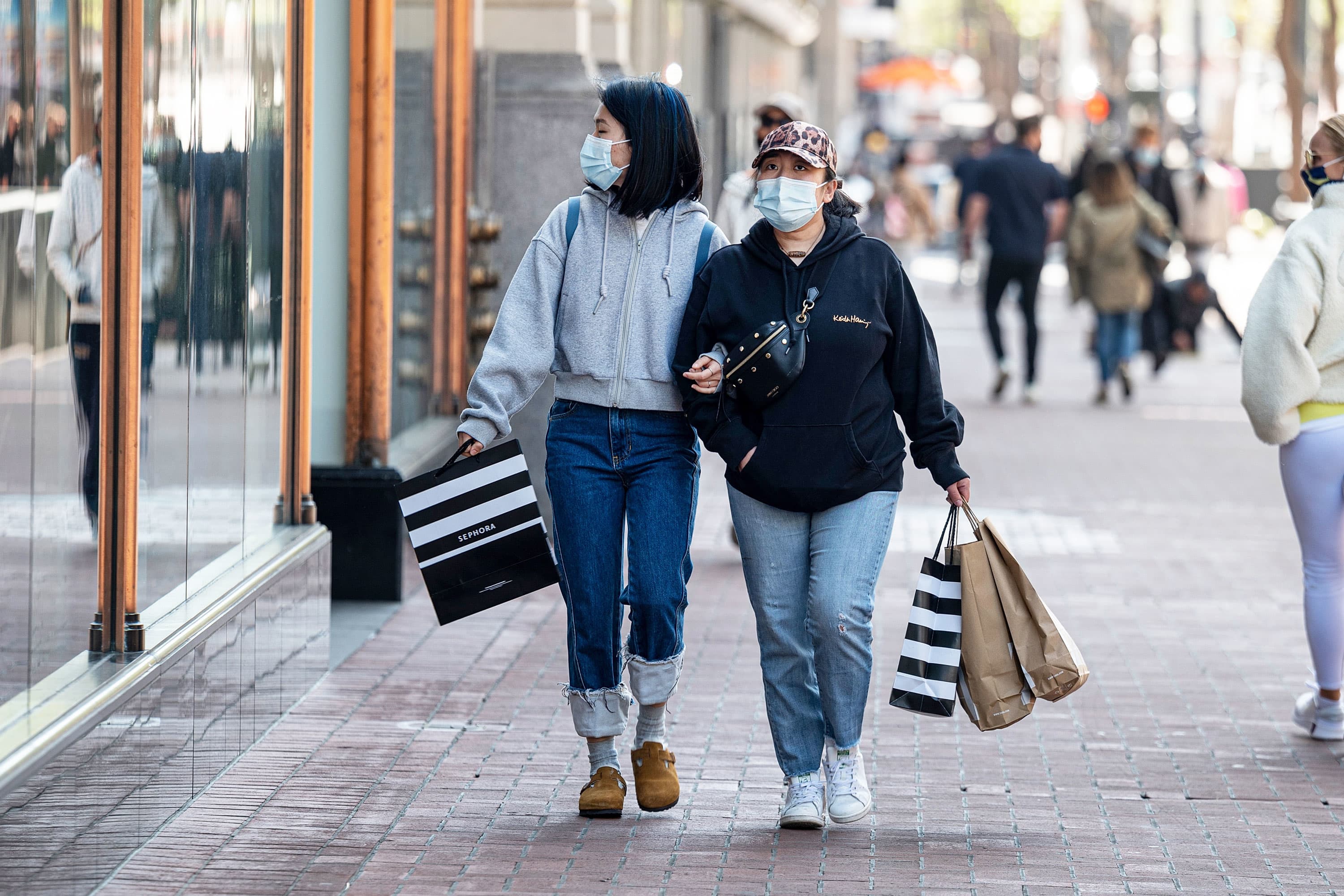
Old habits die hard in the post-pandemic global active-wear segment as consumers still prefer to wear comfortable the clothes they have become used to over the last two years. With healthy lifestyles taking precedence over having a good time and an indulgent lifestyle, majority of consumers (76 per cent) say they are trying to put more emphasis on improving their physical health, revealed a Coronavirus Response Survey (Wave 12, July 2022).
Lifestyle changes augur well for segment
People now prefer to go for a jog in the park rather than meet friends over a drink or coffee after work in the corporate segment. The survey shows, the most popular garments worn in last few months are T-shirts (58 per cent), activewear (31 per cent), denim jeans (30 per cent), athleisure (28 per cent), sweatpants/sweatshirts (26 per cent), and leggings/yoga pants (26 per cent). And the most popular activewear purchases are shirts (72 per cent), bras (63 per cent), shorts/capris (62 per cent), pants (56 per cent), underwear (52 per cent), and sweatshirts/hoodies (47 per cent), according to the Cotton Council International and Cotton Incorporated’s 2022 Global Activewear Study.
A growing number of awareness campaigns to promote sports by various organizations across the globe have spearheaded the growth of active-wear market. The use of environment-friendly green textiles in sustainable method of manufacturing around the world is also a big hit with consumers. Continuation of work-from-home in many corporates as well as leisure activities, such as running and cycling, is strengthening market growth. Also giving a push to the market are celebrity collaborations along with the wide availability of designer active-wear brands through offline and online distribution channels.
Growth a global phenomenon
The global activewear market has grown from $342.9 billion in 2020 to $380 billion this year, reveals Statista, a global leading provider of market and consumer data. It’s projected to reach $455.4 billion by 2027 and fuelled by fitness-conscious consumers and a growth in street-wear, which has led to consumers incorporating activewear into their personal style statements. And as Maria Rugolo, apparel industry analyst at NPD Group states, to look their best, people must also feel their best. While people still want to look fashionable, comfortable clothes versatility remains key reasons why they make a clothing purchase for themselves. With changing economies times, versatile items that can be worn for various occasions and seasons can ease consumers into making an investment during uncertain times.
Merging street styles with active wear
As per a Lifestyle Monitor Cotton Inc report, top brands are concentrating on merging active and street styles, so what is worn at home can also be worn as trendy yet casual street-wear clothes. Signed by McFly is a Black-owned street wear brand that has included cotton stretch body sets, cotton track suits, velour hoodie and jogger, cotton-body/leather-sleeved varsity jackets along with smart streetwear pieces like logo T-shirts and hoodies. Celebrity endorsements for streetwear is the rage with most brands adding cotton-infused clothing that is durable, light and breathable and increasingly used for sports like skateboarding, parkour, and roller skating.
The Naturals, a group of women athletes in male-dominated sports, were chosen by Cotton Incorporated to represent cotton and its natural abilities. This group of athletes including, Leticia Bufoni, a professional street skateboarder and six-time X Games gold medalist, Sydney Olson and Jasmine Moore, a professional roller skater are just some of the many names promoting the market for cotton in a big way.
Active-wear is running fast ahead of the pack with brands laughing their way to the bank knowing it is just a matter of time when the post-Covid complacency of dressing down wanes and the fashion catwalks are back with a bang.