


FW
Why activewear is the new buzz in clothing

The pandemic was not a happy period for the clothing industry in general with the exception of activewear. The fact that it is projected to becoming USD 276.61 billion in the next six years is the proof of its popularity and staying power. UK-based research agency Technavio presented a report titled Activewear Apparel Market by Distribution Channel and Geography - Forecast Analysis 2022-2026 – it stated that the growth momentum is anticipated to accelerate at a CAGR of 11.24% during the forecast period. The report attributed this growth due to innovative use of fabrics and styles as well as creating an activewear line that is premium and on trend.
Did the pandemic create this genre?
Active lifestyles are influencing the market positively thanks to the increase in people turning towards them. One among the key factors contributing to the growth of the active wear market is the unique benefits offered by active wear, like quick-drying, thermal resistance, breathability, chemical resistance, and static resistance. However, the rise in the number of fake and counterfeit products adversely impacts the growth of the global active wear market.
As a results of volatile raw material costs and high designing costs, the active wear market is probably going to face challenges related to a declining number of price-sensitive consumers in the forecast period of 2022-2032. By providing suitable fitting and proper support, activewear can prevent muscle sprains and other ligament and muscle injuries. This has led to the rapid climb of the global active wear market. These activewear products offer many advantages, including quick-drying properties. Sedentary lifestyles have made consumers more aware of their health, which further boosts the active wear market ahead. Women and men are adopting activewear outside the gym to wear as casual clothing because it gives the wearer a dry and comfortable feel. Cotton-based activewear is particularly popular in the summer because it keeps the wearer dry and also prevents irritation of the skin. It should be noted that Cristiano Ronaldo and Serena Williams are athletes who are social influencers beyond football and tennis as they have a huge following for their healthy and active lifestyles and have played significant roles in making activewear so popular.
Fashionably fun?
The single-most important driver to this segment’s growth is that sports and lifestyle brands are making activewear serious fashion statements. Nike, Reebok, Puma, Lululemon, Fila, New Balance and Gymshark are perfect examples of how reputable sports and activity-based brands have made activewear fun and fashionable. These brands are driving the sustainability factor as well with sustainable, durable and premium-quality fabrics that are innovatively designed to fill the fashion gap that previously sportswear couldn’t. Another winning element for activewear is that it has been able to ride on the wave of diversity and inclusivity by offering gender-neutral fashion and is able to cater to all body types.
Luxury brands have realised its potential and be it Gucci or Stella McCartney, they are all busy creating exclusive activewear lines.
Retail outlets and e-commerce are level pegging
When it comes to accessibility of activewear, both platforms are doing well. Retail stores are gaining popularity as more activewear and sportswear brands are launching more brick-and-mortar shopping experiences that visualize their brand stories in person. Additionally, fittings and on-time deliveries or lack of it is driving the popularity of in-shop purchases as people return to post-pandemic normalcy. The popularity of e-commerce that exploded during the pandemic, remains another popular channel for purchase.
Chinese single yarn exports up 46 per cent
China’s exports of single yarn increased by 46 per cent in August 2022. Exports of ply yarn and cable yarn were down six per cent in the same period. And exports of synthetic staple fiber sewing thread were down 11 per cent.
From January 2022 to August 2022, total exports of polyester yarn increased by 22 per cent over the same period last year. The export volume in August was lower than the average level for the first time since May. Orders have been significantly reduced since August, and are expected to further decrease in September.
Two major export markets for China’s polyester yarn are Southeast Asia and the Middle East. Yet, currently, these two markets are facing their own problems. Since July, textile and apparel orders in Southeast Asia have decreased significantly, thus the demand for polyester yarn has reduced accordingly. Insufficient US dollars was the main reason for the reduced export orders to the Middle East, which was mostly caused by the depreciation of its local currency and the rapid consumption of foreign exchange.
Meanwhile, as China’s exports were settled in US dollars, these countries faced great pressure despite the devaluation of the renminbi, thus orders have also decreased.
Bangladesh garment exports to EU up 44%, may overtake China
From January 2022 to June 2022 Bangladesh’s garment exports to the EU rose by 44 per cent. In comparison China secured a 21 per cent rise.
Bangladesh is poised to overtake China in garment exports to Europe. Work orders are also coming in big volumes from the US because of trade tensions with China.
In recent months, cotton imports by China have also declined significantly, which also indicates that apparel work orders are shifting to other countries like Bangladesh.
Bangladesh can perform strongly as it already has the capacity to cater to international retailers and brands. Local manufacturers last year expanded their capacities by over ten per cent just to cater to the influx of the work orders. However, inflation stemming from the Russia-Ukraine war may adversely affect consumers, which may have a slight ripple effect on Bangladesh’s garment shipments to Europe. From January 2022 to June 2022, European imports of apparel were up 25 per cent from the corresponding period of last year.
Exporters in Bangladesh are hopeful that a recent drastic fall of cotton prices in international markets will give a significant boost to the generation of new work orders and enable them to turn more competitive in international markets.
‘Sorting for Circularity’ report suggests recycling textiles to drastically reduce waste
Amsterdam-based Fashion for Good is the world's first museum of sustainable fashion innovation that redesigns how fashion is made, worn, and reused through different fashion seasons. Through workshops and exhibitions, this global initiative constantly innovates fabrics and styles for a better way for the fashion industry to work together as a global community.
Sorting for Circularity Project to use waste intelligently
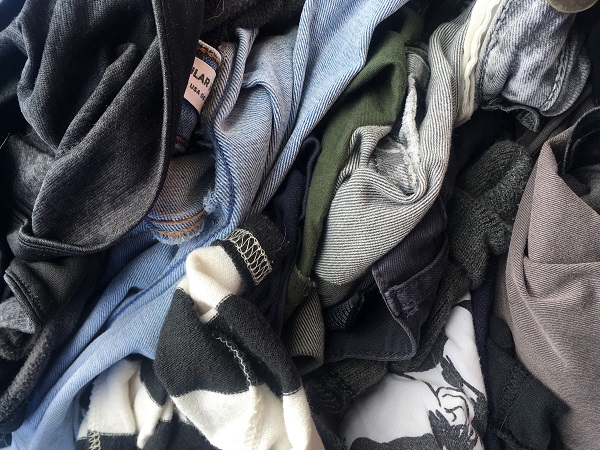
One of its recently concluded projects was the Sorting for Circularity Europe project, which in collaboration with Circle Economy, brought out a report that detailed the findings of a 16 month textile analysis. This report showed that around 74%, a total of 494,000 tonnes, of low-value, post-consumer textile waste is easily available for fiber-to-fiber recycling in six European countries. This points out the inherent potential to generate an additional €74 million per year, in value by reintroducing sorted and recycled textiles back into the value chain.
After the long Covid months, The Sorting for Circularity Europe Project was kick-started to decrease the knowledge gap with in-depth studies on which base investment decisions, policy developments, and the next steps towards circularity can be made. Also, the project focussed on more synchronization between the global sorting and recycling industry while creating a recycled market for discarded textiles to give a new life for earning a new income for sorters, recyclers, and textile brands.
Monetization through recycling waste
Even though some of the waste is reused, a necessary infrastructure to effectively recycle these textiles while understanding their material composition is needed. Fashion for Good’s report on the Sorting for Circularity Project brought together mega textile brands and industry leaders from across Europe who worked together to create a comprehensive textile waste analysis using more accurate, innovative Near Infrared (NIR) technology, along with analyzing the capabilities of various textile recyclers.
‘’As fiber-to-fiber textile recycling commitments and policies increase, as well as the amount of textile waste collected, the infrastructure required to drive the move towards circular systems requires significant investment to scale. To make informed investment decisions, as well as assess the business case for monetization through recycling, a deeper understanding of the characteristics of today's European post-consumer textiles landscape is needed. This project lays the knowledge foundation that will enable key players to set into motion.” says Katrin Ley, Managing Director at Fashion for Good
According to this textile report, the staple cotton was the most dominant fiber (42%), followed by a large presence of material blends (32%), almost half of which consisted of polycottons (12%).While focussing on the three main characteristics of material composition, the presence of disruptors, such as zippers and buttons, and color, it showed that just 21% of the materials under the microscope can be used for mechanical recycling. However, almost the remaining 53% could be processed for chemical recycling, which currently presents a huge opportunity for circularity, given that only 2% of post-consumer textiles are diverted to fiber-to-fiber recycling. The project brought together some of the largest industrial textile sorters across Europe such as the Boer Group, I:CO - part of SOEX Group, JMP Wilcox - part of Textile Recycling International, Modare-Cáritas, Wtórpol, and TEXAID.
Launched in early 2021, this long project finally divulged its findings which is expected to seriously monetize waste and help the textile industry reinvent itself after the dismal Covid years.
Bata to make India a sourcing hub
Bata is making steady progress toward transforming India into a sourcing hub for exports in the coming years. The move is meant to align with the footwear giant’s post-pandemic strategy wherein manufacturing and designing hubs would be set up across key regional landscapes, including Latin America, to cater to its global network.
The move is expected to be beneficial for the company in expanding its global sourcing abilities. The strategy would play a key role in combining countries like India, Indonesia, and Bangladesh as key sourcing hubs for the future, alongside China which is currently functioning as the primary hub for global exports.
In order to successfully establish a firm sourcing hub, Bata is directing its resources toward introducing a common product line, and best-in-class vendors, along with a stable logistical strategy for shipping, transit, and pricing structures. Bata’s floats range of casual footwear has been a huge success in India, owing to its breakthrough design. Currently the team is working toward providing relevant lines, sizes, and stocks across the world. Leading up to the Covid pandemic, India was only an ad hoc sourcing hub. However, with proper scaling and scheduling, the company expects to make it a well-known procurement area by the middle of 2023.
Nike Q1 revenue up four per cent
For the first quarter Nike’s revenues were up four percent compared to the prior year. Sales were up eight percent. Gross margin decreased 220 basis points to 44 percent. Selling and administrative expense increased ten percent. Diluted earnings per share for the quarter were down 20 percent. The fall in gross margin was primarily driven by elevated freight and logistics costs, lower margins in Nike’s direct business driven by higher markdowns and unfavorable changes in net foreign currency exchange rates, including hedges, partially offset by strategic pricing actions. The overall decrease in margins was primarily driven by North America, which took measures to liquidate excess inventory through Nikedirect markdowns and wholesale marketplace actions.
Nike’s strategy is based on its competitive advantages, including the strength of the brand, deep consumer connections and pipeline of innovative product. Nike’s first quarter results set the foundation for another year of strong growth. The focus continues to be the consumer and action is being taken to navigate near-term dynamics while expanding long-term structural benefits through a Consumer Direct Acceleration strategy.
Nike, based in the US, is a leading maker of athletic footwear, apparel, equipment and accessories for a wide variety of sports and fitness activities.
Pakistan exports for two months up four per cent
For the first two months of the fiscal 2022-2023, the value of textile and garment exports from Pakistan increased by four per cent.
Category-wise, knitwear exports rose 16 per cent during the period under review while exports of non-knit readymade garments were up eight per cent. As for textiles; cotton yarn exports decreased by 17 per cent while exports of cotton fabric rose by two per cent. Bedwear exports declined by three per cent during the period. Synthetic fibre imports decreased by 29 per cent while imports of synthetic and artificial silk yarn dropped 24 per cent during the same period. The value of textile machinery imports by Pakistan decreased significantly by 35 per cent.
In fiscal 2021-2022, textile and garment exports from Pakistan increased by 25 per cent over the previous fiscal.
Pakistan is committed to reducing the cost of doing business for export-oriented sectors including textiles and reducing the current account deficit. Value-added products are being promoted. Other steps taken include the supply of energy at competitive tariffs, monetary disbursements to mitigate prevailing liquidity issues due to severe economic challenges, duty-free import of cotton and reduction of custom duties on import of dyes and chemicals, and duty-free import of textiles and apparel machinery.
Turkish raw material exports up seven per cent
Turkey’s textile and raw material exports increased by seven per cent in January 2022 to August 2022 compared to the same period of the previous year.
The most important export market in the January to August period of 2022 in terms of quantity was Italy with a share of eight per cent. Exports of textiles and raw materials to Italy, increased by 0.9 per cent on a quantity basis. Exports to Germany, the second largest export market, increased by two per cent in this period. The US is in the third place with an increase of 16 per cent.
When the exports of textiles and raw materials are analyzed in terms of quantity in the same period, Morocco was the country with the highest increase in exports among the top ten countries. Exports to Morocco increased by 30 per cent. The country with the highest decrease was the United Kingdom. Exports to the United Kingdom decreased by 20 per cent.
The yarn product group continued to rank first in exports of the Turkish textile and raw materials sector, with an increase of three per cent in the first eight months of the year. Exports of the cotton yarn product group, the second largest sub-product group, increased by one per cent in this period.
Under Armour to eliminate biocides
Under Armour is aiming at eliminating 100 percent of biocides in its products by 2025. Other objectives are advancing low-impact manufacturing, reducing the environmental impact of its materials, and targeting net-zero emissions by 2050. Under Armour will work toward reducing the environmental footprint associated with its products and operations while accelerating its social and community impact.
The company has a renewed commitment to continuous improvement, industrywide collaboration, and transparent communication with stakeholders in the ongoing sustainability journey. Under Armour’s sustainability approach reflects the company’s mission to make athletes better by focusing on performance-driven innovations that utilize more sustainable materials designed for recyclability and more efficient production processes in its delivery of durable, quality, high-performing products.
The company is embracing material innovations that will enable less waste and more durability, setting the stage for circular systems by 2030, and supporting innovation that reduces fiber shedding from textiles.Single-use plastic brand product packaging will be reduced by 75 percent by 2025.
Under Armour is a global innovator and leader in athletic performance apparel, footwear, and accessories. At the end of 2021, approximately 40 percent of fabrics used in the company’s apparel and accessories were made from materials capable of being recycled.
Spandex market grows by four per cent
The global spandex market is growing by four per cent a year. The increasing demand for the material from the textile sector especially for sportswear, active wear along with high use in medical applications, is likely to propel the growth of the industry. Rising average disposable income of people is another factor driving the market’s growth.
People around the world have become more conscious about their health and are getting engaged in various kinds of sports or fitness activities. This is creating huge demands in the sports wear market which is largely dependent on the availability of spandex. The need for comfortable sportswear is creating huge demands in the market. Rising disposable income of people has led to greater adoption of high quality inner wear and active wear which is another key factor behind the market’s growth.
Spandex fiber offers excellent strength, weight and versatility which makes it so popular among textile manufacturers. It also finds widespread use in medical applications which is also contributing to the sales figures of the product. The material is light in weight, soft, elastic, stretchable and provides effective resistance against body oils, perspiration, detergent and abrasions. It is used in the production of casual clothing, trekking pants, under garments, home furnishing items, among others.











